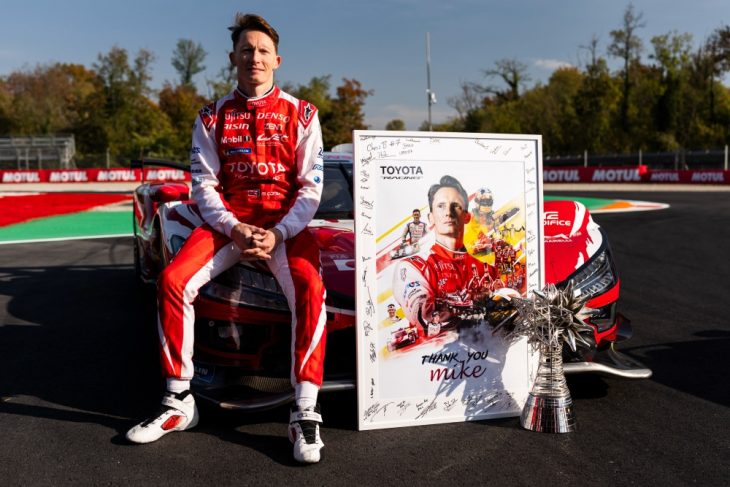

Mike Conway will bring the curtain down on his time as a pro driver at Monza this weekend with the opportunity to add a third world title to a résumé that already includes two Le Mans 24 Hours victories and two FIA WEC World Drivers’ Championships.
The Toyota Racing driver confirmed his retirement before the penultimate round of the season at Barcelona, signalling the end of a career that took him from the heights of single-seater racing to the top of endurance racing. After making his name in British Formula 3, GP2 and then IndyCar, Conway ultimately found his long-term home in sportscar racing, where he has become one of the most successful and respected drivers of the modern WEC era over the past 13 seasons.
“It’s good to finally say out loud, honestly, because, yeah, I’ve been holding it in since the beginning of the year,” Conway says, reflecting on his retirement announcement. “I’m excited, honestly, for the next chapter in life, and racing has been a huge part of that.
“It’s just been my life since I was eight years old; a lot has changed over the years and different categories and racing all over the world, and it’s been a lot of fun. I’ve really enjoyed my time racing, and especially sports cars. That’s where I felt like I had a home, and Toyota has been such a great team to work with and a great manufacturer. It’s been special.
“It just felt like the right time, honestly. Even the last couple of years thinking about it, and then, it just felt like the right time to hang up the boots.”
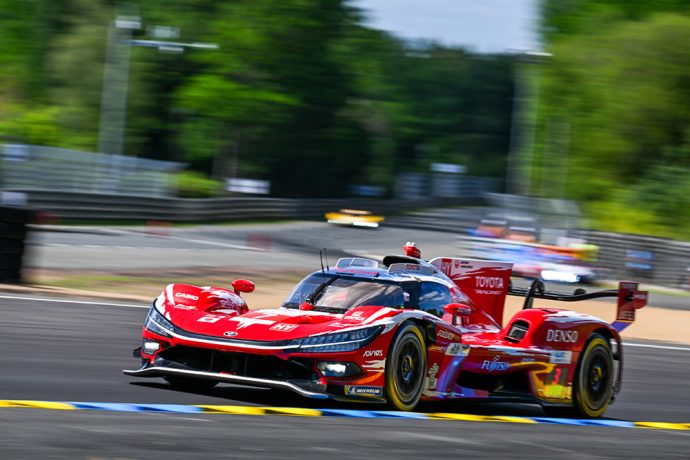
Although the decision was made well before the end of the season, the timing of Conway’s farewell has coincided with a high-stakes title run-in. His victory with Toyota at Le Mans this year, another defining moment in a career, ultimately scored enough points to keep him and his teammates in the #7 TR010 in contention for the 2026 Drivers’ Championship heading into the finale.
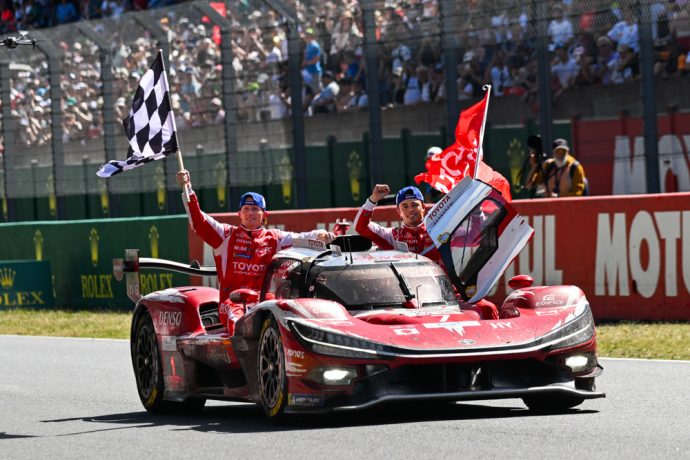
With a world title still on offer, Conway’s focus will remain firmly on the job at hand rather than his farewell tour. Team principal and driver Kamui Kobayashi confirmed after the Barcelona race, which the #8 won, that there won’t be any team orders in play at Toyota this weekend when the two crews go head-to-head, but that doesn’t make Conway and his teammates’ task any simpler.
The deficit to the #8 trio of Sebastien Buemi, Ryo Hirakawa and Brendon Hartley is 17 points, with a maximum score of 26 on offer for a win and pole. History is not on the #7 crew’s side. Only once in the past – back in 2020 – have the overall Drivers’ Championship standings flipped on the final race, though interestingly it was the #7 Toyota that beat the #8 to the title at the death that year. Conway will be hoping that history repeats itself.
“I would absolutely love to win it,” Conway says when asked about the prospect of ending his career with another championship. “I think even just winning Le Mans again was an awesome way to go out as well. But obviously that wasn’t planned. Things were decided before that, so yeah, a chance to win a title too has made it a bit more special,
“We’ll be pushing for that title, and it’s going to be pretty tense.”
Conway’s route to the WEC’s highest level was far from straightforward. He won a Formula Renault title in 04, won the Macau Grand Prix in 2005 and clinched a British Formula 3 championship in 2006, before moving to GP2 and later the United States to pursue a career in IndyCar. There, he experienced both the rewards and the risks of open-wheel racing, winning four races but suffering a serious accident at the Indy 500 in 2010 that ultimately led him to stop racing on ovals and step away from the discipline.
That experience became one of several challenges Conway had to overcome during his career. He also suffered injuries from two cycling accidents that forced him to miss races, including the 2024 Le Mans 24 Hours, but his appetite for racing ultimately carried him through those setbacks.
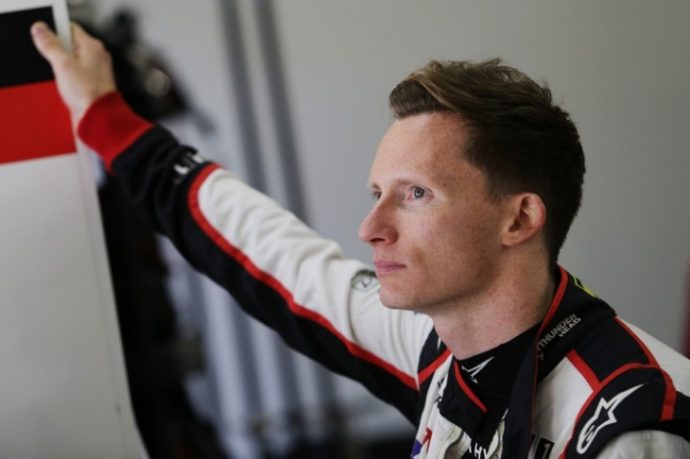
“It’s always tough to come back from those things, but when you just love racing so much, you kind of just get on with it,” he adds. “Unfortunately, there’s been a few injuries. But you don’t plan for these things. They happen, and you just have to get on with it. It’s just part of the history now.”
2012, the year of the WEC’s inaugural season, ultimately proved to be a sliding-door moment for his career. His single-seater career had been derailed by his incident at Indianapolis, leaving him at a point where he was considering leaving professional racing altogether. Conway even approached his father about finding a job outside racing.
But a conversation with his manager, former Formula 1 driver and Le Mans winner, Mark Blundell, helped steer him toward sportscars and the possibility of a manufacturer-backed future.
“I was telling the story to the team,” he explains. “I don’t think they knew, like in 2012, when I stopped racing open-wheelers (full time) and wanted to quit and actually stop racing altogether,” he said. “We were kind of at a crossroads there. Was trying to figure out, you know, I asked my dad for a job if he had any, and he was like, ‘Well, yeah, we kind of do? But I think cleaning lorries and servicing trucks and stuff, I don’t think that’s really a future you should look at just yet.’
“I kind of gave sportscars a shot, you know, rolled the dice and really hoped that we’d get a deal with a manufacturer. That was just a one-year plan, and then it was going to be it. And luckily, you know, (after a season spent in LMP2 in 2013 with G-Drive Racing) it all kind of worked out.”
Blundell’s role in that transition was significant, providing support at a moment when Conway could easily have walked away from racing. The pair developed a close friendship alongside their professional relationship, with Blundell remaining a constant presence throughout the years that followed.
“He’s kept me mentally stable, I guess, a few times,” Conway says of Blundell. “He was definitely part of making sure I did stuff back then. He’s been great, he’s been a good friend and a very good family friend.”
The decision to pursue sportscar racing proved transformative. Conway joined the WEC in 2014 and gradually became a central figure in Toyota’s endurance programme, helping the Japanese manufacturer navigate the championship’s evolution from the LMP1 era into the current Hypercar category, winning titles and the crown jewel race at Le Mans along the way.
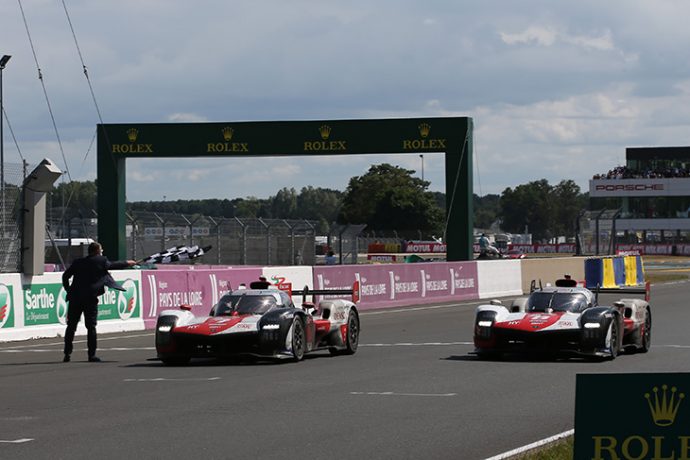
His achievements span three different prototype classes. Conway has won races in LMP2, LMP1 and Hypercar, underscoring his ability to adapt as the regulations changed around him. His record also includes 20 overall WEC wins and 51 podiums, a tally surpassed by only a small number of his contemporaries.
At the time of the retirement announcement, Conway had made 92 WEC appearances, placing him among the championship’s most experienced competitors. Only Toyota teammate Sébastien Buemi and WEC GT stalwart Richard Lietz have more starts.
The statistics tell only part of the story, however. Conway’s success has been built through long-term partnerships with teammates, engineers and mechanics, and through his willingness to become part of the collective effort required to win the sport’s biggest races and remain successful through multiple eras.
Asked which WEC races he remembers most fondly, Conway naturally points to his Le Mans wins, especially this year’s, as he was able to soak in the experience more than he did when he won it the first time.
“Obviously the Le Mans victories, they’re always special,” he said. “I think this year, to savour those moments, it’s pretty special. I’ve definitely made the time to remember a lot of things and, you know, pause and take a moment when you can, which, in motorsport itself, is tough because you’re constantly just on the go.
“This year at Le Mans, it was particularly memorable because of the way the race played out,” he continues. “We almost went a lap down; we had a puncture, we had issues with the car, and we really thought it was going Car 8’s way. Credit to them, they drove a great race, but that safety car brought us back, and it put us back in the game. It was tense all the way to the end, even the last 10 minutes. We had to save a lot, and BMW were so quick.
“It was probably the longest last 30 laps I’ve ever watched. Normally it goes quickly enough, but every time I looked at the screen, the clock wasn’t moving. I was pacing around, and my brother, whom I hadn’t seen all week, and his mates all turned up, and they’d had a few drinks. I had to tell them to sit down and shut up, because I didn’t need them shouting!
“It was great, though. I got to enjoy the moment. When you win the first one, it’s a whirlwind; everything’s new. This one I got to take it in. Me and Nyck (de Vries) actually stayed the longest at the track from the team, having beers. My brother stayed too, with his friends.
“But there’s been loads of fun moments, even races we didn’t win, where you just, I think, as a driver, you love being in that zone, and I think they’re the moments to really savour. But then, there have been many team efforts and results and teammates along the way that I’ve really enjoyed welcoming.”
That collective spirit has defined Conway’s career at Toyota. Endurance racing has given him the chance to build lasting relationships while competing at the highest level, and he expects to carry those experiences, as much as the trophies, into retirement.
Conway’s final chapter is, of course, still being written. Securing a third world title in his 94th WEC race in Monza would mean his departure from the cockpit comes with one final major achievement, adding another layer to an already remarkable journey.
But whatever happens, Conway will leave the WEC having helped define an era for Toyota and having established himself among the championship’s most accomplished drivers. From the uncertainty of his post-IndyCar crossroads to Le Mans wins and world titles with the world’s largest car manufacturer, his career has been one for the books, and will be looked back on fondly for a long, long time.
Images courtesy of Toyota Racing, DPPI, Andrew Lofthouse and Dailysportscar