

Alex Zanardi is back. Again. After a successful foray into touring cars, a medal-winning Paralympic handcycling campaign and a season of sprint racing in the Blancpain GT series last year, the 48-year-old Italian has set upon another of the challenges that have driven him ever since his determined recovery from the loss of both of legs in a Champ Car crash at the Lausitzring in 2001.
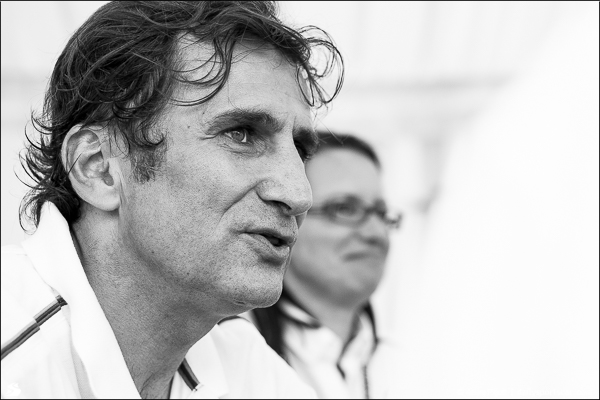
For 2015, the Bologna native is once again at the wheel of a BMW Z4 GT3 run by Roberto Ravaglia’s ROAL Motorsport outfit, but this time, there’s a difference. Unlike 2014, when he raced solo in the car with a specially adapted hand-controlled throttle and a brake pedal he could push with his prosthetic leg, this time around he’s sharing the car with BMW factory DTM racers Bruno Spengler and Timo Glock in the Spa 24 Hours.
It’s the first time a handicapped driver has shared a racecar with non-handicapped co-drivers, and a series of further modifications have had to be made to the systems he’s developed to allow them to perform driver changes as quickly as any other three-man crew.
“The main thing was to create a solution that would allow me to drive at least at the same level as I was driving last year,” Zanardi told us when we sat down with him at last weekend’s Blancpain Endurance Series race at Paul Ricard, which he, Spengler and Glock contested as preparation for Spa next month. “But we also had to create controls that wouldn’t prevent Timo or Bruno driving to the best of their ability.”
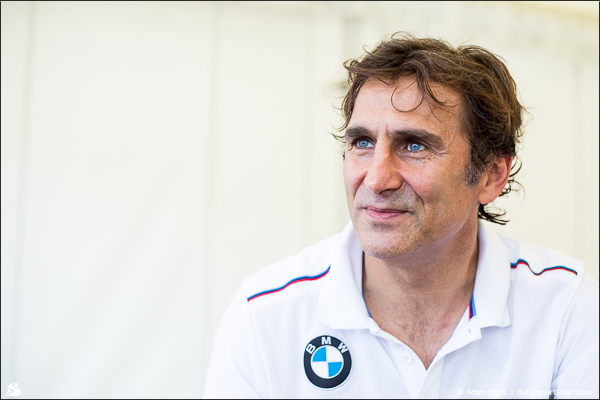
Perhaps surprisingly, the DTM aces initially considered adapting to Zanardi’s system themselves. “They’re both very talented drivers,” Zanardi continued. “The first time they sat in the car, they both said ‘yeah, I can work with that’. I said: ‘Guys, you can decide what you want to do, but you have to be comfortable. Think about it. Say after 20-plus hours of racing, you’re going through Eau Rouge and some guy swerves out of the pit lane in front of you, cuts across you, and you lose control – now all of a sudden you have to regain control of the car in a way that’s at the limit of you ability, would you be able to do that with my throttle mechanism and clutch?’
“And they both said ‘Actually, we’d better work on something!’” he grins. “This was certainly an interesting task for the engineers in Munich but they were very committed to getting the job done. I have to say after the first impression last week at Adria and what we’ve learned at Paul Ricard, we’ll be alright.”
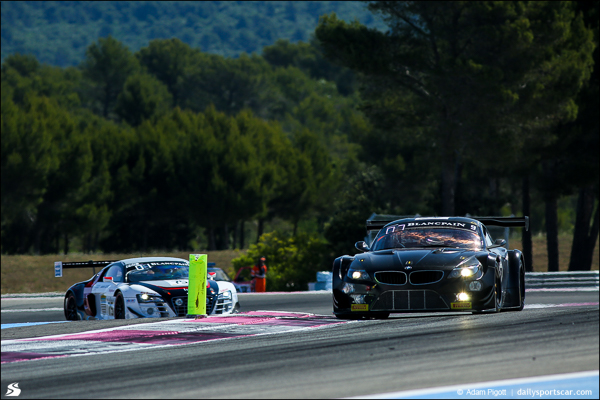
Zanardi has constantly developed and improved the system he uses to control the car since he first returned to racing in a BMW 3 Series touring car back in 2005, and the fine-tuning is still happening in 2015. “We’re not talking about a huge step compared to Blancpain Sprint last year,” he said. “But I can see we’re moving in the right direction – it’s already step forward in terms of throttle feel, the brake pressure I can apply and my personal comfort in the car.”
Once the idea of Zanardi sharing a car at the Spa 24 had been conceived, the next step was to select his two co-drivers. And it immediately became clear this would be a sought-after gig. Zanardi recalls: “Before the project was officially announced, but there were rumours and whispers within BMW, what really made me very happy and touched me was the fact that nearly all of the drivers in the BMW family got in touch saying they wanted to be my team-mate. That was something special, it meant a lot, because as a driver myself, I can like someone and say he’s a great guy, but if I don’t think he’s good enough to get the job done, I won’t want to team up with him. But they all wanted to share the car with me, so that was something I really appreciated.”
“The final decision was made by BMW and a lot of it came down to what other commitments drivers already had. I have to say that I couldn’t be happier with the choice of Timo and Bruno, they’re super guys.” He laughed: “In fact, the only reason they’re not better guys than drivers is that they’re bloody good drivers!”
So while speed on track isn’t a worry, the big question is whether the slightly more elaborate driver changeover process cost the trio precious seconds in the pits. “If I was confident we could do it quick enough, we would have gone straight to Spa,” Zanardi declared. “But we needed to practice and we needed the pressure of a race. We’ve done the changes where I get aboard in around 40 seconds, which is less than it takes to refuel the car and change the tyres. So we should be alright by Spa.”
And for former Jordan, Toyota and Virgin F1 driver Glock and 10-year DTM veteran Spengler, the challenge is two-fold. With the exception of Spengler’s appearance at this year’s Daytona 24 Hours, neither has raced a GT car or done driver changes before, let alone one that involves both moving the pedal box forward and swapping out their steering wheel for Zanardi’s in addition to the regular tasks of removing or fitting a seat insert and helping the driver who’s taking over fasten their harnesses. But both are relishing the challenge.
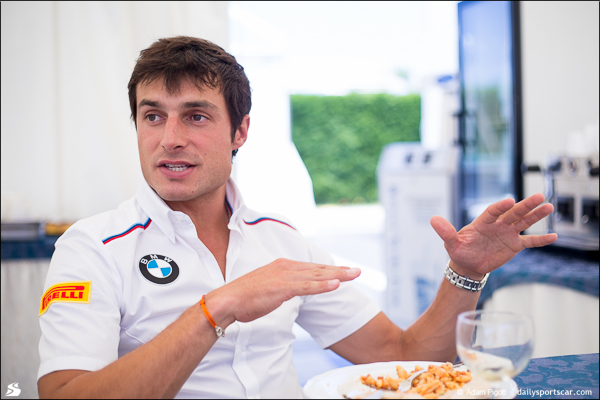
“I’m enjoying it so far,” Spengler told us between mouthfuls of pasta at Paul Ricard. “There’s a lot to learn, because there are a lot of cars on track with quite a variation in their pace, so you have to judge it and I’m not quite used to that yet. But the car is quite good and I’m really having fun. We’re finding a rhythm for the driver changes slowly, step by step. I don’t think we’re perfect just yet, but the most important thing is to be sorted for Spa.”
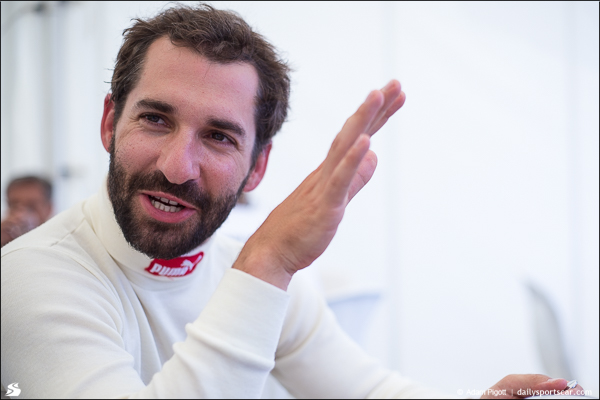
Glock, meanwhile, could see the funny side of the learning process. “When I come home from this weekend my wife’s going to ask what I was doing, because I have bruises everywhere from bumping into the car and roll cage!” he said with a chuckle. “The first driver change I did for Alex, I forgot to move the pedals forward and left my seat insert in. Straight away he was on the radio: ‘Timo what are you doing to me!’ There are funny moments in practice, but obviously we don’t want that in the race. We’re starting to get used to it, you sit in the car in the pit box and they count down, but in the race it’s different again. You drive into the pits and everyone is under pressure, it’s not automatic for me at the moment. I’m thinking about removing the steering wheel and bringing the pedal box forward. The regular GT drivers do this all the time and I’m sure they could do it blind, whereas I’m thinking about what I need to do next.”
On track, all three drivers’ race experience to date has been in relatively short races, F1, Champ Car, touring cars and Blancpain Sprint for Zanardi, F1 and DTM for Glock and DTM for Spengler. So in addition to their unique endeavour, the trio faces the same learning curve that all drivers coming into the GT endurance discipline have to deal with.
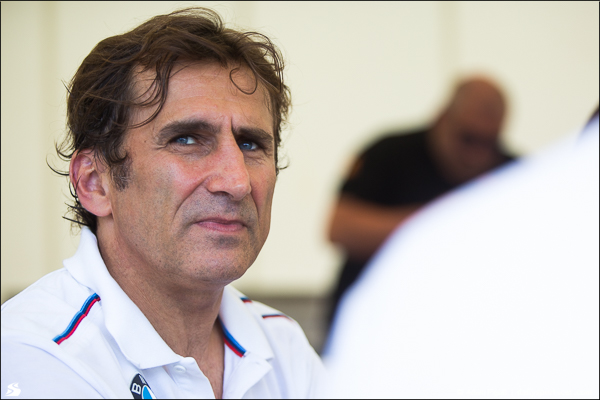
“I’m very excited about it,” enthused Zanardi. “It reminds me of my first hand-cycle marathon. I couldn’t sleep a wink the night before. Doing something for the first times is always a good thing in life and I’ve had the privilege of having many ‘first times’ in my life, a lot of them related to my accident. But if you look at our car it’s not Am or Pro-Am, just Pro, even though one of the three guys is nearly 50 and has no legs! So I’m a very privileged guy to be living this new adventure for the first time. Of course I’m a little nervous, but that’s a good thing.”
Zanardi is also extremely pleased to be returning to Spa, a track he last drove on during the 2005 World Touring Car Championship (although he missed out on the races after a crash in practice). “When [BMW Motorsport boss] Jens Marquardt asked me how I’d feel about driving Spa, because it’s a challenging circuit, his question was related to my handicap. I said: ‘Jens, for me, the hardest place to drive is probably a tight mickey-mouse circuit like Adria where I have to do a lot of braking. But in Spa there are only three very heavy braking points, everywhere else just about ‘cuddling’ the brake pedal and trying to maintain your speed through the corners. It’s a circuit where I always did well in F1 and providing I’m good enough as a driver, my handicap should have less of an affect on my driving than it would in other places.”
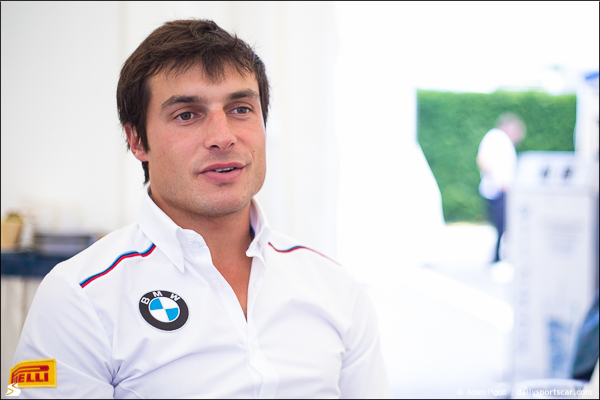
Spengler said: “The approach with endurance is very, very different. For example in Daytona, after the safety car, I overtook the two cars in front of me, then I was leading and tried to overtake a prototype. But I took too much risk, made a mistake and lost the positions again. You have to be a lot calmer, because you have a lot more time to overtake and gain or lose positions. It’s a lot more about trying to stay on the track and keep the car undamaged. That’s difficult, because there are a lot of cars around you, each on a different pace. You always have to be careful, stay calm and bring the car home, but still at a reasonable pace – the level of drivers in Blancpain is amazing, so you can’t just cruise around, you have to push. It’s tough, but I like it.”
The French-Canadian driver also believes that in some ways the single-class format of Blancpain Endurance Championship can be trickier to deal with than the multi-class racing in the US. “it’s sometimes more difficult to judge when everyone has the same car as you, but a different braking point. I’m not used to that,” he explained. “The difference in braking points between two cars in DTM is only going to be five or 10 metres, whereas here you can be running close to a gentleman driver and he brakes 100 metres earlier than you, but you don’t know he’s going to do it, that’s the difficult part to judge.”
The Z4 GT3 itself is new to both Glock and Spengler and differs considerably from the M4 DTM car they race for the rest of the season, not least because it employs both ABS and traction control to make things that bit more comfortable for the less experienced amateur racers on the grid. “It feels very unusual,” admits Spengler. “You can hammer the brakes as hard as you can, which I think makes it a bit too easy, but the car is fun to drive.”
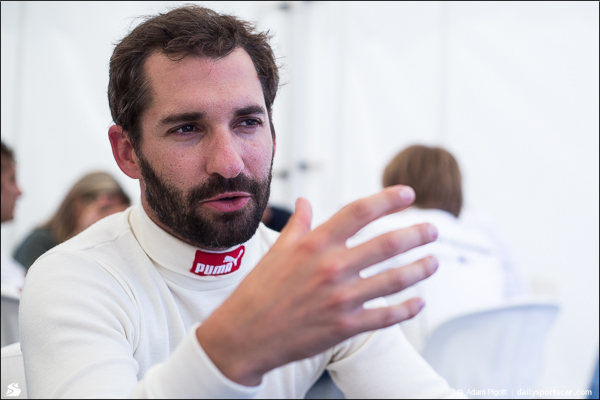
Glock is a little less keen. “It’s a bit different, but still okay,” he said. “In some areas helps, in some it doesn’t. I don’t really like it personally, but it’s in the car so we need to get used to it.” One thing the German is enjoying, however, is the slightly more robust nature of the GT3 car compared to his DTM mount. “It’s quite nice, already at the rollout in Adria I could use quite a lot of kerbs, which you normally don’t do in DTM. I found the car absorbs bumps and kerbs very well!”
While last week’s Paul Ricard outing and next month’s Spa 24 Hours are thus far the only races confirmed for the effort, both Glock and Spengler indicate they’d be keen to get back in a GT car sooner rather than later. “I’ve been interested in Daytona for the last couple of years, but it always clashed with testing,” said Spengler. “I was very happy when BMW called me at the end of 2014 to tell me I’d be competing in one of the most famous 24-hour races in the world. I was motivated to do it and it was a new challenge for me. As long as it doesn’t clash with my DTM programme, I’m more than happy to do as many endurance races as possible.”
Glock added: “We’ll see, this is a special project for Alex, me Bruno and BMW and so far I’m enjoying it. It’s good fun and there’s a good team spirit. It’s a totally different feeling to DTM, where everything is really under pressure. Here, it’s a different approach to the weekend, not more relaxed but a bit smoother.”
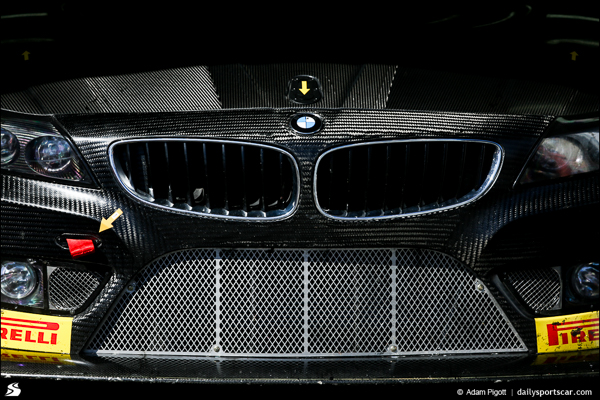
Although mechanical issues forced a retirement for the car at Paul Ricard at around two-thirds distance, it was very much a case of ‘Mission Accomplished’ for the ROAL Motorsport crew. They had good race pace, each driver got to complete a stint and requisite driver changes were carried out in race conditions. With further practice at this week’s Spa 24 Hours test, they should be more than ready to compete at the sharp end come the last weekend in July.
Stephen Errity
Images: Adam Pigott


