In the final part of this three part examination of the trials facing IMSA’s Prototype class Marshall Pruett looks to the predominant personality at the helm – Is Jim France the Answer?
Car Or invite?
The matter of driver status with which we concluded part 2 leads to another question, and it should be a major topic of debate inside IMSA as it decides what to do with its future Prototype cars: What’s more important for its Prototype entrants once 2017 arrives?
Do they want IMSA P2s, converted to IMSA/Le Mans P2s that will never win in France, or do they want the chance to earn an automatic invite to race at Le Mans with equipment that has an actual chance of finding the podium?

One path involves cobbling together a set of hybrid P2 rules that make no sense. The other involves the one thing of value to select Prototype teams and doesn’t involve giving the ACO control over IMSA’s Prototype class.
If all that some Prototype entrants want is an easier path to race at Le Mans, IMSA needs to make that the singular focus of its discussions with the ACO. Forcing its teams to run semi-compliant ACO P2s in order to get an entry would be giving up too much to get something coveted by too few.
Private Showdown?
IMSA has a meeting scheduled tonight with Prototype entrants and manufacturers to determine what they really want for 2017. It marks an interesting departure from a process that has been driven, up to this point, by ACO mandates. And it isn’t the first time IMSA has sought input and feedback from its Prototype paddock on 2017, but it could be a transformational meeting where IMSA’s leadership comes away with a roadmap for a more independent P2 class than the ACO envisions.
Frankly, I love the fact that IMSA’s gathering the people who will spend the money to go racing and ask them how they want IMSA to construct its Prototype class. Forget looking to Europe for what should be done in America, engage the stakeholders who choose to race full-time in IMSA and design a domestic plan to meet their needs.
It’s IMSA’s tradition. They did it 46 years ago when IMSA was formed by Jim France (and John Bishop), and it needs to happen again.
Health And Safety?
There are three other significant items for IMSA to consider as it takes a wider view of 2017.
First, its Prototype class isn’t overflowing with cars. Nine cars routinely compete at most rounds, and the bulk of its entries are DPs, meaning the majority of Prototype owners will have to spend a small fortune on new P2s just to maintain a similar car count.
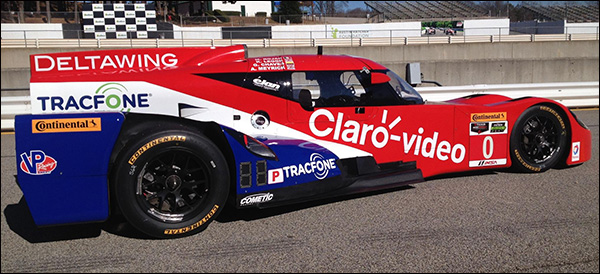
And, looking to 2016, Prototype could lose two full-time entries as Chip Ganassi Racing shifts to GTLM and DeltaWing trades its DWC13 for whatever GT class IMSA places its road car. We know Ganassi would like to keep its Ford DP going, and Michael Shank hopes to add a second Ligier P2 at select rounds, but if we take the full-timers expected to return next year, Prototype will be down to seven cars.
And that’s before the four remaining Chevy DP teams would have to spend more than $750,000 on brand-new P2 equipment (including spares) for 2017.
For all the ground we’ve covered on the ACO’s ill-fitting rules for America, IMSA’s problems with languishing car counts in its marquee class is a giant issue for its management team in Daytona Beach to solve.
The ACO can’t be blamed for the limited interest seen in the Prototype category, and before concerns about French rules and fights over custom bodywork enter into the equation, IMSA must expand its scope for the Prototype class in 2017.
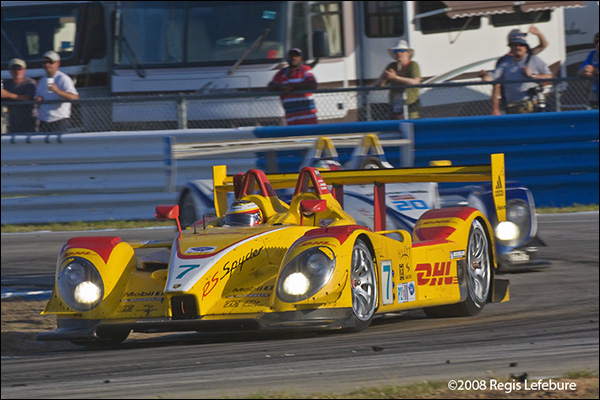
Anyone who believes new P2 regulations will spark an IMSA Prototype buying frenzy is kidding themselves. Look for current DP owners to try and make the costly conversion, but let’s be honest: P2 hasn’t been strong in the U.S. since the Acura vs Porsche wars concluded in 2008, and with three P2s competing in IMSA today, it would take a lot of wealth and unidentified interest coming from left field to see those numbers rise significantly in 2017. If IMSA has 10 full-time P2s when the new formula hits, I’ll be ecstatic.
If they want to give Prototype a real chance to take off, they’ll need to get creative. I’ve heard GT3-based engines have been discussed as a possible option in IMSA’s 2017 Prototype class, and if that door is opened, it could, in theory, pave the way for relatively low cost bodywork-and-engine solutions from Aston Martin to McLaren to Porsche.
Rather than go the route of preparing all-new engines for IMSA P2, the option to fit existing, endurance-bred GT3 engines to the back of a Ligier, ORECA, or other chassis of interest could lead to a significant spike in car counts.
On an international front, there’s no way the ACO would allow IMSA’s GT3-powered P2s to turn a wheel at Le Mans, but I don’t know if that actually matters. Thinking strictly of IMSA and its car count problems in Prototype, a GT3 solution that elevates the class, invites more manufacturers into American prototype racing, gives privateers a shot at creating their own chassis and GT3-based engine combinations sounds like a domestic route worth considering.
The third and final car-related aspect for 2017 involves the current 2014/2015 P2 coupes on the grid in IMSA, the WEC, and the ELMS. I know the ACO intends to grandfather the newish P2 coupes that are racing today, and if IMSA does take ownership of its P2 rules, one of the first orders of business would be to remove any sell-by dates associated with Michael Shank’s Ligier JS P2, Mazda’s Multimatics, or any other new P2 cars that migrate from Europe.
IMSA has already committed to continuing with the BoP system in 2017, which makes balancing 2014/2015 coupes a non-issue. Honestly, it might just be easier and more cost effective for DP teams to purchase used P2s from WEC entrants at the end of 2016.
I can find no reason to force IMSA’s current P2 teams to buy newer cars in 18 months, and with an eclectic mix of 2017 P2s already on the docket, IMSA could add even more cars to Prototype by providing the Domes, SMPs, and other ACO P2 misfits a long-term home in America.
New 2017 P2s, 2014/2015 P2s, and GT3-powered P2s… IMSA could have a winning Prototype formula on its hands if they are willing to stand on their own.
The Trickiest Part
If it’s clear to me that IMSA needs to step away from the ACO on P2 2017, I’m still a bit fuzzy on how IMSA holds its ground with the ACO on one class while maintaining peace and happiness with GT Le Mans.
The income generated by GTLM and its multitude of manufacturers is vital to IMSA’s survival. BMW, Corvette (GM), Ferrari, Porsche, and Ford (starting next year) represent big factory programs that spend a considerable sum on IMSA’s TV package and general advertising. The Prototype category offers fans the fun fantasy cars, but GTLM is the most relatable and profitable class in IMSA’s stable.
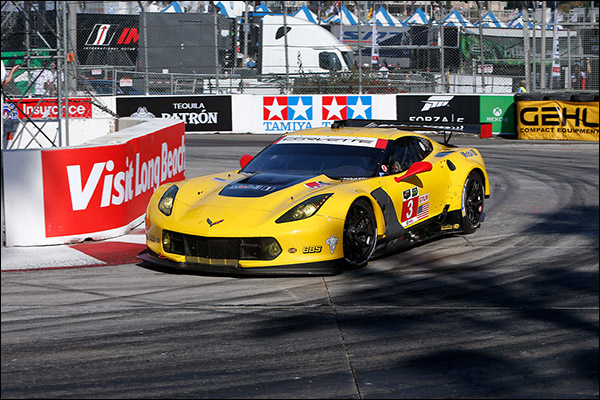
If the ACO decides to pull its support for GTLM, IMSA risks losing its biggest cash cow, and for Corvette and Ford, the link to Le Mans through IMSA is jeopardized.
Granted, do I think the ACO would prevent Corvette and Ford from racing in the GTE-Pro category in June if things went sideways with IMSA? No, not a chance, but the GTE-Pro/GTLM rules bring the big manufacturers to IMSA.
Of all the topics we’ve covered so far, this is the one genuine show stopper. How does IMSA reclaim control on P2 2017 without jeopardizing its relationship with the ACO and risking its GTLM class? It’s a lovely Catch-22.
In Conclusion…
 The ACO needs IMSA and IMSA needs the ACO, but only in the areas where both sides benefit from the relationship. The one person I have faith in to make sure America’s interests are safeguarded is Jim France. He’s often criticized for creating the lo-fi Grand-Am and the Daytona Prototype formula, but France is the closest thing we’ve had to Sports Car Jesus since he brought IMSA to life in 1969.
He’s spent vast sums to keep teams afloat and drivers employed when dollars or opportunities have been sparse, and he continues to quietly lead his flock at the modern version of IMSA. France is a serious competitor that has fought for his teams and an independent vision for sports car racing, for decades.
It’s time for America’s most powerful sports car figure to take control of P2 2017 and steer it in the direction that best suits IMSA’s great 24 Hour race at Daytona and the other iconic events on the TUDOR Championship trail.
Marshall Pruett