


Paul Marquardt will be making his DSC race reporting debut at Road America later this month so we thought we’d put him on a fast track learning curve. First up it’s a chat with Corvette factory driver and WTR DP pilot Jordan Taylor:
PM: So then Jordan Taylor, what is it like to win the 24 Hours of Le Mans?”

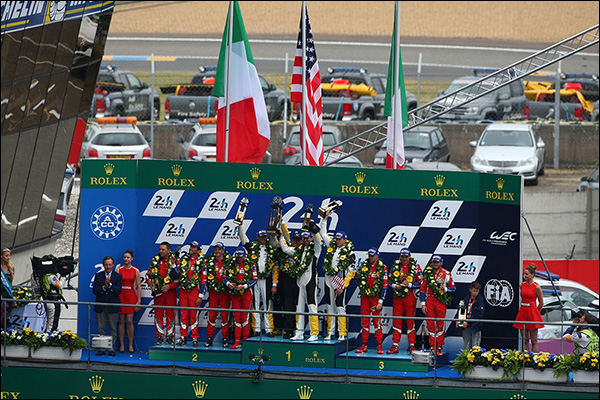
Jordan: “I have gotten that question a lot over the past few weeks. I don’t really have a good answer. The biggest thing is that so many emotions went through my head after the race. It was the first race that I’ve ever cried at – I was very emotional about it.

“To be honest, I didn’t really know what I was feeling in those moments after the race ended. I wasn’t sure if I was experiencing happiness or sadness. I just knew I was more emotional than I’ve ever been. It was a relief to win something as big as Le Mans.
“I’ve always felt growing up with Wayne Taylor as my Father that I was judged as a race car drivers son and given all these hands outs to make it. To win a race like Le Mans, with a factory team, with only three drivers in the car; you really have to make something happen. I was a champion in Grand-Am, but this was a monumental win, certainly the highlight of my career and probably my life.”
PM: “Knowing that you were going into the race as Corvette’s “only bullet in the gun”, did that change anything for you? Or did you run your race as you would any other race?”
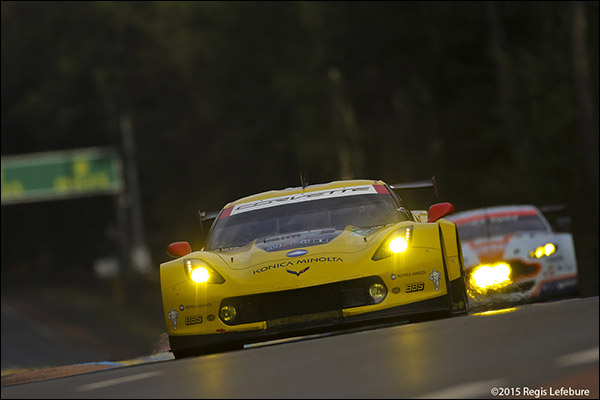
Jordan: “It for sure added pressure. I was going there to win for the #64 car. When the other car was withdrawn, the biggest difference was that all of the eyes are going to be on you. It certainly added pressure. Any little mistake you made was going to be seen by everyone. There are 3 sectors on that board for a lap as long as Le Mans. Everyone in the garage, every mechanic, management, fans; everybody stares at that board all race. We only had one car to look at..and it was us! We knew everybody was watching every single lap, every single sector of the race, so we wanted to run a great race and not make a mistake. Winning it after all that, with only one car, and against all the factories was really special.”
PM: “Now that you’ve won Le Mans, essentially you’ve climbed Everest as a race car driver, does that change your overall motivation going forward in your career? Do you feel more “freed up” as a driver?
Jordan: “It certainly takes pressure off. Guys work there whole career and you could end up 50 years old and not have a Le Mans win on your resume. To get this early in my career was a great relief…but it does make you want to win it more and more! Once you get the feeling of winning such an amazing race and standing on that podium looking over thousands of people – you want that feeling again.”
PM: “Moving away from Le Mans I wanted to ask you about what it’s like to race with your brother. You and Ricky appear inseparable to the public. You are working together, testing together, debriefing together…and then you’re both on social media together – how do you manage that relationship?”
Jordan: “I think it was easy for Ricky and I. We grew up in this sport. We were at the track and with my Dad all of our lives. We had an idea of how to act and how to be a professional from a very young age. Ricky and I were separated for a while in the early parts of our career while we were growing in the sport. I was always with different GT teams and then made the move to prototypes in 2013. At the same time, Ricky was racing with different teams as well (here are the Brothers together back in 2013).

“Then finally we got to the point and realized that we were doing well on our own, so why not try and be together, be a family, and try to win together. It was something that we used to never want to do actually. Ricky and I didn’t want to look like the kids that were driving for their Dad’s race team. We wanted to prove ourselves in other areas first. It’s easy for us to be about business at the track and be brothers away from the track. In sports car racing you always want to beat your teammate. That’s your biggest competition. Ricky and I respect that. Beating my brother, and loving him, is part of it. We take our egos out of racing with each other. If I’m not up to speed on a certain weekend, I have no problem stepping down and letting Ricky take the lead on how we run the race weekend.
PM: “Looking ahead now to speaking about TUSCC, how is Wayne Taylor Racing recuperating from the race at Watkins Glen? It obviously wasn’t the end to the race that you and your team were hoping for.”
Jordan: “It was definitely disappointing. We had a strong car in the dry and the wet. We beat everybody in the pits – so our guys are doing a great job. Looking back on it, the result wasn’t great. But, Ricky was flying in the wet, he had a 20 second lead. We can’t complain about making a small mistake. He was the fastest car on track with an hour to go. We needed to build a lead over the #90 car as we knew they weren’t going to stop. He just touched a bit of paint with about 2 inches of the tire and it sent him into the wall. It was his first mistake since 2013 at Watkins Glen. Everybody is owed a mistake every now and then.”

PM: “Now looking ahead to Mosport and Road America coming up, how does Wayne Taylor Racing see themselves performing at these races? Do you see it as races you could win? Or more damage control and trying to get away with some points in the bag for the championship?
Jordan: “We’ve had a couple bad races in a row, so we are going to treat these final races as individual rounds. We are going to be racing for wins. Take more risks for the win. That’s our strategy on and off the track. Last year we had the strongest Daytona Prototype at Mosport but the P2 cars were in a league of their own. I think we have a strong car for both races. Road America last year we had a great race going until our steering broke. As long as we don’t make any mistakes we have great shots at winning the remaining races.”
PM: “You’ve been to La Sarthe and raced in Europe. You’ve obviously also raced all over the continental United States. A lot of people regard Road America being a more European type track. Do you favor a more European style track?
Jordan: “Every track is different. Every track has it’s own nuances and details. Road America is really tough with it being so long and a lap taking around 2 minutes. It’s a very easy to be slow and not sure where on the lap you need to improve. Road America is a very old school American track. It’s high speed track, with great flow and not much room for error.”
PM: “Jordan, what are your thoughts moving forward with the 2017 Regulations across IMSA and the ACO?”
Jordan: “I think it is really nice that we are moving towards a new car for 2017. I really enjoy driving the Daytona Prototype. It’s a really fun car to drive. But, all the other classes are getting faster. The GTLM cars are going faster and are getting upgrades next year and GTD going towards GT3 specs – all the cars on the grid are going faster. The Daytona Prototype is getting to the point where they are giving us all these upgrades, but the car was designed so long ago – it’s really not made to go that speed. All of us at the team are really excited for what the future brings. It will be cool for the fans to have something new to look at and we can hopefully get a bunch of manufacturers in the sport and keep that battle alive in the class.

PM: “Ford made some rumblings over Le Mans week. What do you think of their new car and program?”
Jordan: “I think it’s great to see Ford back in the sport. I think it’s really healthy for the class to have Ford racing with us. We all saw the car come out at Le Mans and it was a bit of a shock. It looks a lot more like a prototype than it does a GT car. But it’s exciting to have them back.”

PM: “Do you think Ford being part of both the Tudor United Sports Car Championship and the FIA World Endurance Championship next year will force Corvette Racing’s hand into competing in the WEC next year? Would you like to be racing a Corvette against the manufacturers in Europe”
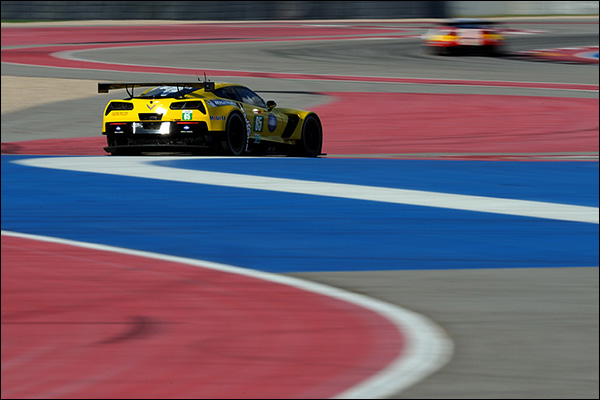
Jordan: “I want to be racing as much as possible. If I could be racing every weekend, I would. Everybody is working towards Le Mans every year. It’s the world stage. Everybody in both TUSCC and WEC are working towards winning that race. No matter what, everybody in WEC would admit that their whole season revolves around Le Mans. In America, Corvette Racing is working towards that race all year as well. It’s just a matter of where you want to fill your time in (pictured below in the one-off entry for Corvette Racing at COTA’s WEC race last year).
PM: “My last question Jordan doesn’t revolve around your racing. You’re well known for your speed but you’re also really well known for your humor, Where does that come from? You can seemingly turn if off and on like a light switch.”
Jordan: “I grew up as a really quiet kid. I hardly had any friends. I was always alone at school. I sat alone at lunch. My whole focus was on racing growing up. But, after I won the 2013 Grand-Am Championship, I realized that there is more to life than just racing. I started to open up my personality and it continues to open up as the years go by. I’m really serious and focused when it comes to racing, but I’m always about having a laugh when I can. It’s about being able to switch it back and forth.
Paul Marquardt


