


Garage 56
#0 Nissan ZEOD RC
Wolfgang Reip, Lucas Ordonez, Satoshi Motoyama
For the second time in three years it’s Nissan that fills the Garage 56 slot – with the Nissan ZEOD RC
The car looks stunning, repeats the narrow frontal area from the DeltaWing but that’s as far as it goes in terms of similarities.
As a closed top version of the narrow front track concept this car is way WAY more attractive than the now Panoz built DeltaWing Coupe, helped by a pearlescent off white livery that suits the cars profile beautifully.

The detailing is superb and there are a number of Le Mans firsts built in – including the fact that the car has no mirrors, all in the pursuit of better aero efficiency (a rear facing camera system suffices). But the important bits are under the bodywork:
 The more normal of the two power plants is the Nissan DIG-T R, a simply astonishing 40 kg 1.5 litre three-cylinder turbo revs to 7500 rpm that produces 400 horsepower that’s rather more power per kilo than a Formula 1 engine.
The base engine is only 500mm tall x 400mm long x 200mm wide and in dimensions would easily fit inside the luggage guides seen at major airports around the world.
Oh and it sounds great too!
The really revolutionary bit though is the ZEOD part of the equation – Zero Emissions On Demand means just that, for one lap per stint the engine will be switched off and the Nissan will complete a full lap producing Zero Emissions, the first ever in Le Mans racing history.
The car will draw on battery technology used in Nissan’s road cars and built at the company’s state of the art facility in Tyne and Wear which power two 110kw electric motors that transfer power to the wheels via the same gearbox that is connected to the internal combustion engine, this part of the package taking over for a final all-electric lap after each fuel stint.
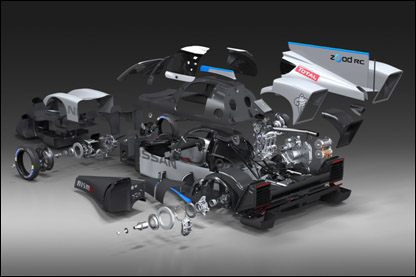
The theory is that the car in internal combustion mode could run ahead of the LMP2s, and in Zero Emissions mode ahead of the GTEs.
The reality though is that that will be a very tough call – The car posted a time ahead of the GTEs at the Test Day with the test car, but it has been a major slog to get this programme running, running reliably,and running at competitive times.

For Le Mans a brand new race car replaces the test car that we have seen thus far with the Test Day car testing in the UK all week to ensure that any possible last minute development can be integrated into the race car.
The programme, and its technology and marketing benefits though have been a key part in focusing corporate attention on the sport – However many laps the ZEOD RC manages, without it we may have never seen an LMP1 programme emerge from Nissan.
The driver squad, Lucas Ordonez and Wolfgang Reip from the Nissan GT Academy programme and Satoshi Motoyama from Nissan’s Japanese GT programmes, will be as quick as the car allows, and all three are fully aware of what they need to do to keep the car on track and out of the pits if they can.
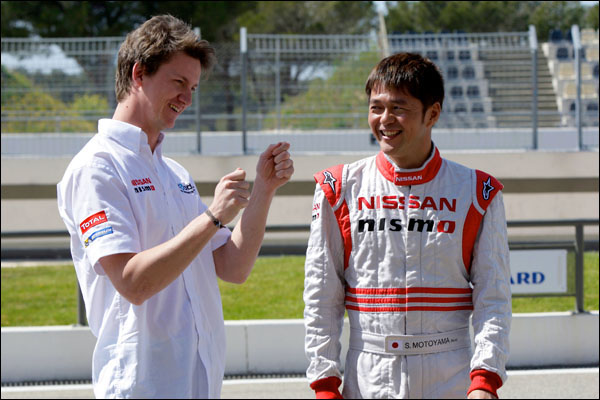
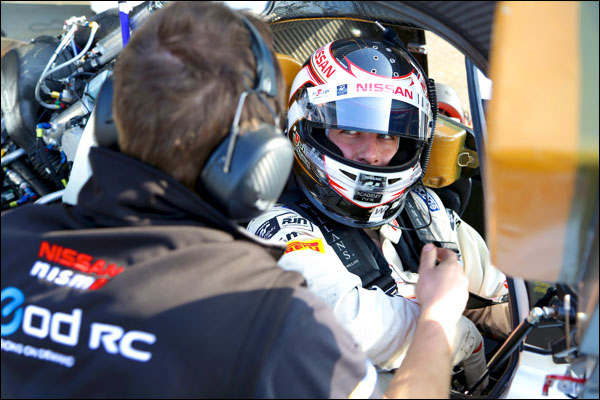
Here’s hoping we get plenty of time to see the #0 car at speed, here’s hoping too that we see another slice of history happen. But even if we do there are questions to be asked about the initiative that spawned this effort.
The idea of the Garage 56 initiative is a sound one, to allow new technologies to be displayed, on track, in the world’s greatest race. but the message coming back from many parties is loud and clear – the timescales applied here are just too tough for almost anyone to come out punching.
There was something of a false dawn with the original Nissan DeltaWing, Nissan’s team pulling out all of the stops to get the effort on track, and get on track it did with a wave of popular interest that we have seldom seen for any race car anywhere!
The motorsport industry again made the near impossible seem easy – But it isn’t, as the ACO found out the following year when the Green GT Hydrogen fuelled LMP concept failed to appear and the 2014 racer, the ZEOD RC was revealed starting a clock that had 12 short months to run.
The ZEOD RC programme has advanced several technologies considerably, and the programme as a whole would not even have been possible just a few short years ago – but a 2 year development cycle would be a far more realistic prospect for truly competitive and rateable future projects.
As Sportscar racing shows the world the way forward for the sport it would be good to see a constructive response to one of the ACO’s best recent initiatives – Or might that be what we are to hear on Saturday with a very big name tempted back to the race via the very last garage in the pit lane?


