Last Friday saw the 20th anniversary of SRO, the body without which we would likely not have such a rich and varied GT racing community.
The company was initially established to hold Stephane Ratel’s shareholding position in the BPR series and to run the Venturi Trophy, then renamed “Philippe Charriol Supersport trophy”.

SRO launched the Lamborghini Supertrophy the following year which lasted seven seasons with Diablo SV-R and GT-R cars.
In early 1997, SRO entered in partnership with Bernie Ecclestone in the running of the FIA GT Championship, which initially displayed direct manufacturer competition with the most extreme generation of GT1 machinery. Thus started possibly the most rapid development of ‘GT’ machinery in living memory, the cars going from mostly production based cars to utterly bespoke prototypes within a matter of months! Much of the outlook at SRO that survives to this day can be traced back to the lessons on sustainability of concept forged in those exciting but hugely expensive years!

In 1999, SRO moved to take sole charge of a redefined category that had been rebuilt around the former GT2 cars, SRO having fought for the right for tuners to be allowed to homologate their cars independently from the manufacturers, which brought cars such as the Ferrari 550 and Lamborghini Murciélago GT into GT racing.
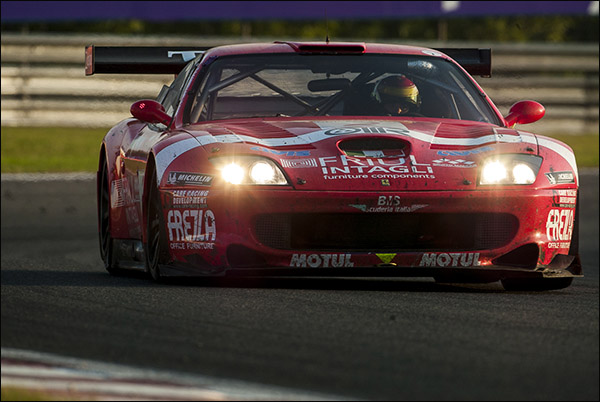
A second key element was the introduction by FIA President Max Mosley of the Balance of Performance concept, to stop manufacturers from introducing GT prototypes in disguise, a matter which had led to the early demise of the original version of the FIA GT Championship.

Its success was in managing to equalize the extreme cars such as the Maserati MC12 with more conventional GT cars with true road-car origins, and it opened the way for the GT3 category, successfully initiated by SRO at the end of 2005.

In the meantime, SRO had taken over the FIA Sportscar Championship. After a running the two European events of the American Le Mans Series in 1999, SRO, associated with Martin Birrane, entered into a partnership with the ACO to create the new for 2004 Le Mans Series. SRO remained a shareholder in the Le Mans Series until 2011, shortly before the Le Mans Series evolved into the FIA World Endurance Championship.
Another successful partnership, with Eurosport was initiated in 2001, turning the FIA GT Championship, the European Touring Car Championship and the Renault V6 Eurocup, into the multi-platform LG Super Racing Weekends, which grew with increasing success until 2005, when the ETCC graduated to become the FIA World Touring Car Championship.
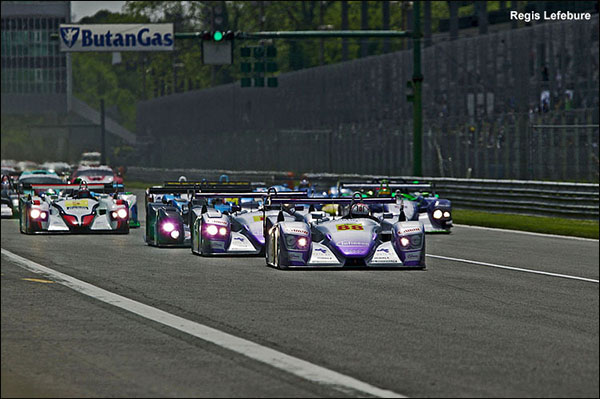
From 2006, SRO successfully developed the FIA GT3 European Championship (below the start of the very first race at Silverstone in 2006), and spread the format of two one-hour races with two drivers per car to the many national championships that SRO had been promoting, including the French GT, under SRO management since 1998, and the British GT, since 2004. The GT3 format spread worldwide, and in 2007 SRO created a new series in Germany in partnership with Jürgen Barth and the ADAC, as well as a Brazilian Championship in partnership with Antonio Hermann and Walter Derani and also took over the management of the Belgian GT Championship. Of these the British Championship remains under SRO management.

A new more production car based GT4 category was created, and SRO entered into various partnerships, the most successful of them being with Circuit Zandvoort for the Dutch GT4 Championship.

Encouraged by 15 years of continuous success and development, SRO embarked on the ambitious FIA GT1 World Championship project in 2010, the first attempt at a World Championship exclusively for teams and independent of the manufacturers.
This brought together a new generation of GT1 cars together with some older ‘grandfathered’ GT1 warhorses to create a global calendar.

Despite some spectacular racing the Championship was never financially balanced and became less relevant when the FIA awarded a GT World Cup title within the new World Endurance Championship.
Despite the demise of FIA GT1 World Championship after the 2012 season, SRO was immediately on the road to success again with the Blancpain Endurance Series it had launched in 2011, as a direct continuation of the old three-hour, three-driver FIA GT Championship format.

This Series grew rapidly with the Total 24 Hours of Spa as its centrepiece.
Recent years have seen SRO dramatically reduce the number of national and single-make series it was running, going from a maximum of 14 different series at one point to concentrate on the Blancpain GT Series, which combined the existing Blancpain Endurance Series with the former FIA GT sprint series into a single entity, as well as the increasingly successful Avon Tyres British GT Championship.

There are new programmes on the way, such as the GT Sports Club for amateur drivers, the Ultracar Sports Club for the most spectacular machines, the SRO Race Centre at Paul Ricard in association with Michel Mhitarian and a new partnership with Sepang International Circuit on the Sepang 12 Hours.

As with any major organising body there are complaints and opinions aplenty over SRO’s role, business modelling and any number of other matters. The reality is though, that without the continuing efforts of Stephane ratel and his team we would likely have precious little of a contemporary GT racing scene to comment on or complain about. Happy Birthday SRO.