

After an extended gestation period accommodating the new AER engine, Rebellion Racing is back in the WEC paddock. Its pair of R-Ones are ready to roll at Le Mans, but before turning a wheel at La Sarthe, DSC went down to the garage to learn a bit more about the 2015-spec car.

To incorporate the new AER P60 V6 GDI twin-turbocharged engines, the car has seen a significant update which took the team about 15 weeks to design, build and produce. Most changes are to the chassis in order to make the transition from Toyota to AER power.
Aside from the motor, the key differences are in the form of aerodynamics and the new cooling system. The suspension and gearbox have remained the same.

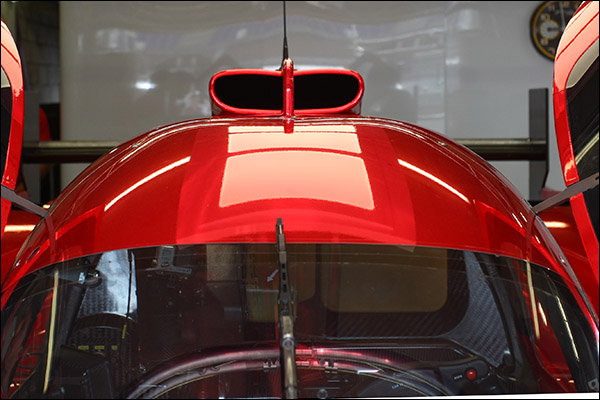
Aesthetically, the air-intake has been moved further back to be directly connected to the engine. It’s been dictated by a slight redesign to the package of the rear, but the performance of the car is unlikely to be affected by this unconventional move.

By moving it further back, the air-intake has also been split by the rear fin in order to abide by the height regulations and reduce drag.
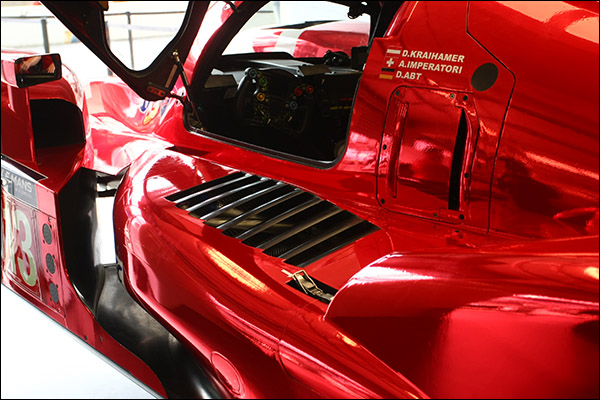
The entrance of the side pods have also been modified. They’re larger to increase air intake and allow hot air to escape quicker and in larger quantities.
AER’s engine is bespoke for the series, it’s more efficient than last year’s used in the CLM, more powerful, and uses maximises fuel-flow. This enabled the team to be immediately hitting its target lap times during the three-day test at Paul Ricard last week. It wasn’t a completely trouble-free run, with a few niggles with the electronics mainly, but that’s to be expected.
“The cars ran for three days, not without their problems, but they were all solved either there and then, or have been since the test,” said AER’s Andrew Saunders.
“This engine allows us to maximise our fuel allowance. Last year, the engine ran mainly at 104.9 kilograms per hour, now it’s 106.4, which means roughly, we’ll be 1.6 percent faster.
“Changing from a normally aspirated engine is huge. A four-litre turbocharged engine with two bars of boost for example, is an eight litre engine, but without boost is four litre. Whatever fuel the FIA give us, we can use that fuel and if necessary can put larger turbos on. The capacity of the engine is adjustable, while using a normally aspirated engine means you get to a point where you can’t add more fuel.”

For the drivers, it’s clear that the AER engine and adjustments to the aero have been welcomed across the board, even at this stage. It should bode well for the team going forward, as it looks to finish ahead of ByKolles in the points standings.
“We didn’t get as much running as we’d like, but we were immediately impressed by the new engine,” Nicolas Prost told DSC. “We suffered minor glitches, and there’s a lot of room for improvement, but things like the top speed was very promising. Switching was the right choice.
“We don’t really know where we are going to be, but we’d like to close the gap a little bit to the factory cars,” he added. “Hopefully we’ll be about three or four seconds a lap off the three factory teams ahead of Nissan, though we know the hybrids have improved massively since last year.”
The team will shakedown the cars at some point next Tuesday on the Bugatti circuit, which will effectively be the final part of its Le Mans prep. After the race, the team have a testing programme pencilled in, but the outcome of the 24 Hours will play a big part in deciding where the development programme is headed for the remainder of the season.
Whatever happens, it’s good to see them back.
Stephen Kilbey


