


What do the following legendary sports cars have in common?
Jaguar D Type
Ford GT 40

Matra MS
Porsche 917

Porsche 935
Renault Alpine A442
Jaguar XJR

Sauber C9
Mazda 787

Porsche 911 GT1
BMW LM
Audi R8

Bentley Speed 8
Peugeot 908
Porsche 919 Hybrid
If the answer you gave was that they are all Le Mans winners you’d be correct – but they all did something else too, they all underperformed to some degree, in many cases dramatically so, and in one case tragically so, on their Le Mans 24 Hours debuts.
In some cases that underperformance continued for more than one year and in almost every case there were major design changes required to find the edge that gave each and every one of them the legendary status that they now enjoy.
Fast forward to 2015 and our current crop.
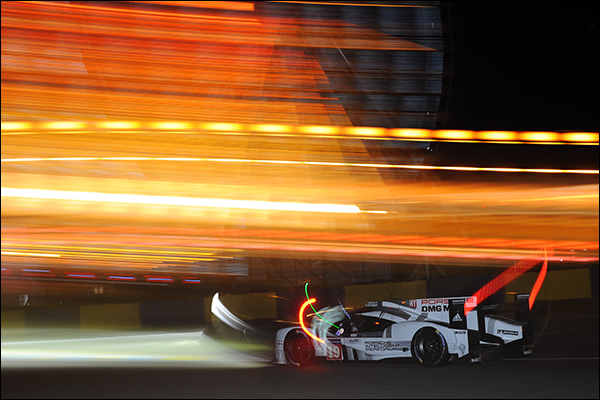
Porsche’s 919 Hybrid scored a famous victory in its second year after reliability woes hit hard in 2014.
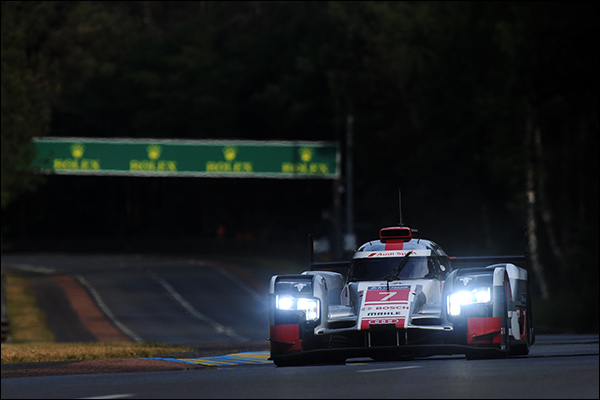
Audi’s R18 e-tron quattro failed to win and is nobody’s idea of an under achiever but even the mighty four rings needed a split strategy in their hybrid masterpiece’s first year to ensure that the technical leap forward had a comfort blanket, the team opting to enter a pair of more conventionally powered R18 ultras alongside the newer tech alternative.
Toyota seem to have lost the ultimate edge after 2014, a year where misfortune bit them hard, a luckless accident and a minor fire with major consequences preventing them from taking a win that they must have felt was in their grasp.

In the wake of an off-the-ultimate pace 2015 run there have been mutterings of major upheaval within the team. Toyota’s corporate commitment though is for a multi year programme.
Then comes Nissan!
The new for 2015 GT-R LM was the most eagerly anticipated newcomer of the year, an extraordinary looking beast with an other-worldly concept.

Testing and development for the new car did not go smoothly. Indeed far from it, with constant issues around the hugely powerful, but as it turned out woefully unreliable, Flybrid hybrid system not so much blunting the performance edge as breaking the blade off at the hilt!
The knock-on effect of still having to carry a deactivated system, having to utilise the braking system designed for 8 mJ harvesting and instead dissipate that heat conventionally, added another major issue, and, it seems, some basic flaws with the suspension added even more challenge than either of the aforementioned problems.

The car was, despite its challenges, very, very fast in a straight line. Not enough for more than a line or two in a press release, but perhaps a hint that some key aspects of the concept have more merit than some naysayers are talking of?
The race proper was a war of problem solving, several lengthy pit visits for braking system issues and the car falling short of the predicted lap times from even the team’s adjusted, hybrid-free data.
That said a car came home, unclassified, but it came home. Score one big fat point for teamwork and pride for starters, and that’s a good thing to have with a hefty development curve ahead.
The team issued a post race statement that they would now admit was not the best of their communications efforts and set off to look at what could be done to move forward, to improve the package and close the yawning gap to their factory competition.

That revised package includes a new braking system, heavily revised suspension and a high downforce kit. The car is set to test later this month and the team is fully focused on making it all work as a more effective package.
Meanwhile the wolves gathered, but not, it seems, necessarily the Nissan corporate wolves.
The one on-the-record quote that seems to have emerged is attributed to Nissan CEO Carlos Ghosn at the Formula E race at London’s Battersea Park who is reported by several who have printed this quote to have said, amongst other things “at a press conference”:
“We wanted to be different and competitive, we have only been different.”
Rather oddly though, as far as I can discover, and I have tried pretty hard, Carlos Ghosn didn’t give a press conference at Battersea.
So at best (or worst!) it was an answer to a question during the event in a less formal context, it was certainly not a prepared statement.
Moving beyond that there are suggestions that the programme is under review.
Of course it is! It’s a multi million dollar corporately funded project, these things are constantly reviewed, subjected to corporate process and scrutiny.
Frankly, after a year of preparation, whether or not there was racing success or failure it would be rather odd if it wasn’t!!
There’s little doubt that Jaguar (at least twice), Ford, Matra, Porsche (four times), Renault, Mercedes Benz, Mazda, BMW, Audi, Bentley and Peugeot did much the same back in their day!
Of those who didn’t get to the top step in period Mercedes Benz built three completely different GT1 Cars before their 1999 misadventure made continuing impossible, Toyota had two years of the GT-One and Nissan themselves had two years with two versions of the R390 GT1 and then a year with the WSC spec R391. In later years Cadillac had three evolutions of their ultimately unsuccessful LMP. Generally speaking the body corporate does not pull the rug from an existing programme.

There’s little doubt that anyone reporting into that process will have some uncomfortable moments in store. But there’s little doubt too that there is plenty of corporate body armour to report on the more positive side of the ledger.
Of course factory racing efforts are looking to succeed on track. But actually just as important in corporate terms are the results that they yield in terms of marketing and customer feedback. In that regard, whatever we armchair internet experts think, the programme continues to be an almost unflinchingly positive one.
So what should happen next?
Should Nissan retire hurt, lick their wounds and shut up shop?
Absolutely not. Look again at the list above. There is MASSIVE potential gain here.
If the programme’s data can be substantiated they should continue to press forward with the concept, have a parallel process in place to address the substantial medium term issues that will only be solved in time for next season and consider the organisational and technical changes that can and should be planned and implemented.
The very worst that can happen is that there is a second failure, and frankly that’s a price worth paying when the resource so far committed would otherwise be an expensive total write-off.
And to those that feel it should be canned I’d suggest they look again at the list above and ask themselves these two questions:
Would we be celebrating the 50th anniversary of the famous win by the Ford GT40 next year with a massive new GTE programme if the Blue Oval had taken that attitude after two humiliating failures?

Perhaps more tellingly would we have Porsche at Le Mans at all if their tragic defeat in the first year of the 917 had been allowed to be a catalyst for withdrawal?
If at first you don’t succeed….
GG


