


In the wake of the announcement of the 2019 ELMS Calendar, with Barcelona replacing the Red Bull Ring next season, Gerard Neveu, CEO of ELMS and FIA WEC organisers LMEM took time out to talk to DSC abut the background to the change, and about a range of other matters of moment around the European Le Mans Series:
Gerard, how did you come to the conclusion that the switch should be made?
“At Silverstone, we had a meeting with all of the teams and asked them a number of questions, one of them was to rank the circuits in order of preference for the current season.
“We also put to them a list of potential venues for the ELMS and, again, asked them to rank those in order of preference.
“We also asked the teams a number of other questions, about race weekend format, race lengths, technical and operational matters all sorts of other things.
“We had around a 98% response rate which was very encouraging and that gave us some very clear indications as to the top three, and the bottom one for their preference.
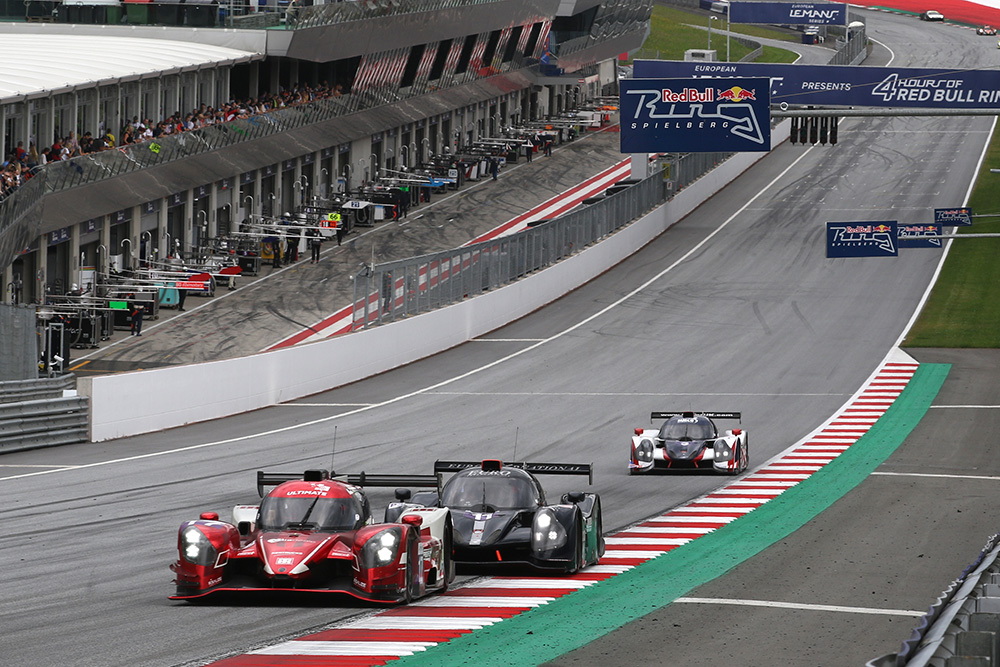
“It was clear too which were their preferred top two or three for new venues and Barcelona was absolutely on the top. To make the decision not to return to Red Bull Ring next season was a difficult decision to take, it has some major benefits but this year we saw one of the downsides, the volume of paddock space makes it difficult to work with the ELMS and with our support series, it is a little restrictive.
“There were other factors too to take into account, the financial aspects came into it too, not the deal we do with the circuit, but rather the distance for the teams to get there, that has a clear impact for them too.
“This does not count out a return at some point to Red Bull Ring, we have a very friendly relationship with the people at the place, it is a very nice circuit and a very nice place to visit but for next year at least we will not be racing there.
“The same questions have been asked of the paddock about a number of other possibilities: Hungaroring, other circuits in Spain, and Italy, and circuits in Germany too. That gives us options for the future but as always, a calendar is always a question of compromise.
In WEC you have a record of seeking and negotiating 2-3 year contracts with circuits, are you doing the same in ELMS?
“We do the same with ELMS. Of course, there are always parts of a contract that allows us to change if something is not correct but 3-year contracts are what we want with our circuits.
“For instance we will be honouring our contract with Portimao, despite the fact that it was not the most favourite of the circuits within the paddock, but that has to be measured against a whole range of other factors including distance, quality of the track, quality of the organisation, hotel facilities nearby, everything. We evaluate the whole picture regularly.
“We know that we have a series, a package, that is operating well, that is popular with our customer and stakeholders and in that situation, of course, you don’t want to make a lot of big changes, but the constant review does lead us to think about small changes, to keep everything in balance, that is the same for Sporting matters, and we’ll have some things to say in Portimao about that.
“We have though already told our teams that most of the major components of our weekends will remain. Same race format (4 Hours), same weekend programme, looking for an early finish to help their logistics, the same opportunity for testing earlier in the race week, usually on the Wednesday. So the teams already have the big picture, at Portimao, we will let them know of some small, more internal, adjustments.

“Wednesday testing is really the only sensible option to allow the teams to prepare their cars afterwards for the race weekend, and for us to undertake scrutineering etc.
And what about grid numbers, there’s clearly the potential for LMP2 to grow even further in 20190 with a number of teams already announcing programmes, and others ready to announce new or expanded LMP2 efforts?
“40 would be the right number for the overall grid, 44 has been a little too many, we have had a couple of times where the paddock has been a little too tight for teams operating at this level.
“Happily, we have another grid in the same package with Michelin Le Mans Cup that has still some space to welcome additional cars so there is a possibility to manage the numbers to some extent.
“Of course, if we get, for example, 41 serious competitors next year we’ll find a way to do it, but if, for instance, it was 48, then we cannot, and should not, do that, because it would affect the quality of the event for everyone in the paddock.
Whilst the numbers this year, and into next, in the LMP classes look very good, with sustained growth, and with the correct upward movement being made between the LMP3 and LMP2 ranks, what are your feelings about the position with the GT ranks – both in the ELMS with the GTE cars and in Le Mans Cup with GT3?
My view on the GT3 in Le Mans Cup is to open the window to teams who are looking to step up to GTE, to give them an opportunity to make a step. Building that (GT3) grid beyond the numbers we have is not a target, the GT platform in Europe is Blancpain, that is clear.

“I think it is pretty cool for drivers and teams looking to build their learning towards ELMS, or WEC, to be able to do so with a GT3, and against LMP3s to learn to manage traffic, the rules, the paddock, before making the step.
“As for the ELMS, we are not looking for a huge GT grid, with Gentleman drivers it will never grow to say 20 cars. But we have five manufacturers in the WEC (in GTE Pro), take out Ford because we understand that at the moment they are not open to selling the cars, that leaves four manufacturers looking to build a GTE market, and the ELMS is a very important component for that, it allows them to find customers that add to the business plan that makes a GTE programme sustainable.

“ELMS is an ideal place for teams and drivers to learn how to compete and fight without having to take on the much bigger challenges involved in the WEC, not just on track but logistically, organisationally and financially.
“We’ll be working to make sure we still have sufficient places available on the grid for GTE.
And is it possible that the ELMS, in a year where we move to a winter WEC season, might see some of the WEC GTE AM teams and drivers decide to race in a continental Series instead?
“The growth in GTE Am numbers in the WEC was because of the Super Season, it is always possible that for a number of reasons, a gentleman driver may opt to race in one or the other, it has happened before and I would be surprised if it did not happen again, the most important thing is to keep them in the Endurance Racing Planet, that’s why we created the pyramid. There are many reasons why those choices are made, availability of time, family pressures, commercial pressures.
“We need to work with them to see what we can
do to keep them in the family.”


