Part One of this four-part retrospective of the GT1 era with Stephane Ratel took a look at the opening phase, the establishment of the BPR and the emergence of the modern era of GT racing with two seasons in 1995 and 1996 of big grids packed with cars initially designed for the road that had been adapted for racing.
The end of the 1996 season though saw the response from a sleeping giant, Porsche, and a car, the 911 GT1 that anyone who saw it immediately realised was going to change everything.
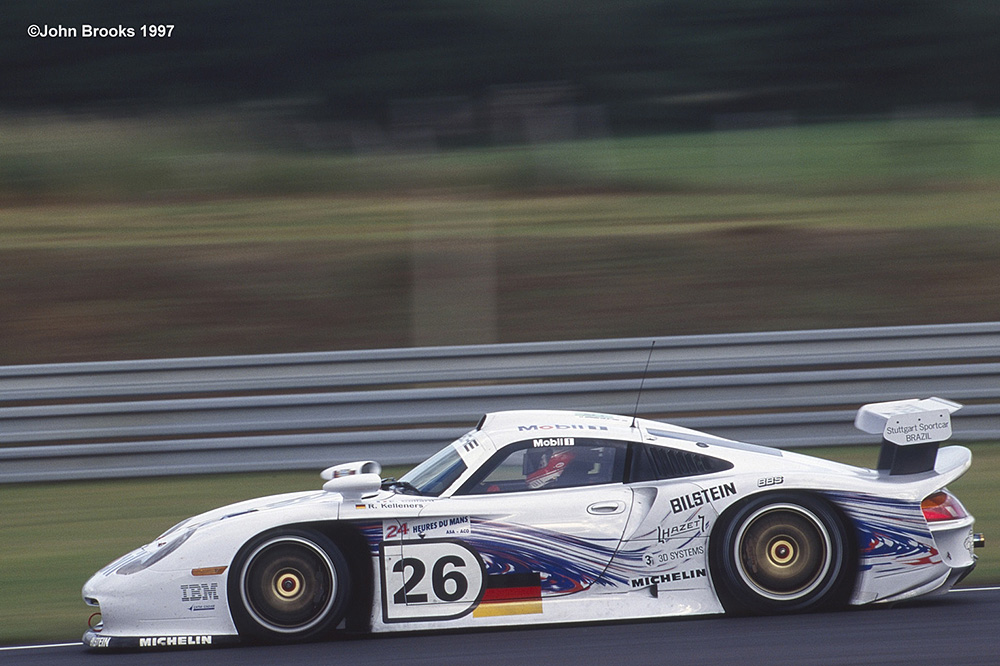
Stephane Ratel, at the joint helm of the BPR, soon to become the FIA GT Championship, takes up the tale once again:
“I met Gordon Murray recently, we were discussing his new car and I reminded him of the day where he said, “Listen, we can absolutely do the same (as Porsche) if you want us to develop the aero – we can come with long overhangs. We can do it but it won’t be the same category as before.
“We went down that road, Patrick (Peter) was, rightly I would say with hindsight, against it, because it was against the concept of GT which was to race roadgoing cars, and not to homologate race cars to go racing.
“If you look at the history of motorsport, it’s happened many times before. A good example was with Porsche producing and lining up 20 or 25 cars to fulfil homologation, effectively the 917 was, in the late ’60s, exactly the same thing in terms of the step forward as we saw in the mid-1990s.
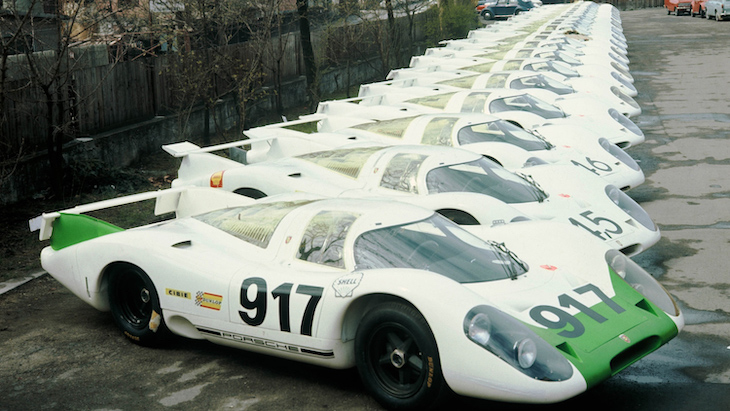
“The rules had a production requirement, they had a radical car that they wanted to get into competition, and were prepared to invest in the production number to achieve that.
“History repeats itself in motorsport many times.”
But Porsche’s willingness to invest in building a small number of premium-priced extreme road cars wasn’t the only factor in defining what would become a period of spectacular development, even more spectacular cars, but a fast track to oblivion for GT1!
“As a coincidence, the DTM/ ITC collapsed at the same moment (at the end of 1996), I think related to an absolute explosion of cost, that translated into Alfa Romeo and Opel leaving.”

“That left Mercedes and important sponsors such as Warsteiner and Mannesman which were very close to to the Bernie environment at the time.
“And it’s probably the fact that the ITC collapsed and that Bernie saw a business opportunity not to lose manufacturer money and sponsor money by continuing it with GT.
“So Porsche had already made a move which we opened the door to, and McLaren was ready to do the same, with Ferrari also wanting to do the same thing with the F50, so I thought we were set to continue with some good racing.

“But then you had Mercedes looking for a new programme and there was money and sponsorship. Bernie was overlooking the championship and that’s why they suddenly had an interest in GT.
“Mercedes showed up with what was an even more radical car. That led to Ferrari saying “OK, it’s not the kind of competition and the type of money we want to we want to invest in this form of motorsport when we’re already in F1.”

“They cancelled their (F50 GT1) programme and then began the story of the next GT1 era, cost explosion from manufacturer competition, three manufacturers: Mercedes, BMW (with the McLaren), Porsche plus Toine Hezemans with his Lotus.

“Putting aside what we now know it was a fantastic year. If you look at the racing in ’97 it was probably one of the most exciting seasons in the history of GT racing.
That, it most certainly was – as anyone that witnessed the long tail monsters would agree, but whilst the cars had huge fan appeal, behind the scenes the cost explosion, and inter-manufacturer bickering was starting to give the Championship an altogether edgier feel.
“There were some tweaks in the regulations, unfortunately, such as the ability for a driver to jump from one car to the next. That favoured Bernd Schneider at the time and caused some upset in the paddock and forced us to adopt the rule in the course of the season.
“So it was not a very peaceful season.
“Beyond that though the fact is that soon the cost went higher than the marketing return that the manufacturer could expect in the series.
“That didn’t last long as BMW pulled out after just one season (with the long-tail McLaren) with only Thomas Bscher continuing as a Privateer. The Lotus effort stopped as well and we ended up with Mercedes against Porsche.

“That, of course, was not enough, even before Mercedes pulled out an amazing display of dominance winning all 11 races (Porsche taking their only victory in the non-Championship, but still hugely significant Le Mans 24 Hours).
“The combination of that domination and cost explosion left the Championship on its knees.
“At the start of 1997 we had something like 56 entries (around half were in GT1), and at the beginning for the ’99 season we had three entries which were the Mercedes, basically GT1 was dead after just a year of the second generation of GT1.
“I have to say, was exciting but brief.”
The GT1 class was dead as an international full season force, the remnants finding their way to Le Mans under the GTP banner. The third iteration of the class though was close at hand!