The passing of Sir Frank Williams on Sunday was a source of sorrow to anyone with a motorsport heart.
One of the very last of the F1 ‘garagistes’ and a man who, together with Patrick Head, conquered the world in F1 terms, 9 constructors World Championships and seven drivers World Championships ranking the team amongst the all-time greats.
It is perfectly appropriate to allow those with far deeper memories and personal relationships with Sir Frank, the Williams family and the Williams Grand Prix team to take the lead in remembering his countless life achievements but here we’ll take a moment or two to look at some of the other milestones that have defined his, and his company’s place in motorsport history.
Williams have been part of success stories in Rallying, Touring Cars and in world class sportscars with seven Le Mans 24 Hours wins at least involving input from Williams subsidiaries.
The Group B rally era saw Williams involved in the design and development of the iconic MG Metro 6R4 in 1981 though the production cars were built on a specialist line at the Austin Rover plant at Longbridge.

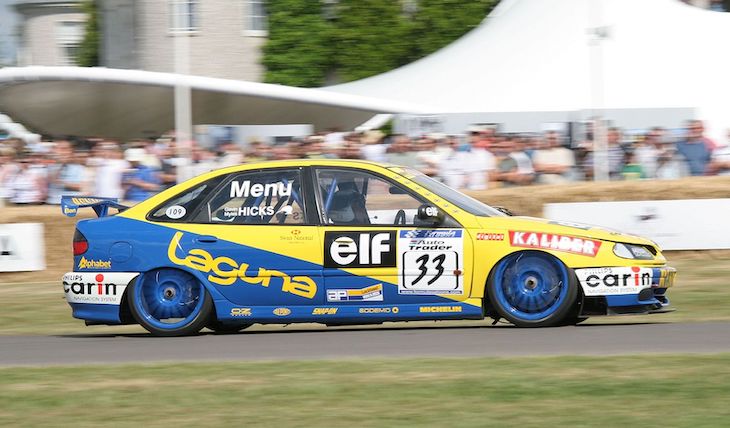
The late 1990s saw Williams join the then booming BTCC grid for a three year programme with Renault, the initially successful Lagunas developed in-house at Williams and the team run by an off-shoot of the core outfit.
Whilst the BTCC programme was underway there was another programme underway, and this time the target was Le Mans.
BMW were a new partner for Williams and commissioned the outfit to design their new LMP car to take on the challenge of Le Mans. As the GT1 formula spiralled out of cost control BMW opted to go down the prototype route, the previous factory programme centred around the (glorious!) BMW V12 engined McLaren F1 GTR had reached the end of its competitive life.
The result was the John Russell-designed BMW V12 LM, again featuring the extraordinary 6 litre V12 with chassis and aero designed by Williams.
The car was a good looking beast but despite mould-breaking advances in its front aero and raised foot box design the car had significant flaws, cooling was compromised by anything other than ideal ambient conditions and the cars would not finish at Le Mans in factory hands, racing with Schnitzer, in 1998.

The following year, with the now ex-factory cars in private hands and benefitting from some development, there would be a fifth place overall for the Thomas Bscher owned, David Price Racing-run Price+Bscher car, an excellent result behind factory car from BMW (see below), Toyota and Audi.
The factory effort meanwhile had moved on to an entirely new chassis, again Williams designed and built, the new V12 LMR with yet more mould-braking advances, in particular the single roll-hoop cockpit design.
The new car would win at Sebring on its debut and for Le Mans a trio of cars were entered, though the Jenny Holzer ‘Art-Car’ would not race.

The open-topped cars were not ultimately as fast as some of the GTP ‘coupes’ but with the Mercedes CLR effort suffering a very public catastrophic series of airborne failures, and the Toyota effort proving to be troubled too with incident and accident, the BMWs came to the fore, the #17 car dominating until a stuck throttle pitched JJ Lehto into the awl at the Porsche Curves when leading by around four laps!
The sister car though would go on to take the win!

The V12 LMR would have race winning success in the American Le Mans Series too, taking six ALMS wins (including at Silverstone in 2000) over two seasons together with a further 13 podium finishes, the team finishing as runner up (to Audi) in both 1999 and 2000 before the cars were retired.
Williams’ influence in sports cars wasn’t done yet though, not nearly in fact.
An increasing interest in hybrid technology saw several projects hit the track:
The 2010 Porsche 997 GT3 R Hybrid had hybrid technology developed by Williams based on using kinetic energy stored in a flywheel rather than batteries.
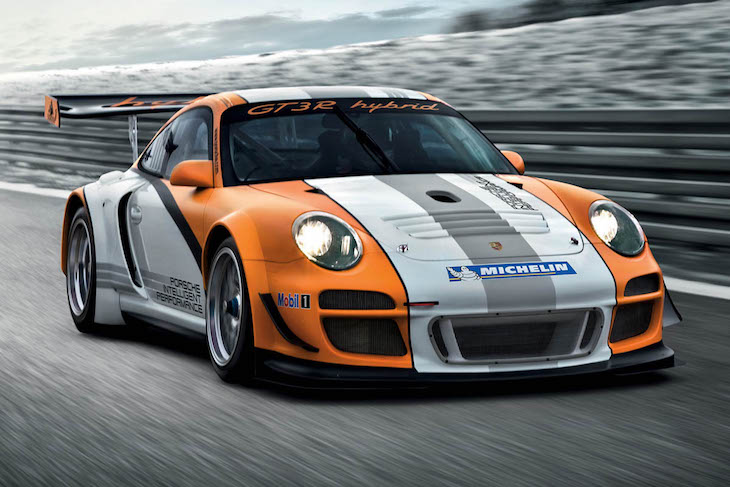
The car led the 2010 Nurburgring 24 Hours convincingly until engine failure spoiled the run in the 23rd hour!
The car won in the VLN in 2011 and made other race appearances in the ALMS and Intercontinental Le Mans Challenge (precursor of the FIA WEC), including a remarkable run at Zhuhai in 2010 where the car finished 6th overall, ahead of all of the other GT1 and GT2 runners.
That came as the hybrid era dated in the FIA WEC and again the Williams-developed flywheel was at the fore, the technology built into the original factory Audi R18 e-tron quattro and serving, in heavily-revised form between 2012 and 2015 before the 2016 car moved to a battery-based energy storage system.

That period yielded a hat-trick of Le Mans wins for Audi Team Joest, a further 8 WEC race wins, and back-to-back Manufacturers and drivers Championships in the 2012 and 2013 FIA WEC.

Another part of the Williams technology family then took the Le Mans helm with a consultancy role on the aero package for the all-conquering Porsche 919 Hybrid, another trio of Le Mans 24 Hours wins, and three more manufacturers World Championships, came with a little help from Williams Advanced Engineering!

And even beyond that, there have been significant contributions, Williams Advanced Engineering were also the wind tunnel partner for the Ginetta LMP1 programme and the Williams name will live on into the next golden age of sportscars with Williams Advanced Engineering the supplier for the spec. battery at the heart of the hybrid system that will help power the LMDH prototypes of 2023 and beyond.

Sir Frank and the Williams family may no longer be directly involved with the company that bears their names, but without Sir Frank’s drive and vision there would have been no company to sell on.
Long may we be reminded of one of the gutsiest men in motorsport!
Pic top copyright and courtesy Formula1.com