


Here’s the second of a three-part series bringing the state-of-play with the new generation of top-class sports prototypes for both the FIA WEC and IMSA into one place.
To recap, the WEC’s Hypercar class includes both LMH (Le Mans Hypercar) and grandfathered LMP1 non-hybrid cars once again in 2022 with the LMDh (Le Mans Daytona Hybrid) cars added to the class in 2023.
Grandfathered LMP1s will not continue into 2023.
In IMSA rules their class will also be composed of both specs of the new car but will not be dubbed ‘Hypercar’.
You can find guides to the differences between the LMH and LMDh cars at the links shown
Part One of the Series – covering the 2022 season – can be found here
Firstly some updates to 2022 since the initial story linked above:
Peugeot has shaken down the new 9X8 LMH ahead of their full test programme with a targeted 2022 race debut date still not revealed.

A seemingly well-sourced article in the French magazine Auto Hebdo indicated that a change to the regulations had pushed the programme back to a point where Le Mans 2022 was looking unlikely. That story though has been denied by senior industry sources, any change to the car would have been the choice of the manufacturer and not forced by regulation.
ByKolles may opt to campaign their new non-hybrid LMH as a Vanwall after the trademark for Germany was registered by an associate company.

Whilst the roll-out of the car appears to have slipped beyond Christmas, the teams two test drivers have been engaged with the programme, Tom Dillmann recently undertook a seat fitting and Esteban Guerrieri told Argentinian media that he has seen images of the car with the car complete.
Scuderia Cameron Glickenhaus The full-season effort in the FIA WEC for a single SCG 007C will see the car run with a new brake-by-wire system, as well as engine tweaks, principally to adapt the Pipo Moteurs turbo V8 to the new for 2022 TOTALEnergies renewable fuel.

2023
Beyond the near-certain continuation of the Toyota GR010 programme into a third season, the first full season of the Peugeot 9X8, potential extensions for Scuderia Cameron Glickenhaus and ByKolles, and the cessation of the grandfathered LMP1 programme for Alpine after 2022 (see part three for details of the Alpine LMDh programme for 2024), the following are already confirmed to be working on programmes for 2023 and beyond:
Ferrari
Ferrari has committed to a two-car, full-season effort in the 2023 FIA WEC with a new clean-sheet LMH rules Hypercar, set to be a hybrid-drive vehicle, operated on the factory’s behalf by AF Corse and designed in-house, Ferrari is still targeting a mid-2022 test programme.

There is understood to be strong interest in adding at least a limited IMSA programme.
Senior sources have confirmed to DSC that there will be no customer cars in 2023 at least.
Porsche
2023 sees the arrival of the first LMDH cars into competition with Porsche already publicly committed to two car efforts both in the WEC and IMSA, Penske will be the service provider for both programmes with bases in Germany and the USA.

Porsche recently ‘teased’ further renders of the new car though the final version is believed to be a combination of three different visuals released by the company:

With frontal styling designed to be reminiscent of the classic Porsche 956 Croup C racer, sidepods based around the general design principles shown in the very early renderings of the car and the rear expected to be close to the images released officially by Porsche earlier this month.
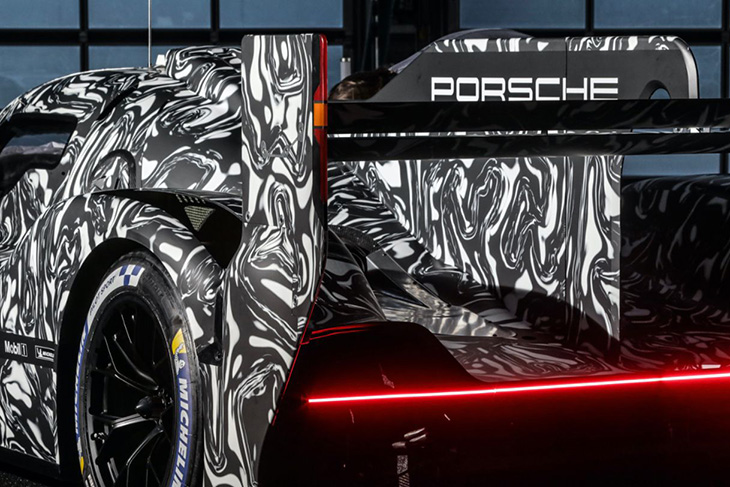
The initial roll-out of the car was delayed from December to the early new Year but the corporate line remains that the required test programme is challenging but achievable.
Porsche have also confirmed both Felipe Nasr (initially understood to have been contracted to Audi’s programme), and Dane Cameron as factory drivers from 2022 – Both, together with others from within the current Porsche factory roster, will play significant parts in the testing and development process.

The Porsche will be based on a Multimatic chassis and powered by a production-based 4-litre twin-turbo V8 used in a variety of models including the Porsche Panamera and Cayenne.
Customer cars will be offered with multiple teams interested in both WEC and IMSA programmes. Customer cars will be available for 2023, believed to be priced at c.2.5 million Euro, but in greater numbers from 2024.
Multiple existing LMP2 and GTE teams are known to be pursuing customer efforts from as early as 2023 with a strong interest in FIA WEC and some interest too in IMSA.
Audi
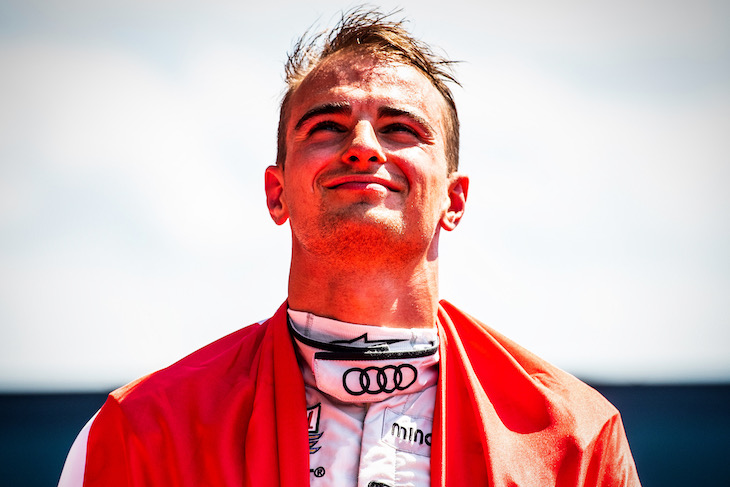
Based around the same chassis and powertrain as the Porsche, though with different homologated bodywork, the planned full-factory efforts in both IMSA and WEC have now been trimmed back to a single factory-run programme in the FIA WEC.

That programme looks very likely indeed to be run for Audi by Team WRT. There are though significant prospects of privateer and/ or semi-factory efforts in both Championships, possibly for 2023, more likely in 2024.
Audi’s roll-out will follow on from Porsche with parallel test programmes likely from the Spring.

Rene Rast and Nico Mueller are the first-named factory drivers for the programme.
Acura/ Honda
Acura’s programme is now confirmed as an Oreca-chassised LMDH and will include cars from both current factory-supported DPi teams: Wayne Taylor Racing and Meyer Shank Racing.
Also confirmed is that the factory-supported programme is for full-season IMSA only under the Acura brand, with no announcement as yet of any plans to contest the 2023 Le Mans 24 Hours with the cars, though both teams are known to be keen to add the French classic to their programmes in the future.

Sources have confirmed to DSC that there are plans to offer customer cars though this may not be until 2024.
Whilst DSC is aware of interest from FIA WEC teams in running privateer or semi-factory cars, most likely under the Honda brand, there are no plans known at present that extend beyond the commercial evaluation stage.
BMW
Confirmed with a two-car IMSA-only effort with a factory-backed LMDH team from 2023, the chassis partner is Dallara, Team RLL are now confirmed as the factory team.
BMW has released renders of the front of the car which feature the latest ‘broad-nostrilled’ version of the BMW grille. That look will make its way onto the car for 2023.

DSC understands that the vast majority at least of the drivers for the effort will be sourced from within the current BMW factory driver pool.
No WEC or Le Mans programme has yet been confirmed but there continues to be a very active interest in a semi-factory effort for WEC from 2023 from at least one serious player.
Cadillac
Cadillac has confirmed their intention to enter full-season, Dallara chassised LMDh cars in both IMSA and FIA WEC from 2023 with Chip Ganassi Racing set to be the primary factory partner team in the FIA WEC, and with a parallel factory-blessed IMSA effort by Action Express too though the number of cars for each team is still unannounced.

The render above, released at the time of the confirmation of the programme, is not an accurate representation of the look of the forthcoming car!
Action Express has made clear their intentions to seek an entry for the Le Mans 24 Hours for the first time in the team’s history.
The programme is targeting Spring 2022 for the first roll-out with an extensive test programme thereafter.
Ligier
Whilst Ligier does not have an OEM partner for LMDh, the company is a key industry partner for the construction of the Peugeot 9X8 and will produce a 2024-spec LMP2, the ‘spine’ of which will be available for any prospective OEM to adopt as a basis for an LMDh (pic below is of the 2017 LMP2/ Dpi – chassis derived JS PX).

Ligier intends to be early to market with their LMP2 and hope to steak a march on their market rivals, as well as, they hope, catching the eye of a manufacturer for a hoped-for ‘second wave’ in LMDh.
Details of progress for Alpine, McLaren and Lamborghini, plus the proposed Fangio LMH programme and the current status of interest from both Geely and Tata will be included in Part 3 which looks at 2024 and beyond.


