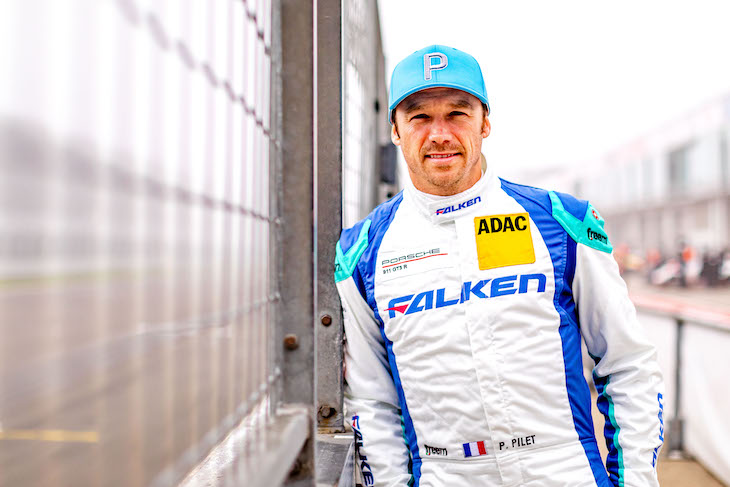
Double duty at any race meeting is tough, but double duty at the Nürburgring 24 Hours is another level. Only the very best are called upon to do it and Patrick Pilet certainly fits the bill.
As a result of a Porsche driver reshuffle elsewhere, he’ll race both of the Falken Motorsport SP9 class Porsche 911 GT3Rs this weekend. He took time out with the DSC Editor to preview the event.
Let’s start by talking about this race and the circuit. Tell us a little bit about your feelings on the Nurburgring?
“I mean, first of all, I love this track, for me is the most amazing track in the world. I love this race. If you compare it with other races like Daytona or Spa or Le Mans, it is totally different. First the atmosphere is different. Everything is a bit strange, when you arrive it is really relaxed. And you have to relax because the track is demanding so much. But yeah, the atmosphere is always really cool, and so open with a lot of spectators and entertainment around the track.
“But the track is demanding, it is extremely hard, you can’t make mistakes, you have to push. The weather is always chaos and changing so much, so quickly. But as a driver it is the best race to show what you can do, you can really make a difference. Because like I said, the weather is changing all the time. Sometimes you have to survive for example, with slick tyres and 30% of the track is fully wet and at 70% is fully dry, so you cannot run anything else other than slick tyres. And you have to survive, sometimes it gives you a feeling you’re really slow.
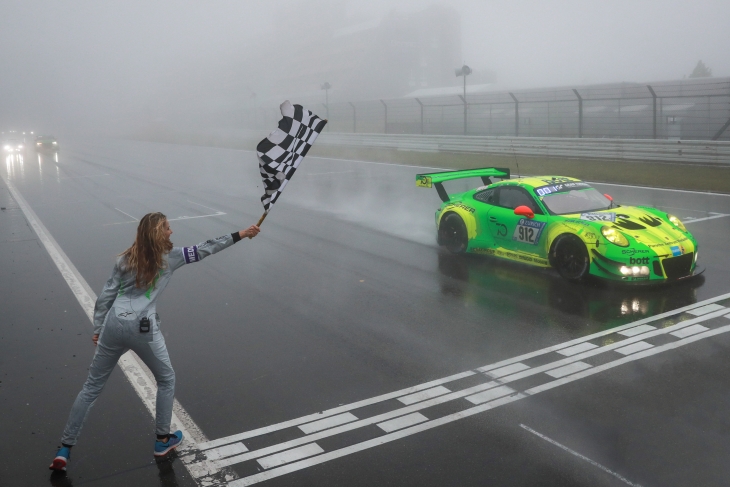
“For example, my experience in 2018 when I won, it was the first time I drove in the rain. And when I drove the car, I had to push because we have a puncture in the first lap. So we pushed all the time and I was completely lost. I said to my engineer, ‘I don’t know, I don’t know my pace, I feel so slow. And I don’t know what to do, just tell me’ And he answered to me ‘you are 25 seconds quicker than everybody else on track’. So maybe I pushed enough!
“Sometimes you get lost and you can be off the pace, or flying without having the feeling of flying. You have to stay extremely calm and focused all the time. That’s why as driver, it’s like the best race to win. When you’re on it, it’s the best race to show it.”
When you’re on it, it’s the best race to show it.
What does it take out of you physically and mentally? Clearly, the challenge is there, the actual danger is there and at a higher level than just about anywhere else. What are the challenges physically or mentally that this race presents you over 24 hours?
“I mean, physically when you have four drivers in your car, normally it should be fine. Especially if you drive only in one car…
“I remember my first lap on on the Nordschleife was with Manthey. I start the race on pole. I had two laps on the track before so I didn’t know the track at all. And I remember is that Olaf (Manthey) told me, ‘you have to give back the car, minimum P6, if not, you will not drive for me again.’ I was like, ‘Okay…’
“I remember I start the race, I had a good start, I did my full stint and when I stopped, I was so exhausted. This is partly because I warmed the tyres from the grid until the end of the Nordschliefe. So for 20 minutes, I was warming the tyres. So my tyres were really warm, but nobody told me that I have to warm the tyres only in the last four or five km! So I just did it like a normal track, but it’s not a normal track. And I was so exhausted because of the concentration, everything is coming so quick. And you don’t want to make any mistakes; when you have more experience, you find time to relax yourself, in the straights, in some parts where it’s flat after. But when you don’t know the track, there is a lot of tension all over your body. So it’s quite difficult. But with experience, you will learn how to relax or to take more time for yourself.
“Beyond that it really depends on how the car is and how the conditions are. You have to be extremely focused, okay, because the level of traffic means there is no room for any mistakes and you cannot hesitate. So for me, it’s hard physically for sure. But for me, there are other races like Spa for example, where it can be harder. But mentally and about the focus and concentration, it’s the hardest race you have in the world.”

Tell me a little bit about the additional challenges when you’ve got to switch between cars. Is this the first time you’ve driven two cars in the N24?
“Yes, this is the first time I will drive two cars. So it will be a bit strange because even if the colours of the two Porsche are the same, I’m sure both won’t have the same setup because there are always differences so you have to adapt yourself. So it’s not just a question of sitting in a different seat, but it’s a question of handling the car. There is always a small difference so you have to always take a bit of time. Let’s say I will have always the GP track to learn the car and see what the difference is. But then when I arrive on the Nordschliefe I have to be on it. So it will be challenging but I’m really looking forward to it, I’m fully prepared.”
What about traffic? You mentioned the Spa 24, and there’s traffic there but with cars running at broadly the same speeds. This is very different….
“Yeah, because I mean, there are some parts where you have over 100 kph difference between cars. There are really small cars in this race and hats off to the drivers because, to be honest, I would never drive a slow car at the Nordschliefe because seeing drivers like me coming in the mirror would be a disaster. So I have a lot of respect for these guys and you have to respect them. You also have to know that there are gentleman drivers and people afraid in the car so you have to adapt yourself.
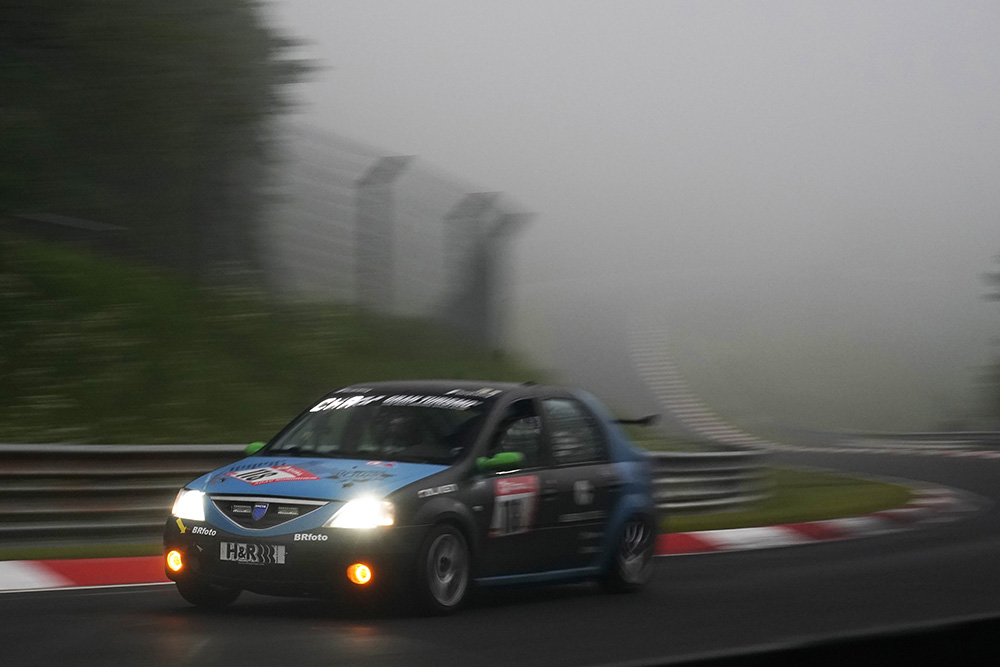
“Elsewhere if you talk about the differences between LMP and GT it’s 30-40 kilometres, not more. So it’s a huge, huge difference that you always have to consider you always have to think ‘okay this guy, what he can do with this car, so where can I go without disturbing him or where will he go in this line?’ Your brain is always calculating a lot of things just to reduce the chances of an error. Traffic management is key, often there can be a 10-second difference in traffic. You also you have to see where the performance of the car is and where you have to push and everything.
“I remember in 2018 when we had a puncture on the first lap, we lost four minutes. So it was flat out from the beginning and to the end, and we had to hope everything went perfectly, we had no other choice. But sometimes there you have to accept that you need to be a bit slower and lose a bit of time because you know, you can get this time back at one point.
“That’s why it’s really important to be really connected with your engineer and the guys in the pits and trust them to give you the best information possible during the race.”
Has the introduction of the ‘Ring permit been successful in your eyes? Have you seen a difference in the driving standards of some of the less experienced drivers?
“I think so. I think it’s better because when I started I went straight into a Porsche RSR so it was different. To be honest, I’m happy to start like this because I’m not sure I gonna like to drive slow cars. But I think everything is making a difference with the test online to remember the rules. It’s so different to all the other series and the track is so different so it’s good that they introduced this permit because it helps the guys to learn the track and to learn how the race works. The issues are when people miss out on their permit, because they didn’t get the laps in. It should be a bit more flexible on some drivers when you see that they are really on the pace, but is not only about pace it’s also about knowing the race. So I understand.”
I will have always the GP track to learn the car and see what the difference is. But then when I arrive on the Nordschliefe I have to be on it.
It has always seemed to me, even in recent years, that when I am in the press room, there are certain outlets strangely absent… Do you think the race gets the international attention it deserves?
“Internationally I don’t think so. For German manufacturers, yeah, sure. For the people who drive there, they know, yeah. And the competition is so high now with so many cars with really strong line-ups. Yeah, for me, it’s underestimated for sure. It is the most difficult race to win. Clearly, by far, it’s so tricky, so unpredictable. And even if you have the best line-up, the best car, you can still lose the race just because so many things can happen.
“So yeah, it’s a bit sad that is not more international or one of the most famous races in the world. It feels like it though, as the atmosphere is unreal, with hundreds of thousands of people on the grid. And everybody respects you, respect the cars and everything, it’s not chaos. It’s a bit like the races in the USA. It’s an old school race but with new cars, new teams, new competition and it’s extremely professional. It’s definitely underestimated.”
Final question for me it’s about Falken tyres. How different are they from the Michelins that you won with at Manthey in the past?
“Yeah. So most of my career has been with Michelin, it’s a really specific tyre, and I learned more and more. I have also had experience in the GT World Challenge with Pirelli, and in LMP2 with Goodyear and the Falken is also a different kind of tyre. They’re extremely interesting to jump into.
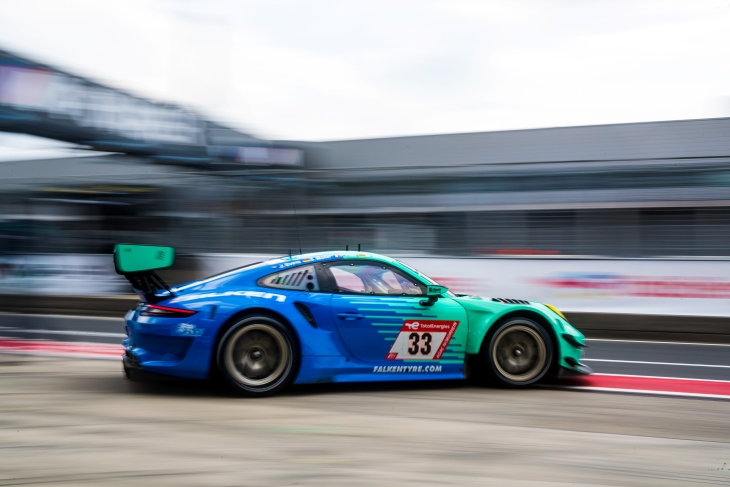
“I was lucky because I directly felt good with these tyres, they are really good tyres, but you have to forget everything you have learned from those other manufacturers because it works differently. I think the conception and everything is quite different but I have to say they did a really good job. We have a really strong tyre. In NLS 1 I was really, really happy with the car and the tyres.
“They work extremely hard to give us a chance for this race. It’s always tricky because of the links with Japan, and the issues with transporting goods. But to be honest, Falken has done a really good job to give us the chance to fight for the victory at the 24.”
Images courtesy of Falken & Porsche