Ask a national GT series privateer owner/driver about their ultimate goals and the answer in the vast majority of cases is, “To get to Le Mans!”
While the ebb and flow of factory programmes may change the event’s complexion, the ‘amateur’ entrant remains a core element of sportscar racing’s DNA, preserving the very essence of 1923’s seminal endurance event.
With the Automobile Club De L’Ouest’s central 24-Hour event setting the guiding principles, its 2011 edition effectively set the scene for the inaugural FIA World Endurance Championship in 2012. The erstwhile LM GT2 category would be split: LMGT Endurance – Pro, and LMGT Endurance-Am. Restricted to one-year-old cars, GTE-Am would level budgets and performance, requiring a minimum of two drivers per crew to hold either a FIA silver or bronze ‘Amateur’ licence; a strategy to boost grids at events other than the 24 Hours and direct factory interest to its new GTE-Pro variant.
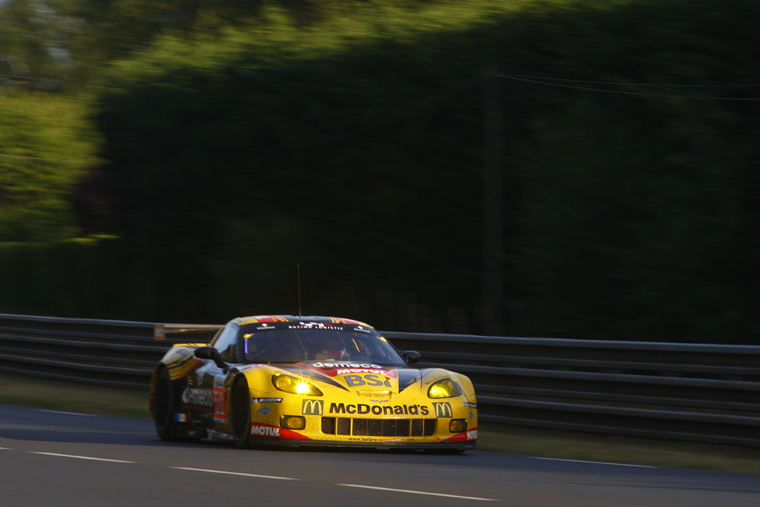
An initial entry of thirteen cars was headed by Larbre Competition’s Corvette C6.R, the French outfit taking a class 1-2, its second-string Porsche 997 GT3 RSR in support. Robertson Racing proved that gritty privateer determination and simply hanging in there could deliver a Le Mans podium finish; third place with its grunty, no-frills Ford GT-R clearly a dream come true for the recently passed David Robertson when interviewed in the moment by this writer.

Similarly, Felbermayer Proton team’s Porsche 911 RSR enabled enthusiast and now co-license holder Patrick Dempsey to cut his Le Mans teeth in its synonymous #77 entry. The German based outfit remains at the backbone of GTE-Am, campaigning as Dempsey-Proton Racing and/or Proton Competition, regular driver Christian Ried the only competitor to have appeared in every Le Mans 24 GTE-Am field and indeed every WEC race since.
Other highlights at the French classic have included the marvellously spirited Flying Lizard Motorsport and staunch Krohn Racing campaigns representing the USA.
Whereas this year’s bumper 23-car Le Mans entry (notwithstanding three reserves) is typically dominated by European teams and drivers, American representatives such as Hardpoint Racing (albeit now effectively an entry transferrd to Absolute Racing) and Weathertech Racing’s Porsches fly the stars and stripes. Similarly, Ben Keating (who has piloted SRT (Dodge) Viper, Ferrari, Porsche, Ford and Aston Martin entries in class), and Cooper MacNeil are proven Le Mans regulars.

The privateers’ traditional brand of choice, Porsche Motorsport’s support for the category has been solid throughout, notching up three class victories and six podium finishes. GTE-Am achieves continuity for the French classic’s most successful overall manufacturer, its 4.0 litre Flat 6 911 RSR derivatives well suited to private budgets. With homologation set at 100 manufactured units per year the business model has been a lucrative one, the Weissach operation establishing a factory driver model now the adopted norm for other marques’ competition departments at this level. It is a solid form of marketing, hard-wired to sporting brand equity and product development. Supplying professional driver services to teams can be part of the deal too, as recently retired factory hot-shoe Patrick Long once told this writer, “We’re here to sell cars, right?”
However, it has been Ferrari taking more of the spoils. Without the headline grabbing overall victories of the top prototype category, the Prancing Horse has steadily built a position of strength in GTE-Am, mirroring the pace and reliability of its ‘semi-works’ GTE-Pro counterpart. Four wins and fourteen podiums in GTE-Am demonstrate the suitability of the 3.9 litre turbo 488 GTE around La Sarthe, fifty percent of the 2022 GTE-Am entry list featuring the Ferrari 488 GTE EVO. With five podiums and a win (finally, last year!) for its own entered cars, the AF Corse team has been the foundation of Ferrari’s recent success at Le Mans, preparing and running many a customer entry too.

British race fans can look forward to continued Aston Martin presence through its factory supported Northwest AMR and, former winners, TF Sport entries. 2017 class winner JMW Motorsport’s Ferrari is a perennial favourite, a certain Renger Van der Zande in a starring role this year, while GR Racing could dodge its undeserved bad luck at Le Mans to get the best from its Porsche, which rarely lacks pace. All four teams have been committed class campaigners in various guises over the past ten years.
Cast in a supporting role they may be, but look closer and see plenty of familiar names inside the GTE-Am cockpit guaranteed to deliver pace and close racing. Then there are the rising stars: Sebastien Priaulx, Mikkel Jensen, Nick Cassidy, and more… any result at the 24 Hours of Le Mans is a heck of a career booster and there are LMH and LMDH seats around the corner (just ask the aforementioned Dane!). Throw in the strategic challenge of balancing Bronze driver performance – some now establishing their own ‘super bronze’ domain – and this really could be Le Mans 2022’s hardest fought category.
Stability and variety have been key to Le Mans’ GTE-Am success, paving the way for 2024’s GT3 Pro-Am evolution. But as its penultimate Le Mans outing, 2022’s Le Mans GTE-Am slug-out will be an unmissable cracker!