We write a lot about, and talk to the drivers, team managers, Heads of Motorsport around our sport, but often leave out another group who truly make factory sport happen.
They are the senior managers that head up the companies as a whole and ultimately make the decisions as to whether motorsport will be part of the marketing and/ or R&D strategy for their brands – or not!
So it was a real pleasure to have the opportunity to chat in-depth to one of the most influential women in the automotive industry.
Linda Jackson is the CEO of Peugeot, moving to the brand in early 2021 after almost 15 years in senior positions at Citroen (the last 6 of which she served as CEO).

So Linda – is there any emotional attachment to this programme, and to the sport?
“It’s great to actually be at a race and see it. But to be honest with you, I’m a businesswoman, as well. And I like the fact that I can marry what is really exciting visually with all of the technology that I can potentially offer to customers. And of course, it’s a fantastic way for me to talk about Peugeot across the world.
“So personally, yes, I do love to go racing, but at the same time, I see a real benefit for us in terms of really pushing the name of Peugeot across the world.”
So what are the benefits of a programme like this to a brand like Peugeot?
“The real benefits for us, why do we do it? There are a number of reasons. But one of the most important is that Peugeot Sport, and motorsport, is a real laboratory for technology. So we can develop technologies for the 9X8 which we can then take and potentially put onto the road cars, the cars that you and I can all enjoy.
“So for me, it’s about that creativity, an innovation that we can really test out, and this is the laboratory. And that benefits all of my customers in the end. The second benefit is, of course, that it’s a great way to talk about Peugeot because these races are international. I mean, obviously, we talk about Le Mans. But you know, we’re going to be in Monza, Fuji and so on. Peugeot is a global brand and therefore it’s very, very good for me to be able to talk about Peugeot worldwide.”
Why did you choose FIA WEC?
“That goes back to what we were just saying about technology because we wanted to go into a motor sport, but we wanted to make sure that we were associated with a motor sport that was in line with how the whole world is moving, perhaps moving quicker in Europe than it is in some of the other markets.
“So this was about how do we link a motorsport discipline with electrification. And, of course, when the ACO and the WEC organisation said, Okay, we’re going to change the regulations. We want to have new regulations and we want to be able to look at technologies that can go on a hypercar but that can also go on a road car, associated with efficiency and electrification. We said, aha, hold on a minute that marries beautifully. Let’s go!”

One of the things that the WEC manufacturers have not always displayed is marketing activation against their racing programmes.
Peugeot have shown from the very start that you do intend to activate this programme?
“It’s a big investment, let’s be honest, and I need to get my return on investment, to state the businesswoman’s side of it!
“So I have to make sure that I align Peugeot the brand which sells 1.2 million cars a year with Peugeot motorsport, because that’s the whole point.
“So it’s very important for me, to integrate the two and to use Peugeot motorsport to talk about Peugeot.

“I think it’s wrong, in my opinion, to separate the two because I think there’s a real joining together, and not to contrive stories, but to really weave “Why are we doing motorsport? Why are we doing Peugeot Sport?” And of course, it’s to showcase the technologies, the inventiveness, the innovation of Peugeot, which obviously has a spin off on my brand. So we need to combine it all seamlessly.”
What about at the races? What are you planning to achieve with that activation ‘on event’?
“For me it’s very important that we have a presence obviously, I mean, for example, we were at Le Mans this year even before we were racing. Because we think it’s important to learn from the experience, but be to start to really talk to Peugeot fans, but also the other motorsport fans to start the programme of with them too.
“And then when you move to next year, when we’re in the races, when it’s important that we’re there, that we’re inviting people, we’re including, not only the sponsors, but also key influencers, key key customers, etc. And that’s when you marry the business with motorsport, and that’s important for us.”

There’s never been a time when there’s been more political focus on the automotive industry. It was already tough to get a major motorsport programme across the line with any major OEM. It’s clearly tougher now! Can you quantify how tough it is both to get something like this signed off? And then to maintain it over the medium term?
“Well, you know, every decision we make is a business decision. And you have to put the emotion to one side, and we may have emotion!
“And my boss is very, very keen on making sure that each brand, of the 14 (across Stellantis) chooses what’s right for their brand. And so we looked at it, and we said, what’s the return on investment of doing this? Quite simply what’s the maths of doing this?
“And when you look at the investment we make, and the return that we can have? So yeah, of course, it’s like any marketing decision to be honest with you, or any decision you make in business that we make, does it have a return on investment? Is it really going to push the Peugeot brand? Can we integrate it into the Peugeot brand values, etc. And that for me, is how we get it through. And that’s true for anything that I would want to push through for Peugeot and it would be true for any other brand.”
Is this budget ring fenced budget from Peugeot or is there some Stellantis group money?
“No, each each brand chooses a discipline. They have to fund that and they have to justify it. So that’s my funding and that’s also why it’s very important, of course, to align with partners and sponsors, because that’s part of the way that you can make this work.”
What is the process within the group of compare and contrast, if you like, of the success (or otherwise) of those different programmes, because there’s a lot of claims made, amd this is where a group has a potentially major advantage – you will be able to see whether the claims made produce the results they promised?
“Let’s be honest, there’s a lot of competition within the Group. It’s friendly competition. But at the end of the day, the real competition is outside to Stellantis. You know, we may joke inside, but outside, that’s where the competition is. And that’s what it’s all about – Are we getting market share? Are we getting market share profitably, which is clearly the thing to do.
“We are obviously testing and monitoring what we’re getting in terms of the return on investment for all of the programmes, we have to keep justifying them. But the competition is outside.”
So for clarity, you will have the opportunity to ask the individual brands to compare and contrast the commercial success of this FIA WEC programme with other programmes undertaken by other brands withing the Group?
“Absolutely, and that is done at the very highest levels.”
The 9X8 is an extraordinarily different car – was the look of the car important?
“It was important for me that we really put design into it. So design, and engineering, and marketing all work now as a team. But that was important, because you know, you can create a hybrid car in a number of ways.
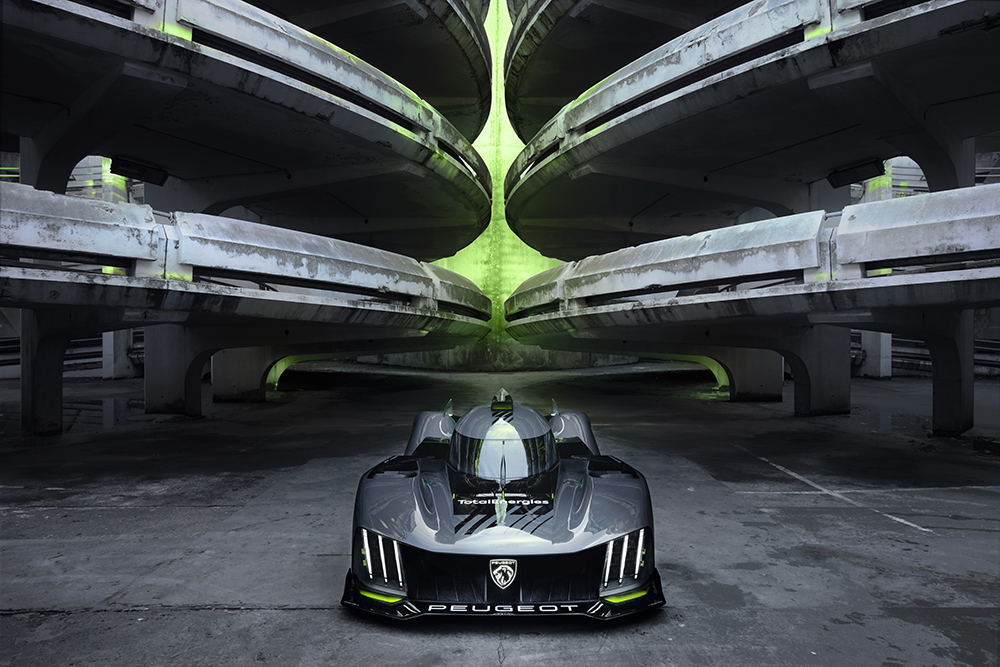
“We wanted to create a racing car, that was beautiful. Now, you may say, Well, why are you doing that? But that’s following exactly the values that we have as Peugeot. So we wanted to do something that was a bit unconventional, no rear wing, which was I have to be honest, a surprise when they first told me about it, but you know, it works and I trusted them.
“We wanted to make something that really was a car that was really bold, unique, and we hope beautiful, and I think I think we’ve delivered, I think we have, it’s pretty close to what we first showed 11 months ago.”