DSC has been a leader in expansive coverage and analysis of the Autobacs SUPER GT Series since 2017, and that commitment to the series remains unchanged as the 2023 season gets underway this week. One of our favourite works before the start of every season is our in-depth annual preview of the runners and riders in both classes.
And there’s no better place to start than in the GT500 class, the top category of SUPER GT. For a few years, GT500 has been able to claim itself as the fastest class in all of professional sports car racing – up there with Le Mans Hypercar, and the new LMDh platform.
2023 is the final season of the current four-year cycle of GT500 technical regulations, which was originally the capstone of a joint-produced set of regulations between SUPER GT and the DTM known as “Class One.” But while DTM has long since pulled the plug and gone to the GT3 standard, SUPER GT continues to blaze its own trail. Based on the concepts that we’ve already seen, the future of the GT500 class will be a continuation of its super silhouette GT racing heritage.
On the surface, there’s nothing radically different about this current crop of 15 GT500 machines built by Toyota, Honda, and Nissan – or the twin-turbocharged, two-litre inline-four Nippon Race Engines that power them.

Instead, the major change is what fuels these cars. SUPER GT has partnered with ETS Racing Fuels to introduce a 100 per cent renewable, carbon-neutral fuel (CNF) for the 2023 season. This new fuel will make its debut in GT500 this weekend at Okayama International Circuit.
Japan’s “big three” have had the chance to test the combination of their racing engines and the new CNF for nearly a year – first in their laboratories, then on the track. But now their greatest test is right around the corner. When victories and championship points are at stake, we’ll soon know which of the three manufacturers has done the best at maximising the potential of their engines.
Tyres are also a distinguishing trait of SUPER GT – one of the few major racing championships that still allows for open tyre competition. In GT500, Bridgestone has long been the dominant tyre for most teams, competing against the likes of Michelin, Yokohama, and Dunlop (Sumitomo). Optimum performance has been the goal of these tyre manufacturers for a long time. But with fewer sets of tyres allowed per race meeting this season, durability and longevity have become more important.
Yet again, SUPER GT’s premier class boasts a grid filled with colourful and captivating cars, and driving talent that can stand up against the very best that the top classes of any other series have to offer.
Nissan
It’s safe to say the debut of the new Nissan Z GT500 went as well as the manufacturer could have envisioned. The new RZ34-generation Fairlady Z reeled off three wins in its first year, culminating in their first GT500 Drivers’ and Teams’ Championships since 2015 – a period when Nissan, as a global entity in sports car racing, was riding as high as they ever have.
The Z’s streamlined shape cured many of the ails that the R35 GT-R experienced late in its term of service, particularly its excessive drag. Now the question is whether or not the Nissan NR4S21 engine can cope with the change to carbon-neutral fuel. They had no major issues in testing, but like their rivals, Nissan was guarded about their chances.
In a very rare decision, Nissan opted to retain all eight drivers from their 2022 roster into 2023, all at the same teams they drove for last season.
#1 – Team Impul: Kazuki Hiramine / Bertrand Baguette (Bridgestone)

For the first time in 27 years, Team Impul’s iconic, world-famous ‘sonic blue’ Nissan will carry the coveted number one plate bestowed to the reigning GT500 Champions. In 2022, Kazuki Hiramine and Bertrand Baguette scored four podium finishes – none more exhilarating than their win at the Suzuka 450km from 15th and last on the grid, in which they survived several close calls with catastrophes along the way. Second place in the final round at Mobility Resort Motegi was all they needed to clinch a long-awaited, undisputed championship.
It was a season that justified Baguette’s commitment to SUPER GT racing despite the long and difficult periods spent away from his family. It also justified his decision to transfer to Nissan after eight seasons at Honda. His hard-charging style was the perfect fit for a team that always encourages its drivers to race with the same fighting spirit as its founder, the legendary Kazuyoshi Hoshino.
Hiramine has become one of the modern underdog success stories in all of racing. Ten years ago, he was a disillusioned, burned-out 21-year-old “ex-racer” who was working odd jobs as a postman and line cook. Picked up by JLOC as a third driver in 2014, he soon went from GT300 speed merchant at JLOC and Kondo Racing, to the unlikely ace of Team Impul in the GT500 class, to a champion and worthy disciple of “Hoshino-ism”. Hiramine’s out to prove that his whirlwind ascent to the top of GT500 wasn’t a fleeting moment, but the start of something much bigger.
There are two significant changes at Team Impul this season, one with more sentimental value than the other. The Calsonic brand name that is universally synonymous with the Impul team and their blue Nissan has been phased out by title sponsor Marelli. It’s a sad moment for generations of JGTC and SUPER GT fans who grew up with the “Calsonic Skyline/Z/GT-R” as an ever-present figure in their lives – but one can argue as long as the hue of blue remains the same, then the Calsonic spirit will still endure.
The other change hints towards an expected passing of the torch between generations. Hoshino will still be involved with his team as General Manager and Representative Director. But his son Kazuki will have a more involved leadership role as he ascends to the coveted role of Team Director. Kazuki Hoshino is an accomplished driver in his own right, a two-time GT300 Champion driver. He will be tasked with continuing Impul’s standard of excellence for future generations, starting this season.
#3 – NDDP Racing: Katsumasa Chiyo / Mitsunori Takaboshi (Michelin)
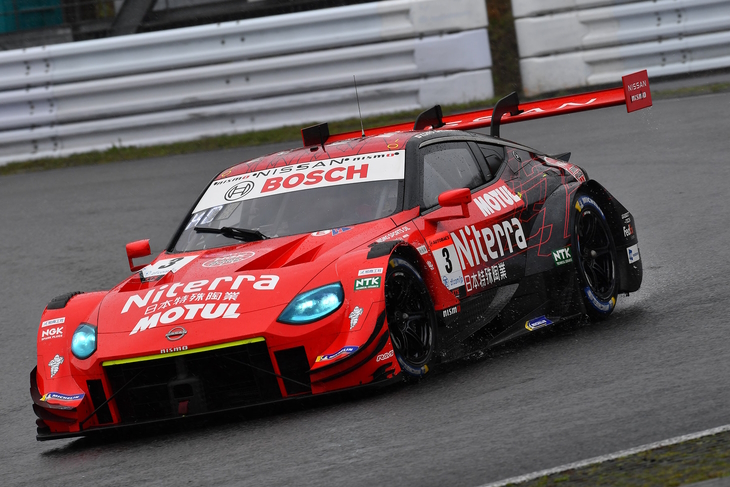
NDDP Racing is, in all but the entrant name, the second car of the flagship NISMO racing team: Operated out of the NISMO factory, sharing an exclusive Michelin tyre contract, with a similar livery to the number 23 car. Last year, the “junior” team surpassed the “senior” team on the track with two victories, and they finished second in the championship standings, just a handful of points back of Team Impul.
The two drivers are graduates of the old Nissan Driver Development Programme after which this team is named. Katsumasa Chiyo is by far one of the NDDP’s most renowned alumni, known for his success in international GT endurance races as a NISMO athlete in between stints in SUPER GT. Last year, he finally captured his first GT500 class victories which had been long overdue and rediscovered the form that made him one of global sports car racing’s prime-time performers.
But Takaboshi was the breakout star of 2022, in his first real opportunity in a competitive GT500 ride. After a terrifying crash down the front stretch at Fuji Speedway, Takaboshi bounced back three weeks later to take a dominant maiden GT500 win at Suzuka.
Chiyo and Takaboshi followed that up with an impressive wet-weather victory at Sugo, aided by a new Michelin wet tyre with a striking asymmetrical pattern. In the last race at Motegi, a costly first-lap mistake from Chiyo may have been what ultimately cost them their first championships. Can this team build on their awesome 2022 season and go one position better in 2023?
Again there are no substantial changes to the squad led by long-time engineer Jiro Shimada, but they do have a new title sponsor, Niterra – the new name of NGK Spark Plugs’ holding company.
#23 – NISMO: Tsugio Matsuda / Ronnie Quintarelli (Michelin)

NISMO is the most successful team in the history of JGTC/SUPER GT racing, with more race wins and championships than any other organisation. For the tenth consecutive year, the #23 Motul Autech Z will be driven by the two most successful GT500 pilots in the history of the sport: Two-time GT500 Champion and all-time GT500 career win leader Tsugio Matsuda, and record-setting four-time GT500 Champion Ronnie Quintarelli, who won back-to-back GT500 titles in 2014 and 2015.
But surely, no golden combination can shine forever? NISMO went winless for only the second time since Matsuda and Quintarelli joined in 2014, wading through an inconsistent season filled with costly driving errors and mechanical woes to finish seventh in the table.
Matsuda committed multiple, uncharacteristic mistakes during the two rounds at his home circuit, Suzuka. But despite the individual rough patch, the 23-time race winner has the full support of his entire team – including Quintarelli, who’s still as quick and aggressive as he was during his mighty run of four championships in five seasons.
Team Director and title-winning Chief Engineer, Takeshi Nakajima, is a worthy successor to the late Yutaka Suzuki. Nakajima begins his second season in his dual role.
Both Matsuda and Quintarelli will turn 44 years old later this year, as Matsuda begins his 23rd full season as a GT500 driver and Quintarelli begins his 16th. “Retirement” isn’t in either of their vocabularies, but in SUPER GT, we often never know if a driver has run their last race until weeks or months after the season is over – which is why the NISMO faithful should cherish every race that this golden combination has left.
#24 – Kondo Racing: Daiki Sasaki / Kohei Hirate (Yokohama)

Kondo Racing has long been the underdog of the Nissan GT500 stable, owned by rock star and ex-racer Masahiko Kondo. This team has won its share of races but has never seriously competed for a championship. In fact, Kondo Racing has never finished in the top six in the championship standings since debuting in 2006.
After some exceptionally lean years, Kondo Racing had a bounceback 2022 season – aided by a step forward from their long-time tyre partners at Yokohama Rubber, and the addition of two-time GT500 Champion Kohei Hirate to the team alongside Daiki Sasaki.
Sasaki is now starting his tenth season as a GT500 driver, despite often racing under threat of his place in the premier class. He’s had his best years at Kondo Racing including a two-win 2016 season, and standout performances at Fuji and Autopolis did more than enough to convince Nissan to keep him around for another year.
Hirate is back for his second season at Kondo Racing, his fifth as a Nissan GT500 driver – but only does so as a “Plan B”. The 37-year-old was already consigned to the end of his GT500 career until the planned promotion of two-time GT300 Champion Kiyoto Fujinami had to be withdrawn.
A popular and knowledgable driver, Hirate and his supporters hope that this sudden reprieve can re-energise his top-flight career in the same manner as his initial transfer to Nissan from Toyota in 2019. It wasn’t all that long ago that he was touted as Nissan’s GT500 ace of the near future, after all.
Honda
2023 marks the end of an era for Honda in the GT500 class. At the end of this season, the second-generation NSX-GT will be retired as Honda’s GT500 challenger, to make way for a new-generation car based on the Honda Civic Type R.
Perhaps the NC1 NSX never captured the imagination of motorists the way the original did. And this NSX-GT may be a strange machine with its engine mounted on the wrong side of the cabin. But the NSX-GT is still a proven winner on the track, and the NSX name still means a lot to Honda enthusiasts, who hope that the car can get a proper send-off with another GT500 Championship.
Even in its last year, HRD Sakura is still developing the NSX-GT – which received a new bonnet with redesigned air intakes and a new aerodynamic device. Even after some impressive results in testing, though, Honda GT500 project leader Masahiro Saeki wasn’t sure if the HR420-E powerplant has found the sweet spot when it comes to adapting to CNF.
All ten of Honda’s GT500 drivers are home-grown stars who worked their way through the Honda Formula Dream Project (HFDP), the company’s driver academy for future racing stars.
#8 – ARTA: Tomoki Nojiri / Toshiki Oyu (Bridgestone)
#16 – ARTA: Nirei Fukuzumi / Hiroki Otsu (Bridgestone)
Honda’s biggest change in the off-season was a merger between two of their five GT500 teams. ARTA (formerly Autobacs Racing Team Aguri) and Team Mugen have joined forces to form a two-car team under the ARTA banner. M-TEC (Mugen’s parent company) will handle all the trackside operations and engineering, and the famous Mugen “eye” will adorn both cars, managed by national F1 hero Aguri Suzuki.

The bright orange No.8 ARTA Mugen NSX will again feature Tomoki Nojiri as its ace driver. The two-time, back-to-back Super Formula Champion is now regarded as the best all-around individual driver in Japanese domestic motorsport. And he has enjoyed a fair bit of SUPER GT success, too: Nojiri has won at least one race in each of the last six seasons and finished runner-up in the 2021 GT500 Championship.
Outside of a fortuitous and abbreviated win at the Fuji Golden Week race last year, 2022 wasn’t a great season for Nojiri and ARTA, who suffered multiple misfortunes in the second half and plummeted to 12th in the final tables. But the ARTA/Mugen alliance brings renewed optimism that he can make a serious challenge for the GT500 title.
Excitement manifests with the addition of third-year GT500 driver Toshiki Oyu, the charismatic young maverick who’s shown flashes of mind-numbing speed over his first two seasons in the top flight. It’ll be Oyu’s first season driving on Bridgestone Potenza tyres. With his attacking style, Oyu could be the perfect complement to Nojiri’s soft-spoken demeanour and adaptability in the cockpit. The addition of new Chief Engineer Toshihiro Ichise – Nojiri’s Race Engineer in Super Formula during his championship run – only adds to the excitement.
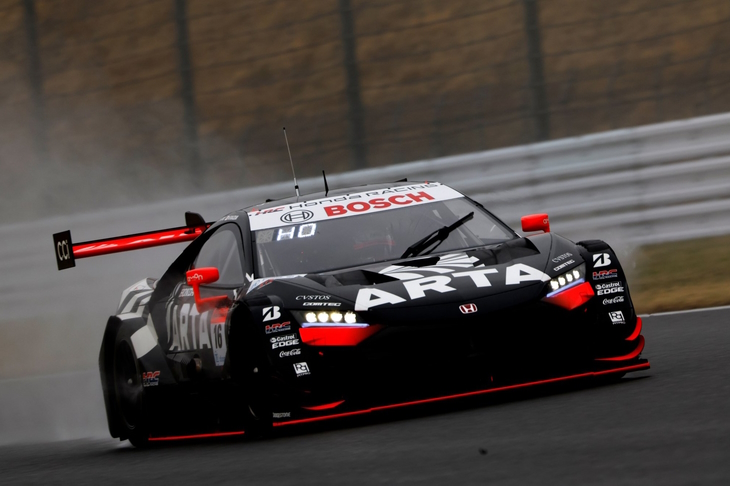
The black No.16 is the former Team Red Bull Mugen car, now with a new name, new livery, a new tyre supplier in Bridgestone, and a new driver line-up from the one they had last season.
Coming over in exchange for Oyu is the 2019 GT300 Champion and 2021 GT500 runner-up, Nirei Fukuzumi. As the co-driver to Nojiri, Fukuzumi has demonstrated great speed and maturity over the past three seasons – but he was mired in a slump last season across both SUPER GT and Super Formula (where he was given the tough task of elevating Honda minnows ThreeBond Racing out of the doldrums). Nonetheless, ARTA has put their trust in the 26-year-old to be the “lead driver” of one of their two cars.
Hiroki Otsu is a new addition to the ARTA stable, transferring in after three seasons with Nakajima Racing. Like Oyu in the #8 car, this will be his first season racing on Bridgestone tyres, and with due respect to Nakajima Racing, it’s his first time in a car that’s expected to regularly compete for victories. Otsu also wants to prove that he’s a dynamic and capable driver that can stand out among Honda’s best, particularly after he lost his ride in Super Formula.
Expectations will be very high indeed for Honda’s new two-car super team, as they try to give ARTA their first GT500 championship since 2007!
#17 – Astemo Real Racing: Koudai Tsukakoshi / Nobuharu Matsushita (Bridgestone)

Astemo Real Racing has been a steady and serious championship contender for the past three seasons. Katsutomo Kaneishi’s team still finds themselves in search of an elusive first set of GT500 titles. But if you believe in superstition, the stars might be aligning for them in 2023 – the 17th season for car number 17!
Real Racing and its drivers finished fourth in the GT500 championship standings and had three podiums, but that only tells part of the story of their season. They lost a race they arguably should have won, when they surrendered the lead in the final minutes of the Suzuka 450km. And then they won a race they really should have lost, at Autopolis, after officials missed the Astemo NSX overtaking another car during the start of a Full Course Yellow – until it was too late to change the results.
The continued pursuit of a championship is a gruelling journey that Real Racing has shared with their ace driver, 36-year-old Koudai Tsukakoshi. He’s driven his entire GT500 career for one team, and finished top-three in the drivers’ standings three times – third in 2010 and 2021, and second in 2013. Tsukakoshi, as calm and as battle-tested as ever, is still in the prime window to finally capture his elusive first title.
His co-driver, Nobuharu Matsushita, was welcomed home to Honda with open arms in 2022 after a short estrangement period. Revered during his Formula 2 tenure for his flamboyant and aggressive style of racing, Matsushita met all expectations in his first year with Real Racing and is eager to be the missing piece that the team has sought for years.
The cherry red and silver Astemo NSX is expected to fight at the front again with the same core of drivers and management as last season, including tenured Chief Engineer Yasuhiro Tasaka.
#64 – Modulo Nakajima Racing: Takuya Izawa / Kakunoshin Ohta (Dunlop)

Founded by national racing legend Satoru Nakajima, Nakajima Racing is the longest-operating GT500 team that hasn’t won a title in SUPER GT. Unfortunately, they’ve been propping up the rear of the field in recent years – finishing last in the championship tables for two straight seasons, and winless in championship races since 2017.
They’ve been Dunlop’s most loyal clients in GT500, a partnership that goes back to 2005. This year they’ve reverted back to being Dunlop’s sole GT500 representative, which has more often than not been a curse rather than a blessing.
That’s made veteran Takuya Izawa even more indispensable to this team. Over his 14-plus seasons in GT500, Izawa has forged a reputation as a trusted hand in set-up work, tyre development, and mentoring young drivers. The 2009 GT500 championship runner-up returns for his fourth season at Nakajima Racing.
His new team-mate is the latest graduate of the HFDP system, 23-year-old Kakunoshin Ohta. Ohta surprised many with his performances at GT300 Team UPGarage, including two podiums and a memorable lap-long fight for position at Motegi in the final round. But as the only rookie in the GT500 field, Ohta’s pre-season preparations took a hit when he crashed the #64 Modulo NSX-GT during a private test at Suzuka in March, which forced him to miss the entire pre-season test at Okayama.
Ohta’s development will be a story to watch over the season, as Nakajima Racing try again to break through its long slump.
#100 – Team Kunimitsu: Naoki Yamamoto / Tadasuke Makino (Bridgestone)

Engraved underneath the red Honda emblem of Team Kunimitsu’s #100 Stanley NSX-GT is the phrase, “Kunimitsu Spirit.” A year has passed since the racing world lost the legendary Kunimitsu Takahashi, but his successor Kazuhiro Kojima has vowed to keep racing in his memory.
An emotionally-charged 2022 season filled with many memorials and tributes to the great “Kuni-san” ended with Naoki Yamamoto and Tadasuke Makino dominating the season finale at Mobility Resort Motegi from pole position. A perfect win, that lifted Team Kunimitsu and its drivers to third in the final GT500 championship standings.
The anchor of the team is the two-time series champion Yamamoto, who’s spent 11 out of his 13 seasons as a SUPER GT driver with Team Kunimitsu. He’s already built a Hall of Fame-caliber CV before his 35th birthday, as a two-time “Double Champion” in GT500 and Super Formula (where he’s won three titles). Along the way, he’s earned the endorsement of no less than Formula One World Champion and past team-mate Jenson Button in the process. As last year’s victory at Motegi showed, Yamamoto still has the pace and the poise to dominate races and the skill to fight for every position.
Entering his fourth season as a Team Kunimitsu driver, Makino won the 2020 championship in his first year with the team and has become Team Kunimitsu’s opening-stint specialist. While he’s gone somewhat overlooked over the past two seasons, Makino’s drive to pole position at Motegi and his blistering first stint in the race were reminders that the 25-year-old is rapidly becoming an ace-calibre driver in his own right.
With the support of their many fans around the world, Team Kunimitsu can once again be a threat to win races and compete for the GT500 crown.
Toyota
Toyota Gazoo Racing once again enter with a fleet of six Toyota GR Supra GT500s powered by the Toyota RIA4G engine.
They won five pole positions and two races last season but had only one team finish in the top five in the final championship standings as they fell behind Nissan and Honda in the late-game development race.
TGR’s teams have made some key personnel changes in the off-season, and at the Fuji Speedway pre-season test, they deployed a new bonnet design of their own which has an aero device on the intakes similar to what Honda has done with the NSX-GT.
#14 – TGR Team Eneos ROOKIE: Kazuya Oshima / Kenta Yamashita (Bridgestone)

Expectations are high at ROOKIE Racing, the fourth-year team founded by former Toyota Motor Corporation President (and future Chairman of the Board) Akio Toyoda. They recently opened their new headquarters on-site at Fuji Speedway. They are positioned to be Toyota’s new flagship racing team in Japan with the personnel and the resources to match.
2019 GT500 Champions Kazuya Oshima and Kenta Yamashita started the 2022 season off in the same manner that they did in 2021: Winning the opening race at Okayama International Circuit. Unfortunately, the season ended in the same manner – with heavy Success Weight leading to a mid-season slump, and a late-season surge that came too late for them to be serious title contenders. ROOKIE Racing still finished as the top Toyota team in the standings but has greater ambitions than being “best of the rest”.
Oshima has matured into the sort of dependable stalwart driver a team can build its entire foundation around. Fast, consistent, and capable of impeccable technical feedback, the 15th-year veteran is hungry to add a second GT500 championship to his mantle.
The speed and strength of Yamashita have never been in doubt – it’s part of the reason why Toyota wanted him to be part of the future of its WEC programme until he decided to return home during the height of the COVID-19 pandemic. But the 27-year-old is coming off a back injury sustained in a high-speed testing accident at Suzuka in January, which left him physically bedridden and emotionally distraught for several weeks. But since getting back behind the wheel in testing and in Super Formula races, Yamashita has returned as strong as ever.
We know that this driver combination can start strong, and we know that Team Director Toranosuke Takagi and Chief Engineer Kazuya Abe are two of the best in their fields with proven championship pedigrees. Can this super team put it all together and find the consistency they’ve been missing on the way to a championship?
#19 – TGR Team WedsSport Bandoh: Yuji Kunimoto / Sena Sakaguchi (Yokohama)

Racing Project Bandoh operate one of the most iconic cars on the grid, the blue and yellow #19 WedsSport Toyota GR Supra. Last season, armed with some fast compounds from their long-time tyre partners at Yokohama, they were the surprise standout performers in qualifying – as Yuji Kunimoto and Sena Sakaguchi combined to win four pole positions and an average qualifying rank of 2.63, by far the best performers.
But on the surface, they might have sacrificed too much in race trim and converted those four poles into a somewhat lacklustre 11th in the standings with no podiums and just two fifth-place finishes. The team earned the nickname “SaturdaySport” as a backhanded compliment, and the most extreme example of this phenomenon came when they started on the pole at Sugo, and then finished last.
Their focus for the 2023 season must be to convert more of those top tens and top fives into podiums, and try and win their first race since 2016 – even if it comes at the expense of some of that sheer qualifying pace. One big change that second-generation Team Director Masataka Bandoh made in the off-season was promoting young Masaru Nakayama to the Chief Engineer position.
Kunimoto was the man who took the chequered flag for Bandoh’s only GT500 win to date, and their best-ever championship result of fourth place, both in 2016. He’s been a supportive mentor to many young Toyota drivers that have received their first big GT500 break in the WedsSport Supra, and at just 32 years of age, he still has much more to offer as a steady, swift driver.
At his side once again is the former Honda prodigy Sakaguchi, who won three poles and extracted as much as the WedsSport Supra could offer despite its disadvantages. The 23-year-old is determined to earn his first premier class win in his second season at the WedsSport team.
#36 – TGR Team au TOM’s: Sho Tsuboi / Ritomo Miyata (Bridgestone)
#37 – TGR Team Deloitte TOM’s: Ukyo Sasahara / Giuliano Alesi (Bridgestone)
TOM’s enter as a two-car outfit as they’ve done every year since 2013, with both cars changing driver combinations for the 2023 season.

The number 36 car has long been the “flagship” of the organisation, and with two of the best and brightest graduates of the Toyota Gazoo Racing Driver Challenge (TGR-DC) young driver system at the wheel this season, this is the car which enters 2023 as a potential championship favourite.
For starters, they’ve held on to 2021 GT500 Champion, Sho Tsuboi, as the ace of the team. “Sho-time” broke through when he clinched his first championship with his first GT500 class win. And while his 2022 team-mate Giuliano Alesi struggled mightily against expectations, Tsuboi’s speed and confidence still carried the au TOM’s Supra to top-ten finishes in every round, including a second-place finish at the Fuji Golden Week race.
Expectations have been heightened exponentially for the 2023 season after transferring Ritomo Miyata from the #37 car, following a season in which he scored his first career GT500 victory in the Fuji 100 Lap Race, and contended for the championship alongside the now-departed Sacha Fenestraz. Miyata, like Tsuboi, boasts exceptional one-lap speed and metronomic precision in race stints. Tsuboi and Miyata could be the golden pair of the immediate and long-term future for Toyota and TOM’s.

With a new look and a new title sponsor in Deloitte, the number 37 TOM’s team enters the season with two hungry young drivers with a point to prove – including the newest member of the Toyota racing family, Ukyo Sasahara.
Sasahara joined Toyota in a transfer after three seasons with Honda. While he’s only recorded two podium finishes in his first three seasons in SUPER GT, his two wins in Super Formula last season were more indicative of his driving quality. Sasahara will have the privilege of running on Bridgestone tyres for the first time as a GT500 driver, and he has the passion and the speed to be a team leader right away.
Alesi comes over in a swap with Miyata and will be examined closely after a difficult 2022 season, where he looked like a passenger in most races across both SUPER GT and Super Formula. The French-Japanese driver carries with him sponsorship and celebrity by way of his famous parents – but those considerations can only carry him so far, and after his current Super Formula campaign started terribly, Alesi will be feeling the pressure to perform more than ever in his second year in the top class.
If both cars perform well and avoid getting sucked into too many battles for intra-team pride, TOM’s can have another season that lives up to the team’s mighty legacy.
#38 – TGR Team ZENT Cerumo: Yuji Tachikawa / Hiroaki Ishiura (Bridgestone)

2022 was a frustrating season for Team Cerumo, to say the least. They suffered four mechanical retirements on the season and failed to finish on the podium all season. The ZENT GR Supra finished 13th in the final standings, ahead of only the two struggling Dunlop-clad Hondas.
Cerumo has now gone winless in the last three seasons, and while Yuji Tachikawa and Hiroaki Ishiura are returning for their ninth season together, many might wonder – as harsh as it may sound – that their best chances at winning a title together have already passed them by.
Tachikawa is set to begin his 25th consecutive season as the lead driver for TGR Team ZENT Cerumo, the longest uninterrupted stint for a driver at a single team. Since 1999, Tachikawa has amassed 19 career wins, a record 24 pole positions and over 1,200 championship points – along the way to three GT500 titles. But 2022 was by far his lowest point as a Cerumo driver, his first season in 23 years without a podium to his name. Tachikawa turns 48 years old in July, and as the dean of the GT500 grid, there’s always the chance that it could end up being his farewell to the series.
Last season was also a low point for Ishiura, who turns 42 later this month. The two-time Super Formula Champion and 2007 GT300 Champion’s best championship finish in the premier category was third in 2012, and ten years on from that high mark, it felt as if his long-desired goal of a GT500 Championship slipped further out of reach. His long-time friend and former co-driver Oshima has already become a champion in GT500, and many still hope that Ishiura can join him on the premier class roll of honour.
Cerumo did not remain stagnant this off-season. While the drivers remain the same, there’s a new team leader on the pit wall: Representative Director, Junichi Murata, who installed himself as the new Team Director.
#39 – TGR Team SARD: Yuhi Sekiguchi / Yuichi Nakayama (Bridgestone)

Toyota’s oldest factory-affiliated team, SARD Racing are managed by the great Juichi Wakisaka – a championship-winning driver and Team Director famous for his charisma and uncompromising approach to racing.
Last year the famous Denso Kobelco SARD Supra consistently ran inside the top ten and even managed a third-place podium finish at the Suzuka 450km. Big results were hard to come by – and one has to wonder how different their 2022 might have been if Yuhi Sekiguchi hadn’t gotten out of his car and touched it under a red flag at the Fuji Golden Week race, costing the team a sure victory.
Sekiguchi arrived last season off the back of winning the 2021 title with TOM’s, in the hope that he could turn SARD back into a title-contending team. Aside from the gaffe at Fuji, he delivered on each and every one of the expectations set upon him – delivering strong results, fighting hard for every position, and doing it all with a smile on his face. Yoshihito Kashiwagi, who has been Sekiguchi’s race engineer in Super Formula, has now joined SARD as the new Chief Engineer of the number 39 car as they look for their first win since 2020.
Yuichi Nakayama first broke into GT500 with SARD in 2019 after several impressive seasons in GT300. While he has won races, he’s rarely been able to distinguish himself from his more-celebrated teammates like Sekiguchi and Heikki Kovalainen. More drives like the one he had at the August Suzuka round would go a long way to changing his perception as Toyota’s “forgotten man”.
SARD had to wait 23 seasons to win their first GT500 Championships, back in 2016 – and their supporters definitely don’t want to wait that long to experience that joy once again.
Be sure to read part two of our season preview, profiling the GT300 class, tomorrow!
Images © GTA, except where otherwise listed