A single tour of the ELMS paddock is enough to bring home the fact that LMP2 racing is currently in a rude state of health. 22 cars are racing in Europe, with a further 11 competing in IMSA full-time. And that’s before you consider the sizeable entry that took part in the Asian Le Mans Series over the winter.
Yet in the background, the shape of the category’s future has never been more uncertain.
Currently, the next-gen regulations are pencilled in for a 2026 debut, but this has never been set in stone, as key decisions still need to be taken in a number of areas. The 2026 Rolex 24 Hours is less than two years away, and it is still unclear when and where the new cars will hit the track for the first time
DSC has been tracking the shape of the ruleset for a number of months and notes Endurance Info’s report earlier this month which discussed, in-depth, the possibility of a delay to the new ruleset beyond 2026. It appears that this is indeed the most likely scenario, but the length of the delay is not yet known. There are signs that we are close to a final decision, though senior paddock sources in the LMP2 marketplace have suggested to DSC repeatedly that the situation remains ‘fluid’ at the time of writing.
So, how did we get here?
Around the time of the Sebring 12 Hours, the common belief from industry sources was that the new rules were still on track for 2026, though only the ELMS (and Le Mans) would adopt them, while IMSA and the Asian Le Mans Series would wait until 2027 to introduce the new-look cars.
This made sense for one key reason: scheduling. In IMSA’s case, using next-gen LMP2 cars in ’26 would mean a debut in January at the Rolex 24 Hours, shortening the timeframe the four manufacturers have to deliver cars. It would also place the burden of debuting the new cars at a 24-hour race not organised by the governing body that controls the rules.

And in the case of the Asian Le Mans Series, should the calendar format remain the same by that point, the introduction would come halfway through the 2025/26 season. That’s not at all practical.
For both series, an immediate adoption would be especially tricky as several teams that compete in IMSA – and almost all the teams that frequent the Asian Le Mans Series – also compete in the ELMS, adding to the expected complications regarding the availability of chassis, parts and the logistical limitations of the calendar.
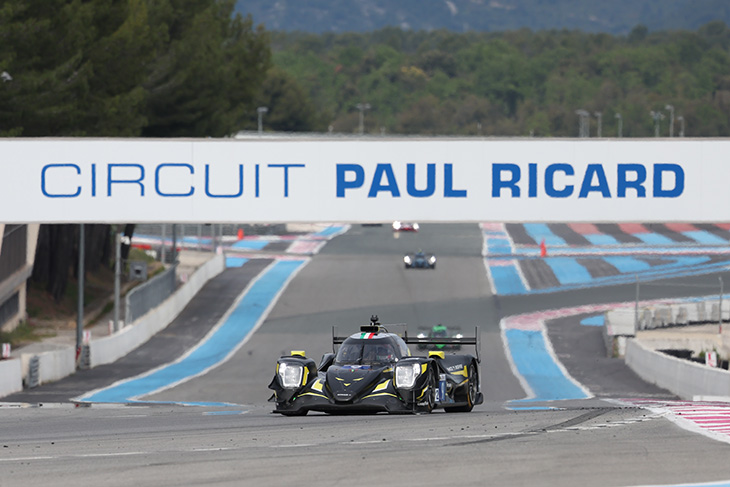
This consensus though, appeared to have changed by the week of the ELMS opener in Barcelona a month later. One source told DSC that “a total delay to 2027 or beyond seemed almost inevitable”, with an announcement regarding the timeline expected ahead of Round 2 in Paul Ricard.
The expected announcement never came though and a technical working group meeting planned for Le Castellet week was understood to have been postponed following a significant meeting held elsewhere.
This left the four LMP2 manufacturers and cabal of current teams to ponder whether or not this meant the ruleset would be delivered as planned for 2026; “As there is still no announcement, you’d expect that means there is no change to the rules and the timeline,” a senior paddock source close to the situation, who wished to remain anonymous, pointed out to DSC.
The length of time it’s taking to draw up the ruleset is proving to be a source of frustration for just about everyone involved. Currently, there is no fully finalised set of rules and no firm end to this process in sight. There is a framework that is near-completion, with itemised costs and peripheral overarching regulations, meaning the green light could be given on short notice; depending on the ongoing tender for electronics coming to a close. But crucially, nothing has been signed off.
With each week that passes without a decision, a 2026 debut for the new cars seems less likely and a year-long delay to 2027 appears to be the most realistic scenario. The manufacturers need to know how much time they have to play with to finish development work and build up a stock of cars to sell for Year 1; despite the fact that none of them know how many customers they’ll be able to attract.
Is it possible for the manufacturers to finish designing and building cars in time for 2026 at this point? The answer appears to be ‘yes’, though it would be extremely challenging and the feeling is that a firm decision needs to be made prior to Le Mans this year in order for everything to come together.
What’s on the table?
The timeline of the new regulations may be the most pressing issue right now, but the actual ruleset being formed and the cost of the cars the teams will be investing in, is the crux of this story.
If forced, of course, there will be teams that will come along for the ride come what may, especially as DSC has been told clearly by a senior source close to the ruleset in recent weeks that there will be at least 15 LMP2 spaces on the grid at Le Mans “indefinitely”. There is, supposedly, no debate to be had.

Question marks over how those entries are handed out – via results from a previous season, loyalty, driver selection, or a combination of the three – remain, but as long as entries for Le Mans are on offer, teams will work overtime to make the sums work.
The key is how many teams make the transition, particularly early on when it isn’t clear which of the new chassis is best, how well the class is being balanced, what the true cost is and how satisfied the drivers are with the final product.
So what do we know about the new cars?
DSC has seen a breakdown of cost-capped parts for the cars and was pleasantly surprised by it. Factoring in today’s economic climate, what stood out was the overall cost per car, which has been placed at a level not dramatically different to the current ruleset.
The car itself, including electronics (a final total isn’t yet available for that element as the tender is ongoing), is expected to be around 560-600,000 Euros. With spares, this means teams are looking at roughly a million Euros per car. That may sound eye-watering at first glance (and it is!), but the reality is that an ORECA 07 without an engine, electronics kit or spares, right now will set you back 525,000 Euros. This is the current price following the permitted price rise above the original capped cost brought in to offset inflation.
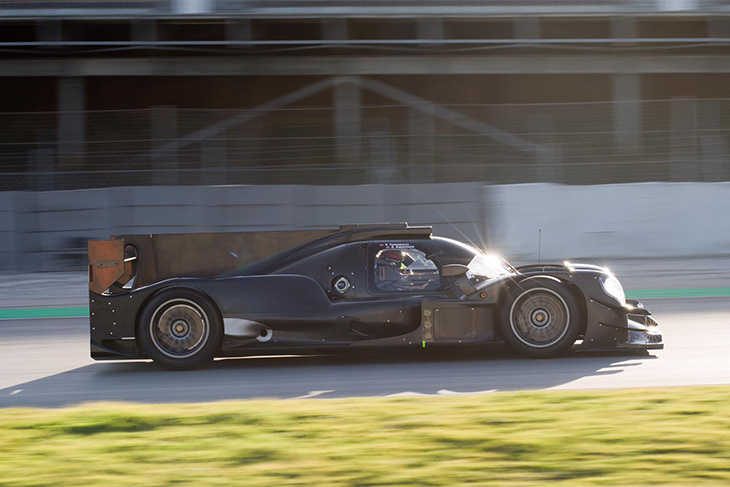
Looking at the specific elements with costs placed on them, some are supposedly going to be capped at a lower price than the current formula. For instance, a front bodywork assembly is believed to be priced at 38,000 Euros, when it’s 50,000 now, while a plank will set you back 1,500 Euros, as opposed to 3,500 at present.
For the new ruleset, in which all four manufacturers (ORECA, Ligier, Dallara and Multimatic) are expected to produce cars for customers, there will be no Balance of Performance.
Instead, they will be homologated to sit inside a defined performance window – like LMDh cars right now. And, to keep all four manufacturers in the formula long-term and prevent the current situation (where almost every team currently competing uses ORECA’s chassis and has done so for some time) from reoccurring, a bi-annual “Adjustment of Performance” will be made. This will balance their weight and power. Is this “BoP” under a different guise? We will have to wait and see.
Going into further detail, the radiator will supposedly have its dimensions mandated and each team will be forced to run to a compulsory ride height level, primarily to increase the life of specific components such as the splitter. Certain parts will also be designed to meet regulations that define specific areas permitted to experience ‘excessive’ amounts of wear.
The weight of the cars is expected to come in lighter than current Hypercars but heavier than current P2s, at 980kg. There will be one homologated body kit for the cars globally and they will be expected to run to the same performance level as the current LMP2 cars at Le Mans.
Further clarity is needed on whether or not the cars will run at a higher level of performance in the ELMS in this new era, as they do now, because there is no stratification needed between Hypercar/GTP and LMP2. DSC has been given conflicting answers specifically on this subject, more on that later…
Beyond all this, the scope for the manufacturers to go in different directions conceptually has been squeezed. They will run with spec exhausts, spec electronics, a spec gearbox and a spec engine from Gibson.
The fight to get customers to commit will be fierce if all four manufacturers expect to receive a fair slice of the pie
As for tyres, Goodyear is set to supply spec compounds to the class in the ELMS and Le Mans through the start of the new era. Currently, the moulds for the new sizes (that mirror LMDh tyre sizes) have been produced, the first iteration of the tyres has been prepped, simulation work is ongoing and Goodyear has told DSC that it will be ready to supply product to manufacturers for the start of track testing as soon as Q1 of 2025.
Michelin meanwhile, already supplies tyres for LMDh. It is ahead of the curve in that sense for its future LMP2 commitments in IMSA and the Asian Le Mans Series.
All this comes together to form the regulations for the new cars, in which the four manufacturers will be pitted against one another to secure customers. Leaving the financial side of this for the teams to one side, how does this work in cost terms for manufacturers?
There is money to be made on spares, but the fight to get customers to commit will be fierce if all four manufacturers expect to receive a fair slice of the pie.
A senior manufacturer representative, who wished to remain anonymous, put this in simple terms during a conversation with DSC. “We believe that in order to make our money back and begin to go into profit, we need to have six cars running over a five-year period,” they said.
Whether or not all this work for a handful of customers and a five-year wait for a return on investment makes business sense for anyone other than ORECA (and its bulging book of current customers) is another layer of this onion…
“The perfect time is now”
Speaking of ORECA – the dominant player in the current marketplace – it finds itself in an odd position.
On one hand, a delay to the ruleset would be beneficial as it would enable it to continue selling 07 chassis to its large customer base. On the other, it is actively developing its new LMP2 car, which will be based on the LMDh chassis used by Acura and Alpine in GTP and Hypercar.
It is confident it will continue to offer the best product, is prepared to have a car on track testing during Q2/Q3 2025 should it need to and has already engaged with its current customers about its future position in the LMP2 market. It has reaffirmed its plans to continue supporting them into the new era and has begun to work on an outline production plan, which will likely need to be scaled up from 10 cars per year to meet demand.
Dallara and Multimatic have been described by teams as “more relaxed”, leaving Ligier as the voice in the room making the most concerted effort to move the ruleset along
The other three manufacturers appear to hold mixed feelings. Ligier is keen to return to the sharp end of LMP2 as soon as possible, alongside its dominant position in the LMP3 sphere and involvement with Lamborghini in LMDh.
Ligier is believed to be pushing hardest for a 2026 debut. Dallara and Multimatic have been described by teams as “more relaxed”, leaving Ligier as the voice in the room making the most concerted effort to move the ruleset along.
However, (despite rumours suggesting otherwise) Multimatic and Dallara are known to be fully engaged in the process and just as serious about re-entering the marketplace; the difference is they are less worried about the timeline. Dallara specifically is understood to be in the final stages of the design work for its chassis, is prepared to run its car as early as April of next year and is currently offering tours of its facility to teams keen to see its progress.

“We are committed to the ruleset, and to 2026 should it happen,” Pierre Nicolet from Ligier Automotive told DSC when asked for a summary of where the French constructor stands on the new regulations. “The CFD work has started, we have new staff dedicated to delivering it and everything is in place for the start of race track development by the end of Q1 2025, ahead of an anticipated homologation for the latter part of the year.
“In this case, we would be open for business, with 10 cars ready to sell in Year 1 to customers racing in ELMS, IMSA, Asia, anywhere the cars are able to race. We are ready.
“The new set of regulations strongly pushes to stop the cost escalation, with a cost cap on specific parts and an overall cost cap. The sporting regulations also prevent bodywork wear to prevent damage-related costs we see in the current regulation.
“It should be the same level of performance in the ELMS, for the same price. The cars shall not be slower there.”
So what is the case for 2026? The reasons for delaying are plentiful, and we will come to those later. What about pushing ahead with the current schedule?
“The perfect time is now,” one anonymous source from an LMP2 supplier told DSC. This is because the marketplace is in such a strong position.
The point has been made to DSC that if you change the ruleset now, the take-up will be strong, purely because Hypercar is in such a good place, with manufacturers in record numbers and factory seats to fight for. The demand for race seats in LMP2 in the ELMS, IMSA and at Le Mans, has never been higher as a consequence.
“Do I have the money right now to switch and invest in multiple cars? No.” One LMP2 team owner told DSC. “But we all went through this in 2017 and came out on the other side. Despite the fact that many teams ended up needing to change manufacturer because it became clear that the ORECA was the strongest car and you needed one to compete.”
Delay the LMP2 ruleset and you risk introducing it at a time when the top class is either smaller, features fewer factory cars or is in a transition to new rules. This would make LMP2 a tougher sell, especially at the cost level being talked about. By bringing in next-gen P2 sooner rather than later, you allow time for the marketplace to settle before the future rulesets for Hypercar and GTP become the topic du jour.
This would also allow teams to race with cars based on LMDh chassis ahead of deciding whether or not to go racing in Hypercar or GTP in the future. Next-gen P2 is non-hybrid (and therefore more privateer friendly), but with the base chassis proposed, you could theoretically upgrade to an LMDh, or utilise any spare chassis that hasn’t been raced for future LMDh programmes.
It would not be cheap of course, but if the customer LMDh market becomes more buoyant or tempting, it may become easier for manufacturers to convince LMP2 teams they can make the transition without too many hiccups.
By delaying, you’re also putting off teams that are currently on the outside of LMP2 and looking in. Why buy an ORECA 07 now? It is unclear how much longer you can use it and the level is so high. Coming into a spec formula and trying to match teams that have been squeezing the orange with the same car for half a decade is a real risk.
For any teams in single-seater paddocks, or even in the LMP3 ranks (who are about to make key decisions concerning upgrading current cars or buying new ones with the new engine and aero for 2025 being introduced), it makes the most sense to wait.

“At some point, you have to change,” Gary Holland, team principal of ELMS team Vector Sport told DSC. “A reset wouldn’t be a bad thing as everyone has found the absolute maximum from these cars after so many years.
“Why pay more to go the same speed or slower? That’s also a difficult argument to have, so the performance has to be better. The numbers we’ve heard are quite realistic though.
“What needs to happen is the rules need to be laid out, and everyone can make a decision. The problem is that at the moment nobody knows what’s happening, so nobody knows what decision to make.
“Everything is getting older. We shouldn’t change for the sake of change, but if there’s something better we should future-proof the class, especially if it needs to return to WEC in years to come.”
So, why delay the inevitable?
“If it ain’t broke, don’t fix it”
With a delay looking like the most likely course of action, it makes sense to go into detail about why this is, what the options are and what the mood is that surrounds it all. In reality, there are many reasons pointing towards an extension of the current ruleset.
The most complex elements of this entire subject are twofold: The consequences of a delay, and the clear confusion amongst the teams regarding the future of the formula as it’s been mapped out.
The most common response to any question asked to team managers about the future of LMP2 is a variation on: “It works so well. Why are they changing it?”

If a delay happens, the pushback from the teams in recent weeks as the future ruleset has become more of a pressing issue will be the key factor in the decision.
From DSC’s paddock conversations, here are snippets which cover the main points of apprehension:
- “The cost of investing in new cars is too high, at a time when costs to go racing are rising in every area. And there’s no resale value of current cars.”
- “There is a significant amount of financial risk attached to choosing ‘the right’ chassis.”
- “The racing is good now and at full power, the current LMP2 cars are extremely popular with pro and amateur drivers alike.”
- “There is no BoP, we like that it is spec.”
- “Everyone will surely just stay with ORECA anyway? It’d have to be a very good to deal or a very well-proven car in concept to move away given what they know and their track record.”
- “I don’t believe that any of the manufacturers will have enough cars or sufficient spares ready in time to service all the customer teams in 2026.”
- “We will be paying more money to go slower!”
Many of the reasons above are valid. However, there is a case to be made that some of the fears are based on a lack of clarity rather than firm decisions made by the rule-makers.
Take the “There is no BoP” argument. As it stands the new formula will not be governed by BoP as we know it in Hypercar – though it remains to be seen how effective (or indeed necessary) the bi-annual adjustment process is in practice. It is understood that these changes will not be mandatory, IE: there will be no changes for change’s sake if the category is well-balanced.
The overarching theme here is a lack of clarity in key areas
What about “we will be paying more to go slower”? This one is tricky. DSC has polled manufacturers, teams and drivers, and they all have a different understanding. DSC has been told categorically that the cars “will run to current Le Mans performance levels everywhere” and “they will be faster in the ELMS, as they are now”, by different sources from LMP2 manufacturers.
DSC has also been told that “only ORECA and Ligier are interested in new P2” by one team, and “we’ve been courted by all four manufacturers, who are already pushing to sell their new cars” by another.
The overarching theme here is a lack of clarity in key areas. With no defined set of rules published and no delivery date to work towards, trying to unpick facts from rumours has been a real challenge for DSC, and it seems, for the teams trying to plan ahead too.
If not now, when?
This leaves us with the final item on the agenda: what a delay actually looks like. If 2026 is not delivered, then we will almost certainly see the new LMP2 cars debut between 2027 and 2030.
Talks are ongoing in the background between the rule makers, suppliers and the current band of LMP2 teams. A survey has been sent to the teams asking for opinions on the new rules and a delay in recent days. There is even talk of a conference-style meeting being organised by LMEM, giving the teams and all four manufacturers an open forum to discuss the new ruleset and answer key questions. (This would surely prove to be a popular decision…)
From the rule-maker side, it has become clear to DSC that a concerted effort is being made to listen to current LMP2 teams over the key voices within the suppliers, as the overwhelming majority of the teams in the ELMS paddock have made it clear that a delay is preferable. The current financial situation globally is being taken into account, as is the fragility of the sport at this level moving forward.

Once we get into the weeds of 2027 and beyond, that would place the debut of the new LMP2 regulations during a transitional period for the top class. By then, hydrogen regulations will be firmly on the agenda, along with a likely extension of the current Hypercar ruleset. Such wholesale change to the prototype marketplace in such a short space of time would bring with it an additional set of challenges.
A single-year delay seems most logical. But if opting for more ‘breathing room’ is the chosen route, it must be managed carefully.
Are the proposed regulations fully fit for purpose? Do they require tweaking? Is there a case for a “total blank sheet of paper rethink”? (DSC believes this has been suggested) What do the teams think? Are the suppliers happy and capable of delivering high-quality products in the time they are given?
These are all questions that must be asked and answered to ensure the future ruleset for LMP2 is effective at delivering good racing, with cars that aren’t too expensive to buy and run.
The fight for the future shape of LMP2 is well underway. It looks set to continue for weeks and months to come…