


Yesterday’s Le Mans Test day shed at least some light onto the hierarchy of the field heading into race week at the Le Mans 24 Hours.
While the top of the time sheets tells one story, there’s plenty more to examine in the timesheets.
Here are five things we learned from the test day, and three questions still to ask.
1. Penske Porsche is quick
The three Penske Porsche 963s were the class of the field come the end of test day, with the three team cars placing 1, 2 and 4 in the day’s standings. The pace was apparent regardless of the driver in the car; all eight of the Porsche Penske drivers who set times in the second session of the day managed a 3:27 lap time, which would have put any of them into the top 10 drivers of the session.
Only one other hypercar dropped into the 3:27s; the #8 Toyota Gazoo Racing GR010, with Brendon Hartley and Sebastien Buemi dropping into the 3:27s.
In fact, looking at theoretical best lap times from the test, it becomes a Penske Porsche 1-2-3, with the #5’s theoretical best lap – taken by combining the best sector times from the car – eclipsing the theoretical best by the #8 Toyota by one-thousandth of a second.
The story didn’t appear to be the same for the customer 963s however: Both Hertz Team JOTA Porsches were over 1.5 seconds away from the absolute pace, with the 6 Hours of Spa winning #12 10th, ahead of the #38 in 11th, while the Proton Competition Porsche, which set only 12 laps in the faster afternoon session, was the second slowest Hypercar, down in 21st.
While Porsche was keen to downplay its ‘favourites’ tag in the lead-up to the event, evidence suggests that at this point at least, it will be the ones with the target on its back.
2. Plenty of Hypercars in the mix
Despite Penske Porsche locking away the top of the day, there were plenty of Hypercars in the mix throughout the day’s running. The #50 AF Corse Ferrari 499P finished the day in 5th, BMW had the #20 M Hybrid V8 strongly placed in 6th despite issues for the sister car, and Lamborghini showed pace with the #63 SC63 ending the day in 7th.

If only Porsche, Toyota, Ferrari, BMW and Lamborghini are in the mix for the race, that already gives 12 cars that have a chance at taking the win – a number that rivals the absolute peak of the LMP1-H era.
Digging into the theoretical best laps paints an even better picture, with a few cars not stitching a complete lap together in the test day but showing great pace in individual sectors. The biggest jump is from the #51 AF Corse Ferrari 499P; James Calado’s 3:29.162 was only good enough for 12th place on the time sheets. However, looking at the theoretical best lap, the #51 would eclipse the sister car for 5th place, with best sectors combining for a 3:27.285, only a tenth behind the #6 Penske Porsche and #8 Toyota Gazoo Racing GR010.
The Cadillacs are also not that far off the pace; While the best-placed Cadillac ended the day in 14th, a theoretical best lap of 3:28.4 puts them within striking distance of the head of the pack. Alpine too can look at positives, with Charles Milesi setting the third-best first sector and sixth-best second sector on his fastest lap, but a difficult last sector saw the #35 Alpine A424 finish the day in 20th.
Critically, the Hypercars seem to be reliable. Only one of the 23 Hypercars spent a significant length of time in the garage undergoing repairs, that being the #15 WRT BMW which required an engine change. The #3 Cadillac suffered a fuel line failure, but was back on track later that same session, while the #99 Proton Porsche was reportedly untroubled despite spending large amounts of time in the garage during session 2. As a result, we could be in for a stellar race with plenty of teams in the mix.
3. Year 2 Improvements
A key element in the discussion around the Porsche Penske programme this season has been the development of the car into year 2 of the racing program, and the significant improvements made in pace, and subsequent results, that the 963 has achieved this season.
Diving into the numbers from the test, that is backed up not just for Porsche, but for all the cars in the second year of their racing programs.
Porsche has made the biggest gain, dropping their outright best time from a 3:29.648 to a 3:26.907 – an improvement by almost three seconds. But that has been matched by improvements from Ferrari and Cadillac as well.
The Test-topping car from last year, the Ferrari 499P, improved from a 3:29.504 last year to a 3:28.014, an improvement of 1.5 seconds, while Cadillac’s best effort last year was a 3:30.673 for the #2, which this year turned into a 3:29.360, an improvement of 1.3 seconds.

However, the next best improvement behind Porsche has been the Toyota GR010, which has improved its lap time by over 2 seconds over last year – a 3:27.615 vs a 3:29.827 from the test day last year.
The Peugeot, on the other hand, saw the least improvement with the move from the 9X8 to the 2024 spec version of the car. A 3:30.427 has improved to a 3:29.326 – a gain of just over a second.
It must be said that in general, this year’s test produced faster times across the board compared to last year. However, these improvements show not only the better conditions but also the improvements to the cars over the last 12 months.
4. LMGT3 vs GTE
The departure from the much-loved LMGTE spec to the new-for-2024 LMGT3 spec for the GT class at Le Mans has seen with it a minor reduction of pace, with the outright lap time after the test day dropping by almost four seconds.
This could be due to a variety of factors, but principally, the GT3 cars were not expected to be as fast as the GTE cars in the FIAWEC spec for this season.
Last year, the best GTE time was a 3:56.088 by the #66 JMW Ferrari, whereas this year the best time of the day, set by Sebastian Baud in the #82 TF Sport Corvette, only just scraped into the 3:59s, with a 3:59.883. The LMGT3 best lap was in fact slower than the best lap for the entire GTE field last year.
The larger gap between the pace of the Hypercars and the LMGT3 cars compared to last year may increase difficulties in traffic, especially considering the return to the FIAWEC of the LMP2 class for this event.
5. LMP2 takes another step.
The peak pace of the LMP2 class, once again, sits just off the back of the Hypercar field, with a stellar lap by Oliver Jarvis in the #22 United Autosports Oreca 07 in the second session of the test putting the car into the 3:34’s, with a 3:34.704. His time was only 1.7 seconds behind the Isotta Fraschini Tipo6-C, and only 3 seconds away from the factory Hypercars.
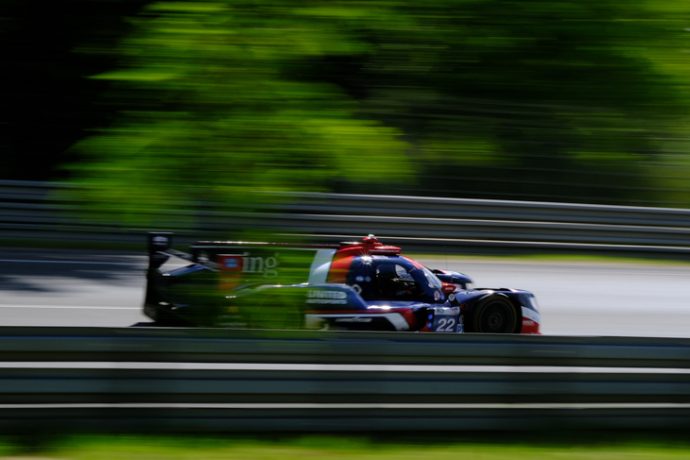
This gap is similar, albeit at a faster speed, than last year’s separation between the two classes. Last year, the JOTA Sport #28 car set a 3:35.472 to be 2 seconds behind the slowest of the Hypercars – on that occasion the #311 Action Express Cadillac – and 4 seconds behind the rest of the hypercar field.
However, Jarvis was the only driver to eclipse last year’s top time, with the rest of the field mostly in the 3:36s. Olli Caldwell in the #25 Algarve Pro Racing Oreca was the only other driver to scrape into the 3:35s, with a 3:35.9.
What does this all mean? Apart from Jarvis’s one lap, the LMP2 field is incredibly well matched, with almost the entire 15-car field within three seconds on outright pace.
And those three questions!
While we’ve certainly learned a lot from running yesterday, there are still some questions, or points, that we will only find answers to later in the week.
1. How much were the Hypercar teams hiding?
It needs to be kept at the forefront of the mind that this was a test day, and while topping the times at this stage certainly looks and feels great (and grabs the odd headline or two!), it’s not necessarily a true indicator of where the teams will stand come 4 pm on Sunday.
Last year, the improvement between test day and the best times of the weekend was astronomical. Ferrari’s 3:29.504 at the end of the test had been slashed to a 3:22.982 for Hyperpole – an improvement of almost seven seconds. Last year, the teams had an additional 9 hours of running between the Sunday test and Hyperpole on Thursday, so there should be plenty of time for improvements across the board ahead of the important sessions later in the week.
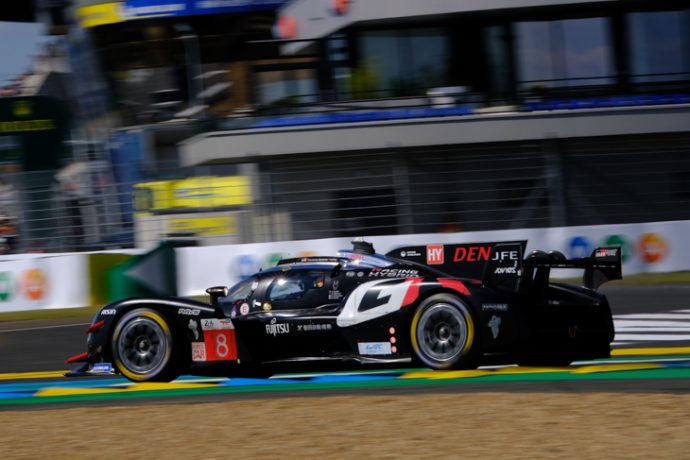
In addition, it was noted that Toyota in particular were not showing their pace in the final sector on their outright fastest laps. Sebastien Buemi set a string of fast laps late in the second session, including a lap that was well up on the overall best time to the second sector. But, a slow last sector (to the tune of four seconds) prevented that lap from showing the absolute best that Toyota could produce. It was a similar story in the #7 GR010, with Jose Maria Lopez setting a personal best to the second sector before a very slow final sector dropped that lap time away from the top of the leaderboard.
It is highly unlikely that any team showed their true ultimate pace at any point during the test session. Sure, the track will continue to improve over the week and learnings of the cars and the drivers will see lap times come down, but the teams will have kept something up their sleeves to mask their true pace ahead of the weekend proper.
2. Are the LMGT3 teams hiding something?
The same question can be applied to the LMGT3 class, with a significant concentration of lap times at or just faster than the 4:00 mark.
Four drivers in three cars – Sebastian Baud in the #82 TF Sport Corvette, Alex Riberas in the #27 Heart Of Racing Aston Martin, and both Sean Gelael and Augusto Farfus in the #31 WRT BMW – dipped into the 3:59s, but eight cars had theoretical best laps under the four-minute mark, and a further eight had a theoretical best lap within half a second of the four-minute mark.
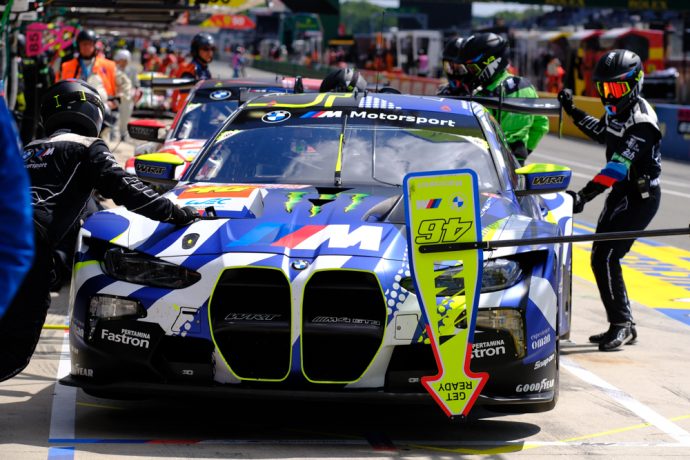
Looking at the last outing for GT3-spec machinery at La Sarthe last year brings some interesting comparisons. The 24 Hours supporting Road To Le Mans race last year featured GT3 spec machinery, with Pro-Am line-ups in the field as well.
In last year’s Road to Le Mans practice, Silver-rated Russell Ward put the Winward Racing Mercedes GT3 into the 3:58’s, and come qualifying, the peak lap time, by Max Hesse in the Team WRT BMW M4 GT3 was a 3:55.888.
In the lead-up to the event, Michelle Gatting of the #85 Iron Dames Lamborghini told DSC that in LMGT3 spec, she feels that the GT3s have been slowed “too much.” Could the difference in spec between last year’s Road to Le Mans GT3 and this year’s LMGT3 be to the tune of four seconds?
Again, it must be said that this was only the test day, but it would not be a surprise to see a significant increase in pace across the board in LMGT3 as the weekend progresses. And, as is always the case, the true proof of the equalisation will only be seen on Sunday
3. The conditions will change
Sunday’s test day was in almost picture-perfect conditions for both sessions. It was a warm, clear day, with patchy cloud light winds. Not hot enough to significantly reduce grip or power, not even a hint of a drop of rain, and effectively, perfect conditions for a test day.
However, that will not be the case for the coming week.
At this stage, the forecast for the week is for rain on Thursday night, and then all the way through Friday, Saturday, and increasing in intensity on Sunday in the lead-up to the finish. The lap times, mileage, learnings and expectations in yesterday’s perfect conditions will be entirely thrown out should that forecast eventuate, and a consistently wet 24 Hours become the reality the teams have to face.
The 2024 season of the WEC has so far escaped wet conditions, except for an hour or so of wet running during the race at Imola. Should rain fall during the 24 Hours of Le Mans, it will be a whole new set of conditions that the teams are going to have to quickly adapt to, without the safety net of prior experience in wet conditions in these cars.
Safe to say, there’s still plenty to discover as we approach the 92nd edition of the Le Mans 24 Hours.


