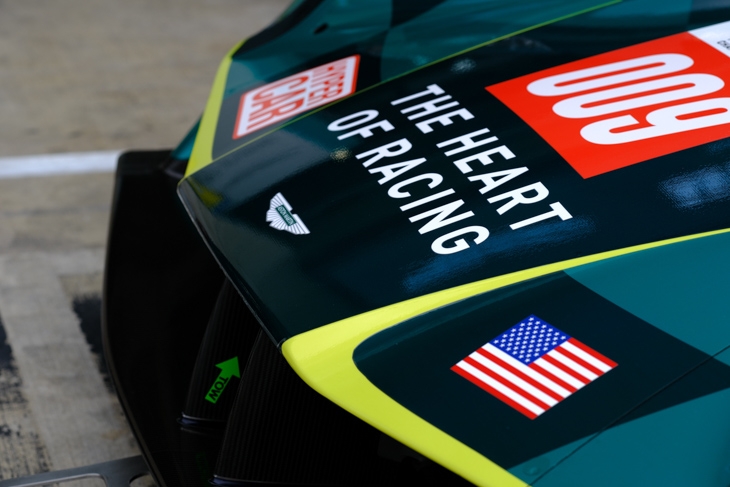

As Aston Martin’s Valkyrie LMH takes to the track in Qatar, it will be the first true embodiment of the original LMH rules ethos, a genuine, roadgoing hypercar gone racing. And, though it could be argued that many GT3 cars are in a similar situation regarding aspects of their performance, it’s no understatement to say that the inherent potential of the production Valkyrie had to be dialled back to hit the WEC BoP window.
The road car is a stunningly potent beast. Powered as it is by a naturally aspirated, Cosworth-developed V12, making over 1000bhp as it sings its way to 11,000rpm and augmented by hybrid system on the rear axle, it also features a host of aerodynamic and suspension features that would turn rule-makers blue in the face.
Active suspension and aerodynamic surfaces allow for the downforce to be adjusted on the fly, making full use of the sculpted underfloor and its in-your-face rear diffuser. In short, not only are these features banned in racing, they put its on-track performance potential way outside the window for WEC, particularly if one is talking about the AMR Pro spec Valkyrie.
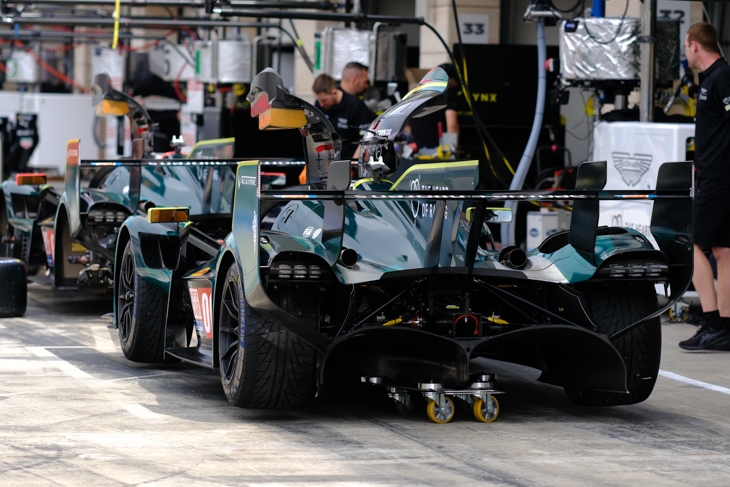
Aston Martin has been very diplomatic on the topic, but even with the considerations of endurance racing in mind, if the production car had simply been turned into a no-holds-barred racer, the rest of the hypercar field wouldn’t see which way it went.
As a quick recap, cars in LMH must fit within an aerodynamic performance window which limits the downforce-to-drag ratio to about 4:1, while also mandating a power and torque curve (with a cap at 650 hp). The job for manufacturers is to make sure they are as close to the upper limit of this window. The point is that hitting this target is not that hard for a competent group of racecar designers and aerodynamicists (though doing it well and finding the gaps within the BoP where performance can be gained is a story for another day).
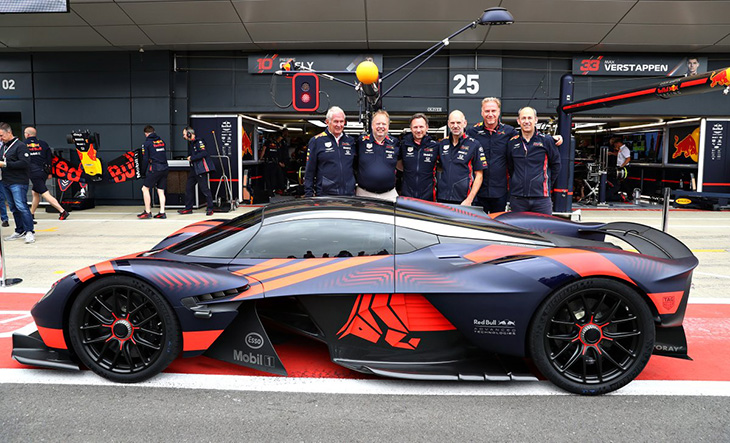
Looking at the images of the LMH car on track compared to the AMR Pro, the extensive aerodynamic differences are clear. Some of the changes are very rules specific, for example, the honking great dorsal fin and holes in the upper surfaces of the front and rear wings are there to comply with the regulations around aero stability and preventing liftoff at high yaw angles. However, it is the many smaller details that hint at how downforce potential has also been shed.
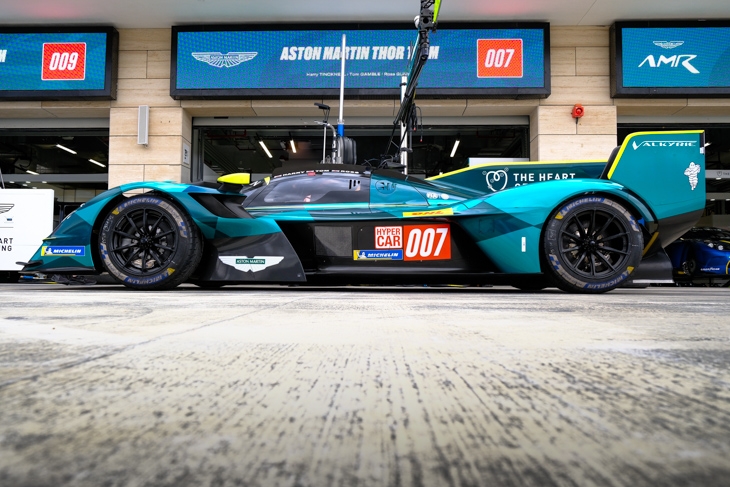
Take the floor edges; on the AMR Pro these are every inch the F1 car, replete with sculped gills and flicks, all intended to optimize the airflow along the sides of the car and ensure that the air passing through the underfloor goes exactly where it is supposed to. The same is true of the front and rear diffusers and the wraparound multi-element rear wing.
Each element is designed to work in unison to extract maximum downforce. Compare this with the LMH and it is immediately evident that the racecar is a much ‘simpler’ affair. Simple here is a very relative term, of course, the race car is obviously highly optimised, just to a much more restrictive set of requirements.
About that V12. In production form, the Valkyrie’s engine is already very close to being a racing unit. Added to which, Cosworth was already working on a WEC spec version of the engine when Aston first said it was going to Le Mans back in 2019. Development was not from a standing start when the project recommenced.
Looking at the details of the V12, Cosworth’s racing heritage is front and centre. The most impressive thing about the road car being that Cosworth was able to take an 11,100rpm V12 and get it to meet emissions regulations (as it has since done with engines for Gordon Murray, Bugatti and Red Bull, but the Valkyrie is the OG effort).
The lubrication system is a great example of this ethos, the dry-sump compartmentalises the lower half of the crankcase, with individual scavenging pumps sections for each compartment; pure racecar and able to ensure lubrication reliability even at very high lateral Gs.
Then consider that the engine was designed as a stressed member from the outset, bolted directly to the bulkhead of the car’s carbon tub. It also has a fully gear-driven valve train, again 100% racing and necessary due to the 11000rpm rev limit. For the road car, this meant something of a compromise when it comes to NVH (noise vibration and harshness) but meant it was ready to go for racing.
Certain elements of the roadcar engine could be dispensed with. As noted, the road version is emissions compliant, which it doesn’t need to be for racing. As a result, complex features such as tumble flaps on the inlets, necessary to achieve the right mixture preparation at low speeds, can be dispensed with.

Of course, there is one considerable downside to using a glorious V12, it takes up a lot of space! As Aston Martin’s Adam Carter, head of endurance motorsport, explained at the car’s launch, the choice to rely solely on ICE power was dictated by the regulations and the size and weight of the production powertrain.
“Hybrid systems come with a significant mass consequence, so to take a car that’s also carrying a V12, which comes with a mass trade as well, when you do the summation of everything it becomes, let’s say, a different challenge.”
Carter also noted that on the Valkyrie road car, the hybrid is on the rear axle, while on the race car it would have been ideally placed on the front axle. Such a change would have entailed revision to the monocoque and other elements of the chassis, leading to further weight penalties.
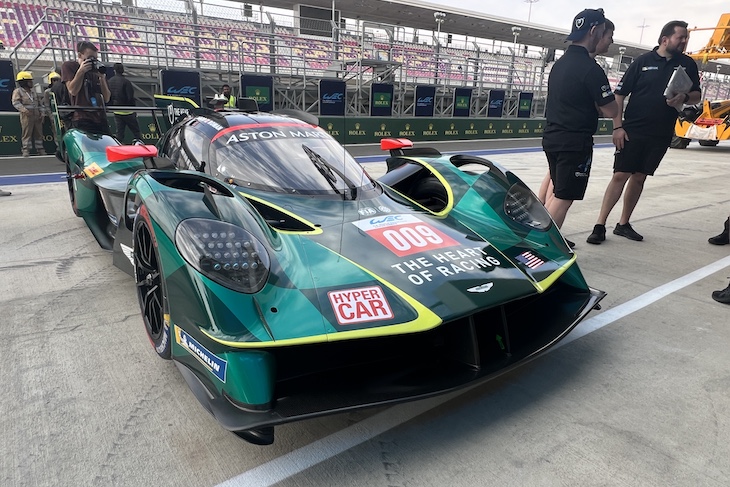
Retaining the styling cues of the Valkyrie was another important consideration for the brand, and implementing a hybrid would have brought with it different cooling demands. Packaging the additional heat exchangers and their associated inlets would have made this goal more challenging.
Ultimately, it will remain to be seen how the BoP treats the Valkyrie in competition, but as the epitome of the concept, it is hard to argue that Aston Martin has nailed the brief.
DSC’s new technical column series is powered by the industry-only PMW Expo in Cologne, which is set to take place this year on November 12th and 13th at the Köln Messe.
You can register your interest HERE and enquire about exhibiting HERE.