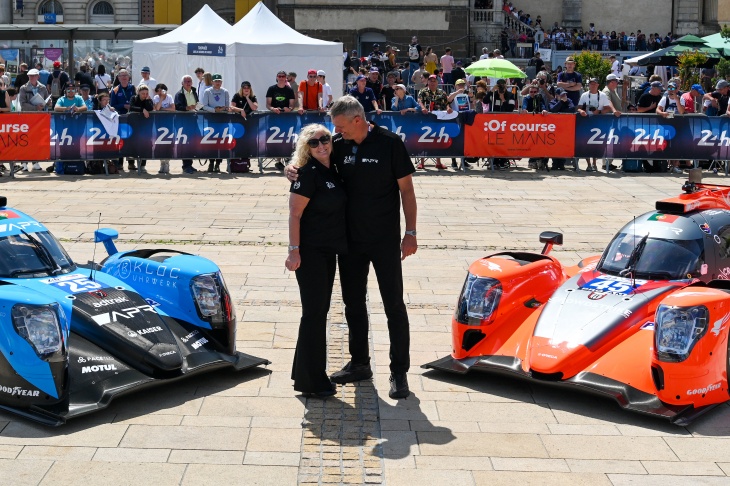
When chronicling the story of Algarve Pro Racing’s rise from a family-run grassroots test team to one of the premier privateer operations in sportscar racing, an element that cannot be ignored is that neither co-owner, Stewart nor Sam Cox, planned for any of it to happen.
Back in 2010, after a lengthy stint dating back to 1998 working at the highest level of motorsport in multiple roles with Jordan in Formula 1 (including as test team manager), and later as chief mechanic for Virgin Racing, Stewart walked away from the sport and moved to Portugal with his wife. He was done.
“I wouldn’t want to say much about that part of my life,” he says of the Virgin F1 days during a sit down over a coffee with DSC. “But that was the point when I gave up, and Sam and I packed our bags. We thought there was more to life than racing.
“You get plenty for your money in Portugal, and our life was totally different initially. We’d wake up in the morning, drop the little one off at school, drive to the local market, buy a fish, come home and make a fish salad for lunch, and then go exploring at the beach. I had no intention of ever working in motor racing again.”
But that only lasted three months. It wasn’t long before Stewart was roped in to help out engineering an aspirant driver in a Formula Renault test programme.
“I feel I’m still paying the price for that holiday, as I never get any bloody time off now,” he jokes.
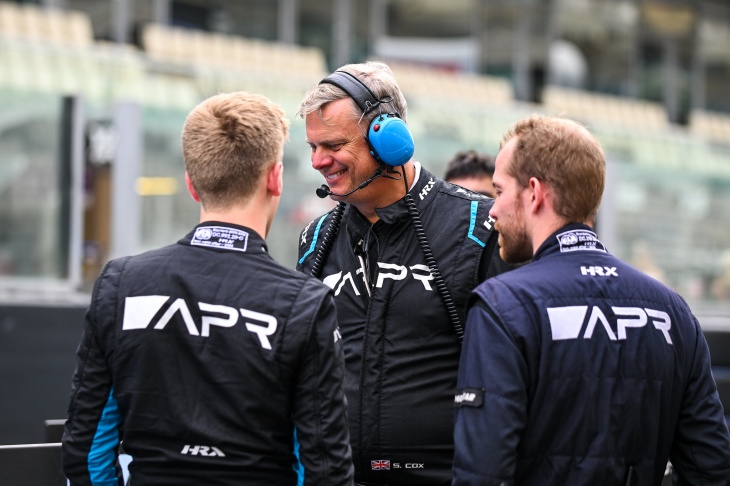
Racing, you see, is in the blood of Stewart; who, contrary to his reputation in the paddock as a loud, larger-than-life character, is often softly spoken, particularly at the end of a long day trackside with a glass of wine in hand, sitting with his crew.
This was also the case when DSC asked him to reflect on his upbringing and journey into the sport in the office space of his truck.
“My dad used to race,” he explains. “He was a printer by trade, but he did hill climbs and sprints in a Lotus Cortina. He’s one of the few drivers who beat Gerry Marshall in a Lotus Cortina in a sprint.
“And he always used to watch Formula One on TV, and when I came along, he stopped racing. I remember sitting on the roof, and he had a three-litre Capri and did a time trial at Duxford, and I can still picture it, that was 1973.
“But Sunday night the Grand Prix were on, BBC 2, and I wasn’t allowed to stay up, I blagged it sometimes. And in general, I just liked anything mechanical, anything with an engine, because of him.
“A friend of his, Ted Hawkins, used to do Formula Ford racing, and I did two years with him in the late 80s, but the credit crunch at the time meant I took a year out as teams only wanted people with more experience.
“But I got back into it, into Formula Ford with Swift and Vector before going to Williams and working on BMW’s Le Mans project before ending up at Virgin via A1GP.”
Going back to the Formula Renault test, it led Stewart to amateur racer Michael Munemann, who, it turns out, incidentally turned out to be responsible for the formation of Algarve Pro Racing.
“It wasn’t quite as it seemed, like all things,” Stewart points out. “I was doing a bit of work near where I lived, and the guy who was driving this Formula Renault I was working on was being milked out of cash.
He turned up at 9:15 and the track had been green since 9 am and he said to me: ‘I hope you’re better than the last shower of sh*t..’
“I got on quite well with the guy, though, and they asked me to do a test and a race. I did that, it was a GT3 championship with two Ferraris, and halfway through the event, they asked me to stay on for a couple of days to meet an important client.
“So I agreed, and the guy turned up on Monday morning. We had the track exclusively because the guy had money. He turned up at 9:15 and the track had been green since 9 am and he said to me: ‘I hope you’re better than the last shower of sh*t..’
“I said I didn’t want to be talked to like that, so ‘I’m out of here’ and his mate said: ‘People don’t talk to Michael like that.’ and I said: ‘Well, he’s f*cking late and I’m not interested.’ and in fairness, Michael came out and told me he respected that because he didn’t like people wasting his time either.
“So we started again, and this was how I met Michael Munemann. We had a chat, and he started driving the car. He was horrendous. He couldn’t get his head around it. Ultimately, he didn’t stay there long.
“But we carried on. He had a background in Formula Ford, so I said, ‘You’re haemorrhaging cash in this, what’s the point? Do you really want to tell everyone you race a Ferrari that badly?’ So, instead of racing the Ferrari GT2 we raced the Formula Renault in 2011 and did loads of testing.
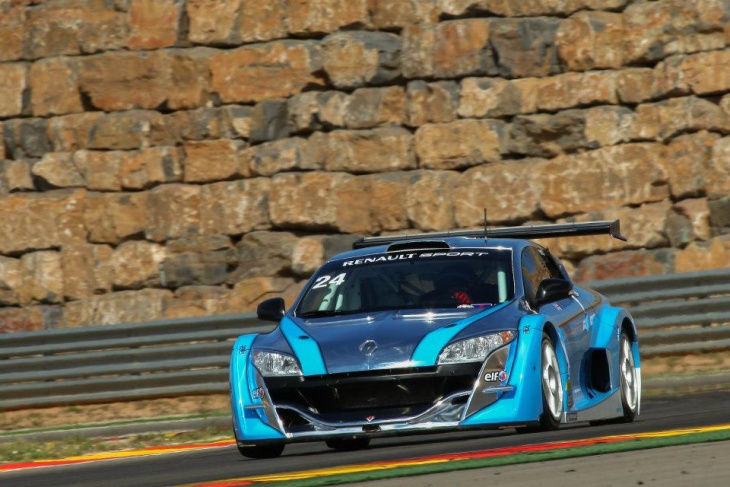
“When he’d burnt all the money with that team, he called me after we parted ways and said he wanted a test team starting up. So we bought a car, an old Formula Renault with a gear lever. But he wanted to go to Le Mans, so we moved into the Renault Megane Trophy on the World Series bill, and he did loads of testing and racing in two years and he improved.”
It was at that point that Sam – whom Stewart met and began dating a few months before moving to Portugal – found herself involved in motorsport for the first time.
“We’d known each other for a long time before we started dating. But it was still a big move!” She interjects from across the office when Stewart is asked how he convinced her to move abroad just months into their relationship. “He just wore me down!”
“The first time we went racing I made it clear I wanted to bring Sam because I didn’t want to be away all the time,” Stewart continues. “Otherwise, I’d have stayed home and done what I wanted to do, build houses.
“So she ended up doing the fuel and tyres on the car, then the lollipop (below) for the season. But the best part about it was that Sam hadn’t brought anything to work on the first day, she was wearing a pair of heels!
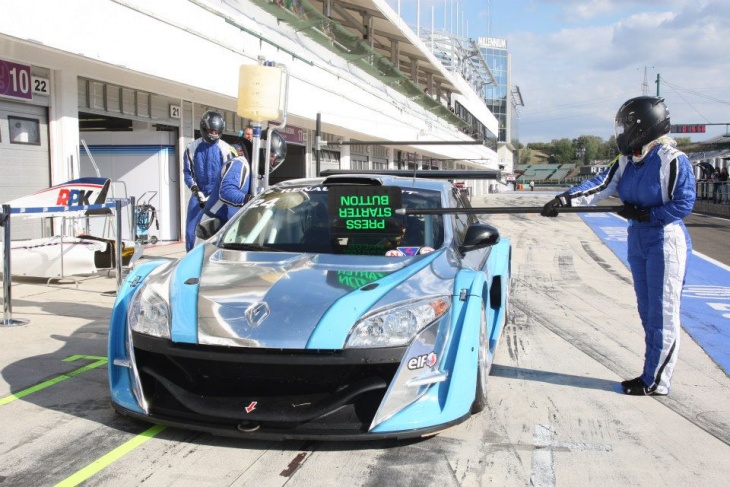
“But we had a great time because he enjoyed the driving. It was all a journey for him. He was totally serious about it, but he wanted us to enjoy it. We’d go out for nice dinners and evenings, but to him, it quickly became more about driving.
“We did two years of that, and he was getting good enough to have a crack at Le Mans. And he wanted to go to a team and do a deal because he didn’t want Sam and me working that hard. So we did a deal with Greaves Motorsport to put him in a P2 car.”
Looking back, the early years with Munemann turned out to be critical in putting the team on a path to winning races and titles regularly today, even though his first Le Mans start came to a sudden end after two hours following an incident in the wet.
“Michael was going slowly back into the pits, and Karun Chandhok came across and took the splitter off the car, broke the wishbone and snapped the bolt inside the tub,” Stewart recalls. “It was game over. All that money, for two hours at Le Mans.”
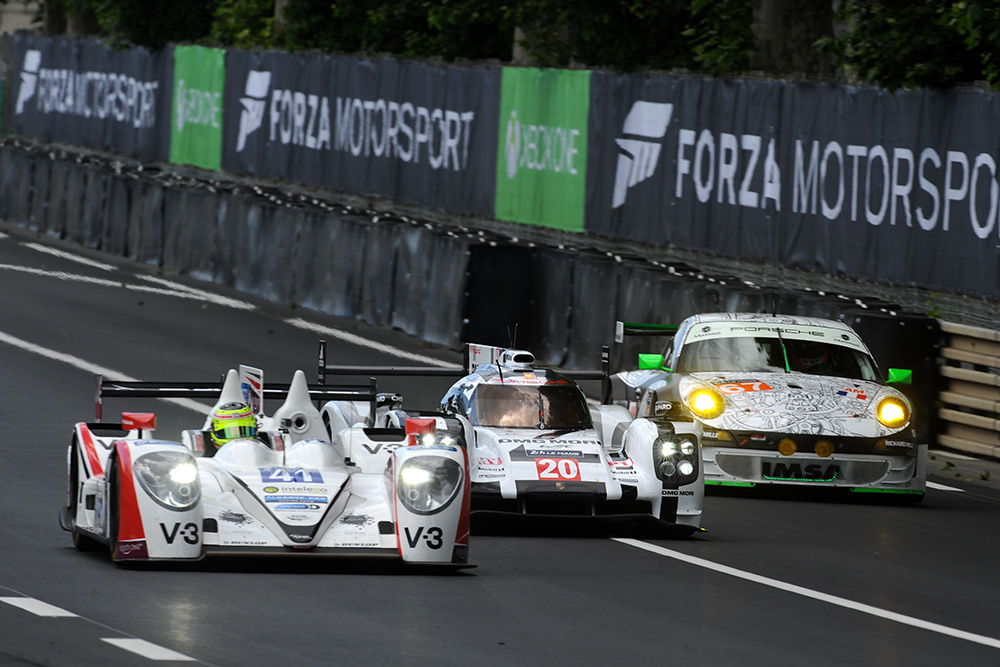
But that wasn’t the end of the story, in fact, it prompted Stewart and Sam to push even harder to help him achieve his goals.
“We decided to go again, and we bought a Ligier JS P2 in December that year,” Stewart says. “And there we were, running a P2 car with like four people. I could drive the truck, I could engineer the car, I could be a one-man race team, but you need more, and he was against having lots of people as he felt the team became an extension of his business if it was too big.
“But we did a bit of ELMS in 2015, and then in 2016, he wanted to try one more time for a Le Mans entry. We were on the reserve list, as the first reserve, but we got a call eventually from Pierre Fillon (the ACO President) to say we had got in.”
Within an hour of that news, Sam received a second phone call, this time from Nissan, offering Sir Chris Hoy as a driver to race alongside Munemann and Andrea Pizzitola. It made for a whirlwind race week, as in addition to coaching the Six-time Olympic Gold Medalist through the event, the team was the subject of a BBC documentary about his switch from two wheels to four.
“We had no clue about that bloody documentary until we signed the deal,” Sam recalls.
“You couldn’t script it really, having the BBC following us around while I was organising the team’s first Le Mans. It was stressful, but we got through it the best we could. All we wanted was the car to finish as that’s what Michael wanted.”
The Ligier JS P2 did indeed make the end of the race, completing 341 laps and finishing 12th in class. It was a milestone moment when the car crossed the line on Sunday afternoon.
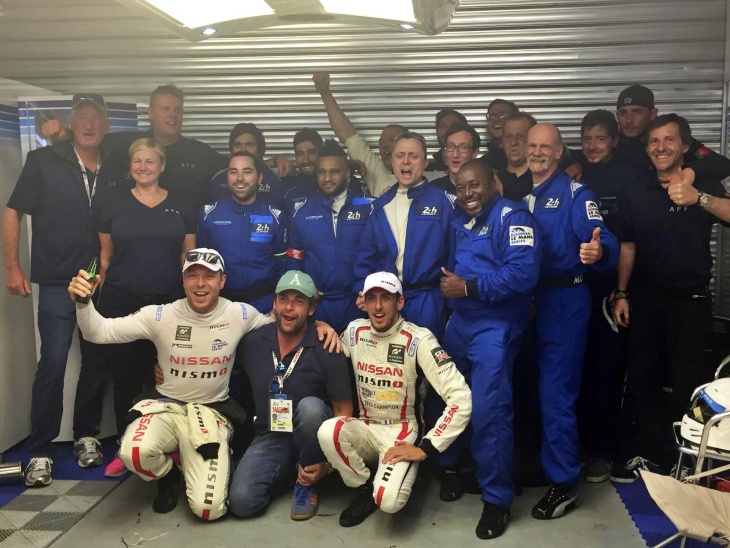
From there, the team grew and grew, rapidly to the point where in its present form, the entire operation is almost entirely unrecognisable from the early years. Through graft and improved form APR expanded from the ELMS to the Asian Le Mans Series in 2016 then the IMSA WeatherTech SportsCar Championship in 2022, winning key races and titles along the way, all run out of a modest pair of workshops on the continent that measure 400 square metres total.
The recent track record is astonishing. The team’s current tally of Asian Le Mans LMP2 titles has reached five, in addition to an ELMS crown in 2023, a 2023 Michelin Endurance Cup title in IMSA and three LMP2 Pro/Am class wins at the Le Mans 24 Hours. Since 2016, through the current ORECA 07-dominated era, APR has become an LMP2 ‘Super Team’, with a record that is essentially unmatched in the formula.
“Running a team out of Portugal is hard, the bureaucracy is hard, but once you understand it, it works,” Stewart explains.
“Well, it certainly works for us, as it’s relatively inexpensive and we can keep it personal. Though the paddock has gone berserk since 2017/18, with salaries tripling and quadrupling. But we keep doing well, improving every year. I know enough about engineering to know what I need to spend money on and what I don’t.”
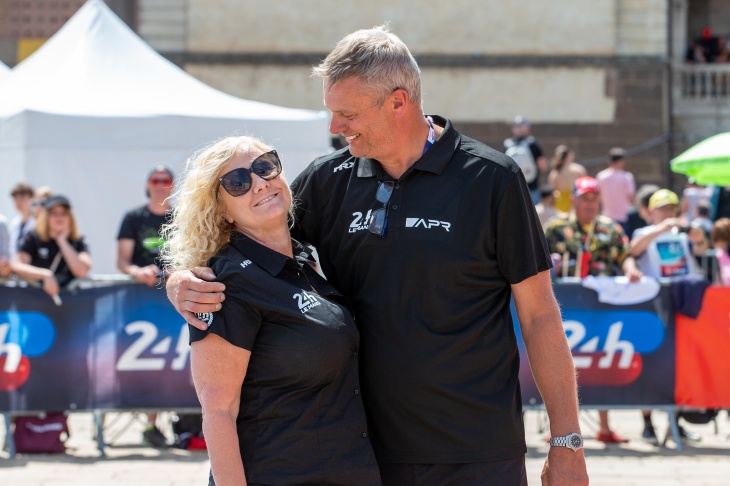
That’s one of the elements of the team that’s striking when you take a moment to study how it operates. APR is run extremely efficiently and punches well above its weight with the resources it has, retaining its tight-knit, family feel.
In an era where paddock hospitality structures are getting taller and more impressive by the year, Stewart and Sam remain focused solely on staff retention, pouring the vast majority of its budget into car performance, results and, according to former driver Alex Lynn, “the best catering team in the paddock” rather than the team’s image.
“It’s just been hard work for us. And you have to keep at it and get the right people on board to make it work. If you do, everyone pushes on with a goal, and it works,” Stewart says.
“We have one crew for Asian, ELMS and IMSA, another for Asia, ELMS and Le Mans. You just motivate them with money and give them the conditions they like working in. We want everyone to think of it as a tough hobby rather than a hard job.
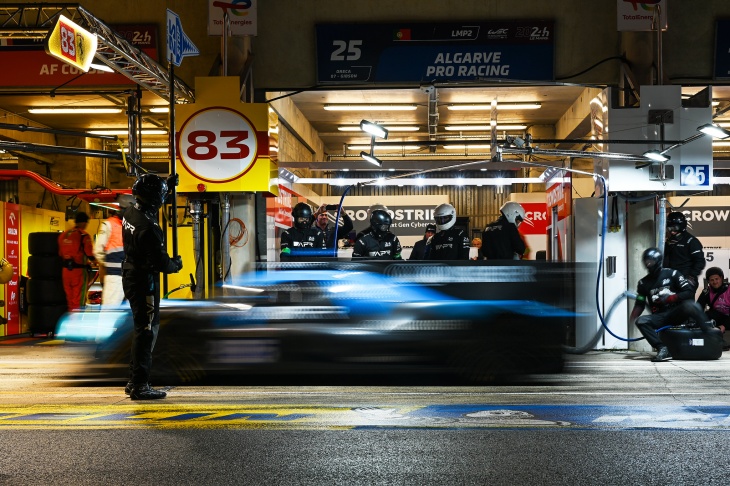
“You only want people that put the same level of effort in that you do, it’s the same for the drivers. We don’t want drivers who just jump in the car and then go to the hotel.”
And it’s for that reason that a number of significant commercial alliances have come the team’s way.
This includes the recent tie-up with Crowdstrike Racing via George Kurtz that has seen the team flourish stateside and with Chip Ganassi Racing, which placed development driver Kyffin Simpson with the team for the 2023 title-winning ELMS season alongside Alex Lynn and rapid Australian James Allen.
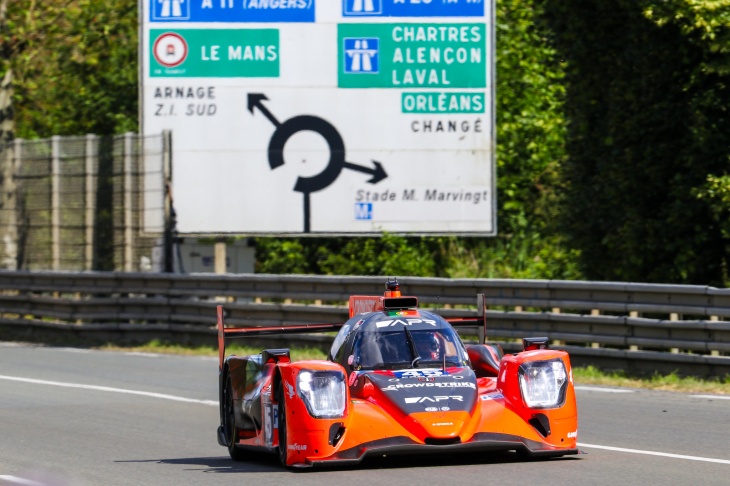
“People come to me, as they know we run cars well these days,” Stewart explains. “It’s how we got introduced to George. he came our way, and as long as we keep delivering, that relationship will continue. That’s been huge, it’s allowed us to expand where we race and show the North American race scene what we can do.”
Stewart and Sam never sit still and show no signs of slowing down as we reach the halfway mark of the current decade and the team’s 20th-anniversary approaches.
With the Hypercar and GTP grids swelling, powered for the most part by service providers plucked from the LMP2 ranks, APR appears primed to step up into the top class with a manufacturer looking to join the LMDh or LMH ranks. “It’s something we’d be dead keen on,” Stewart points out.
We have no secret backers pumping money in; we live and die by results, and our budget comes from customers
“We’re not one of the well-funded teams in the ELMS, that’s for sure. We have no secret backers pumping money in; we live and die by results, and our budget comes from customers. But we feel we could do that, race in Hypercar either privately with the right commercial structure or with a factory.
“I’m a ‘we can do that’ sort of person, so it doesn’t phase me. Whether it’s smart or not, time will tell. The bigger question is what the future holds. It’s fantastic right now, but the ACO, FIA and IMSA all know that one false move and they’ll have no grid in a few years.

“They need to take a look at ensuring teams like ours keep coming back, give us opportunities to win races and stay profitable.”
In the meantime, the team finds itself fighting on multiple fronts once again. Fresh from clinching the 2024/25 Asian Le Mans title in February, APR is locked into another globe-trotting tour that encompasses the full ELMS and IMSA seasons, plus a two-car effort at Le Mans in June.
“It all comes back to what Michael told us from the start,” Stewart concludes. “He said: ‘Look, the thing about life is, you can do loads, but if you don’t enjoy it, then there’s nothing really there, you get old and you’ve done f**k all. It’s all about the journey.’ And that’s what we’re on right now.”