
As is the tradition in the lead-up to the 24 Hours of Le Mans, DSC takes a look back at some of the significant anniversaries being celebrated at this year’s Le Mans.
5th anniversary (2020)
Astonishingly, it’s almost five full years since the COVID-affected, behind closed doors Le Mans 24 Hours.
With no fans permitted to attend and multiple teams struggling for commercial traction, it was a sad sight in September, particularly from the podium, but all credit to everyone who made it happen.
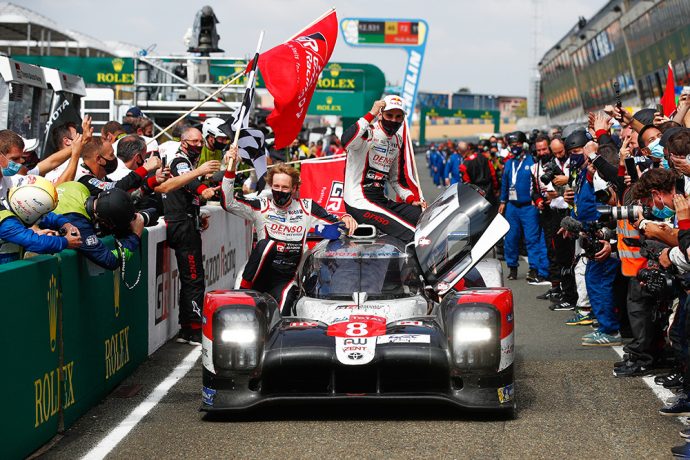
It was also the final Le Mans for the LMP1 class that had provided every winning car since 2004, the #8 Toyota crew taking the win in the awesome TS050 Hybrid.
10th anniversary (2015)
A decade ago, Porsche scored the first of three Le Mans wins for its magnificent 919.
The win saw F1 driver Nico Hulkenberg, joined by current Cadillac racer Earl Bamber and Nick Tandy, now back with Porsche after a spell with Corvette, take the victory. It would be the first of the major 24-hour overall wins for Tandy, who followed with wins at the Nürburgring 24 Hours, Spa 24 Hours and Daytona 24 Hours to complete a unique quartet.

It’s also the tenth anniversary of a unique experiment, the front-engined Nissan GTR Nismo LMP1, which failed dramatically. The promised hybrid system wasn’t delivered and the fan-favourite Nissans, running without the substantial boost it was designed for, proved to be woefully off the pace. It would never race again.

15th anniversary (2010)
2010 saw a 1-2-3 for Audi’s ‘Ugly Duckling’ R15 TDI Plus, a somewhat compromised version of the initial R15 concept after Peugeot protested the car’s aero package.
It was, though, a race that Peugeot should never have lost.
Its 908 HDI FAPs had dominated since wining at Le Mans in 2009 and, in the led-up to Le Mans, had a clear performance advantage.

Team management, though, decided that they wanted a still further edge and signed off on an engine upgrade, featuring titanium connecting rods for Le Mans. It would prove to be a disastrous move; three of the four 908s entered would see the rods fail in spectacular fashion after the first car had fallen early victim to a suspension mount failure.
A seemingly surefire double win almost literally went up in smoke.

20th anniversary (2005)
2005 was the big chance for Henri Pescarolo to take the overall win as a manufacturer and team owner with his pair of Pescarolo C60 Hybrids (Hybrid in this instance referring to a mix of aero regulations and not a Hybrid electric drive).

The all-conquering Audi R8s, as fully-fledged LMP900 cars, had to run with smaller air restrictors and with more weight, handing the Pescarolos a significant advantage. The gap in qualifying between the fastest of the Pescarolos and the fastest Audi was a mighty three seconds.
A clash early in the race between Soheil Ayari and the Panoz of Patrick Bourdais led to a four-minute delay, though, as the #17 Pescarolo attempted to lap the GT and sustained significant damage. The sister #16 car hit gear selection problems and a bodywork-damaging puncture, leaving it to chase from behind.
A clash overnight between Ayari and Bobby Verdon Roe (Rollcentre Dallara) then delayed the #17 further before spin into the tyre wall for Ayari 18 hours into the race after picking up a puncture ended the run for the #17. The #16 would fight back to second, but the lost opportunity was a heartbreaker for Henri. Soheil Ayari was off his Christmas card list for good!

The win went to the Champion Audi of Marco Werner, JJ Lehto and Tom Kristensen, the Dane’s seventh win and overhauling Jacky Ickx’s win total. The Legend of ‘Mr Le Mans’ was building!
25th anniversary (2000)
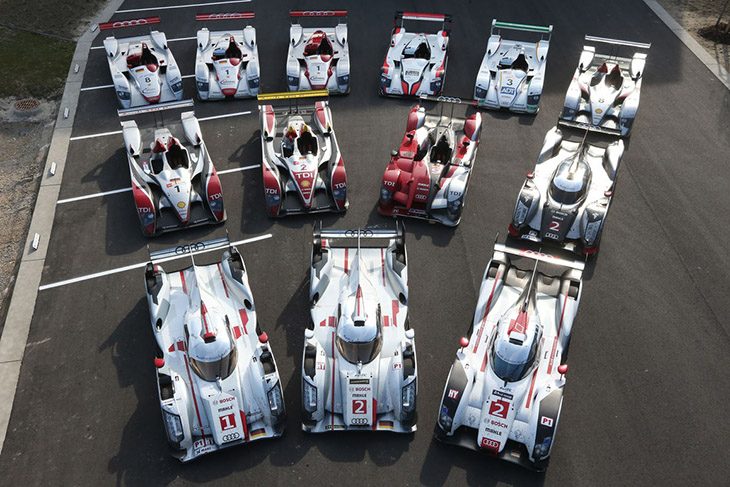
It is a quarter of a century since Audi arrived for its second attempt at Le Mans and swept all before them in a dominant podium sweep that effectively announced a new era.

The mould-breaking R8s locked out the podium with cars that brought a new level of pitlane preparation and serviceability to Le Mans. The quick-change rear end of the early cars was soon outlawed. Still, the approach of Audi and their Team Joest service providers would set a standard that all who followed had to meet, or better.
The R8 would win five times in a six-year stretch, with Audi taking 13 wins in 15 years (featured)!
30th anniversary (1995)
The race in 1995 would see a win from McLaren on its debut and the most recent win for a car that was first designed as a road-goer.

The #59 McLaren F1 GTR, complete with its astonishing BMW V12 engine, redefined the era as GT1, and GT in general, started a march forward that shows no sign of slowing, through the GT1, GT2 and GTE eras, before LMGT3 arrived in 2024.
With McLaren back at Le Mans in the GT ranks, and with a Hypercar programme now in preparation, the 1995 Le Mans-winning brand is now looking, for the first time in over a quarter of a century, to provide an encore.
Also notably 1995 saw the first win from a Japanese driver, Masanori Sekiya.
35th anniversary (1990)
Jaguar’s last win, with the Jaguar XJR12 LM, came 35 years ago, its second of the group C era, and Jaguar’s seventh.

It was the second too for the Tom Walkinshaw Racing-run team. Price Cobb, Martin Brundle and John Nielsen shared the victory with ‘Big John’, the first ever Dane to win the race.
40th anniversary (1985)
It’s now 40 years since Toyota entered Le Mans for the first time with a ‘factory’ effort, the RC85C-L – Though the car was a TOMS entry and with a chassis from Dome.
The driver trio included Masanori Sekiya who would win ten years later with McLaren. Somewhat unusually Satoru Nakajioma featured too, father of course of now vice-chairman of Toyota Gazooo Racing and three-time overall winner Kazuki Nakajima. Satoru’s inclusion was unusual because, at the time, he was a Honda-contracted driver, his appearance coming because of an association with Dome. The late Kauro Hoshino completed the driver trio that would finish a fighting 12th.
Amazingly, it is now also the 40th anniversary of the final start at Le Mans for Jacky Ickx! The six-time Le Mans winner would share a factory Porsche 962 with the late Jochen Mass, scoring a 10th place finish, remarkably his lowest ever finishing position!
His 15-race Le Mans history included those six wins, a trio of second places, 10th and 5 x DNFs. He walked away with his status as an all-time great, very secure indeed!

The race also saw a second consecutive win for NewMan Joest Racing’s Porsche 956B chassis #117, the car becoming the fourth car to do so.
There would be a fifth, the TWR WSC 95, in 1996 and 1997. All five were brought together at the Goodwood Festival of Speed for a unique photocell in 2023 as part of the celebration of the Centenary of the race.
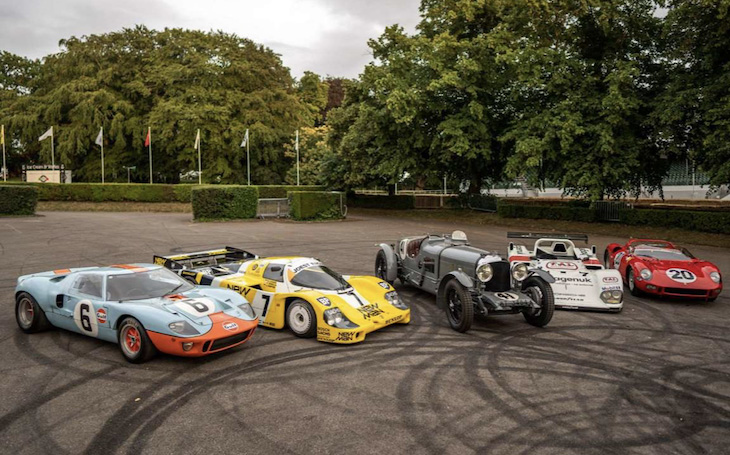
Pic Copyright Goodwood Road & racing
45th anniversary (1980)
Le Mans history is dotted with significant moments and 1980 produced a truly significant one as Jean Rondeau took the overall win, in a car he had conceived and built himself, the Rondeau M379B.
The achievement followed on from a pair of class wins for the team owner, again both in cars from his own workshop, in 1977 and 1978.
Just as remarkably, the Rondeau win also marked the last overall Le Mans win to date for a car powered by a Ford-badged engine, with the M379B sporting a Ford Cosworth DFV.

50th Anniversary (1975)
Astonishingly, it is 50 years since a car bearing the iconic Gulf colours took an overall win at the 24 Hours of Le Mans.
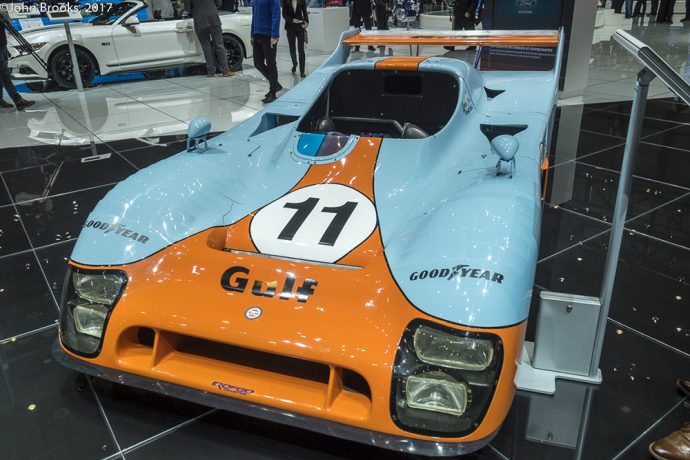
1975 saw the Gulf-Mirage GR8 of Jacky Ickx and Derek Bell finish a lap clear of the similarly Ford Cosworth DFV-powered factory Ligier JS2 of Jean-Louis Lafosse and Guy Chasseuil, this the best ever finish so far of a Ligier.

55th anniversary (1970)
Porsche is super keen to add a 20th overall win to its record total. That it is looking to try to do so just 55 years after their first win is still mathematically impressive!
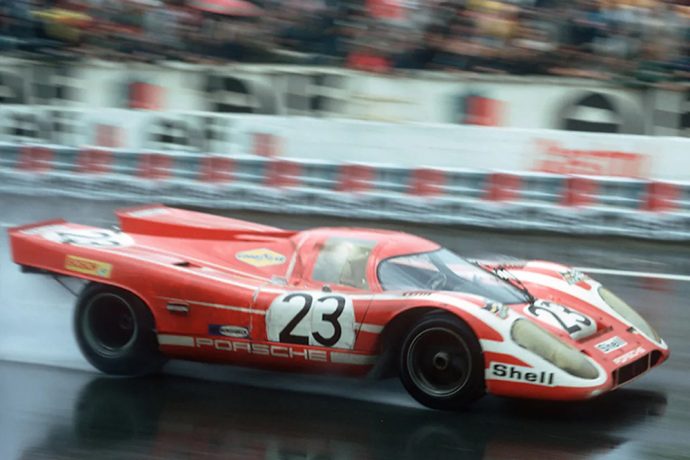
That first win came with the works-backed Porsche Salzburg 917K of Hans Hermann and Richard Attwood, the start of a run that would see Porsche claim 12 wins in 18 years.
60th anniversary (1965)
The race in 1965 saw an overall win for the pretty little Ferrari 250 LM of Jochen Rindt and Masten Gregory (with reserve driver Ed Hugus claiming many years later to have driven a stint too).
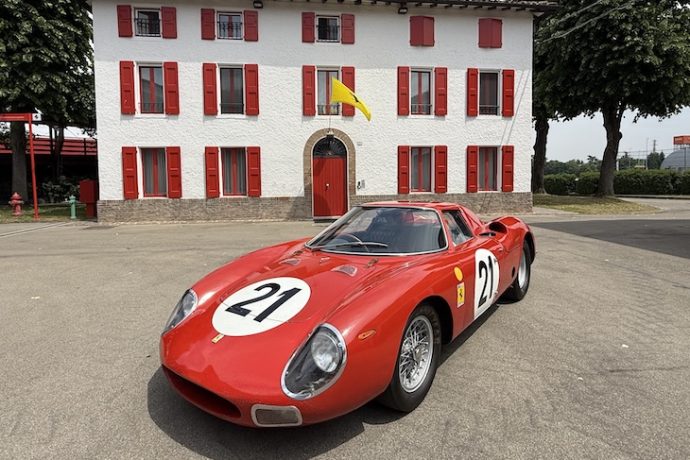
It was Ferrari’s last win until 2023 and came as the Ford GT40 effort came to bear. No fewer than six GT40s were entered, and all were out of the race by the seventh hour, the calm for Ferrari before the Blue Oval storm that would follow!
Notably, it was also the first international race win for Goodyear tyres.
70th Anniversary (1955)

The darkest day in the history of the race, and indeed in the history of the sport, came on 11 June 1955 with the accident that claimed the lives of at least 81 spectators and Mercedes-Benz driver Pierre Levegh.
The incident saw the French racer’s Mercedes 300SLR launched over the Austin Healey of Lance Macklin and into the crowd after the slower car moved to avoid Mike Hawthorn’s Jaguar, which had moved across his path to head for his pit.
90th Anniversary (1935)
1935 saw the only overall win for the British Lagonda marque, the M45R Rapide of Luis Fontes and Johnny Hindmarsh.
The same race, somewhat ironically, also saw the first overall podium finish for Aston Martin, which would go on to purchase Lagonda in 1947 and win the race overall in its own right in 1959.
100th Anniversary (1925)

Lorraine-Dietrich took the first of back-to-back wins in 1925 with André Rossignol following his class victory in the first running of the race in 1923 with the first of what would become two overall wins.
He’d win again with Lorraine Dietrich the following year, becoming the first driver to take multiple overall wins at Le Mans.
Pic Copyright ACO Archive