Welcome to Part 3 of DSC’s A-Z of Hypercar and GTP. Missed out on the previous instalments? Catch up with PART 1 and PART 2 with these links.
FIA
The Federation Internationale de l’Automobile is the world governing body of motorsport.
It provides the regulatory framework that underpins the safety, technical parity and sporting standards for the FIA WEC.
The body also provides the driver ranking system, circuit certification, race control and stewarding staff and training.
The FIA and ACO collaborate on various matters, including the Balance of Performance systems for the FIA WEC, and work closely with IMSA’s technical team.
FIA WEC
The FIA WEC (World Endurance Championship) commenced in 2012 as a joint venture between the FIA and ACO, managed and promoted by LMEM.

The top class of the WEC transitioned from LMP1 to Hypercar from the 2021 season. In 2025, Hypercars race alongside production-based LMGT3 cars in a two-class championship, with LMP2 joining for the Le Mans 24 Hours.
All full-season FIA WEC-entered cars are accorded an assured entry to the 24 Hours of Le Mans, which also serves as a double-points-scoring round of the FIA WEC.
Championship-winning drivers and manufacturers are accorded full World Champion status from the Hypercar class. The championship also has a Hypercar Cup for privateer entries.
Ford
The Blue Oval is another industry giant which had at least two sniffs around the ruleset tree before committing earlier this year to a programme to join the FIA WEC in 2027 with an LMDh Hypercar based on an ORECA spine. Whilst turbo power is the default option in Hypercar, some sources suggest that Ford may opt to go toe to toe with its GM rivals with a normally aspirated V8!
It is set to become Ford’s first top-class effort at a global level in sports cars since the Group C C100.
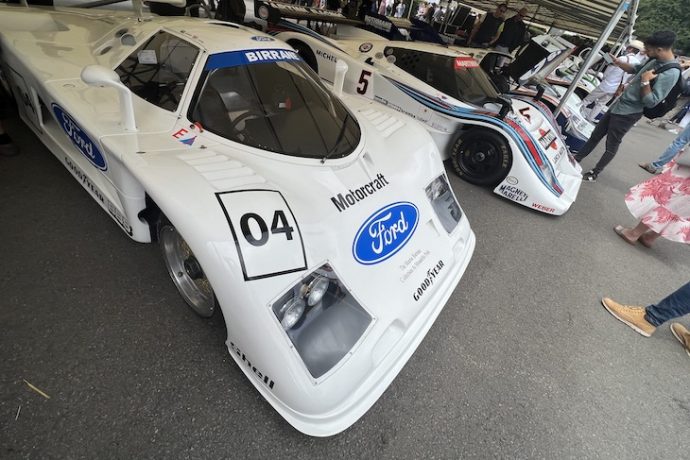
Ford initially looked at Hypercar and GTP while the plans for convergence were in their early stages, before deciding instead to focus on a GT3 platform with the Mustang platform.
A later evaluation was shelved as the brand decided instead to fund an F1 engine programme before finally deciding to join the flood of manufacturers looking at Hypercar.
Ford has not yet announced its selected service provider, but it is understood to be in negotiations with a team currently servicing an existing WEC Hypercar outfit. It has also hired Dan Sayers as its programme manager.
There’s no word yet on whether an IMSA GTP programme will come together for Ford’s challenger. As its motorsport boss Mark Rushbrook points out: “We’re already present as a factory team in IMSA, racing with the Mustang in GTD.”
However, should it opt to run parallel programmes in the future, Rushbrook previously told DSC that its WEC service provider would need to be capable of operating cars on both sides of the Atlantic. It doesn’t want to work with a second team based in North America.
Fortescue Zero
See Williams Advanced Engineering.
Ganassi Racing
Ganassi lost out after piloting both the WEC and IMSA Cadillac programmes as a factory service provider.
Currently, without a programme, the US giant is known to have courted a number of potential clients, including BMW, Ford, and Genesis.
See Cadillac.
Geely
See Lotus.
Genesis
The ‘halo’ luxury and performance brand of South Korean giant Hyundai is set to use sportscar racing as an important element in a global boost for the brand.
After evaluating nearly every option on the global motorsport scene, Hyundai/Genesis settled on Hypercar and GTP and is set to enter the WEC in 2026 with a two-car team, featuring the forthcoming GMR001 under the Genesis Magma Racing banner, directed by Cyril Abiteboul.
The car is based around an ORECA ‘spine’ (joining Alpine, Acura and Ford on the ORECA customer list) and powered by a Pipo Motors turbo V8 developed from the Hyundai WRC rally engine – effectively a pair of four-cylinder engines mated together.
The WEC team is set to be based in Signes, southern France, on the technoparc adjacent to Circuit Paul Ricard in a new facility designed and built by IDEC Sport.
For the WEC, the effort will be run by an in-house factory team. To prepare for that, Genesis is collaborating with IDEC to field an LMP2 ORECA in the 2025 ELMS, principally to allow incoming crew members to familiarise themselves with the endurance racing discipline, and, not inconsequentially, the rulebook!
The team is set to move into its new HQ this summer (July is planned), with the track debut of the first development, GMR001, soon afterwards.

The full-size visuals of the car were revealed just a few weeks ago, and the engine, despite some reported difficulties, had its first bench fire-up just a few days later.
For the US programme, there is an active selection programme to select a service provider to support the IMSA effort. DSC is aware of the shortlisted parties who do not, at this point, include Ganassi, an early tip for the role.
There is still a possibility, if the programme goes well, that the Genesis could be seen in some late 2026 IMSA races, but indications are that the timelines across the board for Genesis are proving to be challenging
Gibson
Gibson Technology’s sonorous 4.5 litre GL458 normally aspirated V8 powered the now-parked Alpine A480 and continued in the ‘Vanwall’ Vandervell 680 as a much-upgraded version of the very familiar GK428 4.2 litre engine, which is the spec unit for LMP2 worldwide.
The ByKolles-run effort pointed to the unit being down on power in BoP’d form, something that the team was well aware of, before public pronouncements of a switch to the ex-Glickenhaus Pipo engine in which form the car has never raced.
Ginetta
There was a fleeting possibility that the British outfit might register its G60 LMP1 car as a grandfathered 2021 Hypercar. The notion was not progressed.
The brand has instead focused on relaunching its LMP3 programme in recent years to coincide with the 2025 refresh for the category’s regulations.

Glickenhaus
Jim and Jesse Glickenhaus provided some early competition for Toyota (and Alpine) with their very pretty, retro-styled SCG 007 LMH Hypercar.

Initially designed to be powered by an Alfa Romeo turbo V6, the early regulations’ changes following the addition of the Aston Martin Valkyrie led to a search for a different engine. Ironically, the withdrawal of the Valkyrie and the subsequent convergence process would likely have rendered the Alfa unit fit for purpose, but by then, the outfit had committed to a new-build twin-turbo V8 from rally and race specialists Pipo Moteurs.
The SCG 007 raced for three partial seasons, in conjunction with Joest Racing. The effort’s highlights included scoring pole position twice in the WEC and finishing on the podium four times, including at Le Mans in 2022, where the team’s two cars achieved a 100% finishing record across its six entries over three years, with a lowest overall finishing position of seventh.
The second car, raced as #709 three times at Le Mans and in selected WEC races, is owned by Glickenhaus customer and dealer HK Motorcars.
After Monza in 2023, Jim Glickenhaus made it clear that he had neither the budget nor the inclination to chase the development curve of the increasing number of major manufacturers. The cars missed the flyaways that year, and, after attempts to find major sponsorship proved fruitless, the cars were not entered for the 2024 championship.
There was a potential way forward for the Glickenhaus / Pipo turbo V8 with ByKolles suggesting that they were redesigning their Vanwall LMH around the unit, but this programme never emerged.
Green GT
Named as the powertrain supplier for the proposed, but currently delayed, Hydrogen fuel cell top-class ruleset, Green GT has been involved in hydrogen tech for several years. Its prior and current projects include both a delayed Garage 56 car and involvement with the ongoing H24 technology demonstrator.

GTP
IMSA’s GTP (Grand Touring Prototype) class is the umbrella for the combined LMDh, LMH formula that sits atop the IMSA WeatherTech Sportscar Championship class structure.
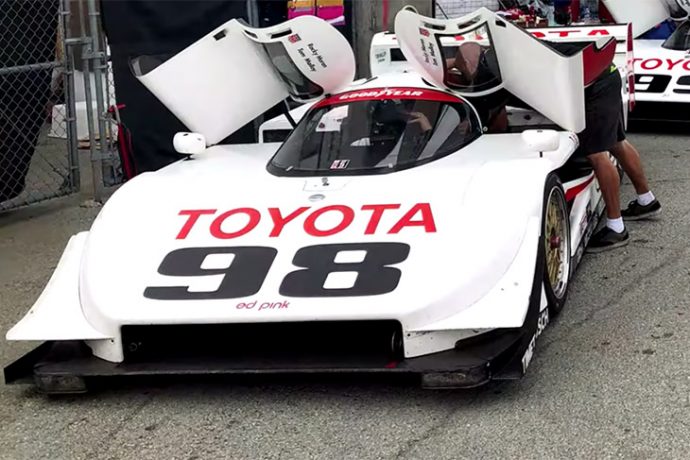
The GTP moniker is a historic one, harking back to a previous golden era in the 1980s and 1990s, when IMSA’s version of the then-dominant Group C rulebook was given the GTP moniker.
GTP operates under an IMSA rulebook, but with significant parallels to the FIA/ACO Hypercar ruleset.
Honda
If the Acura ARX-06 were to race at Le Mans, it would need a full-season FIA WEC entry. And that would likely be under the Honda brand (Acura is a North America-only brand).
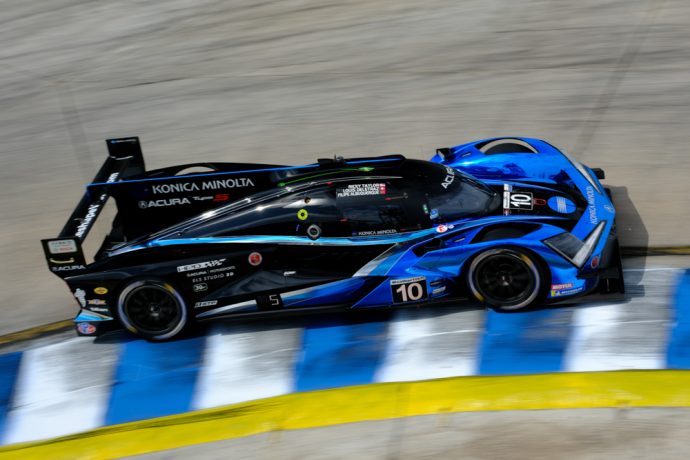
DSC is aware that more than one WEC team has investigated the potential for a Honda programme without success. As noted in Acura above, customer cars are not expected to feature for some time yet.
The advent of the new-for-2024 HRC US (see below), however, gave some new impetus for a future effort, with senior industry voices now openly discussing interest. At least one recent interview, however, suggests that Honda in Japan shows no interest.
(See Acura)
HPD
Honda Performance Development in the USA was behind the design and build of the high-revving 2.4-litre twin-turbo V6 that powers the Acura ARX06, the engine initially designed to do double-duty in GTP and IndyCar before a volte-face by the single-seater series.

HPD was renamed as HRC US for 2024 and now sits alongside its Japanese parent company as a centre of excellence on its continental and global programmes.
HRC
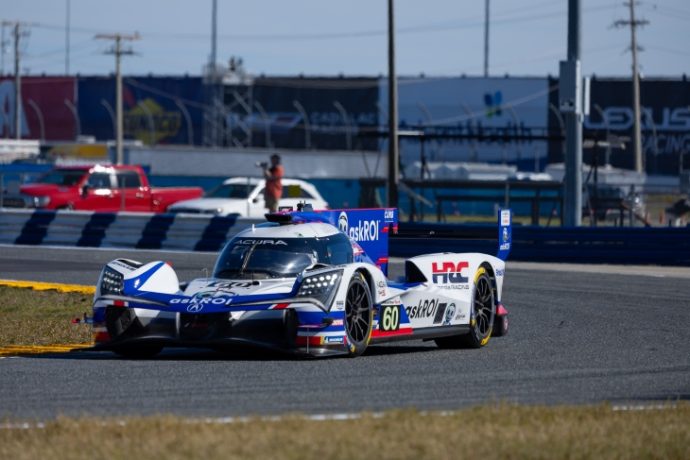
Honda Racing Corporation is the entity which would be responsible for any potential future FIA WEC Hypercar programme, most likely in collaboration with its HRC US subsidiary, which designed and built the current Acura ARX 06 GTP machine.
HWA
The German engineering outfit (and former DTM stalwart) was commissioned by Isotta Fraschini to produce both the internal combustion engine and the hybrid drive electric motor for its Tipo 6 Hypercar.
The 3-litre turbo V6 is understood to be based on a VAG production unit but heavily reworked for racing.
Hypercar
Now, simply the class title for the top level of the FIA WEC, the term has had a slightly confusing evolution.
Initially intended as a class populated by an earlier iteration of the current LMH (Le Mans Hypercar) regulations, the class evolved into a broader definition after the convergence process was confirmed in 2020, and now encompasses LMDh machinery, as well as hybrid and non-hybrid cars built to LMH regulations.
Hyundai
The Korean giant is known to have evaluated developing cars for both LMDh and the currently paused Hydrogen Fuel Cell regulations. The latter looked, for some time, to be the most likely entry point for an entry into the sports prototype marketplace.
The move, though, came with a decision to focus on the company’s newer Genesis halo brand, now confirmed for 2026 in the FIA WEC and 2027 in IMSA with the ORECA-based GMR001 LMDh.
(See Genesis.)
IDEC Sport
The Lafargue-family owned, Nic Minassian-managed team is working hand in glove with the Genesis Magma Racing operation with its 2025 ELMS LMP2 preparatory programme.
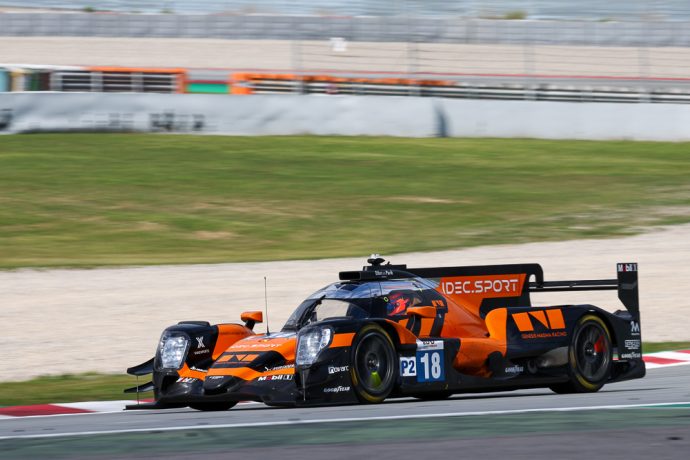
The new Genesis race team HQ is on the same Signes plot as IDEC Sport, and inevitably, there will be some ongoing bonhomie, though a role for the team in running the factory programme, or a customer car, seems not to be in immediate prospect.
IMSA
The International Motorsports Association is owned by NASCAR under founder Jim France, operated under President John Doonan and based in Daytona Beach, Florida.
IMSA sanctions and operates the IMSA WeatherTech SportsCar Championship, with its regulations featuring GTP as the premier class.
It also partners with the ACO (See ACO) on several strategic regulatory matters, including the converged Hypercar/GTP rulesets, LMP2, and LMP3.
IMSA WeatherTech Sportscar Championship
NASCAR-owned IMSA’s premier sportscar racing product in North America.

Operating at road and street courses across the USA (plus CTMP in Canada for a currently LMP2-headlined race meeting), the championship features GTP as its premier class. It’s a series composed of endurance and sprint racing with mixed grids of prototype (GTP and LMP2) and production-based (GTD Pro and GTD) machinery.
The championship is one of only two non-ACO-operated series (and the only one for the top class) that allows cars to gain an entry to the 24 Hours of Le Mans.
(See IMSA.)