Here we are at the final section of DSC’s A-Z of Hypercar and GTP, covering Japanese marque Nissan, all the way to the Danish manufacturer Zenvo.
All previous parts can be viewed by clicking the following links: PART 1 – PART 2 – PART 3 – PART 4
Nissan
Whilst no interest in Hypercar has been announced or confirmed by Nissan, DSC is aware that senior management was in contact with a number of teams and industry bodies in the first year or two of the ruleset to investigate the marketplace.

And that interest is still very much alive. DSC is aware of current moves that might reasonably be defined as a formal evaluation.
Might the Japanese giant be set to shrug off the recent controversy of an abandoned merger with Honda by embarking on their first top-class sports car programme since the ill-fated GTR LM of 2015? It seems improbable, but not impossible.
ORECA
The French motorsport industry giant undertook both LMDh and LMH concept commissions and is currently building LMDh ‘spines’ for both Acura and Alpine, with Genesis’s GMR 001 also set to feature ORECA underpinnings.
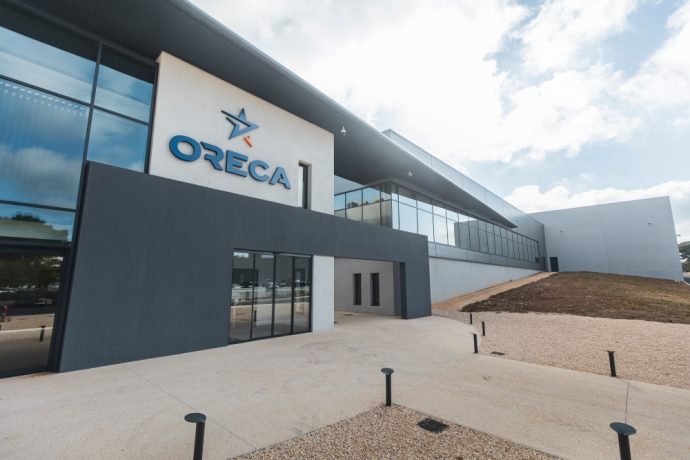
Ford has also confirmed that it will use ORECA’s spine for its 2027 LMDh car.
ORECA is known to have undertaken concept work for McLaren, though the Woking brand has chosen Dallara.
Pescarolo
See Peugeot.
Peugeot
The return to the top class with the radical ‘no rear wing’ 9X8 saw Peugeot’s first entry into the FIA WEC after their last-minute withdrawal prior to the start of the championship in 2012.

The car was greeted with huge enthusiasm for its unique style, but struggled for reliability in its part-season in 2022 (the team ran the three races post-Le Mans) and at Sebring in 2022.
The team replaced its troublesome electronic gearbox actuator with a hydraulic system in early 2023. While the car showed flashes of competitive form, particularly at Le Mans and with its only podium finish at Monza in 2023, it rapidly became clear that the radical concept was a bust. A significant redesign was soon in the works, featuring a far more conventional aero package.
That car debuted after a final hurrah for the outgoing car at Qatar in 2024, where, ironically, the ‘old’ 9X8 ran competitively before running out of fuel late in the race.
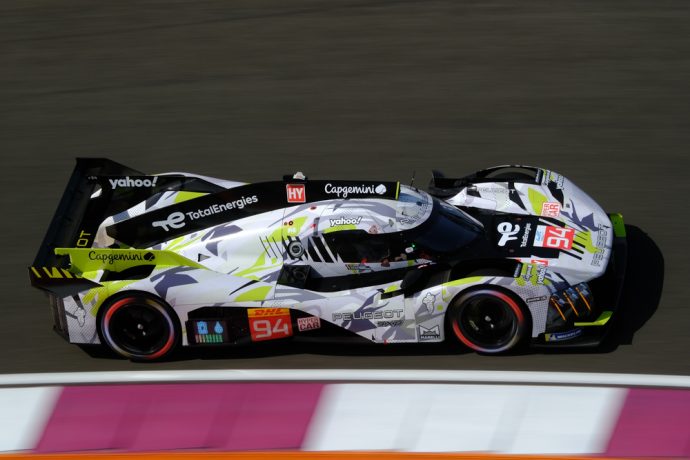
Sadly, the redesigned car was off the ultimate pace, though significantly more reliable. A single podium finish at Bahrain in 2024 is thus far the only podium finish for the car.
Despite the programme’s travails, Peugeot seems set to commit to a longer programme with a new car at some point in the near future (potentially from 2027), and the Stellantis board is understood to have green-lit a Peugeot continuation at the expense of a potential Alfa Romeo replacement.
There was reported interest in a privately entered 9X8 from the new (and entirely unconnected with Henri) Pescarolo effort for 2023.
Despite significant media attention on the effort, there was never a realistic prospect of the team gathering enough of the one resource they lacked: money.
Pipo Moteurs
The French engine specialists, multiple World Championship winners in WRC and World Rallycross, provided the 3.5-litre twin-turbo V8 that powered the Glickenhaus 007 LMH, the engine based on the architecture used in their successful four-cylinder turbo motors.
That engine was also claimed to be at the heart of a revised, but never raced, Vanwall LMH.
The new-for-2026 Genesis GMR 001, meanwhile, will use another version of the same Pipo concept, again a turbo V8 formed by marrying the core of a pair of WRC-like turbo fours.
Podium Engineering
The Italian concern is a long-term engineering partner to Glickenhaus and coordinated the design, and undertook the build of the SCG 007 Hypercars.
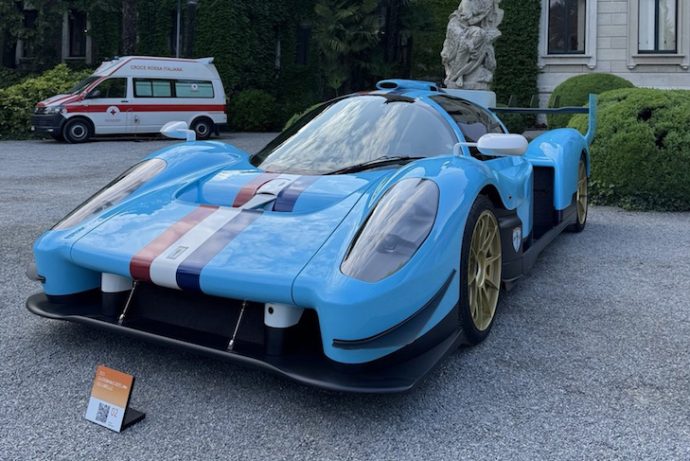
They are also building the road car derivative of the racing SCG 007, the 007S.
Porsche
Porsche’s 963 was an early adopter of the LMDh regulations based around the Multimatic chassis and a 4.5-litre Porsche turbo V8 based around the highly successful non-turbo engine from the Porsche RS Spyder.
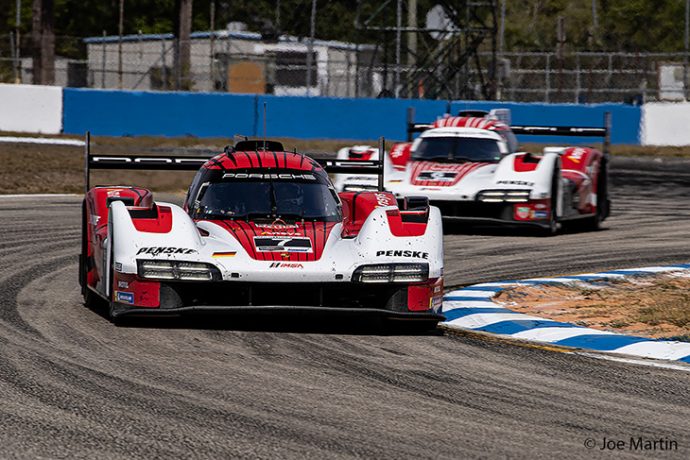
Porsche ordered c.30 Multimatic chassis with the majority delivered within the first few months of the programme for current or future test, race and/or spare chassis requirements (show cars do not require a full chassis).
The full factory efforts have been fielded by Penske Motorsport under the Porsche Penske Motorsport banner in both IMSA and WEC since the 2023 season. Two cars have taken on each championship full-time, with a third entered at Le Mans every year of the programme thus far.
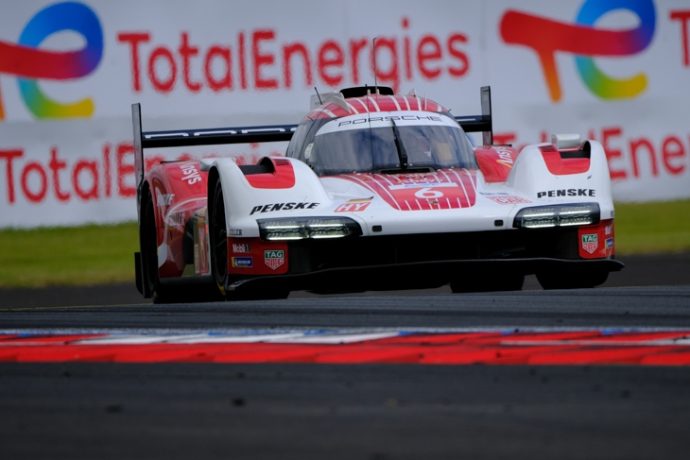
The factory programme in the FIA WEC produced just two podium finishes in 2023 before the effort took a big step forward for year two in 2024, two wins and three second-place finishes for one car, seeing Messrs Lotterer, Estre and Vanthoor take the Drivers’ title, the second car taking four podium finishes.
2025 has been a tough start, but the #6 car provided race-long competition to the eventual winning #83 Ferrari, finishing just 14 seconds behind in second place. This was after the car started 21st following a disqualification from qualifying.
In IMSA, three wins across the pair of cars in the first season were followed up with title-winning form in 2024. It was two wins apiece for the factory cars, including a win at the Rolex 24 for the eventual title-winning #7 crew, which secured the team a one-two finish in the drivers’ and teams’ Championships, the Manufacturers’ title, and the Michelin Endurance Cup.
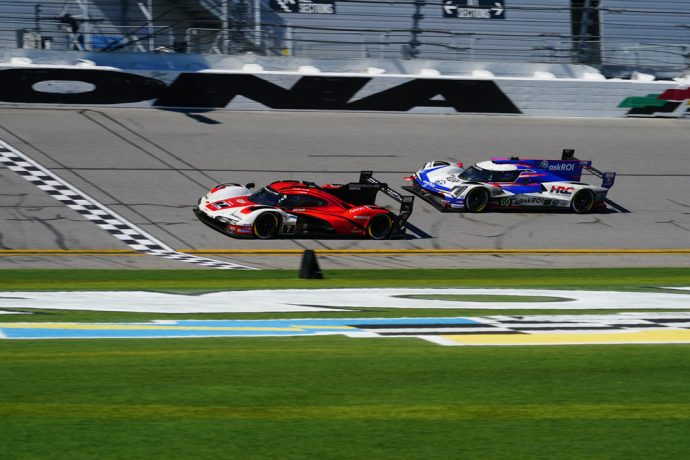
In 2025, the team started with a near faultless run, the #7 car unbeaten in the first three races (including a second consecutive win at Daytona and a first win at Sebring) whilst the second car finished third at Daytona and second at the two subsequent races! The second car then turned the tables at Laguna Seca in another one-two!
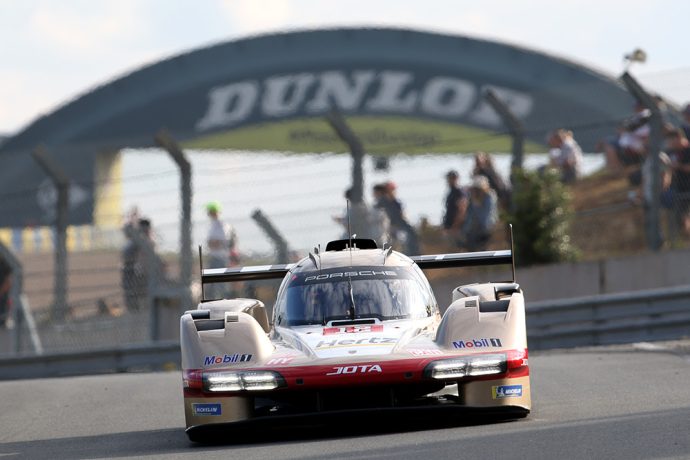
Porsche is the only manufacturer as of the time of writing to have sold customer Hypercars outside of the factory ‘family’ with three customer teams thus far and six.
First up was Hertz Team Jota with a single car joining the FIA WEC from round three at Spa in 2023. The team led the race at Le Mans that year and scored a (distant) finish. A fourth place overall at the Bahrain season finale was its best result of the season, but the results were enough to win the inaugural Hypercar World Cup for privately entered top-class cars.
Hertz Team Jota doubled up in 2024 and, after a fine second place in Qatar, took a Red Flag-assisted overall win at Spa with one car before form dipped. The downward trajectory began with Callum Ilott writing off a car at Le Mans in a practice session, forcing the team to rebuild a car from a spare, bare factory tub in under 48 hours. Both cars would finish Le Mans inside the top 10 overall, and whilst truly spectacular results were behind them, the team’s performance was enough to attract the attention of Cadillac. In 2025, it would switch to factory status with GM.
The Jota-run 963s, meanwhile, are unlikely to race again.
JDC Miller was the second customer team to race with a 963, its debut coming at Laguna Seca in 2023 with respectable rather than spectacular results. A pair of 4th places in 2023 was the best of a run of results that saw the car finish in the top eight at every race.
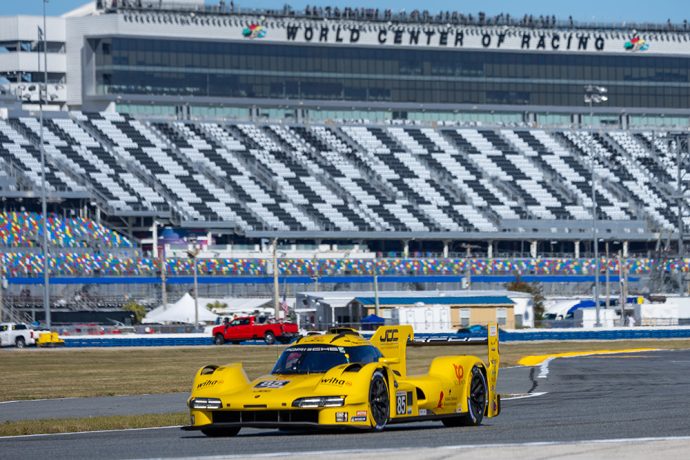
2024 saw a similar pattern, but with a first podium finish for the team coming at the Indianapolis 6-Hour race.
Into 2025, and the team looks set to field their second chassis, thus far used as a spare, as a second race entry – but whilst the initial notion seemed to be from from mid-season 2025 – that may now be somewhat delayed.
Proton Competition meanwhile joined the FIA WEC from Monza in 2023, with a second car contesting the final three IMSA races of the same season and scoring the first-ever overall podium finish for a privately entered Hypercar or GTP at Petit Le Mans that same year.

The single car per series programme continued into 2024 with full season entries in both, and a second entry applied for at Le Mans, which was given the first reserve list slot. Proton did not withdraw either its third Mustang or an LMP2 car, though, which would have guaranteed the 963 a Le Mans start.
IMSA saw no fewer than four fifth-place finishes, whilst in the WEC, the team’s #99 car struggled a little more with the deeper top-class field. A single fifth place at Spa came around a standout performance from Julien Andlauer that should have secured the team a podium slot, but their race was hampered by the long red fog that saw Jota claim the win.
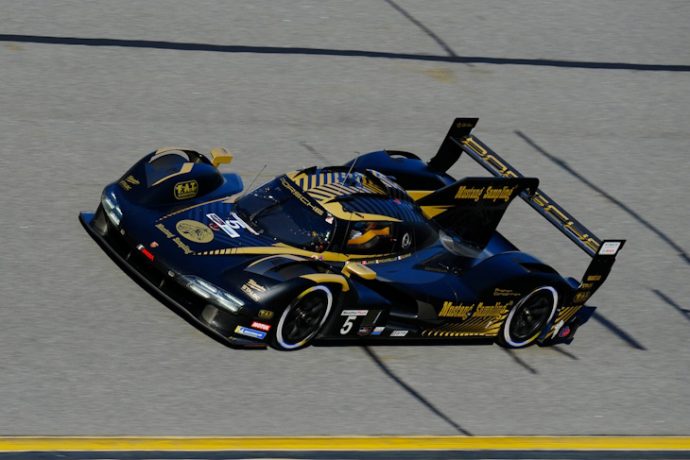
Into 2025, and Proton’s solo WEC car continues with the IMSA effort reeled back to a Michelin Endurance Cup effort only. The team is understood to be unhappy with a cooling of Porsche’s enthusiasm for supporting customer cars.
Once again, the team opted to enter a second car for Le Mans and, once again, it was listed as first reserve and didn’t race.

Porsche unveiled a (currently!) one-off road legal 963 at Le Mans, dubbed the 963 RSP, which is named for Roger Penske.
Pratt Miller
The US squad, long associated with the hugely successful Corvette Racing programme, is now seeking a parallel GTP programme and is understood to have been shortlisted for the US Genesis effort starting in 2027 and a more immediate potential change for the service provider of BMW. Though WRT looks to be in pole position to take over from RLL in the 2026 IMSA season.
Privateers
Entries are accepted in both FIA WEC and the IMSA Championship from non-factory-entered ‘Privateer’ cars.
In the WEC competition, their drivers score in the World Championship, but the team cars are scored in a separate ‘Hypercar World Cup’.
To date, the following teams have competed with non-factory Hypercar or GTP machinery:
FIA WEC:
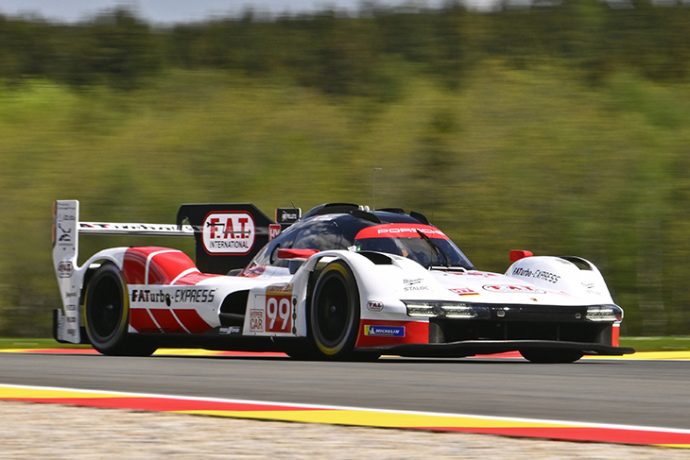
Hertz Team Jota – Porsche 963 (1 car in 2023, 2 in 2024)
Proton Competition – Porsche 963 (1 car since 2023)
AF Corse – Ferrari 499P (one car since 2024)
IMSA
Proton Competition – Porsche 963 (one car since 2023)
JDC Miller Motorsports – Porsche 963 – (one car since 2023)
Proton Competition
See Porsche
R Motorsport
See Aston Martin
Rahal Letterman Lannigan (BMW Team RLL)
See BMW
Rebellion
The Oreca chassised, Gibson-powered Rebellion R13 was repurposed by Alpine as a stop-gap Hypercar for the first two years of class competition in the FIA WEC.

‘Grandfathered down to the aero, weight and power output to allow closer competition, the car, dubbed the A480, scored a pair of overall wins in 2022 and took the championship chase down to the wire at the final round.
A single-car entry initially featured a car previously raced as a Rebellion. That initial chassis was replaced by a new one for Le Mans in 2022
Red Bull Advanced Technologies
Involved in the design of the Aston Martin Valkyrie and also with the proposed chassis (in conjunction with Oreca) for the currently stalled top-class Hydrogen Fuel Cell regulations. Repeated rumours of the organisation’s interest in Hypercar have thus far come to nothing.
Sadev
The French transmission specialist designed and built the gearbox for the Peugeot 9X8
Sauber (See WindShear)
Has been involved with aero consultancy and wind tunnel proving work with multiple programmes, including Glickenhaus, Isotta Fraschini and Vanwall.
The Sauber wind-tunnel was also the homologation-testing facility for the FIA WEC until the end of 2024, with its closure for upgrading ahead of the Audi F1 programme. All cars are now tested, and all data is gathered for both Hypercars in the WEC and GTP in IMSA at the WindShear facility in the USA.
Signatech
See Alpine
Software
An often overlooked but key area of permitted development, impacting powertrain, energy and tyre management and, in particular, on power delivery, braking and driveability.
Most manufacturers credit software development as their key tool in advancing the capabilities of their Hypercar/GTP machines.
Tata
See Jaguar.
Team Penske
See Porsche.
Torque Sensors
Or more accurately Torque meters, a key component of both the convergence, and BoP aspects of the current Hypercar/GTP formulae.

The devices, fitted to every driven axle, measure torque and are capable of relaying real-time data to technical observers, assuring them that the values applied by homologation, regulation, and by BoP adjustment are being complied with.
TotalEnergies
French Petrochemical and energy giant TotalEnergies provides the single-spec fuel for the FIA WEC.

Their TotalEnergies Excellium Racing 100, introduced in 2022, is a fuel produced from 100% biomass origin (from waste produced by the French wine industry.
The introduction of the new fuel promised to reduce ‘whole life’ greenhouse gas emissions from track vehicles by at least 65%.
TotalEnergies’ subsidiary SAFT provides the battery packs for the Peugeot 9X8.
Toyota
Toyota continues with the now most venerable of the Hypercar breed, the 2021 LMH-spec Toyota Gazoo Racing GR010 Hybrid.

The car has undergone significant updates since its 2021 debut, particularly in its second year, with 2023 also seeing updates for both handling and cooling.
A rollover of LMP1 experience in the design and engineering capabilities of the team, coupled with a well-drilled and experienced team in the garages and on the pit wall, has seen Toyota claim the manufacturers’ World Championship in every season of the Hypercar era thus far, albeit in drastically last-gasp fashion last year!
The Drivers’ Championship last year, though, went elsewhere, and so too, for the past couple of years, has the Le Mans win!
Balance of Performance has been pointed to by many as the core issue for the latter losses, but Toyota insiders recognise too that they have failed to deliver the faultless and trouble-free performances now required to take those wins.
The team desperately wanted the Le Mans win in 2025, but failed to feature in the race for the win.
The Toyota is still capable of duking it out with the best of the rest (as Antonio Fuoco found at Imola!), but the rumblings continue from Cologne that there are concerns about overall competitiveness and the Balance of Performance process currently in place.
For the future, Toyota has outlined a vision that would see the GR010, potentially updated, continuing for some time yet, possibly alongside the rollout of a proposed Hydrogen-Powered racer. However, with the likely delay of the ruleset to introduce hydrogen technology looming, that plan might be revisited.
Is Toyota still committed to the long-term in the class? It is currently very tough to call. At almost five seasons old, the GR010 is now at the beginning of a timeline that most would suggest requires consideration of a replacement. If Toyota continues to stick with its current platform with no indication of a replacement or significant update, then perhaps the drive is waning. The time for a medium-term decision is closing in.
As for the expansion of the programme, there was some early interest in evaluating a potential IMSA programme with a single GR010, but that prospect has since disappeared. Toyota has expressed, privately, interest in adding a race run at Daytona, again, though with no certainty of a programme emerging. DSC understands that Toyota hasn’t fully explored the costs and work involved in converting its GR010 for IMSA GTP competition.
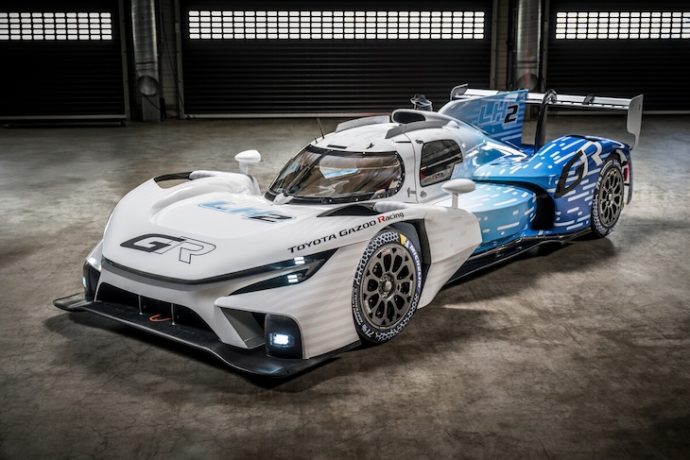
At Le Mans in 2025, Toyota unveiled a technology demonstrator, the GR LH2, powered by liquid hydrogen and based around a GR010 chassis that was described as being close to track-ready.
Tyrrell
The famous British F1 team’s brand was an early target for the ByKolles organisation. For reasons unknown, it switched its focus to the even earlier Vanwall brand.
Vanwall
After a number of efforts over the past decade in LMP2 and later LMP1 under a variety of monikers with very limited success, Colin Kolles’ ByKolles team, via an associated company PMC GmbH, registered the Vanwall trademark in Germany ahead of a Hypercar programme aimed at the WEC in 2022.

Whilst the car was built, despite ongoing legal woes regarding the use of the trademark (see DSC’s archive for past stories), the team’s entry was not accepted for 2022, but was listed for the 2023 season.
The non-hybrid Gibson-engined car debuted at Sebring and was reliable but off the pace in the race until hit from the rear by a Peugeot, the damage subsequently leading to suspension failure.
Thereafter, however, the cars’ form declined further, with a lack of pace, often seeing the car fend off leading LMP2s, and cooling issues plaguing the car.
A promised second car did not appear for the 2023 Le Mans 24 Hours, and thereafter the programme faltered, despite eventual success in the legal tussle over trademarks and a promised re-engining with the ex-Glickenhaus Pipo turbo V8, with associated bodywork changes. The team was not granted entries for either 2024 or 2025 in the FIA WEC.
Whilst Vanwall has expressed interest in competing in the forthcoming Pro-Am Asian Le Mans Series Hypercar class from 2026/27 it has confirmed this would be with the original spec car, operated as a private team under the ByKolles banner, suggesting that they would request entries for the FIA WEC for their proposed ‘new’ Pipo-powered car(s).
The promised road-going version of the original car has not emerged as a commercial offering either. Early publicity images were dismissed by commentators as the race car with revised bodywork and clearly featuring race wheels with racing wets, and the FIA telemetry aerial on the cockpit roof.
Vector Sport
See Isotta Fraschini
Vision 1789
Something of a wild card, the Vision 1789 supercar from Vision Automobiles Paris was designed to be powered by biomethane, with some reports suggesting that the car might serve as the basis for a future ‘Garage 56’ innovative Hypercar project.

The project had a powertrain designed by Gerard Welter of Peugeot, WM and WR, renowned for its initial involvement in the project from racers Matthieu Vaxivière, Ines Taittinger and Paul-Loup Chatin.
The project has been quiet for some time now, though…
VP Racing Fuels
Partnered with IMSA to provide a single-spec fuel for the GTP class, VP introduced its R80 80% renewable fuel in 2023.
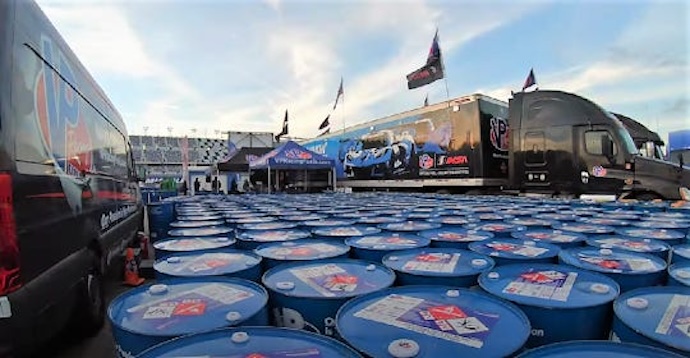
R80 utilises 64% Gen 2 non-food biomass and achieves a reduction in CO2 of at least 55% compared to previous fuels.
Wayne Taylor Racing
See Acura and Cadillac.
WindShear
The Haas Automation-constructed WindShear wind tunnel facility in Concord, North Carolina, has been the designated homologation-certified facility for GTP from the start of the class. And, from the end of 2024, when the Swiss-based Sauber facility became unavailable, it now serves the FIA WEC’s Hypercar class too.
All newly homologated cars and those with ‘Joker’ updates that require re-testing must be tested, assessed and certified at WindShear in full-scale form.
Williams Advanced Engineering
Williams Advanced Engineering (Now Fortescue Zero) is a partner in the ‘single-source’ Hybrid drive for the LMDh cars and also provided technical support for the Isotta Fraschini LMH project, helping to develop and prove the aero modelling.
Fortescue Zero has also provided aero concept work for other manufacturers and is believed to be engaged with at least one major update programme for an existing LMDh factory car.
WRT
See BMW.
Xtrac
The British powertrain specialist provides, amongst other things, key components for the ‘single-source’ LMDh hybrid drive systems as well as the gearboxes for the Ferrari 499P, Alpine A480, Aston Martin Valkyrie LMH, Glickenhaus SCG 007, Isotta Fraschini Tipo 6 C, and the Vanwall.
Zenvo
Danish sportscar manufacturer Zenvo has shown interest in the world of endurance racing since it was founded in 2007. Its ST1 supercar made its public debut at the Le Mans Driver’s Parade in 2009, and company branding later appeared on Rebellion Racing’s ORECA 07s in 2017.
Its most recent project, the Aurora, is also semi-relevant. It’s a “blank sheet hypercar”, powered by a 6.6-litre quad-turbocharged V12 engine, developed by MAHLE Powertrain, which debuted at the Goodwood Festival of Speed earlier this month.
There have been no suggestions that the young brand is due to go racing with its flagship model anytime soon, though it has at least provided us with a Z for this roundup!