From the Author: This is an updated version of a multi-part series that I originally wrote on my old blog, Super GT World, back in 2017. It was later run on Dailysportscar during my first year of contributing to the publication, ahead of what was to be the “final” Suzuka 1000km at its original distance, and as a SUPER GT Series championship round.
A lot of time has passed since then. “Japan’s great endurance sports car race”, as I’ve often called it, is still being run by the SRO and its flagship Intercontinental GT Challenge series, and it’s coming back after a five-year hiatus – under its original format.
Good news! I’m also a lot more knowledgeable, have access to a lot more resources, and have become (I think?) a better writer since I first started, which means that this updated feature will fix more than a few mistakes, add more context, et cetera.
This is Part 1, chronicling every overall winner of the Suzuka 1000km from the first race, through the end of the Group C era: 22 winners in 27 years. Please enjoy! –RJ
1966–1973 // 1980–1982: The Formative Era
The first Suzuka 1000 Kilometres was run on 26 June 1966. By then, it had been almost four years since Suzuka Circuit opened its gates as Japan’s first state-of-the-art motorsports venue, and three years since the first Japan Grand Prix Car Races were held in 1963 and 1964. But soon after, the Grand Prix had moved east to the newer, faster Fuji Speedway, leaving Suzuka in need of new events to promote.
So in 1966, Suzuka Circuit would host two new long-distance races: A 500km race in the winter and a 1000km race in the summer. It was the latter which satisfied all the requirements to be Japan’s first true world-class endurance race: A demanding distance that took a toll on car and driver, the teamwork of two drivers sharing a car to reach the goal, and, of course, the Le Mans-style running start.
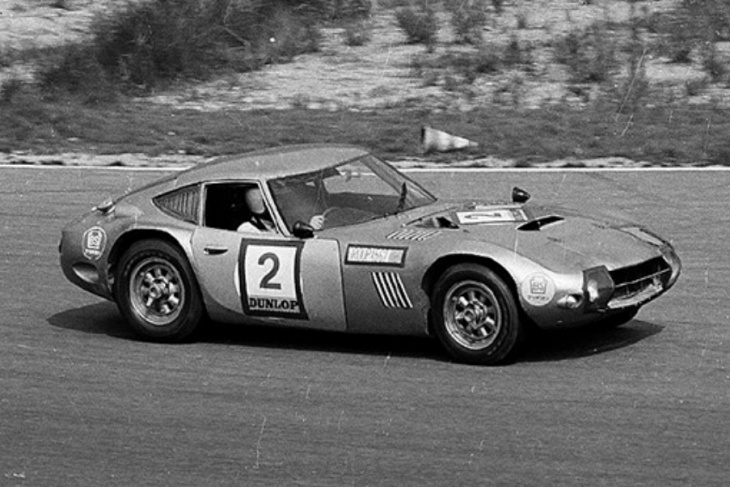
Only 24 of the 49 starters finished the inaugural Suzuka 1000km, and the silver #2 Toyota 2000GT of Sachio Fukuzawa and Tomohiko Tsutsumi took the victory, leading a 1-2 finish for Toyota’s factory team. It took eight hours, two minutes, and 13.9 seconds to complete all 167 laps around the original six-kilometre course.
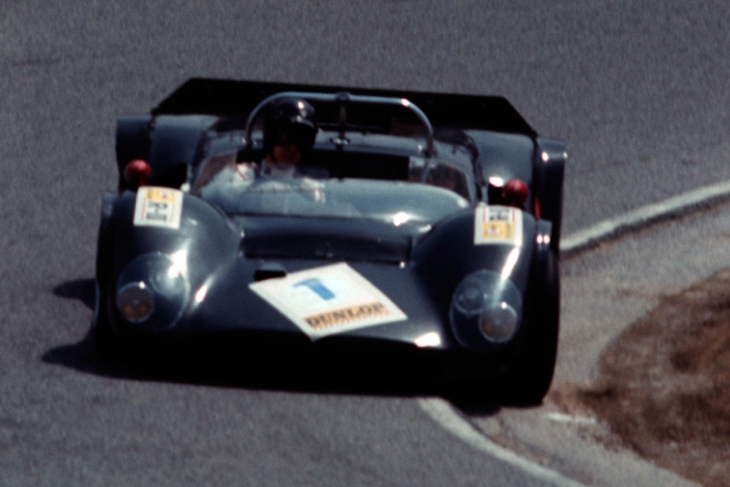
Some publications refer to the first eight-year run from ’66 to ’73 as the “touring car era” since many of the entries were road-going touring and GT cars. But most years, race-bred prototypes would be the cars challenging for overall honours. For instance, the 1968 race was billed as the “T-N-T Showdown” between Toyota’s three-litre 415S, Nissan’s successful R380, and Taki Racing’s newest Porsche 910. In 1969, Honda introduced its very first prototype race car, the R1300.
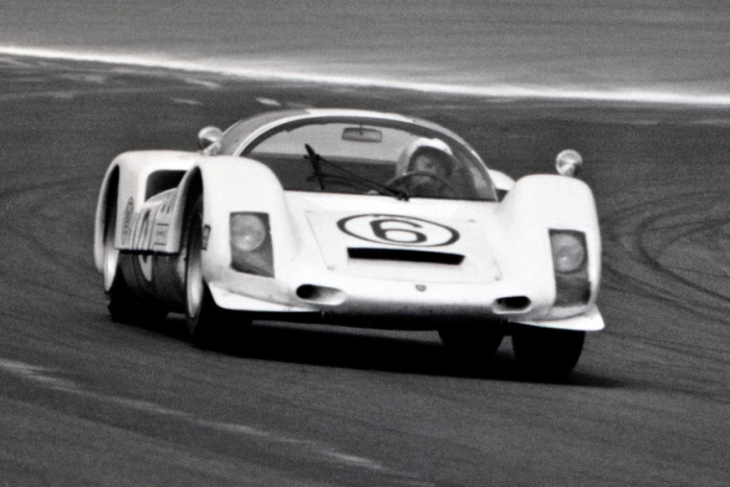
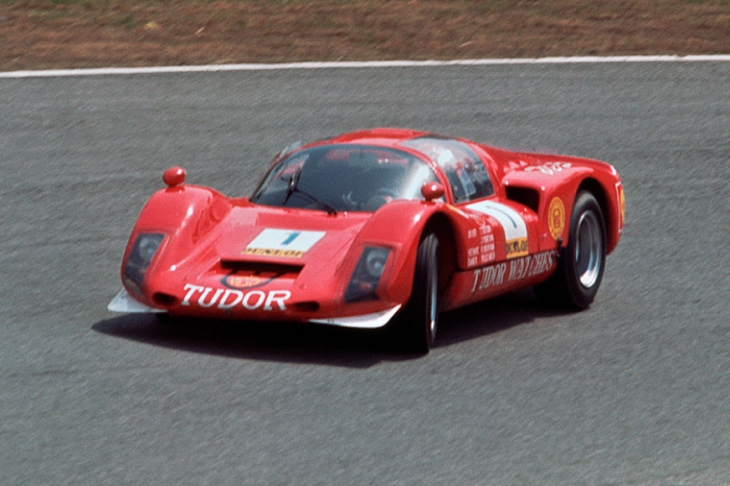
Porsche, Nissan, and Toyota would each collect multiple victories during this first eight-year stretch. A trio of intrepid privateer owner/drivers and stellar “hired guns” would give Porsche’s 906 two wins in ’67 and ’69 – same for the Porsche 910 in ’71.
Two variations of Nissan’s iconic first-generation Fairlady Z-car won in ’70 and ’73. And three very different Toyotas helped establish the brand’s reputation for endurance racing excellence, which continues to this day: The aforementioned 2000GT, the 415S – otherwise known as the first version of the infamous Toyota 7 – and the Celica 1600 GT-R.
The Suzuka 1000km was widely recognised as a stand-alone race during these years, but from 1967 to 1970, it was briefly part of an annual championship. When the Suzuka 12 Hours was added in ’67, the Suzuka Circuit Endurance Series was created, and the top driver across all three legs of the series (the 1000km, the 500km, and the 12 Hours) was awarded a trophy at the end. The Suzuka Endurance Series folded with the removal of the 12 Hours in 1971, and briefly returned later in the ’70s, but (at least as what publications such as auto sport Magazine had written at the time) there was no championship awarded.
Japan was hit hard by the Oil Shock of 1973, leading to the Suzuka 1000km’s first extended hiatus, which lasted until 1980. When it returned, the Suzuka 1000km effectively replaced the short-lived Suzuka 500 Miles, which only ran in 1978/1979. When the race returned, the Suzuka 1000km took over the 500 Miles’ slot on the calendar, during the fourth weekend of August.
Over the first eight years, the race bounced around the calendar, from Summer to Autumn to Spring. From 1980 to 2019 (with only one extraordinary exception), the Suzuka 1000km would continue to run in this traditional mid-summer date. While the 500 Miles isn’t part of the 1000km’s lineage, both races were won by Mazda rotary-powered March 75S “Grand Champion” cars, just like the ’80 winner.
Another significant milestone came in ’81: For the first time, foreign teams from Europe & North America were invited to compete, and the event officially came to be known as the “International Suzuka 1000km.” With sponsorship from fashion label Italiya, Kremer Racing, Bob Wollek, and Henri Pescarolo’s Porsche 935/K3 pulled off two amazing comebacks in the same race to become the first foreign team and drivers to win the Suzuka 1000km.
Another iconic Group 5 “super silhouette” racer, the BMW M1, took the win in ’82, overshadowing yet another significant milestone in sports car racing’s timeline…
1966: #2 Toyota 2000GT – Sachio Fukuzawa / Tomohiko Tsutsumi
1967: #6 Taki Racing Team Porsche 906 – Shintarō Taki / Kenjirō Tanaka
1968: #1 Toyota 7 (415S) – Sachio Fukuzawa / Hiroshi Fushida
1969: #1 Tudor Watch Racing Team Porsche 906 – Jirō Yoneyama / Tomohiko Tsutsumi
1970: #19 SCCN Ōsaka Nissan Fairlady Z432 – Hiromi Nishino / Kōji Fujita

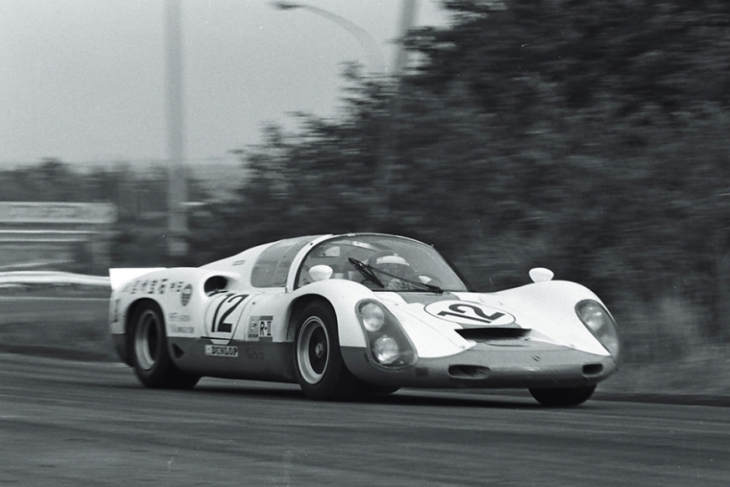
1971: #12 Kawaguchi Porsche 910 – Yoshimasa Kawaguchi / Hiroshi Fushida
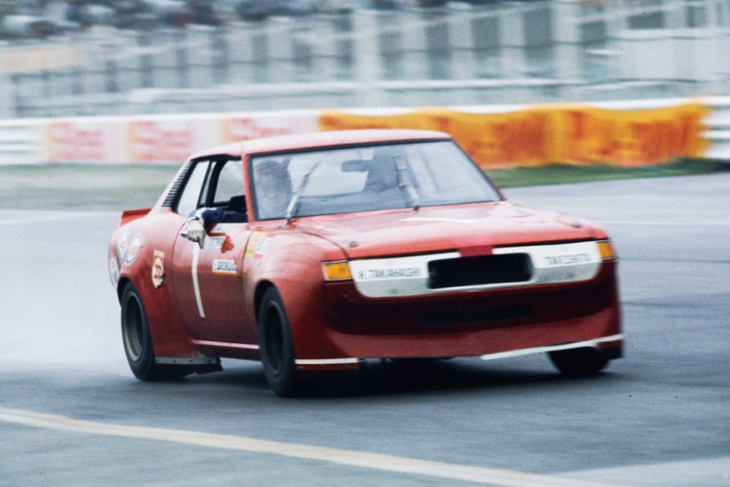
1972: #1 Toyota Celica 1600GT-R – Harukuni Takahashi / Kenichi Takeshita
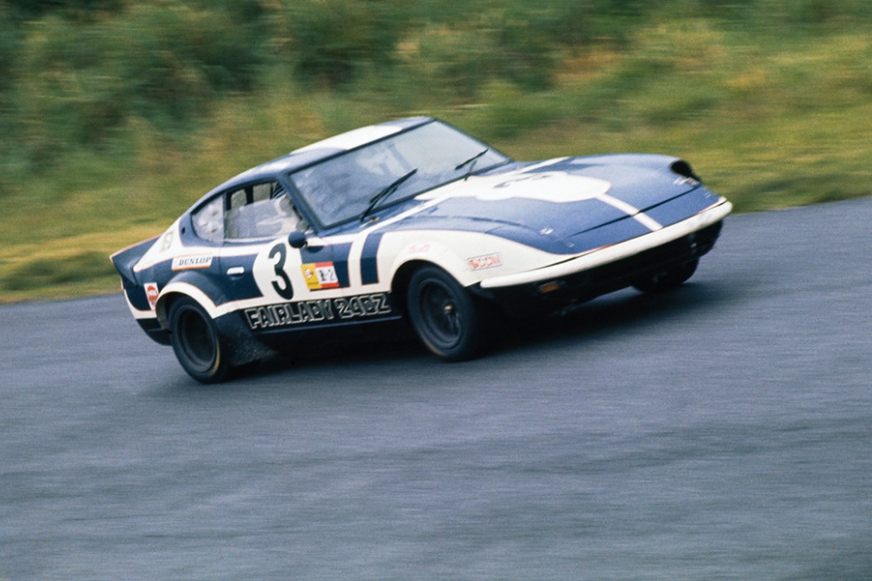
1973: #3 Nissan Fairlady 240Z-R – Kunimitsu Takahashi / Kenji Tohira
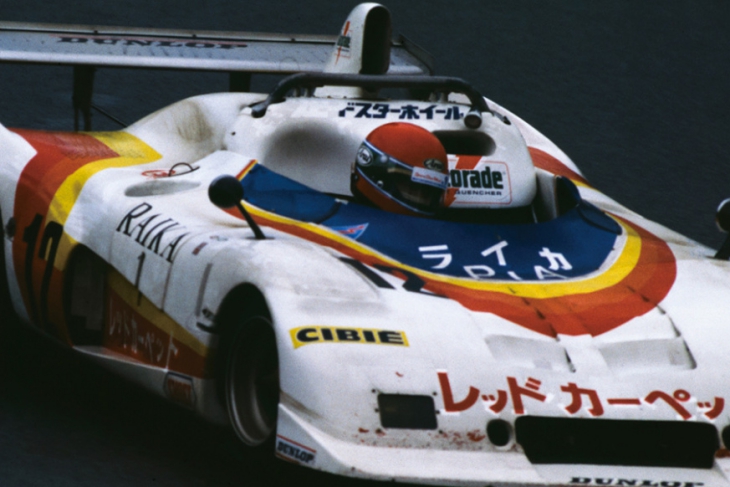
1980: #12 Red Carpet Racing Team March 75S/Mazda – Hironobu Tatsumi / Naoki Nagasaka
1981: #6 Italiya Kremer Racing Porsche 935/K3 – Bob Wollek / Henri Pescarolo

1982: #1 Auto Beaurex Motor Sport BMW M1 – Fumiyasu Satō / Naoki Nagasaka

1983–1993: The Group C Era
The debut of the Dome-constructed Toyota TOM’S Celica C at the 1982 Suzuka 1000km was spoiled by a first-lap accident, but it heralded the first race for a Japanese car built to the new-for-’82 FIA Group C regulations. Five weeks later, the inaugural “WEC in Japan” race at Fuji Speedway brought World Championship automobile racing back to the country for the first time since 1977.
The interest from fans, teams, and constructors moved the Japan Automobile Federation (JAF) to launch the All-Japan Endurance Championship in 1983. This was Japan’s first true professional sports car racing championship, headlined by Group C prototypes. In 1987, the deletion of the touring car sub-class led to the series being rebranded as the All-Japan Sports Prototype Championship – JSPC, for short.
For nearly a decade, the Suzuka 1000km was a staple of the JSPC calendar. And just like the JSPC as a whole – which is to say, just like every other major sports car championship around the world at this time – if anyone wanted to win the Suzuka 1000km, chances are they’d have to go through a Porsche, either the 956 or the subsequent 962C.
Porsche dominated the ’80s at Suzuka, winning six times in seven years from 1983 to 1989 (seven times in nine years, if you include the 935’s victory in ’81). Specifically, it was Porsche Group C cars prepared by Japanese powerhouse Nova Engineering that dominated the JSPC in its heyday. Under the leadership of CEO Ryoichi Inose and Technical Director Motoyasu Moriwaki, Nova prepared Porsches for various clients. None was more successful than car owner Yasutsune “Ricky” Chiba, a lifelong racing fan and CEO of an industrial tools company, and his star driver, the legendary Kunimitsu Takahashi.
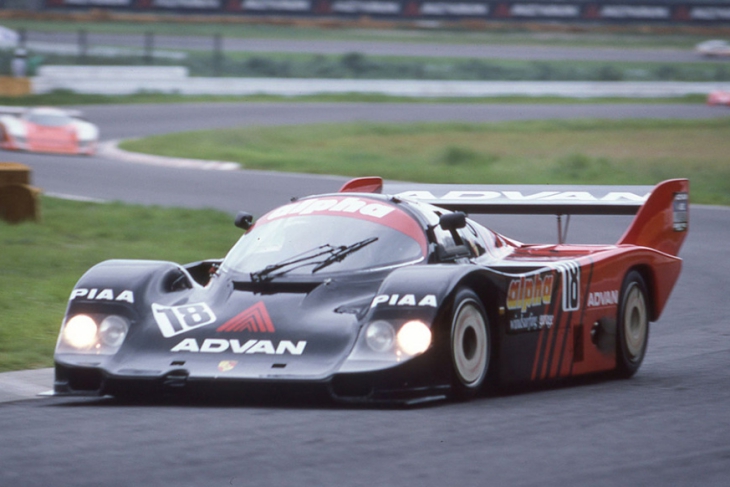
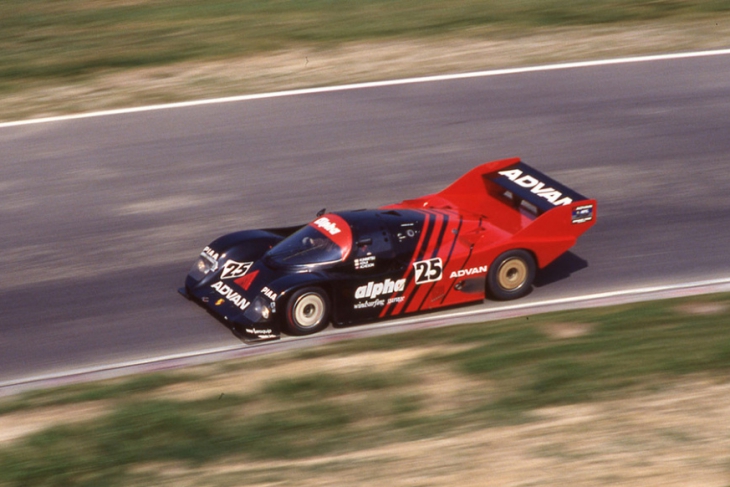
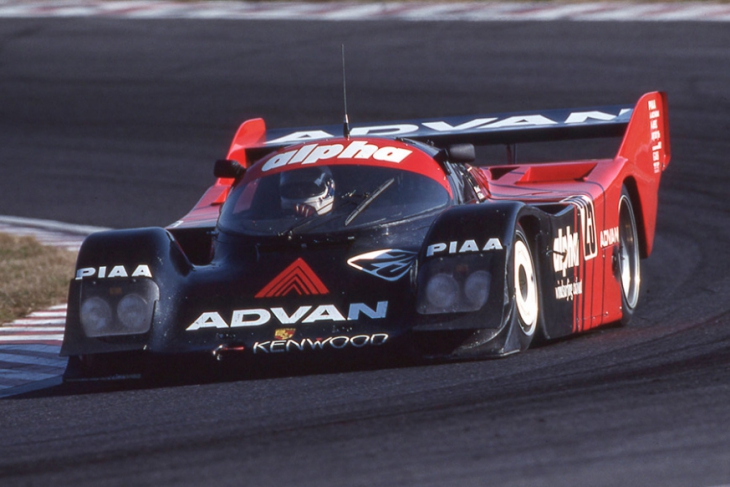
As a member of Nissan’s famous Oppama Works team (a predecessor to today’s NISMO), “Kuni-san” finished third overall in ’66 and ’69, then won it in ’73. But at the wheel of the Advan-sponsored, Nova-prepared, Chiba-owned Porsches, Takahashi became the most successful driver in the history of the Suzuka 1000km. He led Advan Sports Nova’s 956 and 962C to back-to-back victories in ’84 and ’85.
Takahashi’s record fourth overall win came in ’89, the year in which the race was postponed from its regular August date to December because of a severe tropical storm that hit Suzuka on race day. His victory also guaranteed a famous championship comeback for Takahashi to win his fourth JSPC title in five years, and his place as one of Japan’s greatest racing drivers that ever lived was secured. He’d even take two more class wins in ’94 and ’95.
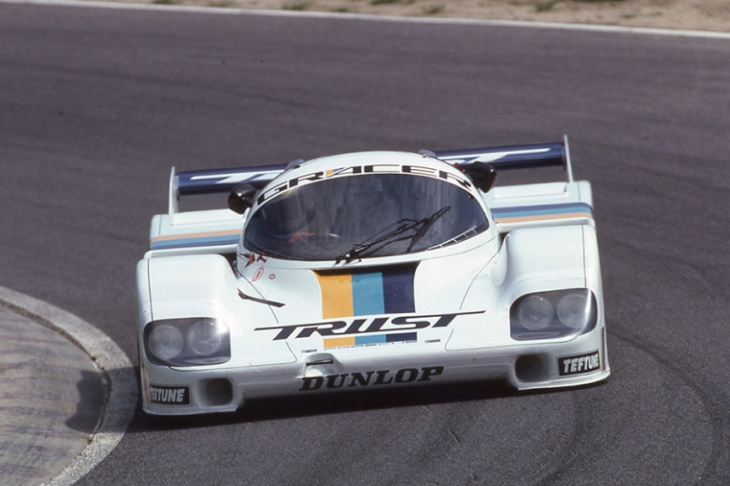
Other Nova clients also found success at the Suzuka 1000km of course; the very first Porsche 956 to race in Japan was owned by Masamitsu Hayakawa of aftermarket parts maker Trust, and it won in ’83 with the powerful combo of Vern Schuppan and Naohiro Fujita. Nova also operated a car sponsored by employment agency FromA; this team would go on to win in ’86 and ’88, led both years by driver Hideki Okada.
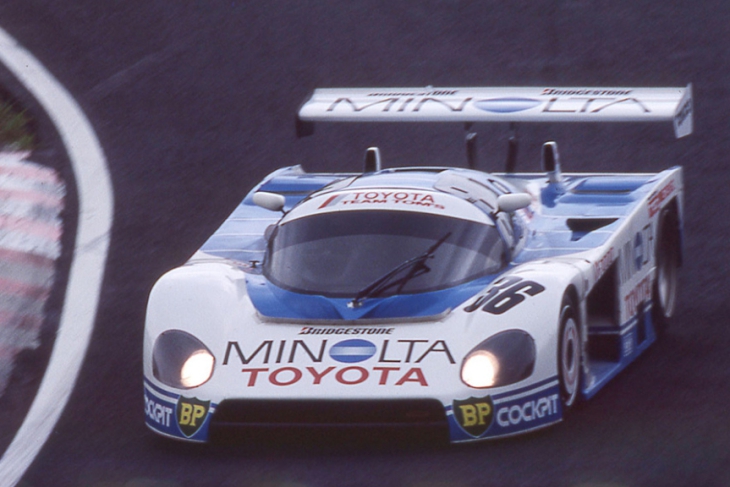
Porsche was powerful, but not invincible; Nissan and Toyota’s programmes were building up strength every year, and in ’87, Toyota and TOM’S would break through to break Porsche’s Suzuka 1000km dominance with a pole-to-win victory.
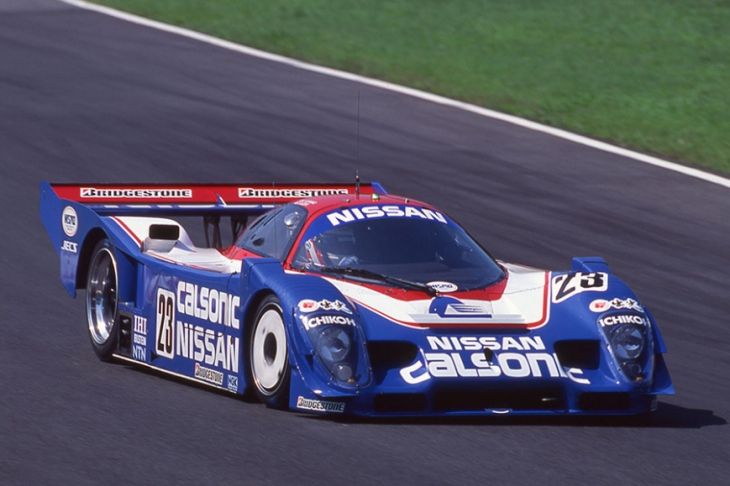
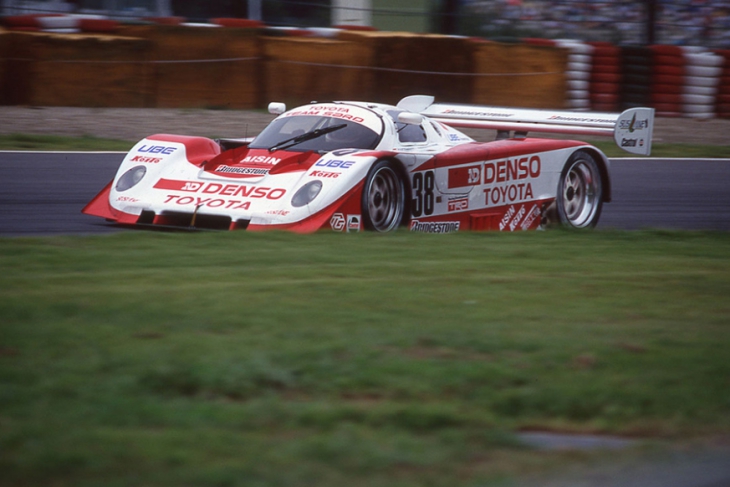
The Japanese giants’ ascension to power and the decline of Porsche’s dynasty happened in parallel at the start of the ’90s. For the first time in the Group C era, Nissan won the Suzuka 1000km in 1990, on the way to becoming the first Japanese manufacturer to take the JSPC title. It was a fine year for Kazuyoshi Hoshino, who also won his fifth Japanese Top Formula title and drove the famous Calsonic Nissan Skyline GT-R to the All-Japan Touring Car Championship. Via Team SARD, Toyota would win the Suzuka 1000km again in ’91.
It was the last year that the Suzuka 1000km would run as a JSPC round, because in 1992, the event would transfer to the FIA World Sportscar Championship calendar, for the first – and only – time. It’s safe to say that the FIA’s controversial new 3.5-litre engine regulations introduced in 1991 left the series in a delicate state thereafter; the cars were amazing, yet wildly unsustainable.
The ’92 Suzuka 1000km, won by the Peugeot 905 Evo 1 Bis, was the fastest edition of the race ever run (five hours, 30 minutes, and 9.627 seconds). But with only 11 starters, it was also the thinnest field in the race’s history. The World Sportscar Championship, whose existence was already in peril before the 1992 season began, folded after its conclusion.
But the Suzuka 1000km would continue with a very eclectic grid for the ’93 race: A pair of older Group C Nissans, a handful of invites from IMSA, plus several N1 touring cars and “Racing Spyder” prototypes from the circuit’s clubman series. It was the only event on the provisional 1993 JSPC calendar before the series folded due to lack of participation. It was also part of the very first JAF All-Japan GT Championship schedule in 1993, but due to a lack of entries, most of its races were cancelled, and the ’93 season is considered a “test year”.
In all practicality, this was a stand-alone race in the crossroads of sports car racing history.
1983: #1 Trust Racing Team Porsche 956 – Vern Schuppan / Naohiro Fujita
1984: #18 Advan Sports Nova Porsche 956 – Kunimitsu Takahashi / Kenji Takahashi / Geoff Lees
1985: #25 Advan Sports Nova Porsche 962C – Kunimitsu Takahashi / Kenji Takahashi
1986: #27 FromA Racing Porsche 956 – Hideki Okada / Tsunehisa Asai / Jirō Yoneyama※

1987: #36 Toyota Team TOM’S 87C – Geoff Lees / Masanori Sekiya / Hitoshi Ogawa
1988: #27 FromA Racing Porsche 962C – Hideki Okada / Stanley Dickens

1989: #25 Alpha Advan Nova Porsche 962C – Kunimitsu Takahashi / Stanley Dickens
1990: #23 Nissan R90CP – Kazuyoshi Hoshino / Toshio Suzuki
1991 – #38 Toyota Team SARD 91C-V – Roland Ratzenberger / Pierre-Henri Raphanel / Naoki Nagasaka※
1992: #1 Peugeot Talbot Sport 905 Evo 1 Bis – Derek Warwick / Yannick Dalmas

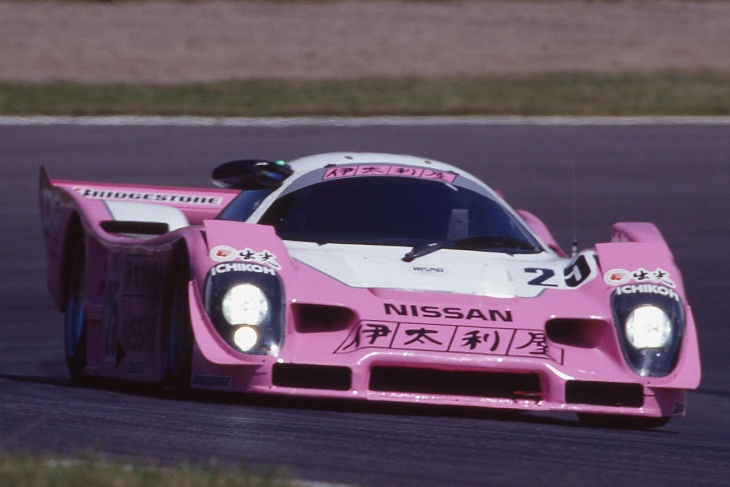
1993: #25 Italiya Sports Nissan R92CP – Takao Wada / Toshio Suzuki
※Denotes a driver who was entered, but did not drive during the race.
Images © Honda Mobilityland