From the author: This is the second part of a feature on every Suzuka 1000km era and every winning car that was originally run on my old blog, Super GT World, then syndicated to Dailysportscar.
As mentioned in the first part, I wanted to take advantage of the greater amount of knowledge and resources that I had, going through the entire “GT era” from 1994 to the most recent edition of the Suzuka Summer Endurance Race held in 2019.
The story will continue in two weeks, but for now, here’s a look back at 26 more years of amazing GT cars that have won the Suzuka 1000km (or longer… or shorter!) –RJ
1994–1998: The GT1 Era
Sports car racing’s most turbulent period of upheaval led to big changes for the Suzuka 1000km, starting in 1994. In Europe, the trio of Jürgen Barth, Patrick Peter, and Stéphane Ratel had banded together to establish the BPR Global GT Series and create a new international endurance racing world championship, led by a new class of cars we’d come to know as GT1.
The Suzuka 1000km was one of two Asian events in the inaugural BPR calendar, and it remained on the calendar after the privateer-led BPR Global GT Series morphed into the manufacturer-led FIA GT Championship in 1997. In between, Ratel established a new promotion, the Stéphane Ratel Organisation; this promotion would execute the new FIA GT Championship after ‘B’ and ‘P’ split from ‘R’.
Ahead of the ’94 race, food and beverage maker Pokka Corporation became the new title sponsor of the Suzuka 1000km, officially known as the “Pokka 1000km” or “International Pokka 1000km”. Pokka remained the title sponsor for two decades, until shortly after its merger with Sapporo.
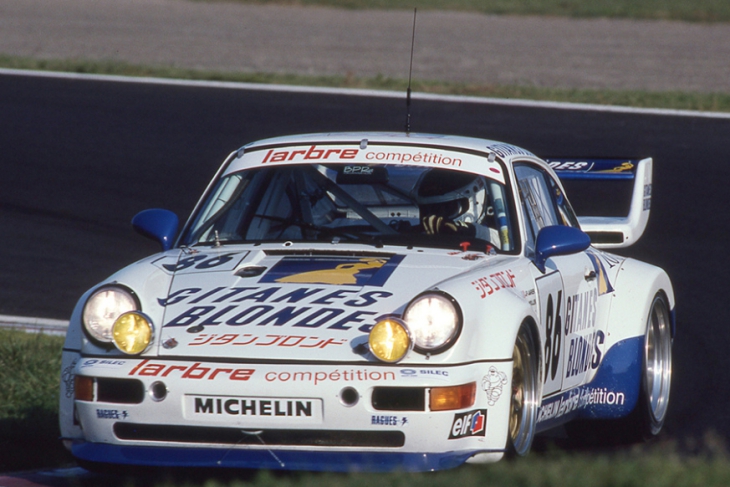
1994 wouldn’t be the last race to feature any prototype cars, but GT cars would win this and every subsequent Suzuka 1000km. French team Larbre Competition’s Porsche 911 Turbo S LM-GT, which won the very first BPR Global GT race, also won the first Suzuka 1000km under BPR’s promotion.
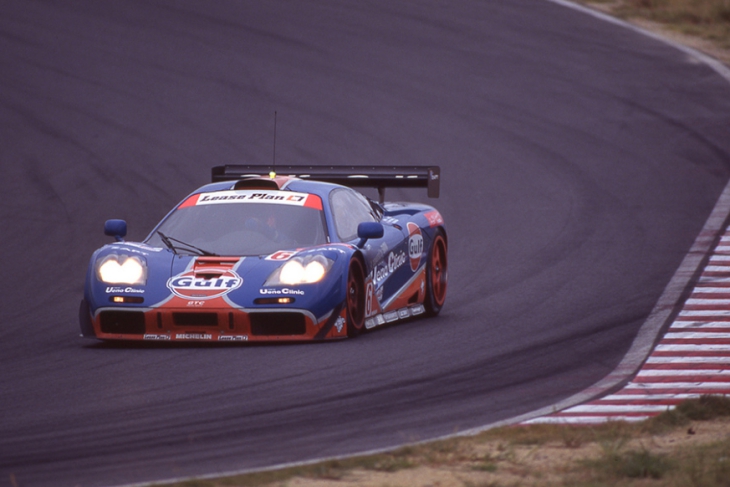
This was followed by two sets of back-to-back victories by McLaren F1 GTRs, operated by Ray Bellm and Michael Cane’s GTC Motorsport. Wearing the same black Ueno Clinic livery that he drove to victory at Le Mans, Masanori Sekiya had a happy homecoming in ’95; his Le Mans-winning co-star, J.J. Lehto, followed in ’96 with GTC in its more traditional Gulf livery. That win also helped Bellm and James Weaver win the final BPR Global GT Series title.
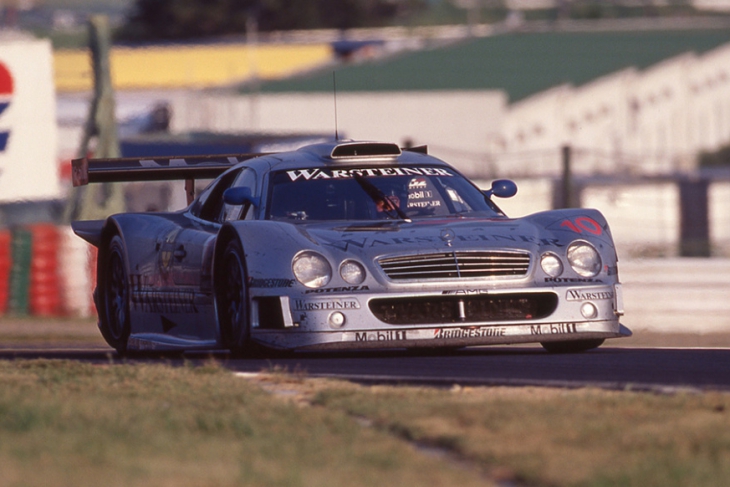
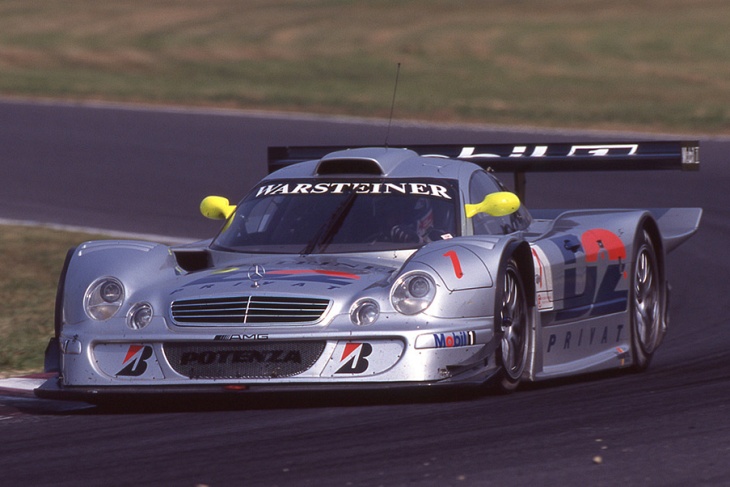
As BPR turned to FIA GT, AMG Mercedes would capture back-to-back Suzuka 1000km overall victories. With the V12-powered CLK GTR of ’97 and the leaner, meaner V8-powered CLK LM of ’98, the Silver Arrows out-slugged the competition, primarily from Porsche and McLaren.
The ’97 race featured an emotional homecoming victory for Alessandro Nannini, eight years on from his only Formula 1 victory in a career cut short. A future F1 winner and World Endurance Champion, Mark Webber, won it in ’98. Alongside both was Mercedes ace Bernd Schneider, who swapped between team cars during the race to secure his first of back-to-back wins in ’97 (no such tactic was needed the following year).
As spectacular as first-generation GT1 was becoming, that rapid escalation of manufacturer money – and sudden withdrawal – caused a rapid boom and bust cycle. As the FIA GT Championship reorganised around the former GT2 class in 1999, the Suzuka 1000km was cut from the calendar, soon to be turned over to another group of legendary GT cars, built closer to home…
1994: #86 Larbre Compétition Porsche 911 Turbo S LM-GT – Jean-Pierre Jarier / Bob Wollek / Jesús Pareja
1995: #1 GTC Motorsport McLaren F1 GTR – Ray Bellm / Maurizio Sandro-Sala / Masanori Sekiya

1996: #6 GTC Motorsport McLaren F1 GTR – Ray Bellm / James Weaver / J.J. Lehto
1997: #10 AMG Mercedes-Benz CLK GTR – Alessandro Nannini / Marcel Tiemann / Bernd Schneider‡
1998: #1 AMG Mercedes-Benz CLK LM – Bernd Schneider / Mark Webber
‡ Denotes a driver who changed cars during the race.
1999–2005: The GT500 Non-Championship Era
In parallel to Europe’s GT racing revolution, a similar upheaval was happening in Japan. By 1994, the GT Association (GT-A) was established to promote and execute the new All-Japan Grand Touring Car Championship (JGTC). With a similar two-class structure to BPR/FIA GT, but built around Japanese manufacturers and sprint races. Japan’s new top class of GT cars would come to be known as GT500, and by 1999, Toyota, Nissan, and Honda all had factory-backed GT500 programmes with superstar drivers and colourful cars.
GT500 would be the new top class for the Suzuka 1000km after it was left behind by the FIA GT Championship, but the Suzuka 1000km would be a non-championship race, open to domestic and international GT teams.
The Honda NSX would score its first win in ’99, beginning a run of Suzuka dominance for Honda and its leading two-car team, the Mugen x Dome Project (which became Dome Racing, after the original Mugen’s collapse during the 2003 season). Honda was always committed to the Suzuka 1000km, bringing at least two NSX-GTs to the race every year during this transitional period.
After the Castrol Mugen NSX, variations of the sister Takata Dome NSX won in 2000, 2003, and 2004. ’03 was a major flash point in GT500 history, thanks to deregulations which allowed for more extensive racing modifications to GT500 cars. Honda used these deregulations to tweak the NSX-GT often – turning the engine sideways in ’03, changing to a turbocharged C30B engine in ’04, then reverting back to the naturally-aspirated C32B in ’05.
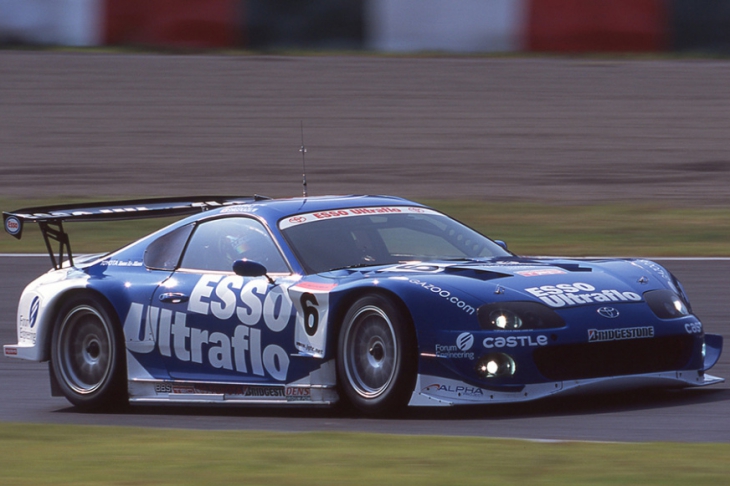
Toyota’s fourth-generation Supra was also a potent GT500 challenger at the Suzuka 1000km. The au Cerumo Supra and Esso Ultraflo Supra won in ’01 and ’02, respectively, on the way to winning JGTC titles in the same year. And Toyota Team LeMans’ win in ’02 was quite the achievement – considering the mighty Audi R8 LMP900 was also in the field that year!
The only ever-present Toyota team during the non-championship years was SARD, who denied a Honda/Dome three-peat with a dramatic victory in the final laps of the ’05 race. Like the NSX-GT, GT500 technical deregulations allowed the Supra to become more potent in its final years of service as it swapped out the old 3S-GTE turbo-four for the 3UZ-FE V8.
Legends of yesteryear, including the great Kunimitsu Takahashi, retired from driving after the 1999 Suzuka 1000km. New legends like Juichi Wakisaka, Ryō Michigami, and Daisuke Itō would emerge in his place: All three drivers went on to win the race three times, as did the underrated Sébastien Philippe.
1999: #16 Mugen x Dome Honda NSX-GT – Osamu Nakako / Ryō Michigami / Katsutomo Kaneishi

2000: #18 Mugen x Dome Honda NSX-GT – Juichi Wakisaka / Katsutomo Kaneishi / Daisuke Itō

2001: #38 Toyota Team Cerumo Supra – Hironori Takeuchi / Yūji Tachikawa / Shigekazu Wakisaka

2002: #6 Esso Toyota Team LeMans Supra – Juichi Wakisaka / Akira Iida / Shigekazu Wakisaka
2003: #18 Dome Racing Honda NSX-GT – Ryō Michigami / Sébastien Philippe

2004: #18 Dome Racing Honda NSX-GT – Ryo Michigami / Sébastien Philippe / Daisuke Itō
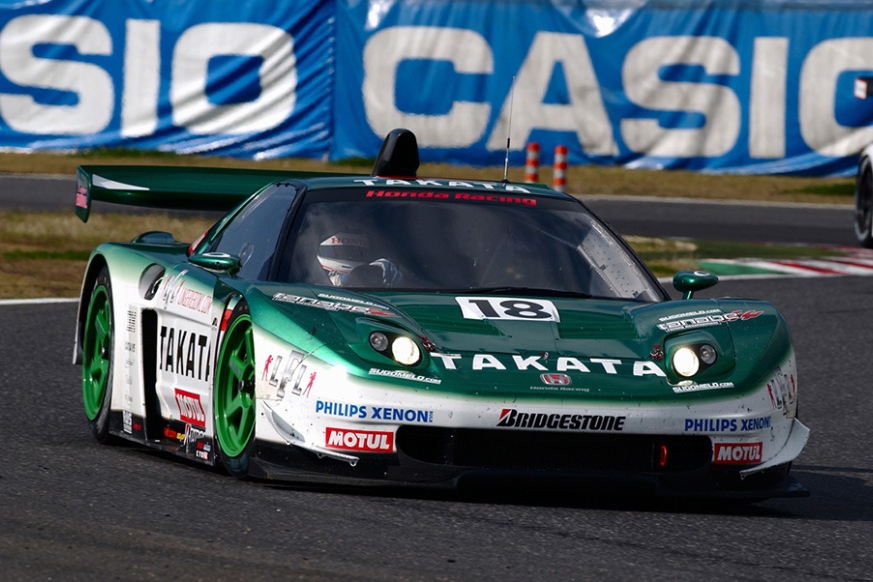
2005: #39 Toyota Team SARD Supra – André Couto / Ronnie Quintarelli / Hayanari Shimoda※

※Denotes a driver who was entered, but did not drive during the race.
2006–2017: The SUPER GT Era
The JGTC’s plans for international expansion sparked its rebranding into SUPER GT from 2005, and one year later, the series would gain its signature race when the Suzuka 1000km was officially added as a championship round in 2006.
This meant that the Suzuka 1000km would be part of Japan’s number one sports car championship as a proper event for the first time in 15 years. It remained on the SUPER GT calendar for over a decade as its equivalent to the Bathurst 1000 in Australia or the Daytona 500 in NASCAR: If you could only win one race all year, this was the one to win.
With Success Ballast in play and its mid-season placement in the calendar, the Suzuka 1000km would often see teams that had struggled during the first half of the season power through to win the race on lower ballast. Not for a lack of trying, but only one team that won the race also went on to win the GT500 Championship in the same year – but that didn’t tarnish the reputation of the race in the fans’ eyes.
Japanese motorsport was heavily impacted by the double-whammy that was the Lehman Shock in 2008, and the Great Tōhoku Earthquake & Tsunami of 11 March 2011. The Suzuka 1000km was not immune, as energy conservation measures resulted in shorter races: In 2009 and 2010, the “Pokka GT Summer Special”, as it was officially known, was only 700 kilometres long; in 2011, the race was reduced further to 500 kilometres. Eventually, its original distance was restored in 2012.
Over the 12 years that the Suzuka 1000km was SUPER GT’s crown jewel, there were many memorable winners and moments. Impul’s wire-to-wire domination in ’06, which saw Kazuki Hoshino win for his father’s team. TOM’S using tactics to defeat ARTA in a mixed-weather classic in ’07. ARTA finally won the race in 2010, giving driver Yūji Ide some much-needed redemption after his 2006 from hell.
Koudai Tsukakoshi’s lucky escape at 130R in 2012. Local hero Tsugio Matsuda’s full-tilt skirmish with James Rossiter in ’14. More wet-weather frenzy in ’11 and ’15. And the infamous “Marshal Post 21 moment” in ’16, which lent a hand in Cerumo defeating TOM’S – in the closest-ever overall finish in the race’s history (1.242 seconds).
GT500 cars themselves transformed dramatically too, evolving from their production roots to pure super silhouette machines with full carbon monocoques, a common engine formula, and the most advanced tyre technology that an open tyre competition could bestow to its teams. Only the late-era Group C prototypes were faster around Suzuka, and not by much.
In this race, a generation of future endurance racing stars cemented their credentials that would make them superstars on a worldwide stage: Names like Benoît Tréluyer, André Lotterer, Loïc Duval, Fréd Makowiecki, and Kazuki Nakajima immediately spring to mind. Matsuda and Ronnie Quintarelli would become the most successful GT500 drivers in some measure thanks to Suzuka 1000km wins.
By 2017, it was announced that the Suzuka 1000km would be run for the final time in its original format, and for the final time as a SUPER GT championship round.
But not before one final classic: With F1 stars like Jenson Button and Kamui Kobayashi running as one-offs, with a record crowd of 72,500 people that weekend, two Honda teams battled for the win, desperate to snap long winless droughts.
In the end, a blown tyre inflicted the most painful defeat on a Real Racing team that had been crushed so many times at Suzuka. Nakajima Racing, who had been relegated to a bottom-of-the-table team in GT500, emerged from nowhere for its first win in nearly a decade. These images defined the “Final” Suzuka 1000km, as we knew it…
2006: #12 Team Impul Nissan Fairlady Z33 – Benoît Tréluyer / Kazuki Hoshino / Jérémie Dufour

2007: #1 Toyota Team TOM’S Lexus SC430 – Juichi Wakisaka / André Lotterer / Oliver Jarvis※
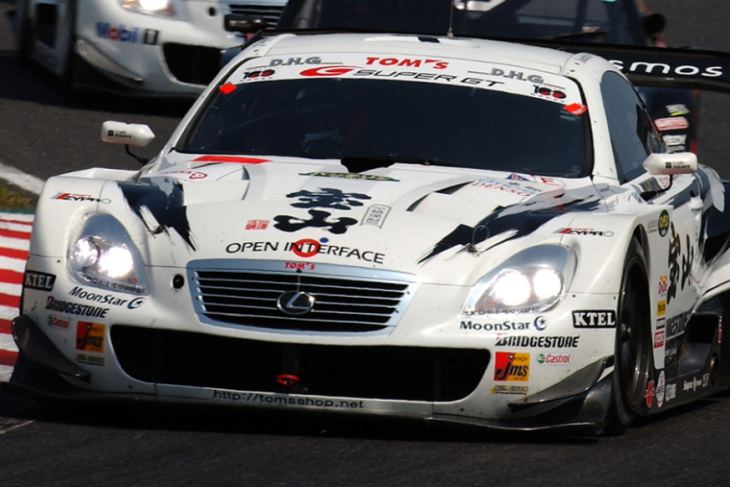
2008: #12 Team Impul Nissan GT-R – Tsugio Matsuda / Sébastien Philippe
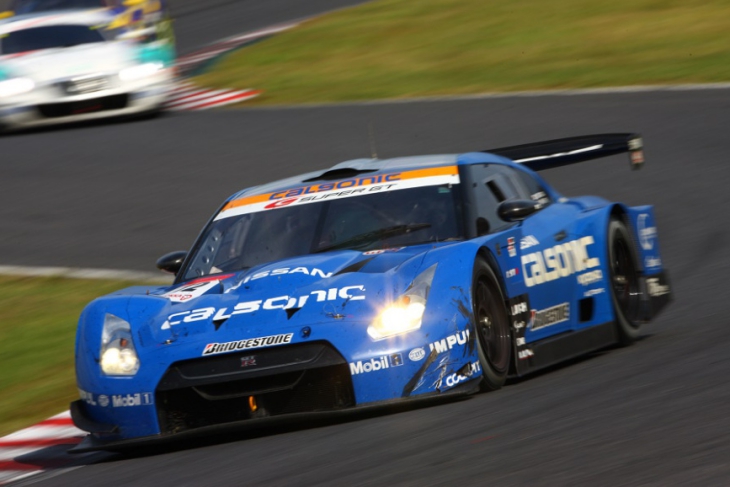
2009: #35 Lexus Team Kraft SC430 – Hiroaki Ishiura / Kazuya Ōshima
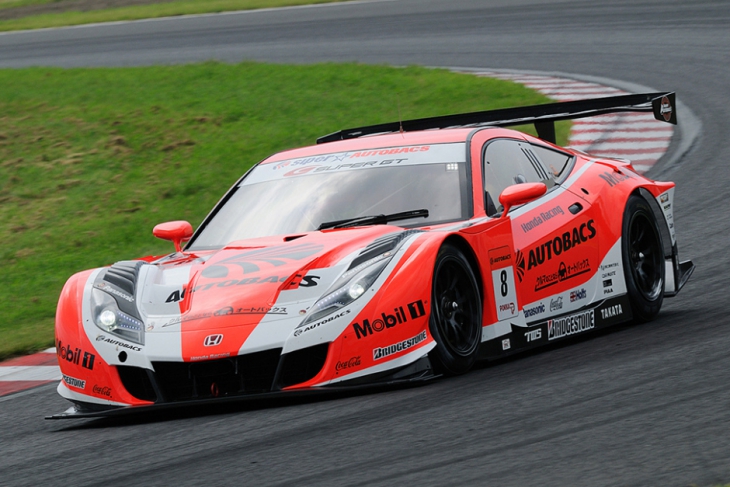
2010: #8 ARTA Honda HSV-010 GT – Ralph Firman / Yūji Ide / Takashi Kobayashi※
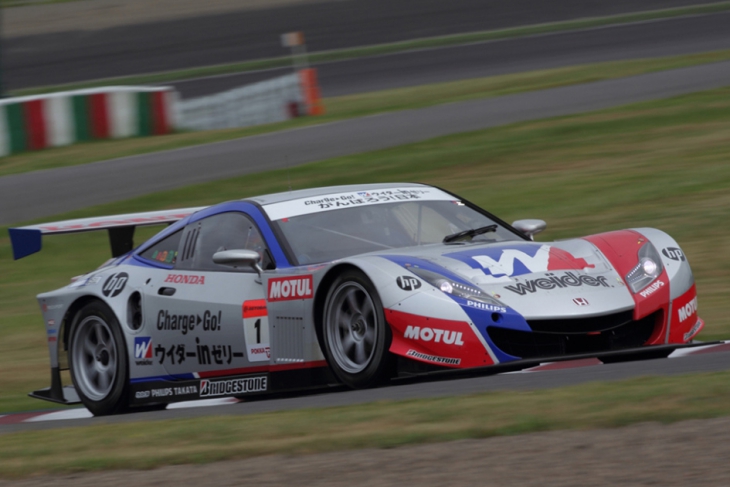
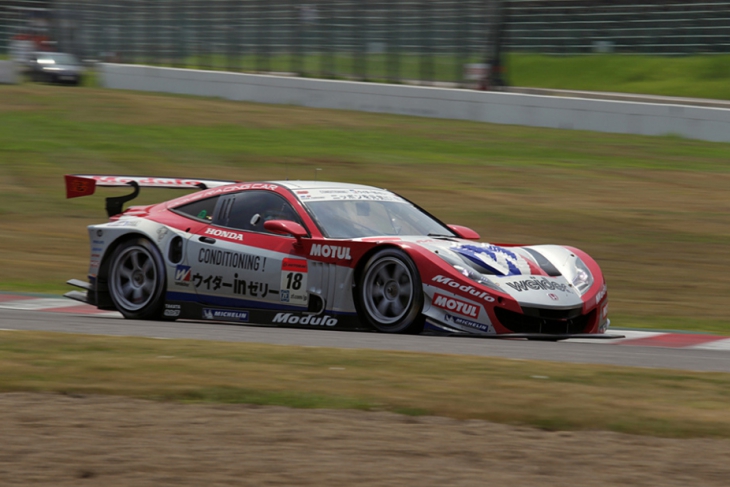
2011: #1 Weider Honda Racing HSV-010 – Takashi Kogure / Loïc Duval
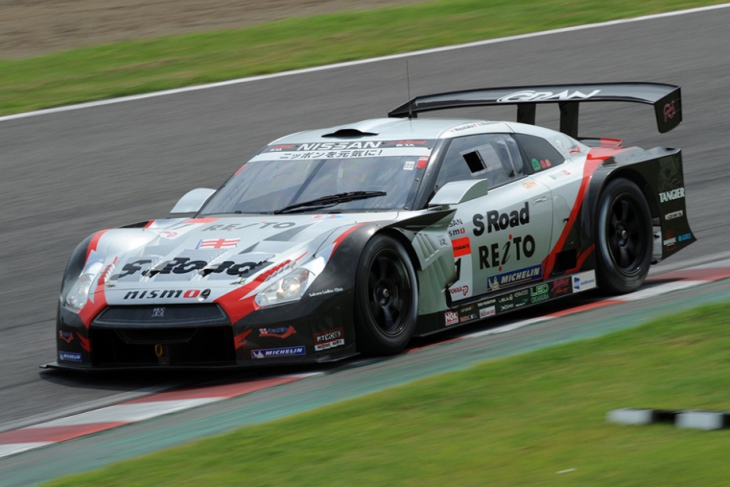
2012: #1 MOLA Nissan GT-R – Masataka Yanagida / Ronnie Quintarelli
2013: #18 Weider Modulo Dome Racing Honda HSV-010 – Naoki Yamamoto / Frédéric Makowiecki
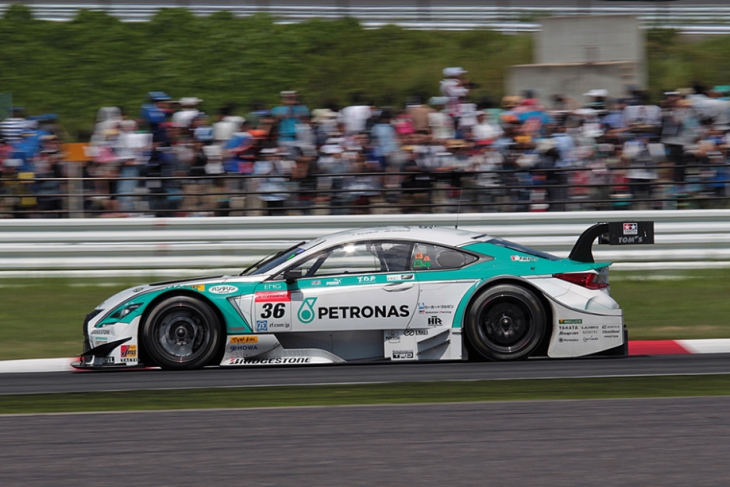
2014: #36 Lexus Team Petronas TOM’S RC F – Kazuki Nakajima / James Rossiter
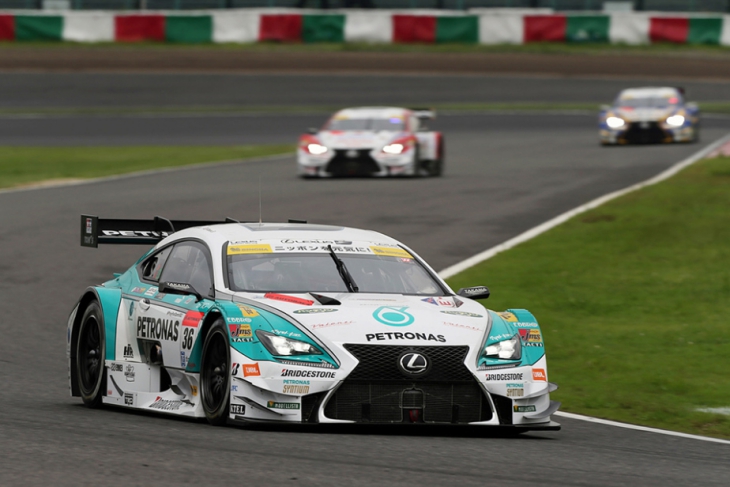
2015: #36 Lexus Team Petronas TOM’S RC F – Daisuke Itō / James Rossiter
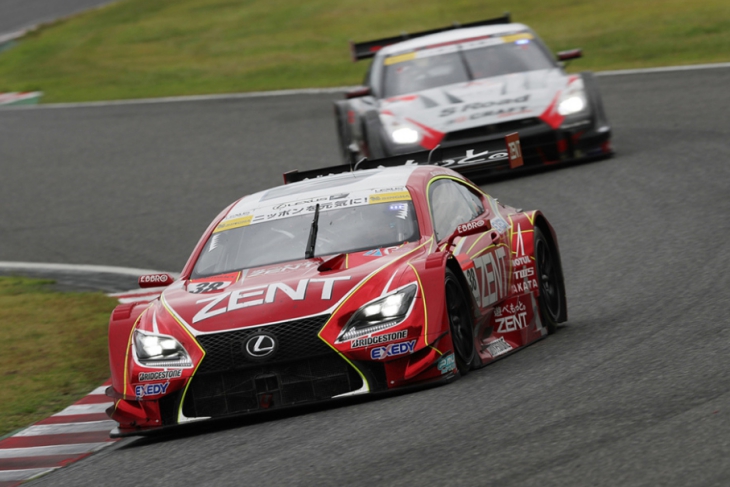
2016: #38 Lexus Team ZENT Cerumo RC F – Yūji Tachikawa / Hiroaki Ishiura
2017: #64 Epson Nakajima Racing Honda NSX-GT – Bertrand Baguette / Kōsuke Matsuura

※Denotes a driver who was entered, but did not drive during the race.
2018–2019 // Present: The IGTC Era
What left some fans conflicted in 2017 was the news that the SRO would take over the Suzuka 1000km from 2018 onward, turning it into an international GT3 showcase round as part of the new Intercontinental GT Challenge series.
It would also be a much longer race, growing from 1000 kilometres to a ten-hour timed race. The Suzuka 10 Hours, as it came to be known, also enticed domestic and international teams alike to enter with a staggering ¥100,000,000 purse as its bounty.
And while the loss of GT500 cars as its top class was disappointing, the addition of new teams, drivers, and manufacturers from abroad to challenge the Suzuka Summer Endurance for the first time was a fair trade.
GruppeM Racing from Hong Kong took the 2018 Suzuka 10 Hours with a Mercedes-AMG GT3 painted in the classic Gundam colours. The trio of Marciello, Engel, and Vautier completed 276 laps in 10 hours.
One year later, Team WRT and Audi, who’d won almost every big GT3 race there was to win together, finally banded together to win the Suzuka 10 Hours, in just one fewer lap than last year.
That’s where the story had to end for a while. “Corona Shock” meant that the plans for 2020 and 2021 would not proceed. From 2022, Suzuka wasn’t even on a provisional IGTC calendar as the series also tried to navigate its own post-COVID difficulties. But it’s almost back, and soon, a 49th team will be added to this roll of honour.
2018: #888 GruppeM Racing Mercedes-AMG GT3 – Raffaele Marciello / Maro Engel / Tristan Vautier

2019: #25 Team WRT Audi R8 LMS GT3 EVO – Kelvin van der Linde / Dries Vanthoor / Frédéric Vervisch

2025: The story continues…
Images © Honda Mobilityland, GTA, Nissan