Author’s note: This is a reformatted version of an article that was originally published on 30 September 2025 at RACER.com.
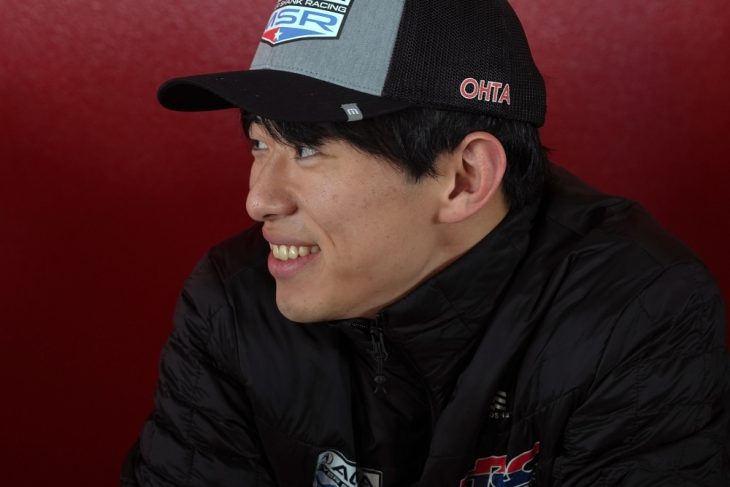
Kakunoshin Ohta’s first partial season in the IMSA WeatherTech SportsCar Championship has been a fulfilling journey for a young driver who may not be anything close to a household name outside his home country. But the young man being touted as Honda’s next homegrown star of the international racing circuit has already shown the talent to change that in a hurry.
He goes by “Kaku” in the US, the way that Toranosuke Takagi became “Tora” a generation or two ago – and thanks to his time studying in an international school during his childhood, he’s as fluent in English as many of the other IMSA drivers whose first language is something else.
Unless you’d spent several weekends staying up late to watch him race in either of the two biggest racing series in Japan – SUPER GT in sports cars, and Super Formula in single-seaters – then you likely wouldn’t have known who Ohta was when the 26-year-old Honda factory racing driver was first announced as a part-time driver for Acura Meyer Shank Racing in IMSA.
“At the time I heard about it (last October), it was amazing to hear that,” Ohta recalled when Honda told him about his new assignment. “I told them, I want to be an international driver. I don’t want to stay in Japan for my whole career. I fully agree that the Japanese fans and the Japanese racing atmosphere are amazing as well – and I love that.
“But for living as a racing driver, I want to challenge in a different country and fight against the top-level drivers around the world. I continued to tell Honda, and then finally, they gave me a chance.”

Driving the HRC-engineered #93 Acura ARX-06, Ohta made his North American racing debut in the Rolex 24 At Daytona. He also drove for MSR in the six-hour endurance races at Watkins Glen and Indianapolis, and to gain even more experience in IMSA, Ohta drove for Indy-based Era Motorsport in the LMP2 class at Sebring and Road America.
Coming over with a domestic sports car racing background in SUPER GT as well as the Super Taikyu Series (where he won the 2022 GT4 class title in the latter), it didn’t take long into his new journey for Ohta to appreciate the high level of competition that IMSA offered.
“I hadn’t seen a lot of races in IMSA, but I know that this competition is so tough and competitive. And after I came to this series, that thought hasn’t changed,” Ohta said. “This series is so tough, and a lot of top drivers from all over the world come here. And to fight against them, it’s so fun.
And it didn’t take long, either, for Ohta to appreciate the passion of the North American racing fans, comparing it warmly to the enthusiasm of Japan’s motor racing otaku. “I like the atmosphere – the people are great,” he said fondly. “Daytona is such a classic and traditional event for the racing world. IMSA is not famous in Japan, but the name of the Daytona 24 Hours race is so famous in Japan, so that’s why Daytona has a big following all over the world.”
He was particularly awestruck by the big crowds at the Twelve Hours of Sebring – easily the highlight of an otherwise frustrating weekend: “I heard there were over 150,000 spectators – I don’t know if it’s true, but I heard about the spectator numbers from my teammates.
“The Japanese fans are some of the best in the world, I think. And here (in America), the fans are very open-minded. They’re also so open: The distance between the drivers and the fans is closer than in Japan, so it’s great. It’s hard to judge which is better, of course, but the fans make the atmosphere, both in America and Japan, also.
“In Japan, the track is so small and there’s not a big space to put your RV inside the track. So the fans are pure racing fans. Here, the fans are big fans of racing, but also, they’re spending a good time in the racing, and they’re having a beer and doing a barbecue out there.
“I love this atmosphere. We are doing racing and sports, but also entertainment. I look at the fans spending a good time at the track, and I feel really happy with that.”
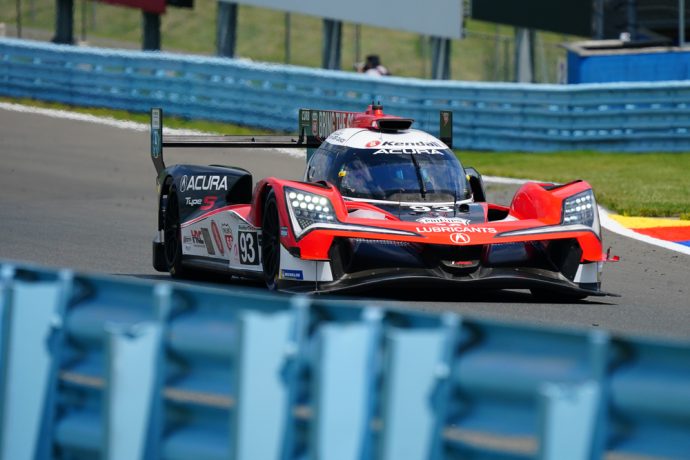
From Daytona to Indy, Ohta showed flashes of the talent that’s made him one of the top stars of the Japanese racing scene. He got to lead a few laps at Daytona early in the 24 Hours.
He enjoyed some attention-grabbing battles for the lead with Romain Grosjean at Watkins Glen and Frederik Vesti at Indianapolis – and on that note, Ohta fell in love with Watkins Glen as a circuit almost immediately. On his LMP2 side-quest, he was in the thick of a hot-blooded battle for a podium at Road America.
Unfortunately, Daytona unraveled due to a suspension failure on the #93 Acura, and the way late race tactics unfolded at Watkins Glen and Indy kept Ohta from his first IMSA GTP podium. Ohta also lost out on a maiden LMP2 podium at Road America due to a small mistake near the end of what could be best described as a combative race.
But even still, there’s a feeling that he’s done quite well for learning five brand-new circuits and two brand-new types of cars, the Acura ARX-06 LMDh and the ORECA 07-Gibson LMP2, compared to what he was used to in Japan.
“It’s difficult to explain,” Ohta said. “The grip is massive, especially on cold days. In Suzuka, a GT500 can do one minute, 43 seconds – it’s just so fast. The car has big downforce as well. The competition between Honda, Toyota, and Nissan, the three biggest car companies in Japan, is a fun thing. The same thing can be said about Hypercar.
“There are a lot of different manufacturers, and that is so fun to look at. Each car has a different body kit and looks really cool. The top drivers from all over the world, even ex-Formula One drivers are here, and IndyCar drivers – the driver levels are crazy, actually.”
While GT500 and Hypercar/GTP can each legitimately claim to be the fastest category of sports car racing on the planet right now, they’re worlds apart in how they drive.
“We are driving instinctively, so there’s no specific stuff to change for the driving side. But we also need to adjust our driving and think about what’s better for the car. In GT500, you have to rely on the tyres more than the downforce. How much you rely on the downforce or tyres is different, I think. For the GTP, I concentrate on using the downforce more than the tyres, because the endurance tyres have less grip. That’s the biggest difference between them, a lot of the time.
“I’ve never done such sophisticated racing as GTP,” Ohta beamed. “The GTP class has a lot of people that are engaged in the racing, the driving, data, manufacturing, a lot of stuff – building together for one goal. There’s almost 100 people who work together. That number is massive – it’s almost more than double that in GT500! Working with this number of people for one team, with one goal, it’s so nice.
“And we can use the telemetry system, which is not allowed in GT500. That’s sophisticated, and also good for my driving development. And also, I need to do a lot of things I’ve never done before, like driving with all the systems in my steering wheel, so that’s fun.”

Ohta has also experienced pleasure in driving the relatively simple ORECA LMP2 that Era Motorsport supplied him with. “The fastest drivers are in LMP2 as well: We use the same chassis, the same parts, and so there’s almost no difference between the teams. I feel that LMP2 is pure racing,” he proclaimed.
“We can push this car really hard, this car has less weight than a GTP. It feels like something close to a Formula 3 car. And we have less systems in this car, so it’s more dependent on the driver for the speed and time.
“I love this car, it’s very fun, and then doing the race with Bronze and Silver drivers, their passion for racing is really nice. My team, Era, is very good as well. It’s really good to get to know the track and then drive this car.”
While racing in GTP and LMP2, Ohta is also fighting for his first Super Formula Championship title, in his third season for the small but mighty Dandelion Racing team. Through his first 25 starts in Super Formula, he’s already taken six wins, including three this year at Suzuka, Motegi, and then Fuji. He’s currently third in the 2025 Drivers’ Championship with just four races remaining.
“You can ask the guys in Super Formula, but I’ve been performing well with very good race pace. I feel like that skill and performance came from my experience in IMSA,” he said with confidence. “Here (in IMSA), you have to drive really consistently. Sometimes you have to go fast, but you have to save your tires, energy, a lot of stuff – and you have to manage it. That kind of knowledge and experience has helped me a lot in Super Formula as well.”
Ohta’s busy schedule has also included trips to the Grand Prix of Long Beach and the Indianapolis 500 as a guest of Honda, to further immerse himself in the culture of American motorsport.
It’s also included supplemental GT3 races in Japan at events like the prestigious Suzuka 1000km and the Fuji 24 Hours, where Honda’s exit from the category has allowed him to drive a Mercedes-AMG GT3 EVO for a top Hong Kong team, Craft-Bamboo Racing.
To get used to working with a foreign team and communicating in English, Ohta started driving for Craft-Bamboo last season in the Super Taikyu, taking two wins in five races. “I tried to tell them, ‘I want to race with you guys, for preparation – whenever I get a chance to go to America with a Honda program, I need to be more suited with English radio and other things,’” he recalled.
“That was a big thing. I proved that I can work with a foreign team – as you know, English is the highest barrier for a Japanese driver.”
All the while, Ohta has been pursuing his ultimate goal of succeeding the legendary Takuma Sato as Japan’s next star in the IndyCar Series. His first-ever test in one of Meyer Shank Racing’s Dallara IR18s at Mid-Ohio this week represents a significant first step towards that goal.
Not bad at all, for a driver who spent a lot of his early single-seater career fighting just to keep his place in the Honda Formula Dream Project (HFDP), the manufacturer’s domestic young driver programme. He missed out on a chance to win the coveted Suzuka Circuit Racing School Formula Scholarship in 2018. Honda actually considered dropping Ohta after three seasons of underwhelming results in the FIA F4 Japanese Championship.
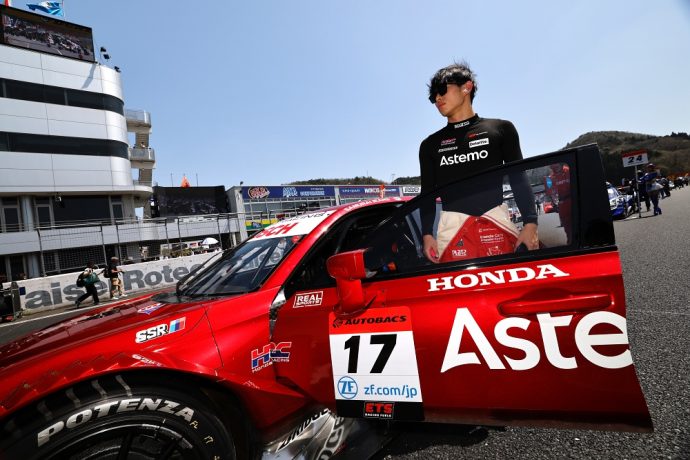
But then he outperformed expectations in 2022: In his first GT300 campaign with perennial midfielder Team UPGarage, Ohta scored two podiums, but his highlight was an incredible battle for fourth place against Gainer’s Ryuichiro Tomita at the season-ending race in Motegi.
Add to that a runner-up finish in the Super Formula Lights (formerly All-Japan Formula 3) Championship, and Ohta got his promotion to Super Formula and GT500 in 2023 as a full-fledged Honda factory driver.
On 3 March, Ohta was testing his GT500 Honda NSX-GT when he had an accident at Suzuka, which threatened to derail his top-level racing career before it even began.
“I crashed at the 130R (Corner) at almost 240 kilometres per hour because of a tyre puncture,” as Ohta recalled. “That was a scary moment, and I got injured.”
Ohta was able to walk away, but suffered a back injury that kept him in the hospital overnight. The pain went away after two weeks, but the crash had a detrimental effect on his performance for several months, keeping him out of the first SUPER GT pre-season test and the only Super Formula pre-season test as well.
He finished no better than 15th in his first five Super Formula races and was looking like a driver who’d be “one-and-done” in Super Formula. Often, when a Toyota or Honda works driver loses their place in Super Formula, it’s hard for them to get back in, and it’s easy for them to be viewed as “lesser than” their peers thereafter.
“For more than half of the (2023) season, it was so tough,” he said, “and I was so upset that I couldn’t drive as fast as I could.
“Everyone knows how fast I was in [Super Formula Lights], but no one knows how this guy can do in the Top Formula. And nothing can prove it before you have good races, get a podium, or a win. I always thought that I needed to prove my ability to do that. But every race, I couldn’t do that; it was like spinning down, down, down.
“And then after that, I got more confidence – at the last round of the season, I won at Suzuka. And (championship runner-up Liam) Lawson was second, so that was good for me.”
Ohta’s struggles of the past seem to be a distant memory now. He went from seventh to fourth in the Super Formula Championship last season, sweeping the season-ending JAF Suzuka Grand Prix double-header, and has taken another step forward, as stated earlier.
In GT500, Ohta captured three podiums – one driving for Modulo Nakajima Racing in 2023, and two for Astemo Real Racing in 2024. His 2023 campaign at Nakajima Racing was otherwise unremarkable, outside his miraculous run from 14th to second in the summer race at Fuji. That was to be expected, though. He was driving for the only GT500 team on Dunlop tyres, in a category dominated by Bridgestone teams.
But moving to Real Racing and getting to race on Bridgestone tyres allowed more of Ohta’s ability to reach the surface. He might have “graduated” from SUPER GT as a race winner last year, if not for some hard luck: A slow final pit stop at the Fuji Golden Week special, and a desperate lunge for the lead at Suzuka that didn’t stick, kept Ohta and veteran co-driver Koudai Tsukakoshi out of the win column.
The general inconsistency of the 2024 Honda Civic Type R-GT, which will be replaced next year, may not have helped.
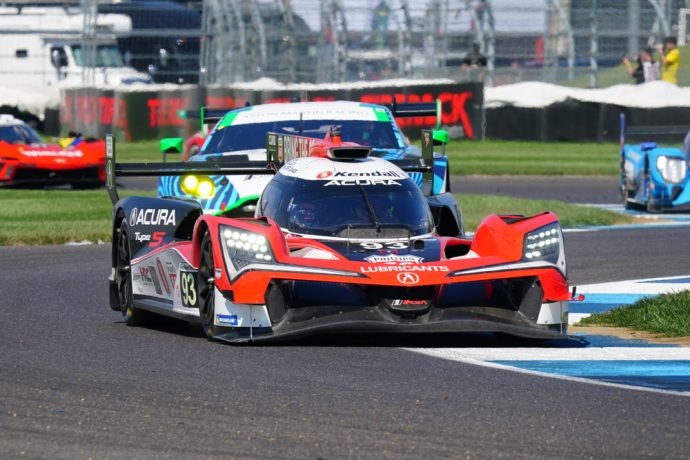
While Honda has yet to announce its plans for the upcoming season, and MSR has only just confirmed it will return to IMSA with two cars next year, as we begin October 2025, Ohta is expected to return for his fourth season in Super Formula and a second season in IMSA.
Thankfully, there are no clashing dates between Super Formula and IMSA next season, which would even allow him to run both series full-time – or at the very least, would allow him to run all five Michelin Endurance Cup events, and also get more IndyCar testing opportunities as his schedule permits, as he targets a 2027 debut.
“I’m a Honda factory driver, and so I have to always think about what I should do, what I want to do, and what Honda wants me to do. But I’m happy to say that the people in Honda always support me a lot, and they respect what I want to do,” Ohta said of his immediate future.
By all accounts, Ohta is loving the next chapter in his racing career. And good news if you didn’t know who he was this time a year ago: There’s a very good chance you’ll be hearing a lot more about him next year, too!