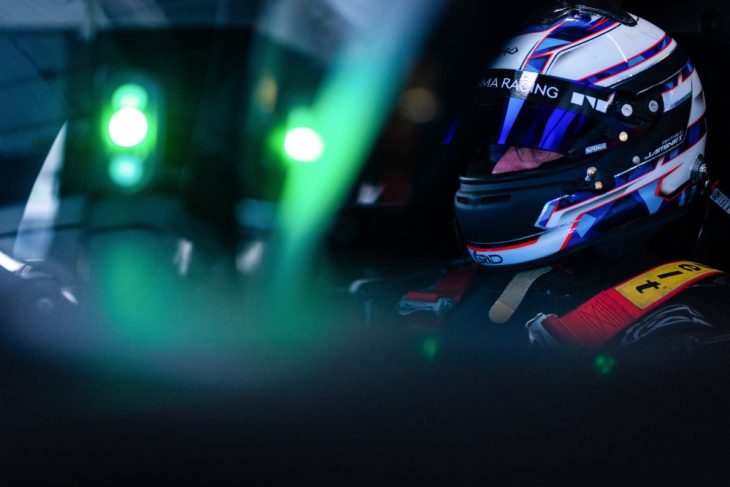
Genesis Magma Racing’s new intake of drivers is settling in nicely as the Korean brand’s ambitious project nears its FIA WEC debut in March. With Mathieu Jaminet and Paul Loup Chatin moving over from Porsche and Alpine’s factory teams, respectively, and Mathys Jaubert and Dani Juncadella stepping up from the Trajectory Programme, the roster (which also features Jamie Chadwick as reserve) is complete, and it has a good feel to it.
Over the past few months, the new quartet have joined the brand’s initial signings, Pipo Derani and Andre Lotterer, who took on the early development work on the car throughout 2025 and head into the first season leading the line for the brand. “We analysed everything,” sporting director Gabriele Tarquini says when asked about how it came together. “The target for us was to have a good mix of experience and youth and speed.”
Impressively, the four newcomers already seem embedded and at home within the team, as DSC observed during its recent test in Barcelona. There’s a clear rapport building among them as a group and with the team around them. “The atmosphere has been amazing, and something I didn’t have in the past. You don’t get this very often in your career, Andre (Lotterer) said it’s just as good as his Audi days.” Derani adds. “It’s been a pleasure to work with everyone so far.”
The addition of Jaminet and Chatin has injected more relevant Hypercar experience into the outfit. Both join having won races with their previous manufacturers, and, in the former’s case, a title too. Jaminet feels energised and ready for a fresh start, having spent more than a year with an eye on a move away from Porsche, despite his 2025 season ending on such a high with a GTP Drivers’ championship win with the Penske-run operation.
“My question marks (over his future with Porsche) started in 2024,” he explained. “My future, what I wanted to do, is something I started to share with my previous boss. We went on in the 2025 season, and things were going alright, but I felt I needed something different. I joined the group and the manufacturer when I was quite young. I developed as a driver but also as a person. I was performing, everything was good, but somehow I wanted to challenge myself and get better.
“It wasn’t an easy decision, and we had some talks. I looked at options on the market, what I wanted to do, and one of the keys to joining Genesis was that they are starting from zero, and have no history, no race team, nothing. Maybe if I were much older, I would make a different decision, but I felt now, with my age, it was the right time to try and create history.”
His first impressions of both the GMR-001 and the programme itself are overwhelmingly positive, though he was quick to stress that expectations are being managed at this early stage.
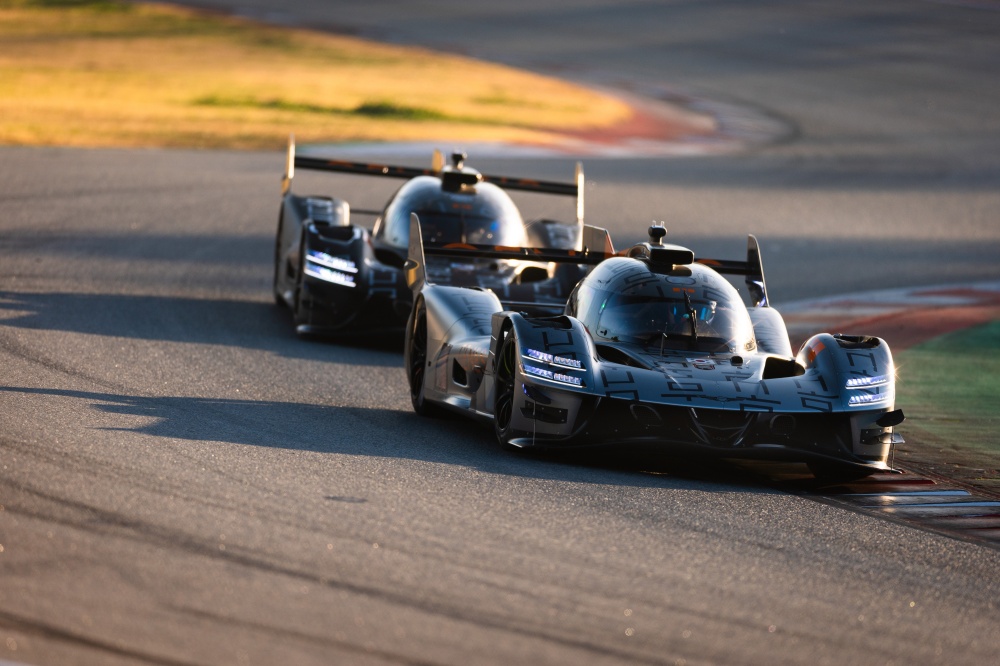
Still, he already has multiple days of seat time under his belt, and the test in Barcelona during December proved invaluable from a relationship standpoint. There, for the first time, the entire network of staff hired for the WEC project was together in one place, allowing everyone to get a feel for the working environment that the management team are building.
“I don’t want to put numbers behind it,” Jaminet jokes when asked about the performance of the car. “I drove something different very recently (the Porsche 963), and I can see that there are definitely positives to the car. This is clear. Obviously, a lot of things need to be worked on, and that’s where we need to be realistic.
“We are going to be off the pace; the question is how much. I hope it’s not two seconds, and I would be surprised if it were two seconds. But we have to be realistic. You can’t catch up in just a few months to what people have done over the last four years.
“The ORECA platform is a very strong one, there’s no doubt about it and we have seen that with Alpine and Acura. But that’s only the base.”
For Chatin, it’s been a slightly different introduction. The 34-year-old was present in Spain, but due to his contractual commitments with Alpine until the end of 2025, he was unable to take the wheel or go fully hands-on with the engineers.
Understandably, he was frustrated by the restrictions, though he doesn’t feel they will hinder his ability to hit the ground running when he first drives the car later this month and the season gets underway in March.

“I can see that Genesis has the right people at the right place,” he says. “What I appreciate a lot is that there is no ego inside the team. Everyone is really open and wants to move in the right direction together.
“I’m convinced that when I jump in the Genesis, I will have a good feeling. I was super happy with Alpine, we achieved a lot, like the win at Fuji, but at some point you need something new. It’s frustrating to see the car, see my teammates driving and not be allowed to do it. But I know there is no compromise on the future performance of the car because I trust everyone 100 per cent. And they have the performance engineer I had at Alpine for two years, he’s part of the team now.
“I also have plenty of experience in endurance so I know that when I jump in the car at Qatar I will need a few laps, but I am not worried. We’ll still have plenty of time to test there, then the Prologue, then the race.”
As for the duo from the Genesis Trajectory Programme, who are fresh from a highly successful ELMS campaign with IDEC Sport, there’s still a lot to learn in the build-up to the Qatar 1812KM. Neither Juncadella nor Jaubert has a Hypercar or GTP start. There’s no reason to believe they’ll be significantly behind the curve, though.

Juncadella, for instance, brings a wealth of knowledge from his time spent working as a simulator driver in Formula One, in addition to his sportscar heritage as a Mercedes-AMG and Corvette works driver, and stint with IDEC Sport in LMP2.
“You learn a lot working in a Formula One team, and just being capable of jumping into different cars and adapting is important,” he adds. “When I came into this programme and did my first test days, I felt straight away I could adapt to whatever it takes.”
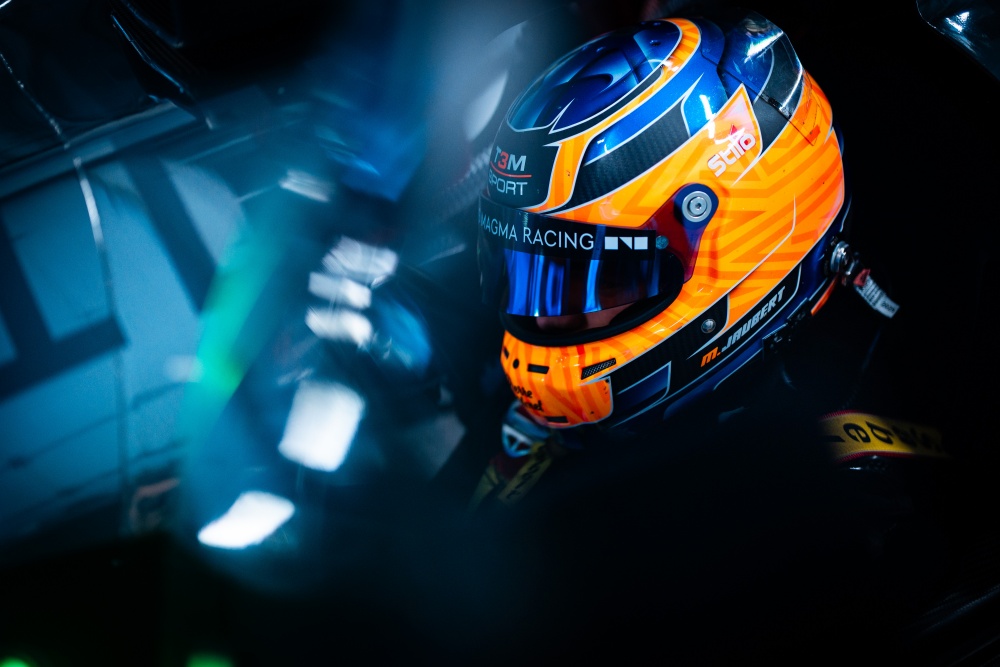
Jaubert, meanwhile, oozes confidence and believes he is ready to step up. The 20-year-old burst onto the scene last year in the ELMS and proved rapid behind the wheel of an ORECA 07 from the word ‘go’. The GMR-001 is, of course, a different animal to the ORECA, but he’s shown that he has the skillset to adapt quickly.
“It’s easier to put me in a car that is developing rather than arrive in a car that’s been developed for two or three years,” he says. “Pressure? No, it’s just doing my job, developing the car and the team. I have learned a lot, and it’s a year to learn, it’s not a question about speed, it’s more about understanding the process and the systems. If I did another year in LMP2, the next year would be more difficult because the car is more developed and I would have to be directly ready and on the pace.”
As time goes on, he will benefit from the experience of working not only with the other five drivers in the stable, but also with brand ambassador Jacky Ickx and with Gabriele Tarquini, who, as sporting director, works closely with the drivers on and off the track.
The big question mark heading into the campaign from the drivers’ standpoint concerns Genesis’ strategy regarding its line-up at the shorter races. Will the team opt to scale back to two-car crews for the six-hour races, or take all six drivers to each of the eight races to give them all a full season of experience?
There are pros and cons to weigh up. According to Tarquini, the decision will come after the start of the season. However, he confirmed that Genesis has selected the drivers who will step aside should the team opt to trim its crew at select races.
“Starting from the first race, we will use three drivers per car,” he explains. “We are developing. You never know where you are until the first race. Even at the Prologue, it will not be enough.

“Personally, I want to wait for the real performance of the car and how far we are at the moment from the pace. On the positive side, to use two drivers per car is to use experienced drivers to spend much more time developing during the race weekend.
“Testing is very limited, so if we need to develop the car, probably we will use two drivers per car on the short races.”