


QUALIFYING
New driver and marque
In 2025, new names were simultaneously added to the list of both drivers and marques to have taken pole position in the race. Alex Lynn became the 44th driver to take pole for the race, while Cadillac became the 19th marque to do so.

However, far from being uncommon, this is in fact the norm. It had already occurred in 1963 (Rodriguez and Ferrari), 1965 (Hill and Ford), 1968 (Siffert and Porsche), 1972 (Cevert and Matra), 1975 (Ickx and Mirage), 1976 (Jabouille and Renault-Alpine), 1980 (Pescarolo/Ragnotti and Rondeau), 1989 (Schlesser and Sauber), 1990 (Blundell and Nissan), 1991 (Alliot and Peugeot), 1994 (Ferté and Courage), 1995 (David and WR), 1998 (Schneider and Mercedes-Benz), 1999 (Brundle and Toyota), 2000 (McNish and Audi), 2003 (Kristensen and Bentley), and 2005 (Collard and Pescarolo). In other words, when 18 of the 19 marques claimed their first pole position, they did so with drivers who had also not previously achieved that feat.
The only exception is Lancia: when it took pole for the 1984 race, its driver was Bob Wollek, who had already claimed pole for Porsche in 1979.
One team at the front – yet again
It was a tremendous effort for Cadillac Hertz Team Jota to claim 1st and 2nd on the 2025 grid, but, as with the previous item, the achievement is in fact commonplace. This was no less than the 40th time it has happened!
Cadillac’s predecessors in that respect were the works/Shelby Fords in 1966; works Porsches in 1968, ’69, ’79, ’81, ’82, ’85, ’86, ’87, ’88, 2015 and ’16; works Matras in 1972 and 1974; works Ferraris in 1973 and 2023; Gulf Mirages in 1975; Renault Alpines in 1977; works Lancias in 1984; works Peugeots in 1991, ’92, 2008, and ’10; Welter WRs in 1995; works Toyotas in 1999, 2017, ’18, ’19, ’21 and ’22; works Audis in 2000, ’01, ’02, ’04, ’06, ’11, ’12 and ’13 (with Joest in all but 2004, which was Veloqx); works Bentleys in 2003; and Pescarolo Sport in 2005.

As qualifying speed has only determined the grid for 63 of the races (1963-2025), history shows that it is therefore comfortably more likely than not that one team will indeed annex the top two spots on the grid – remarkable though that seems.
Genesis joins the fray
This year, Genesis becomes the 143rd marque to contest the 24 Hours since 1963, and therefore the 143rd marque to earn (rather than be allocated) a place on a Le Mans grid. The most recent addition was Lexus in 2024.
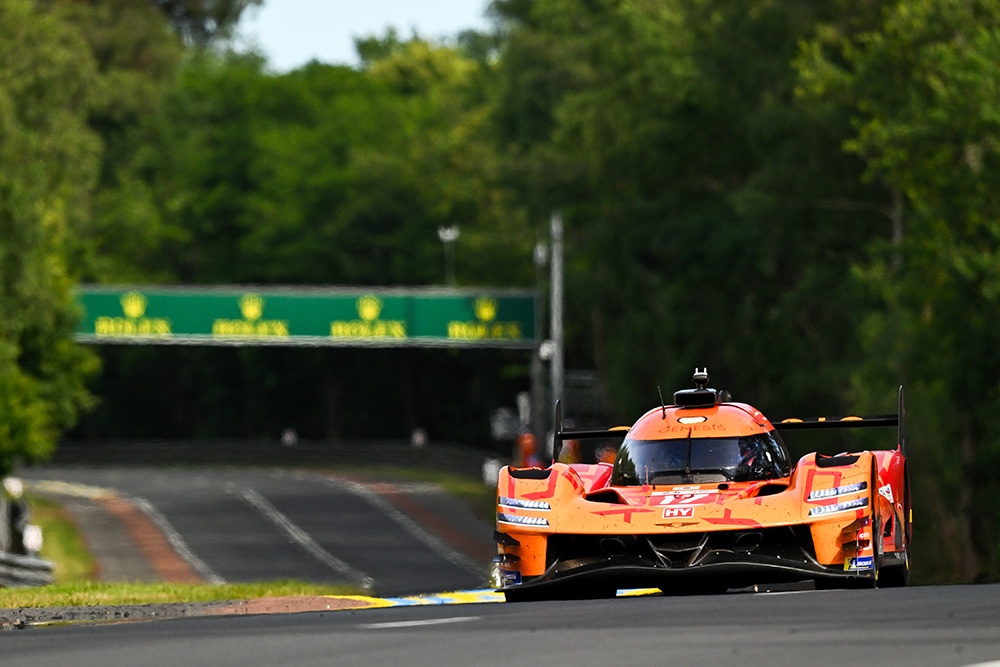
The best grid positions achieved by the other 13 marques participating in the 2026 race are: pole for Porsche, Toyota, Peugeot, Ferrari, Renault-Alpine, Mercedes-Benz and Cadillac; 3rd for BMW; 4th for Aston Martin; 6th for ORECA and McLaren; 9th for Chevrolet; and 46th for Lexus.
If it is thought that the present Alpines should not be regarded as being the same marque as the Renault-Alpines which took pole in 1976 and 1977, then the best grid position by the “recent” Alpines is 3rd.
Detroit’s day
One of the points of interest from the previous item is that Chevrolet’s best grid position – ninth in 1976 – came from the Corvette run by Greenwood/Darniche in the IMSA class.
The big Chev, which featured prodigious speed on the straights, was fastest qualifier of the IMSA runners by a useful six seconds. Even more impressively, it managed to outqualify several prototypes, so its excellent grid position wasn’t just due to the absence of quality competition. It was a mighty, and perhaps surprising, effort.

THE RACE
Winning Le Mans in your second race!
Bernard Rubin had one of the more unusual personal and motor racing stories of any of the winning drivers. Many of the drivers who won the race in its first 40 years served in one or both of the world wars. One of them, Robert Benoist, paid a particularly awful, agonising price for that service. While Bernard Rubin’s experiences in the First World War were not as extreme as Benoist’s in the Second, Rubin was nevertheless so badly wounded in action that he was rendered unable to walk for three years.
Having eventually recovered, he became interested in motor racing through his friend, the legendary Woolf Barnato. Rubin embarked on his racing career at Brooklands in May 1928, finishing sixth. Barnato then invited him to share his Bentley at Le Mans. After engaging in a long duel with the Brisson/Bloch Stutz, the Bentley’s chassis broke and just managed to hold together long enough to stagger past the chequered flag. But they won.

Tragically, Rubin met an early death from tuberculosis in 1936. His body was returned to his native Australia, where he is buried in Melbourne. His headstone makes no mention of his war service or unlikely Le Mans victory, but proudly states, “He was a grand bloke”.
Close finishes
On recent form, it seems likely that the Hypercar era will generate many close finishes, but it remains to be seen if a situation will ever occur where the lead changes hands on the last lap, as it did in both 1933 and 1969.
In 1933, Sommer/Nuvolari’s big lead was drastically eroded by several mechanical problems raising their unwanted head on Sunday morning. The delay brought Chinetti/“Varent” right back into contention, and Chinetti twice held the lead on the last lap. But he ran wide at Arnage, leaving Nuvolari to take the flag 400 metres (about 10sec) ahead.
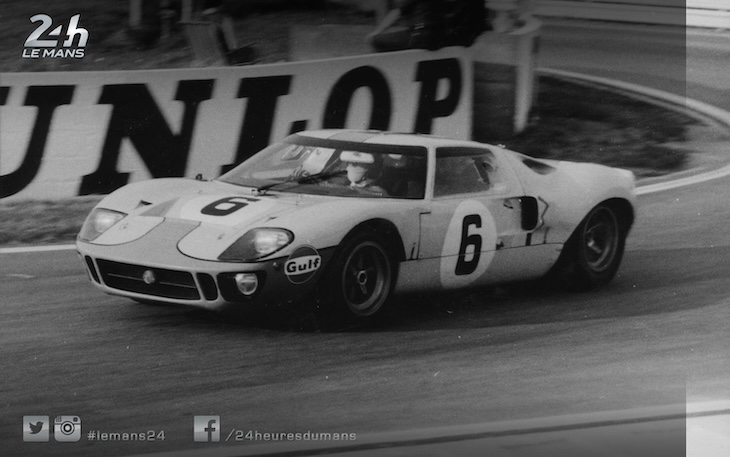
Both those 1933 crews were in Alfa Romeo 8C 2300s. It was a different story in 1969, when Jacky Ickx (Ford GT40) was a much quicker driver than Hans Herrmann (Porsche 908), but was driving a theoretically slower car. But the Porsche wasn’t in top condition at that stage of the race, and Ickx calculated that if he outbraked Herrmann at Mulsanne Corner on the last lap, his trusty old Ford would be able to hold on from there. It did. This time, the winning margin was given as just 120 metres.
Nuvolari not nocturnal
Another curious aspect of the 1933 race was that Nuvolari declined to drive at night, so Sommer drove for about 15 of the 24 hours.
Why was this so curious? Because legend has it that Nuvolari won the 1930 Mille Miglia by driving heroically through the dark, turning off his headlights so the leader, Achille Varzi, wouldn’t see Nuvolari in his mirror until it was too late.
It therefore seems rather odd that Nuvolari would find Le Mans, with headlights and few corners, to be a more daunting prospect than the endless twists of the Mille Miglia, sans headlights. Perhaps the explanation (as is widely suspected) is that the Mille Miglia tale is not quite the gospel truth. Even if that story was indeed a myth, Sommer must have been intrigued, or perhaps annoyed, to find himself doing the whole night shift at Le Mans when he had a co-driver of the calibre of Tazio Nuvolari.
Lagonda lads
Luis Fontés/John Hindmarsh will forever hold the record of being the youngest two-man crew to win the race. Their combined age was just 49 (Fontés was 22, Hindmarsh 27) when they took the Lagonda M45 to victory in 1935.
A few months after that race, Fontés was involved in a head-on road crash near Birmingham, in which the oncoming motorcyclist was killed. At his subsequent manslaughter trial, Fontés (who already had several driving convictions against him) pleaded guilty, but adopted the curious legal tactic of pleading in mitigation his extreme drunkenness. The judge made numerous scathing comments about Fontés’ behaviour (which included leaving the accident scene), and locked him up for three years.
Luis Fontés is not the only Le Mans winner to see the inside of a prison cell; at least five of them have done so.
In life, in death
Fontés and Hindmarsh had more in common than sharing a Le Mans victory at a young age. They both died flying military aircraft, and were both still very young at the time. Fontés is the shortest-lived of all the Le Mans winners, while Hindmarsh is fourth-youngest in that melancholy list.

John Hindmarsh was a senior test pilot for Hawker Aircraft. He was therefore one of the men who honed Sydney Camm’s wonderful Hurricane to such a degree that it became a deadly opponent to the Luftwaffe in the skies over Britain in 1940. On 6 September 1938, Hindmarsh, 30, was testing a Hurricane at Brooklands, when it dived vertically into the ground not far from the famous banked circuit.
Luis Fontés had been a keen flyer for many years. He resumed that hobby after release from gaol, but also applied his aviation skills to more serious purpose. On 12 October 1940, he was a civilian working for the Air Transport Auxiliary, and died when the Wellington bomber he was delivering to RAF Llandow in Wales lost an engine on approach to the runway. Fontés’ rather incident-packed life was over at just 27.
Like father, like husband
John Hindmarsh’s daughter Sue went on to marry Roy Salvadori, who won Le Mans in an Aston Martin in 1959.

Sue therefore found herself in the enviable position of having Le Mans winners as both father and husband. Although it seemed unlikely that such a situation would ever arise again, it has recently been duplicated in F1, where Kelly Piquet has multiple world champions as both her father (Nelson Piquet), and partner (Max Verstappen).
Crime in full view
By way of contrast to the relatively few people who know of Luis Fontés’ prison term for manslaughter, the YouTube viewing figures show that large numbers have found their way to at least one of the documentaries which chronicle the, er, “colourful” careers of the 1979 winners: drug-runners, tax evaders and jailbirds, Don and Bill Whittington.
Value for money?
The story of how the Whittingtons approached that 1979 race is bizarre, to say the very least. They had paid for their drives in a Porsche 935. It was owned and run by the Kremer brothers, who, not surprisingly, wanted lead driver Klaus Ludwig to take the start. But the Whittingtons were so concerned that the car may expire in its first stint, leaving them without the drives they had paid for, that in a startling development, they paid cash on the spot to buy the car from the Kremers. This duly gave them the right to send Don, not Ludwig, out to take the start. Presumably, the brothers reasoned that if the car did fail in the first stint, at least Don had value for his money; sorry about that, Bill…
But the 935 didn’t retire in the first stint, or indeed at all. Having made their point in such an extravagant manner, the Whittingtons sensibly sat back and let Ludwig do the lion’s share of the driving. Don also played a major role in the victory by miraculously effecting repairs after the Porsche ground to a halt on Mulsanne Straight on Sunday morning.
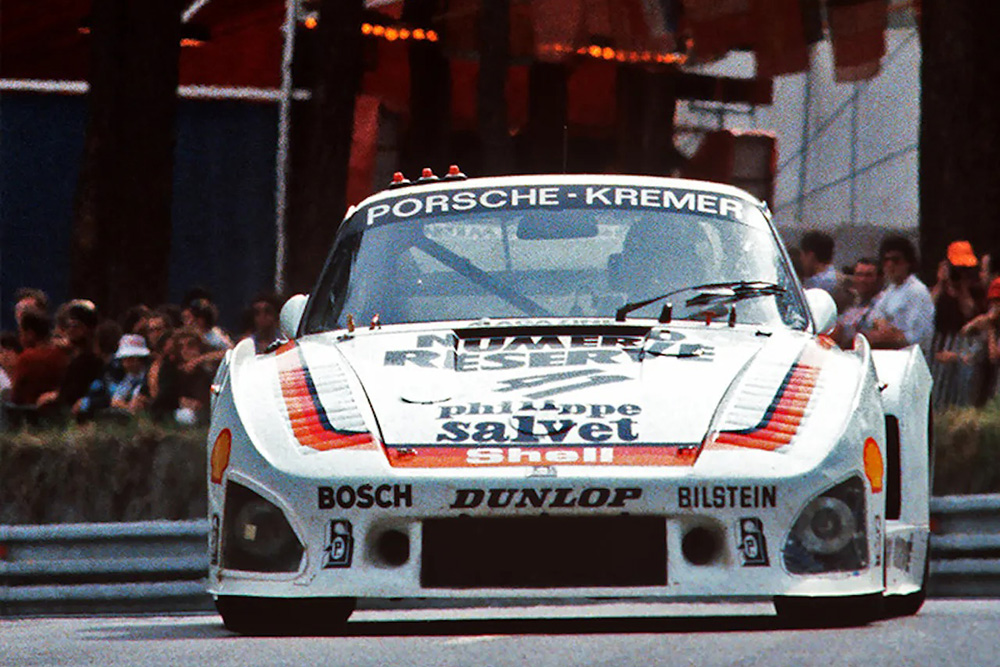
In keeping with this larger than life episode, the various reports of it in film or print include an enormous range of figures which the Whittingtons supposedly paid for their drive, and then for the car. While some or all of those quoted figures are plainly wrong, the undisputed fact remains that the brothers handed over a very large sum of money, simply for the privilege of Don facing the starter’s flag.
Ironically, their substantial outlay made no difference at all to the final result of the race. Ludwig and the Whittingtons would still have won it if the enterprising brothers had decided not to hand over all that cash which was lazily lying around in their transporter, looking for a home.
Young guns firing
The youngest three-man crew to win the race had a combined age of just 81 when they won in 2015: Bamber was 24, Hülkenberg 27 and Tandy 30. Even more remarkably, Bamber and Hülkenberg were making their Le Mans debuts; it was only the fifth time (after 1923, 1928, 1952 and 1993) that there were two Le Mans rookies in the winning crew; it was just Tandy’s third start in the race; and they only had negligible LMP1 experience between them.

It was a magnificent, against-the-odds achievement for the young guns to outrun not only their more highly-credentialled and experienced Porsche team-mates Bernhard/Hartley/Webber, but everyone else as well.
New faces
The 2025 field contained more previous outright winners (17) than ever before. The previous record was in 1996, when 15 drivers went to the start having already won the race. Barring unforeseen circumstances, the 2025 record will be broken again this year, helped by the surprising fact that the race has produced 10 new outright winners in the last four years.
Burn from the stern
Last year, the AF Corse Ferrari 499P won the race from 13th on the grid. Only two crews have won the race from further back. Attwood/Herrmann were 15th on the 1970 grid, while Herbert/Gachot/Weidler were 19th on the rather scrambled, unorthodox 1991 grid.
Ferrari frustration
The Ferrari 499P which was disqualified from 4th on the road last year was no less than the 91st car to be DSQ in the history of the race.
While that number seems alarmingly high, 81 of those DSQs have been for operational reasons (outside assistance, failing to make distance requirements during the race, failing to adhere to the rules about replenishment of fuel or oil, reversing in pit lane etc), rather than breach of technical specifications of the car itself.
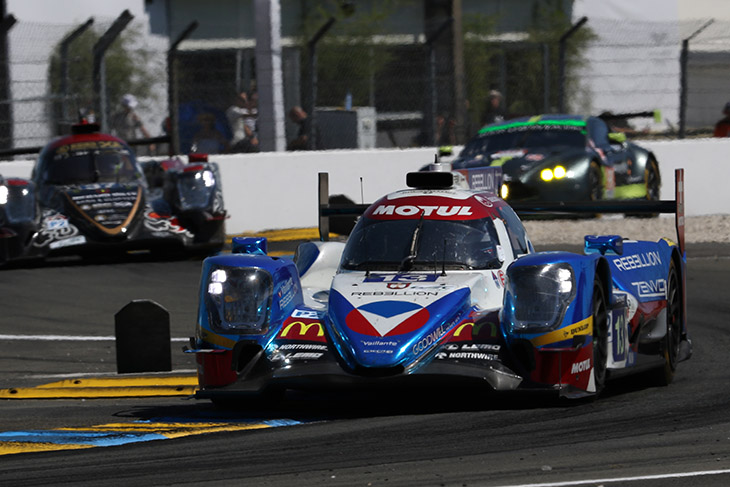
The Ferrari is not the highest-placed car to ever be DSQ: that unwanted distinction lies with the Vaillante Rebellion, which was DSQ from 3rd on the road in 2017 for cutting a hole in its bodywork, to facilitate ease of access.
Six for Lietz
The 2025 race saw Richard Lietz claim a remarkable sixth class victory at Le Mans. This puts him equal third on the all-time list of class winners, behind only Tom Kristensen and Claude Ballot-Lena. When asked if he’d be coming back in 2026, Lietz modestly said that it wasn’t his decision to make. But to the surprise of absolutely nobody, he is again lining up in a Manthey Porsche, striving to move even higher on the illustrious list of multiple class-winners.

Golden years
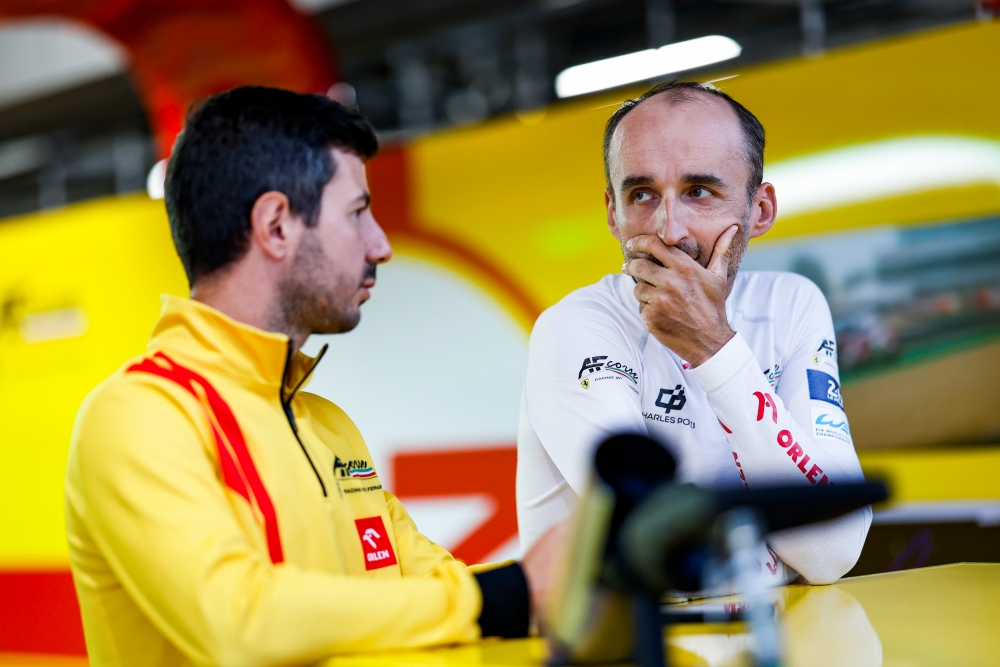
Last year, Robert Kubica, 40, became the first man to win the race in his 40s since Tom Kristensen (45) and Allan McNish (43) in 2013.
Kubica also set the second fastest lap of the race, but the fastest lap went to a driver who was even older than him. At 46, Sebastien Bourdais became the third-oldest driver ever to set the fastest lap in the 93 editions of the race. The only fastest lappers older than Bourdais are Ferdinando Minoia, who was 48 in 1932, and Earl Howe, who was a spritely 51 in 1935.
Vale Hans Herrmann
Hans Herrmann died in January 2026, at the impressive age of 97. He did not have the blinding speed which was the hallmark of his contemporaries like Jo Siffert and Pedro Rodriguez. But a steady, reliable approach was at a premium given the cars of the day, enabling him to achieve two particularly important milestones in his long career.
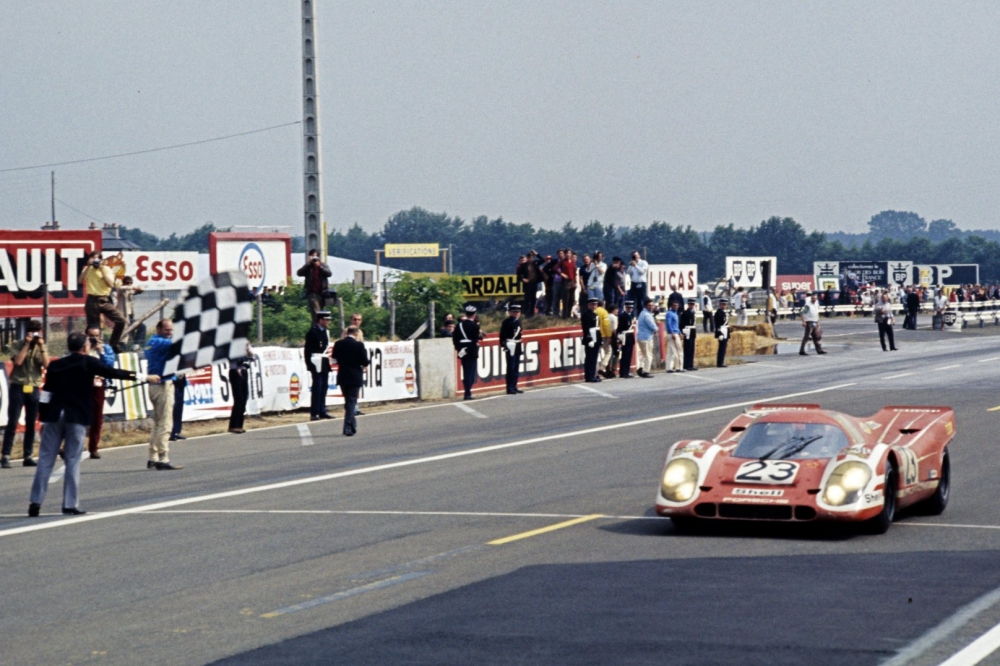
Firstly, it was Herrmann’s very reputation for being a safe pair of hands (he’d already claimed four class victories at Le Mans) that prompted Richard Attwood to ask him to share the Salzburg Porsche 917 in 1970. Sure enough, in a race of massive attrition, they kept going to claim the first outright victory for Porsche at Le Mans, after Herrmann had so narrowly failed to achieve that feat 12 months earlier.
Secondly, by winning Le Mans in 1970, Herrmann became the first driver ever to win sports car racing’s “triple crown”, being the Le Mans 24 Hours, Daytona 24 Hours and Sebring 12 Hours.
Pics: racingsportscars.com / dailysportscar


