
New faces on pole
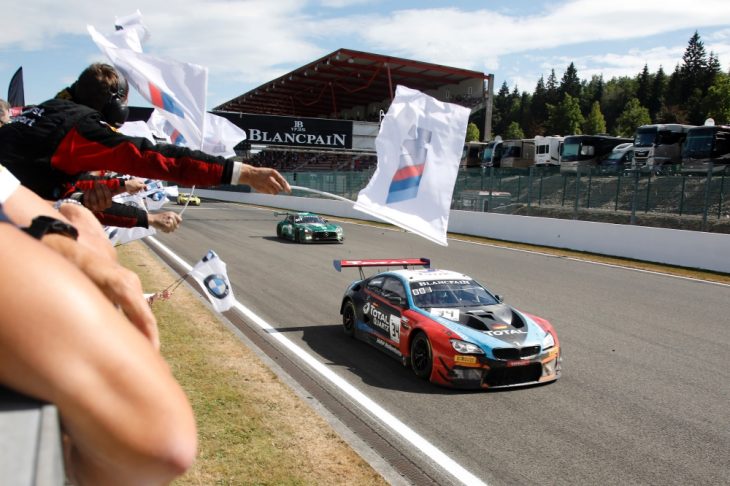
In 2025, McLaren became the 18th marque to take pole for the 24 Hours. It was a very convincing display by Marvin Kirchhöfer, as his margin (0.414s) over the second car on the grid was the largest gap at the front of the field since 2009. And with Ferrari taking pole again this week, that number stays at 18.

From the back
It was noted in these items in 2024 that (unlike many classic races) the Spa 24 Hours has a long and meritorious history of producing winners from lowly grid positions. The trend continued last year, when the winning Lamborghini lined up way back in 19th on the grid.
Qualifying pace was first used to determine grid positions in 1953, so this system has been used for 63 of the races. The cars which won those 63 races started from the following grid positions: pole:13, 2nd:8, 3rd:7, 4th:4, 5th:2, 6th:5, 7th:8, 8th:1, 9th:1, 11th:4, 13th:2, 14th:1, 19th:2, 20th:1, 21st:1, 24th:1, 26th:1 and 29th:1. The pattern of these figures is a testament to the depth of competition which has traditionally been a feature of the race.
Change of fortune
While Lamborghini finally claimed its first outright victory (after five previous class wins) in the 24 Hours last year.

Mirko Bortolotti won the race at his ninth attempt. His eight previous starts were all made in Lamborghinis, and reflected the marque’s perennially frustrating history in the race: before his breakthrough victory, Bortolotti had only managed to record one 8th, one 11th, one 16th and five DNFs.
Lamborghini became the 19th marque to win the race, the most recent addition having been Audi in 2011.
Start with a flourish
By way of contrast to Bortolotti, Luca Engstler did well to win the race in 2025 at just his second attempt.
However, the feat is not as rare as may be thought. No less than 37 drivers have won the race on debut, while Engstler becomes the 38th driver to win from his second start. As a total of 157 drivers have won the race, this means that nearly half of them have done so within their first two starts.
South Africa joins in
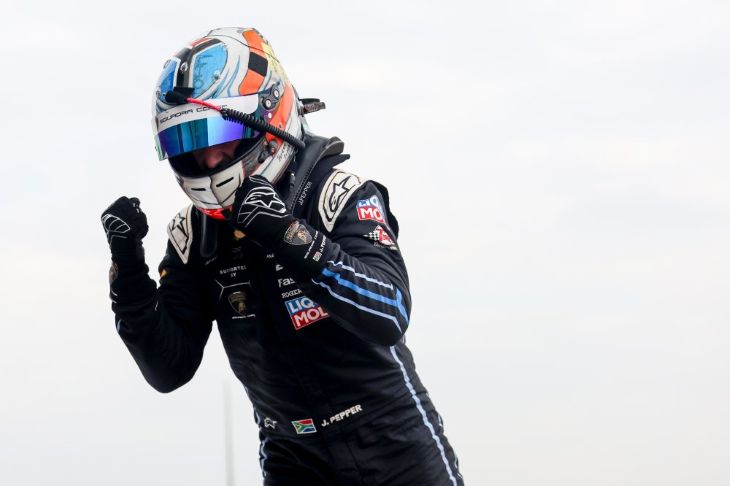
It was noted in these items last year that just seven of the 154 drivers who had then won the race had hailed from outside Europe. Jordan Pepper did his best to redress the imbalance by winning the 2025 race, making South Africa the 23rd country to have produced an outright winner of the Spa 24 Hours.
F1 reprises the 24 Hours
It didn’t take long for the race to produce a dramatic finish: it happened in just the second edition.
In 1925, Lagache/Leonard (Chenard & Walcker) were lying third with only minutes to go. Ahead of them were longtime leaders Decrose/de Buck (Ballot), who staggered out of the pits with a dying car, trying to salvage second place – only to have the axle break on the last lap. So Glazman/de Zuniga (also in a Chenard & Walcker) were set to inherit the win – but Glazman crashed on the last lap, not appreciating that there was no need to rush.
Lagache therefore took the flag, not realising that he and Leonard had added an historic, if unlikely, Spa victory to go with their Le Mans triumph two years earlier.
There were strong echoes of the 1925 finish in the 1964 Belgian GP. Jim Clark started the last lap in fourth. But ahead of him, Dan Gurney and Graham Hill ran out of fuel, and Clark passed Bruce McLaren’s misfiring Cooper on the run from La Source to the flag. Clark then ran out of fuel on his slowdown lap, rolling to a halt way out in the country, having no idea that he’d won the Grand Prix.
Mystery winners
It is an unfortunate aspect of Indianapolis 500 history that some of the drivers who drove the winning car, such as Cyrus Patschke in 1911, are somehow not regarded as having won the race.
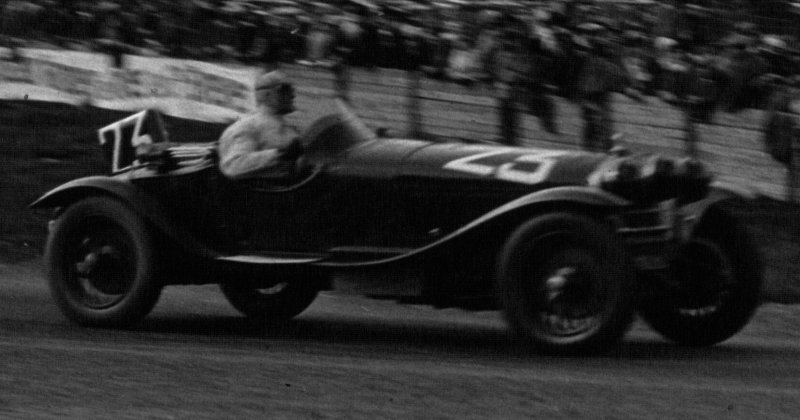
Remarkably, the Spa 24 Hours has a similar tale to tell. Pietro Ghersi (Alfa Romeo 6C 1750 (pictured above in the 1929 edition)) injured himself in a fall during a pit stop in the 1930 race. His co-driver Attilio Marinoni duly carried on without him to victory – but Motor Sport reports that, “in the final stages of the race he [Marinoni] was relieved from time to time by various other members of the team who were off duty from their own cars”.
If that comment is accurate, then some or all of Boris Ivanowski, Franco Cortese, Goffredo Zehender and Carlo Canavesi drove the winning Alfa Romeo as well as their own cars, and received no credit from posterity for doing so.
Indeed, unlike the case at Indy, it seems that we don’t even know which ones, or how many, of them actually took the wheel.
Showroom to racetrack
Another quirk of the 1930 race saw three Imperias being picked at random by the organisers from showroom floors, being sealed so no modifications were made, and sent into battle.
The three cars largely ran in convoy, didn’t miss a beat for the whole 24 Hours, and finished 4th, 5th and 6th in class. Bearing in mind that the original purpose of the 24 hour classics at both Le Mans and Spa was to provide a test of endurance for road cars, the Imperias had certainly passed with flying colours.
Sorry about that, ma’am
The conclusion of the 1949 race managed to be even more bizarre than 1925’s epic finish.
In the last 30 minutes, the Louveau/Mouche Delage D6-3L (below is Louveu’s 1929 D6-3L from Le Mans), running second, began to lose its oil at a great rate. When race leader Luigi Chinetti (Ferrari 166) came across the Delage’s oil at Hollowell, he slid off the road, colliding with (in order of importance) a woman and a house. After rendering first aid to the unfortunate lady, Chinetti limped back to the pits for repairs. The Ferrari was patched up well enough to stagger around for two more laps to the flag, while Louveau’s own problems left him in no position to challenge, and everyone else was too far behind.
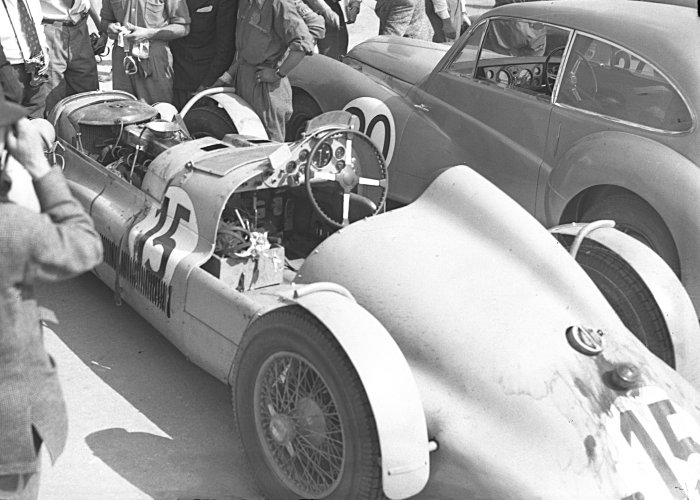
There have been numerous occasions in motor racing history when the winning car has been involved in late-race contact with either another car or the scenery, but surely there can’t be many (or perhaps any other) times when a victorious crew has come into contact with a spectator in the final minutes of a major race.
Old hand
Last-minute twists and turns in famous 24-hour races were familiar territory for Luigi Chinetti, who had lost Le Mans on the last lap in 1933.
However, his 1949 triumph at Spa meant that he became the first driver to win Le Mans and Spa in the same year. He drove a Ferrari 166MM each time, although it seems that it was not the same chassis.
Chinetti and his co-driver Jean Lucas had a combined age of 79 when they won at Spa that year, a record which will stand forever as the oldest two-man crew to win the 24 Hours.
Down to the wire
The sheer drama of the 1925 and 1949 finishes depended to a large extent on misfortune, and the extreme unlikelihood of what eventuated.
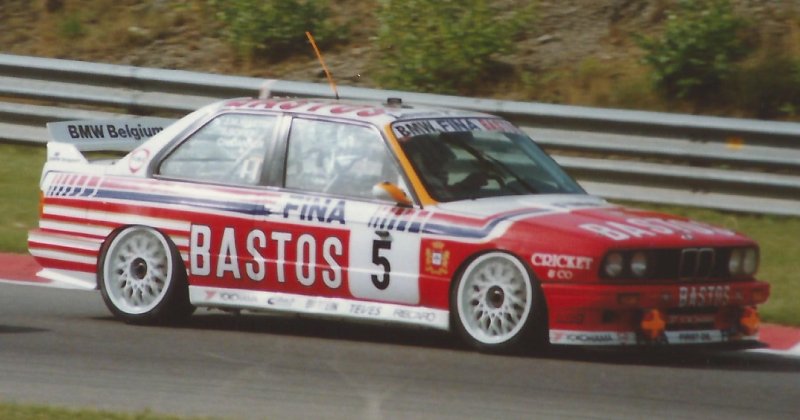
By way of contrast, the cliffhanger finish in 1992 was a much more conventional, pure racing end to the 24 Hours. In the closing stagers, Steve Soper (Bigazzi BMW) was full of running in second place, while the exhausted race leader Eric van de Poele (Schnitzer BMW) was adopting a considerably more measured approach.
It proved to be too conservative: Soper stormed into the lead on the second last lap, and went on to win by just 0.48 sec. It still stands as the closest winning margin in the history of the race.
Close at the front
Notwithstanding the fireworks in 1992, the GT era of the race, commencing in 2001, has generally produced much closer finishes than the touring car era which preceded it. In the last 10 editions of the race, the winning margin has varied between 4 secs and 1m56s, but in all 10 of those races, the first two cars have been on the same lap.

Ten consecutive victories by less than a lap is unprecedented in the history of the race, and stands as a great credit to the high level of competition provided by the GT3 category.
Indeed, four of the five closest finishes in the history of the race have occurred in the GT3 era.
Crushing wins
At the other end of the scale from the 1992 nailbiter, the daunting old 14km circuit produced some startling margins of victory: over 250km in 1953, and more than 200km in 1928 and 1973. The Farina/Hawthorn Ferrari’s massive lead in 1953 very nearly came to nought, when it developed serious drivetrain problems in the closing stages, the Autosport report mentioning “loud clanking noises”.
Retiring from such an enormous lead would have been a very bitter pill to swallow, as Lotterer/Tandy/Jani discovered to their chagrin at Le Mans in 2017, but the misbehaving Ferrari managed to hold itself together to the flag.
The rhythm of the track
On the day after the 1986 Belgian GP, I parked my hire car just before La Source, hoping to find the memorial stone marking the death of Richard Seaman while leading the 1939 Belgian GP in a Mercedes W163. Another car pulled up behind me, and a short, bearded man emerged.
It was the legendary Denis Jenkinson, of 1955 Mille Miglia and Motor Sport fame, on exactly the same mission as me. He told me that he used to race motorbikes on the 14km circuit.
He said that the F1 drivers thought (and he agreed, from his own days), that there was something very satisfying about La Source being such a slow hairpin: “that’s the end of a great lap, now here we go again”.
In that respect, he compared Spa to the (then-current) Osterreichring, which didn’t include a slow corner to provide such a point of difference; it was simply very fast the whole way around.
It was an interesting insight from a man who had approached Spa from the point of view of both competitor and journalist. But there was no sign of the Seaman memorial.
Images courtesy of Dan Bathie, Frozenspeed, SRO & Racing Sports Cars (Bob Vandenholt)