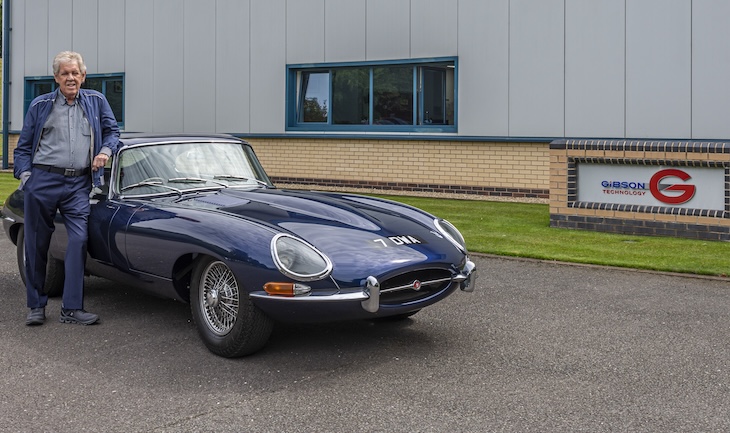
Bill Gibson, the co-founder and driving force behind Zytek Group and later Gibson Technology, has passed away after a long illness aged 78.
Bill’s impact on the motorsport industry is often understated but was revolutionary and profound in a number of technical areas across sportscar racing, touring cars and single seaters up to and including Formula One.
His Zytek concern brought digital engine management to F1 for the first time back in 1984 with Toleman, and his technological solutions would play key roles too in TWR’s racing successes with Jaguar in the World Sportscar Championship, and in 24 Hour racing at both Le Mans and Daytona.

In touring cars, European Championship-winning efforts from both Rover and Jaguar owed much to Zytek electronics too.
On the engine front, Zytek moved from race engine servicing to producing their own designs, most notably a collaboration with John Judd to supply the much-loved 3 litre KV V8 that powered F3000 for a full nine seasons! A1GP too was also launched with Zytek power and electronics.
In sportscars, Zytek flourished in a number of areas, their chassis, after taking over the assets of Reynard in 2002, were game changers in LMP2 and competitive in LMP1. The evolution of the LMP2 car saw the, by then Gibson badged, cars still winning races and championships into the current era.

There was an LMP2 engine programme too, with assembly and servicing of a production-based Nissan V8 that went on to dominate the formula until 2016.
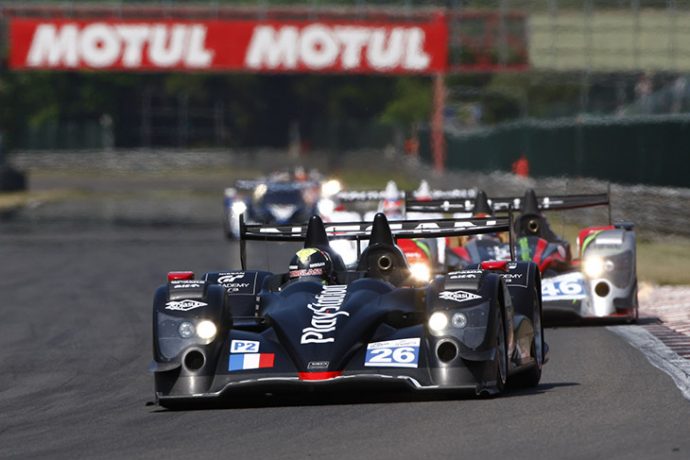
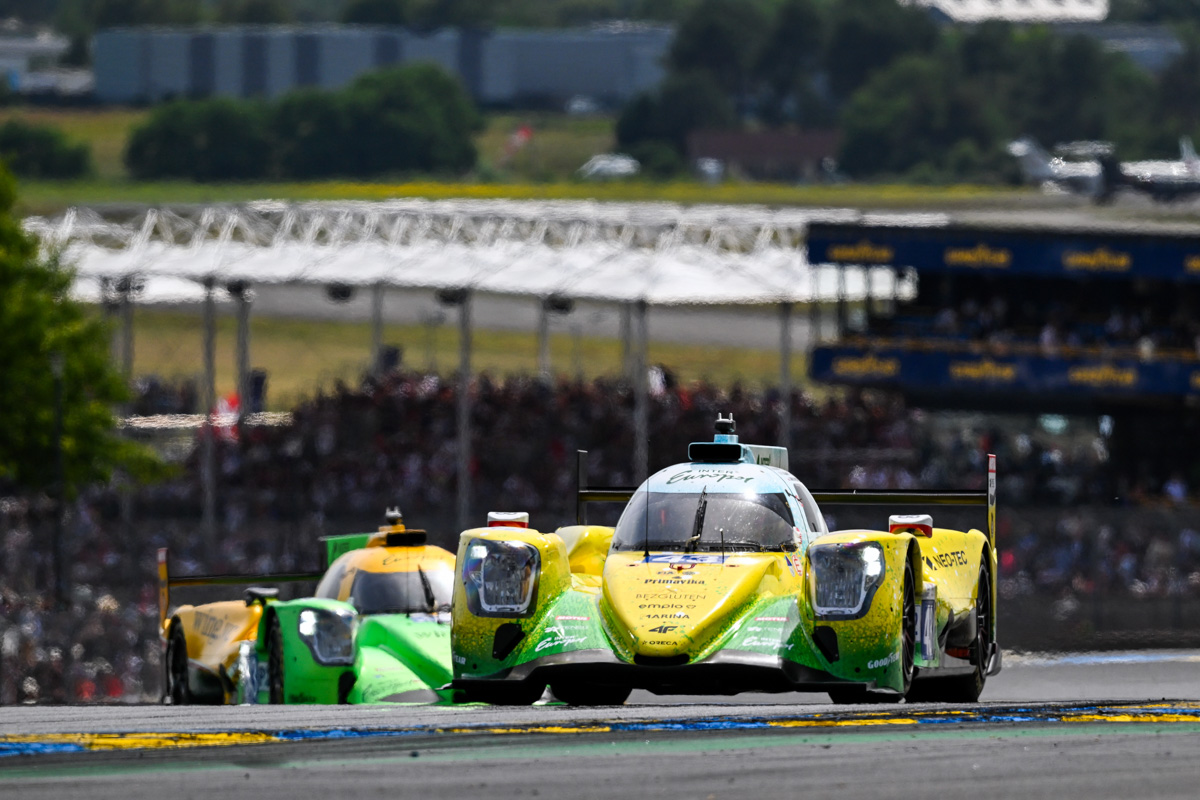
Since 2017, Gibson has supplied the control engine for the stupendously successful LMP2 class in the FIA WEC, ELMS, IMSA, and Asian LMS. That success in terms of performance and quality control was recognised with the awarding to the company of the next generation powertrain contract from 2028 with NISMO-based turbo V6 engines.
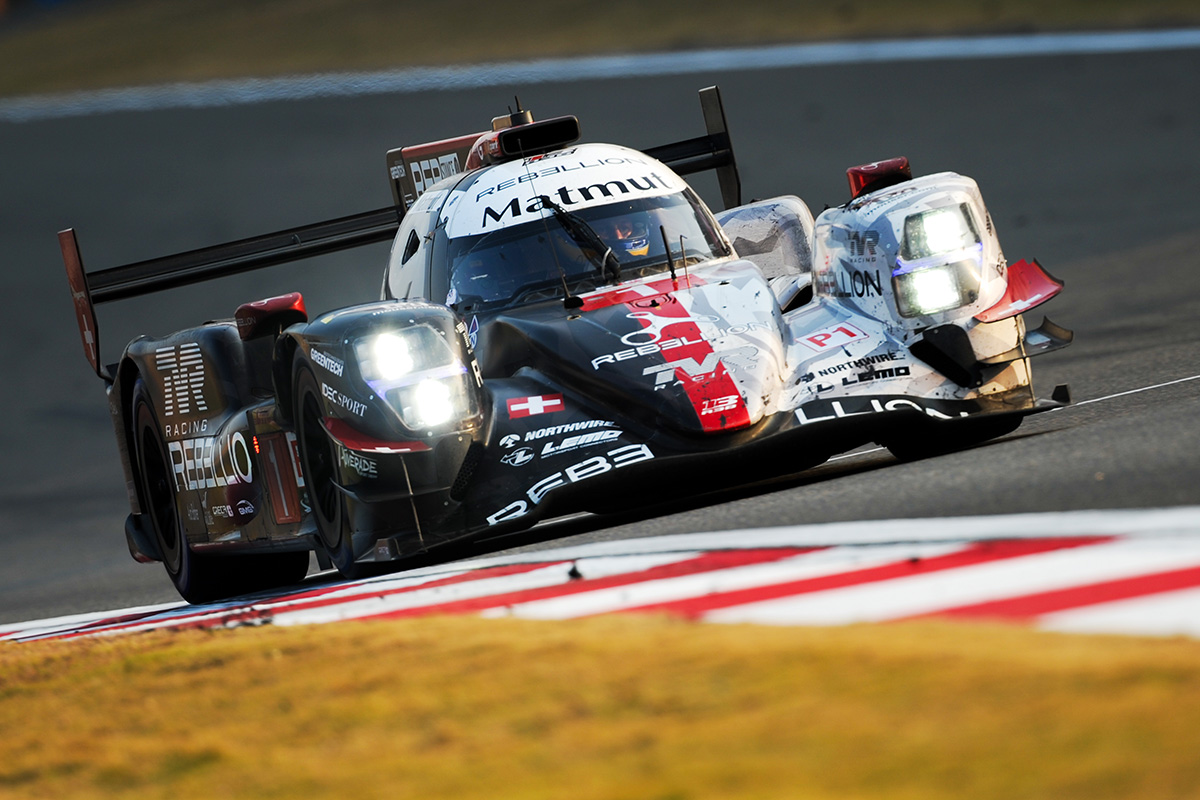
The engine programme also saw success with an uprated LMP1 version of the GK 428 normally aspirated LMP2 V8. The 4.5 litre version powered the Rebellion R13, and its ‘twin’ the Alpine A480, taking wins against Toyota factory hybrid opposition five times across LMP1 and into the Hypercar era.
Zytek were true pioneers in hybrid tech in racing, starting with the 1998 Panoz Q9, universally dubbed as ‘Sparky’ that showed the viability of the concept, later developed in Zytek LMP1 efforts in both the USA and Europe. That side of the business found much wider commercial interest with Continental eventually acquiring the electronics side of the business in 2014, the move prompting the change of name for the current business to Gibson Technology.

All of that, though, rather underplays the contribution of the man himself.
Any visit to Repton, to the team’s truck in the paddocks of the world, or in any encounter with the senior team had a common factor. To a man or a woman, the company is populated with professionalism and a smile. Long service in depth tends to indicate great foundations and a sound business ethic towards the talented people that drive it forward. Zytek and Gibson remain exemplary in both regards!
The company put out a statement today to mark Bill’s passing:
On Saturday, 20th June 2026, the motor racing community lost one of its most respected engineering figures with the passing of Bill Gibson, founder of Zytek and Gibson Technology, whose engines and electronics powered generations of racing success.
Bill Gibson’s career mirrored the evolution of modern engine technology, from early electronic fuel injection to hybrid systems and dominant single-seater and endurance racing powertrains.
Born in Ayrshire on 25th June 1947 and educated at Sheffield University, he joined Lucas in 1971 and quickly became a leading figure in electronic fuel injection, rising to chief engineer on Jaguar’s V12 programme at a time when the technology was still in its infancy.
Leaving Lucas in the early 1980s, he founded his own business, developing engine management systems that would evolve into Zytek—one of motorsport’s most influential engineering companies. In 1984, its technology made an immediate impact in Formula 1 with Ayrton Senna at the wheel of a Toleman-Hart, before going on to underpin major successes with TWR Jaguar in sportscars, as well as supplying engines to Formula 3000, A1 Grand Prix, Auto GP, World Series by Renault and LMP1 / LMP2 in Sportscars.
A pioneer of hybrid technology, Gibson was responsible for one of the first hybrid race car systems in 1998, and in 2009 provided technical expertise to McLaren on the introduction of hybrid systems to Formula 1. Consistently ahead of the curve, he led projects that helped shape both racing and road car powertrain development.
Following Reynard’s collapse in 2002, Gibson moved quickly to secure the intellectual rights to its sports prototype programme, acquiring chassis 02S and laying the foundations for a lineage of Zytek and Gibson prototypes. Over the following years, the programme produced 15 chassis, while Zytek further strengthened its position in LMP2 through its collaboration with Nissan, assembling the VK45 V8 engine that would go on to achieve multiple Le Mans victories.
Rebranded as Gibson Technology in 2013, the company secured the LMP2 control engine contract, its GK428 V8 becoming one of the most successful and reliable engines in endurance racing history, covering over six million kilometres in competition.
Across more than four decades, Gibson’s work helped define the technological landscape of modern motorsport. Bill was a visionary engineer and leader whose drive and ingenuity shaped Gibson Technology into a world-class powertrain supplier. He inspired loyalty and long service from those around him, building not just a company but a close-knit team.
As one colleague reflected: “His impact was immense – he encouraged all of us to achieve something remarkable.”
Bill Gibson’s legacy will continue to echo through endurance racing, in every engine bearing his name and in the standards he set for performance, reliability, and engineering excellence. In addition, many of Bill’s family continue to work in Gibson Technology.
Bill will have been proud of the way that his team regrouped after ill-health struck over two years ago, and he’d likely have been surprised at just how hard a hit his passing has had on his colleagues. People of quality have that effect though, and if Bill Gibson was defined by just one thing it was exactly that – quality!
DSC sends our profound condolences to all at Gibson Technology, to Bill’s family (including three daughters and seven grandsons), and friends in motorsport and beyond.