The ACO, FIA and IMSA’s reveal of the framework for the 2030 Hypercar regulations earlier this month on the eve of the Le Mans 24 Hours was a huge moment. Sure, it wasn’t the unveiling of a full published set of technical regulations, but it was the first major step towards securing the future of sportscar racing’s top class.
Right now, 2030 may still seem like a long way away. In motorsport terms though, it’s right around the corner. The full set of regulations is on track to be published by the end of this calendar year. After that the boardrooms for all the OEMs involved in the top level of sportscar racing will have decisions to make and budgets to sign off, to allow their race teams to go away and develop cars in time for track testing before the next-gen cars are homologated for Q1 of 2030.
What will the new rules look like? At a basic level, they are essentially a merger of LMH and LMDh, though this new, long-awaited single platform solution looks set to lean more into the LMDh philosophy.
Cars will all be hybrid-powered (using either a bespoke system or a common one from a nominated supplier), two-wheel drive, with open rules on engine architecture and be frozen from performance updates for five years.
They’ll be built around survival cells which meet new FIA safety standards, weigh more than 1040 kg and feature a mandated weight distribution and centre of gravity. The spine, like the hybrid system, may either be a bespoke solution or an off-the-shelf one from a supplier, like the current LMDh ruleset (assuming suppliers agree to come forward to offer one).
Aerodynamically, they’ll all run with a “prescribed” underfloor and diffuser, and fit into a tighter window than the current regulations. Heavier (1200kg) liquid hydrogen-powered prototypes will also be allowed and balanced in via an ‘Equivalence of Technology’ process, with specific tyres.

Add it all together, and you have a single ruleset designed to keep cost contained, make performance balancing easier, and appease as many of the current band of manufacturers as possible.
It’s too early to say whether or not this shift in direction will prove to be as much of a smash hit as the current era or not when it comes to grid sizes in the WEC and IMSA. But many of the key voices in the technical working group have expressed their initial opinions, and the majority of those have been net positive.
Frederic Lequien, the WEC’s CEO, feels the move to a single-platform with the parameters outlined is “in the interest of everyone,” telling DSC that “the direction is clear, everybody agrees, and it makes sense.”
IMSA President John Doonan, who confirmed to DSC that the aim is to debut the new rules in IMSA at the Rolex 24 Hours in January of 2030, feels the timeframe is sensible and workable for all parties.
“It takes time to develop the cars and get ready,” he added. “So getting it out here five seasons in advance, you can’t ask for more.”

The devil, though, is in the detail, and this was the message delivered loud and clear by all the OEMs and key suppliers DSC polled in the aftermath of the news drop.
So what are the key concerns and areas that need the most attention in the discussions ahead?
For the LMH manufacturers in particular, there’s a broad sense that the 2030 regulations will not push hybrid technology forward enough.
Ferrari, Toyota and Peugeot all point out that the current rules work for them because they benefit in an R&D sense. Whether or not the new philosophy does will be up for debate.
“I would not call it convergence. I would call it an alignment,” Toyota Racing’s technical director David Floury told reporters. “It’s more or less in line with the picture we are seeing here. Clearly we LMH have to align with LMDh regulations.
“The reason why we as Toyota go racing is to develop technology to support road car development and develop people.

“The fact that the grand context from an environmental point or view or an energy point of view, it would make sense and be responsible to make a step in the direction to be relevant in this respect. I don’t see that at all.”
The head of Stellantis’ motorsport division, Olivier Jansonnie, was broadly positive in the wake of the regulation reveal, pointing out that the planned freeze on development (except for situations where manufacturers can prove an update is absolutely necessary) is “something they should have done 10 years ago”. But he echoed Floury’s concerns regarding hybrid tech.
“We like to understand the technological roadmap they were to put in place,” he said. “What do you want to promote as a group in terms of technology? Those cars are Hybrid. What are we doing on the energy? What are we doing on the power? Do we keep the same amount of electrical power on the car energy? Which one, then, LMH or LMDh? Or something in between? How do we want to balance the cars in the future? It’s very early in the process.
I would not call it convergence. I would call it an alignment
“Now it needs to be analysed. Where can we put the technology while keeping the cost completely under control? There’s probably room to increase the amount of electrical energy compared to LMDh translation for the current LMDh.”
Ferrari too is conscious of the technological benefits of running a programme. However, its major sticking point surrounds the ability to design a fully bespoke prototype, which, according to the proposed framework, will be possible.
“When we have the prancing horse on the car, the car has to be built 100 per cent in Maranello,” the global head of Ferrari Endurance and Corse Clienti, Antonello Coletta, stated to the press.
The outlier is Aston Martin, which currently competes with a non-hybrid Valkyrie derived from a road-going Hypercar.

However, Adam Carter, AMR’s endurance boss, hinted that the ruleset is on track to tick enough boxes to keep the British brand in the top class in the long term.
“Regulation direction as it is means it’s definitely a change for Aston Martin’s approach to Hypercar racing in the future,” he explained to DSC. “2030 will require us to get a different platform. However, we absolutely love endurance racing, it’s right at the heart of Aston Martin. We are very supportive with what the FIA, ACO and IMSA have done.
“If you look at the platform they’ve created in terms of popularity and the engagement and growth in WEC races, we’ve got full trust in them to develop a platform which will continue this great success in endurance racing.
“We’ve been fully engaged with the regulation development process to this point. We understand what 2030 will require and the world will have changed from where we are today by 2030, and as we march towards 2035 as well. It will align with Aston Martin’s roadmap for propulsion systems.
“The direction has been set, the detail has not. We have to work collaboratively as a group of manufacturers with the regulatory bodies to get the detail nailed down. All of a sudden we’ll need to be building cars in 2028 and that’s not far away and it’ll be 2027 before we know it.
The direction has been set, the detail has not
“(Staying committed to both IMSA and the WEC going forward) That’s our intent. It’s a long way into the future. Le Mans is super important to Aston and America is a huge market. Having Le Mans, Silverstone and America, is a great alignment.”
As for chassis suppliers, such as the nominated LMDh organisations – Dallara, ORECA, Ligier and Multimatic – the business case for taking part needs to be studied further before any major commitments are made.
In particular, designing and producing an off-the-shelf spine for the new regulations has to make sense commercially for the projected (low) volume they will be produced. Crucially, this time around, there is no planned carryover of said spines into a set of LMP2 regulations (which, in the end, were scrapped after the formula debuted).
There are a number of pertinent questions in this area that will need to be answered during future technical working group meetings: What constitutes a spine for these rules? Could producing a solution for multiple OEMs be as profitable as working hand-in-hand with each of them on a bespoke solution? Will any OEM’s be interested in a shared spine second time around, even if it carries an increase in cost? Will there be cost-capped parts?

And that leads on to the broader subject of carryover. Last year when discussions for 2030 first got underway with meetings, there was a will from multiple LMDh manufacturers to push for a ruleset that enabled the current cars to be adapted for 2030 onwards, in a bid to, you guessed it, reduce cost. Right now, this subject represents another grey area.
First off, to comply with new FIA safety standards and an increase in crash-test impact velocity, the monocoques will likely need to be new, eliminating the option of reusing a key element as is. Certain key components, such as engines, look set to be permitted, though, handing manufacturers shortcuts to the new era.
“I think one of the things that we want to make sure of is that the investments that these companies have made do not become obsolete,” IMSA’s John Doonan said on the topic of adapting current cars.
the goal would be to make sure that we don’t completely make obsolete what people have today
“So from an engine standpoint, my hope would be that they could carry those on. The same with most of what they’ve developed from a spine standpoint. The four constructors – Dallara, Multimatic, ORECA and Ligier – have dedicated so much to their work with the manufacturers. None of those things do we want to become completely obsolete.
“Will there be updates to the cars based on the new regulations, or will others competing in the top category have to modify their strategy and develop a car to these regulations? Yes. But the goal would be to make sure that we don’t completely make obsolete what people have today.”
Key manufacturers have come out in support of this, including both McLaren and Ford, who are set to join the Hypercar ranks next year with new cars, just three years before the next-gen ruleset debuts.

“We’re here in 2027, it’s not a particularly long period, so the ability to carryover elements of the car would be a positive not just for us but we’re sure for many others,” James Barclay, McLaren’s endurance racing boss, told DSC.
“We hope we can find a balance, so keeping some key elements of the car which are significant in cost, and then in other areas where there’s a requirement to change, such as safety with the chassis. We support that.”
Ford Racing’s Mark Rushbrook added: “There will be changes to the chassis required, but details of that will be worked on in the coming weeks. It’s not a major sticking point, but it makes sense budget-wise as we look at how we spend our money.”
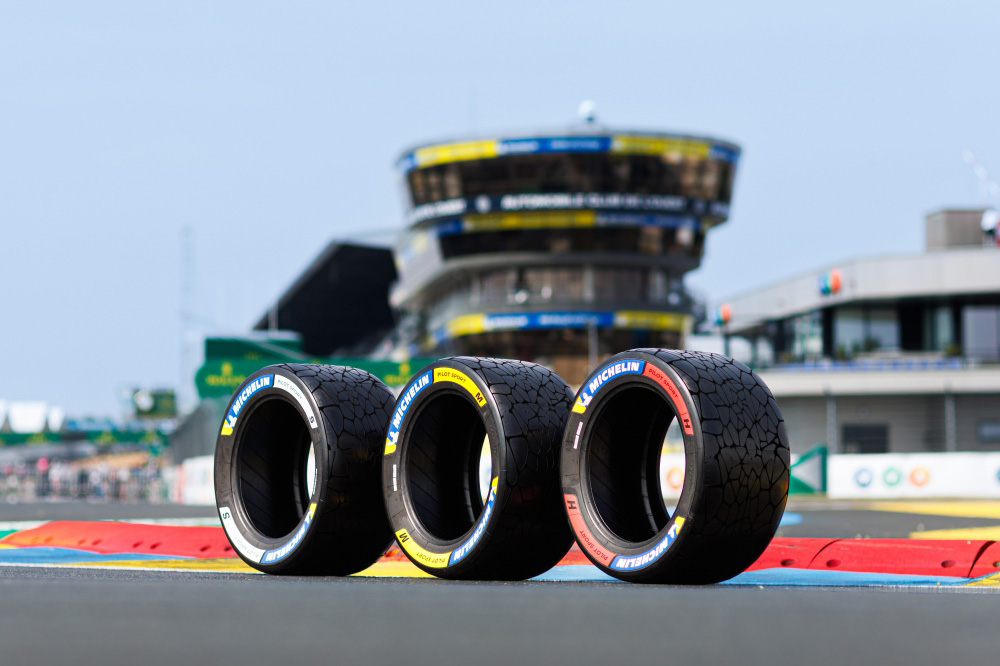
As for other key areas, there’s no word on who will supply the spec hybrid system (currently, for LMDh, it’s Bosch), and the tyre suppliers taking a look at the formula (including for hydrogen entrants), which includes Michelin and Goodyear, are currently in waiting as a decision on the result of the tender process has been delayed.
“It’s taken more time than we expected,” said ACO President Pierre Fillon of the tyre tender. “We plan to make an announcement, maybe just after São Paulo (next month).”
There are so many elements of this up in the air, that need to be agreed on before we get to a point where the manufacturers involved, or previously involved, feel they can commit. And it’s certainly too early to project who will be racing where when the cars debut, especially when you factor in current geopolitical tensions and the continued economic difficulties facing many OEMs.
We may see the majority continue on, or we may rely on new faces to form the backbone of the next era. We may see the Hypercar and GTP entry lists hit higher totals than ever before or we may suffer a mass exodus. We may even see manufacturers that have walked away or reduced programmes reverse decisions and use 2030 as a chance to jump back in.
Porsche, which scaled back its 963 programme to IMSA-only this year, is keeping an eye on the direction, with its motorsport VP Thomas Laudenbach acknowledging that moving towards a single set of regulations “is what we wanted”. And HRC/Acura may also see the ideas surrounding a performance-update freeze as a step towards it pushing the play button after its stated IMSA GTP “pause” on cost grounds.
Either way, the train bound for 2030 has left the station. Now comes the hard part: reaching the final stop with the carriages full.
Images courtesy of Michelin, IMSA, Peter May, Jack Webster, DPPI, Toyota