Malthe Jakobsen completed his fourth Le Mans a few weeks ago in the #94 Peugeot Totalenergies car, finishing 11th to match their 2025 finish. In what was a clean, steady 24 Hours of Le Mans in general, with only two safety cars and a total of 8 full-course cautions, the Peugeot team ran a quiet but consistent race with no major incidents or mechanical issues to speak of.
While the pace did not reach the level the French marque hoped for throughout the event, the #94 crew at least brought the car home clean, as Jakobsen had anticipated going into the race.
Speaking to the Dane post-race, he gave DSC an inside look into his experience driving in sportscar racing’s biggest race.
With all of the demands and sources of pressure for drivers during Le Mans week, the driving part of the whole song-and-dance is what comes easiest, according to the young driver.
“Usually it’s difficult because you have been waiting for such a long day [ahead of the race] already with all of Saturday, and the grid show, and having been going to the Danish campsite on Friday, it’s lots of building up to the big race. At that stage, you just want to get driving.”
The campsite he speaks of, a gathering of Danish nationals near the Porsche Curves, is perhaps one of the largest gatherings of motorsport enthusiasts from the proud nation each year, supporting Jakobsen as well as the seven other Danish drivers on the 2026 Le Mans entry list.
Taking the wheel for his first stint of the race still affects Jakobsen’s nerves because of this build-up full of pomp and circumstance that comes along with this scale of sporting event.
“It is a little different going in the car the first [stint], because you usually have a bit more nerves before you [suit up].”
After strapping in for his first stint, four and a half hours into the race, Jakobsen found his groove in the first four hours in the car. There were no major cautions or safety cars during this period, allowing him to log laps in the Peugeot 9X8 consistently before handing the car back to teammate Loïc Duval.

“Mostly green race for sure helps, because then it’s easier to stay focused and in the zone and not make any [mistakes].
“Usually, when you have the safety cars, you have to restart on colder tyres, and there’s a lot more processes going on. It usually makes the race feel longer as a driver when you’re sitting in the car, compared to if you’re just able to drive flat out all the time.”
Duval would complete two stints before Theo Pourchaire took his second turn in the car, while Jakobsen tried to get some rest in the early morning. He would get back in the car just after five o’clock in the morning, having stayed in for three and a half hours, the #94 still outside the top 10 as the sun rose on La Sarthe.
On paper, it appears as though the workload of driving a 24-hour race between three drivers would allow for the drivers to piece together a solid night’s sleep between stints, but this is not the case. There are many factors that take up a driver’s time when they are out of the car, including reviewing data, communicating with the team, and coming down from the adrenaline of competing through the famous corners of the high-speed circuit for hours at a time.
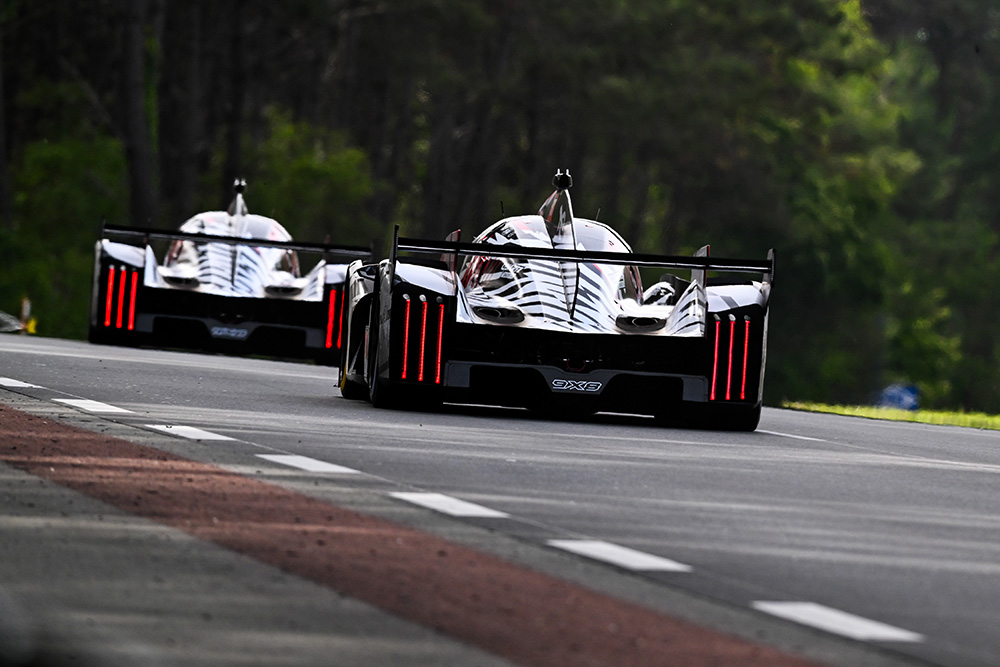
In reality, Jakobsen got less than two hours of rest during the 24 hours, despite almost nine hours of racing across his three stints.
“I think I slept about an hour and a half in total during the race, and this was during the night between the first stint and the second stint I drove. And then I had maybe another half an hour to an hour nap around noon on Sunday. So not a lot.”
Processing and recovering from such an event takes a big toll on those just spectating and working behind the scenes of the race, let alone the drivers. Jakobsen added that the Le Mans recovery process got off to a tough start before he was properly able to relax back home in Denmark.
“I took a lot of rest when I got home. Actually, I didn’t feel very well the first couple of days. I think I was just tired and a bit exhausted.
“But finally I had some good times with the family, enjoyed the good Danish weather at home, so this was a perfect way to round it up.”
The work never stops for a driver like Jakobsen, who participates in multiple series per season. His next race on the calendar is at Imola for ELMS, just two weeks after Le Mans, where he races in the #20 Algarve Pro Racing car in the LMP2 Pro/Am class alongside Michael Jensen and Enzo Trulli.

Before this round, however, there was still work to be done with his Hypercar team, preparing for the next WEC round in São Paolo the weekend following Imola.
“Already this week, tomorrow, I’m heading back to Paris to the [Peugeot] workshop, and we are focusing ahead for the next race in Brazil.”
Following Malthe Jakobsen’s journey through Le Mans week highlighted the amount of work drivers do off track. During the biggest race of their season, the work begins ahead of scrutineering, preparing back at the factory with their engineers and fellow drivers.
From scrutineering, the media deluge begins, with countless obligations and appearances to make to promote their team and the manufacturer’s brands. Through testing and practising ahead of the weekend, the drivers’ and cars’ performance is analysed heavily within and outside of the team, facing scrutiny from journalists and fans alike, beginning to make assumptions about where the cards will fall on race day.
Friday’s qualifying sessions and Saturday morning’s anticipation of the race start bring the buzzing energy in the build-up to the race, which, as always, has the potential to define who these teams are.
Getting through the 24 hours of racing looks like falling into a groove in the car, executing one’s talent and skill to aid the team on the world’s stage. And after all of this? There is the hope of a brief recovery from over a week of intense work before the next round of racing comes knocking.
This race demands everything from drivers, but this is a necessary and welcome sacrifice to make to compete at the top level of the sport.