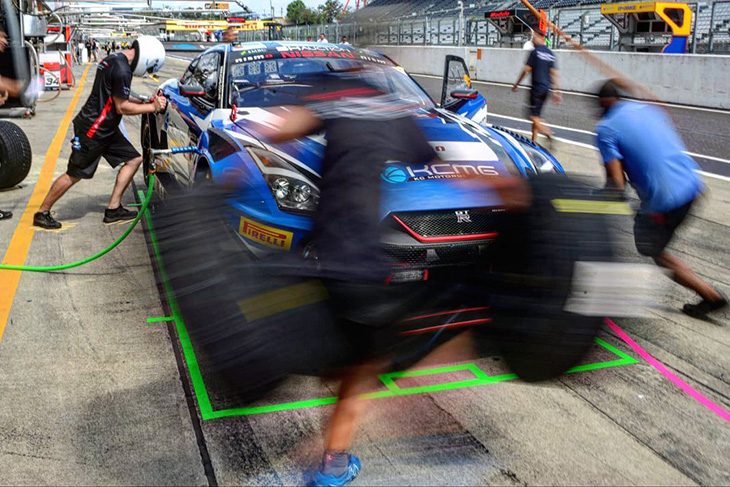

At the dawn of race day for the SMBC/BH Auction Suzuka 10 Hours, we were fortunate enough to speak with two of the leading technical architects of KCMG in the Intercontinental GT Challenge.
KCMG Technical Director, Warren Tyrrell, has been with the team since 2014, at the time where the team from Hong Kong emerged onto the scene with their successes in the FIA World Endurance Championship LMP2 category, culminating with their 2015 class victory in the 24 Hours of Le Mans.
Chief Engineer, Andy Richardson, joined KCMG last season as the team began their partnership with Nissan in the Blancpain GT World Challenge Asia, and now runs one of their two Nissan GT-R NISMO GT3s for the full season of five races.
Each round has its own challenges, and both Tyrrell and Richardson enjoy the unique challenges that the Suzuka 10 Hours presents, from a technical perspective. Starting with preparing for and executing the crucial in-race pit stops.

“The trickiest thing this year has been all the regulation changes for us,” says Tyrrell. “Because it’s none of them are the same! Bathurst is CAMS regulations. Laguna Seca is IMSA, Spa is SRO. Now we’re here with an interpretation of SRO regs. A lot of it is really similar, but it’s not exactly the same.”
“There’s a lot more put into pit stops when you arrive, it’s not like you can practice one single routine. Like here, now we’re allowed to use two air guns. But we still can’t use additional people. So we’ve actually decided we stick to what we did previously because we know the routine. And we can stick with that. And everybody knows what they’re doing.”
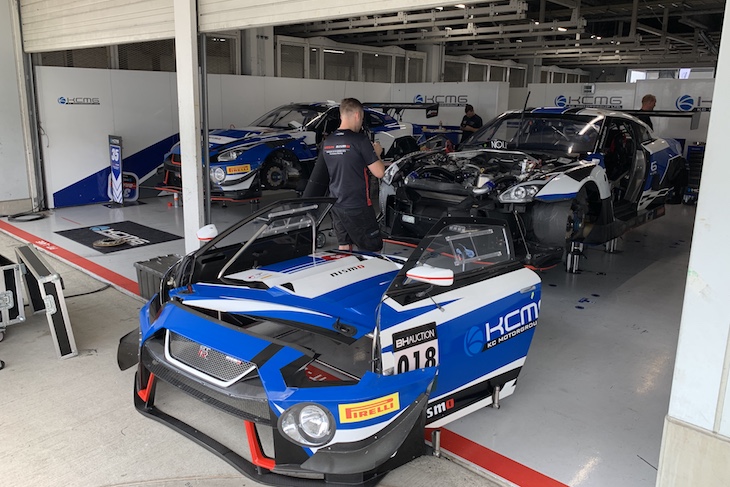
“So we tried to change it the minimum amount possible to sue the regulations where we are. We could be this one say we could flip it completely and use two bits of guns. But for us, it’s better. We stick with the one and work with that.”
“The nice thing about the IGTC is that for an engineer, there’s a different challenge in every single race,” says Richardson. “Although the regulations are very similar, the track conditions are very different.
“Bathurst, for example, is a safety car race, your job is to stay on the lead lap, as long as possible. It’s governed by fuel, not by driver time. So you can run as long as the fuel will last, and the tires will last and last and last. So you can triple stint the tyre. So the most important thing is to be close to the front after the last safety car on the best tyre. And without driver fatigue, which we had there, we should have been on the podium or winning this race. We were very unlucky with this.

“Then you have some races like Laguna Seca, which is a tyre degradation race. So there you are limited by the performance of the tyres dying away. And you have to try to undercut. But you’re also limited to drive time. Spa is now a safety car race, but it’s a 24-hour sprint race. Because the safety car changes very little there, unlike it does at Bathurst, you do need to stay on the lead lap. But it’s controlled by driver time. So the most important thing there is you will not double-stint the tyre anyway. Suzuka is another tyre degradation race.”
Richardson oversees a lot of the preparation as a Chief Engineer: “I am in charge of my mechanics, helping them with their job list achieve the car, I work on improving the setup with the performance engineer and passing information to the car to make sure the car is set up properly and improve the feel and the performance of the car.
“My job is also, effectively, a liaison with the drivers and also to help improve the driver’s functionality. At the same time, on track, my job is to make sure the car is running properly for tire pressures, fuel amounts, components like this. And then during a race, my job would also be to manage strategy, weather conditions, things like that.”
“We have systems in the car to determine when the car enters the pit lane. We have radio calls from the driver on the way in, and confirmations and our list of requests and information going backwards and forwards between the race engineer the car, so that we have primary countdown systems running in the car and secondary backup systems and third backup systems for failures.”
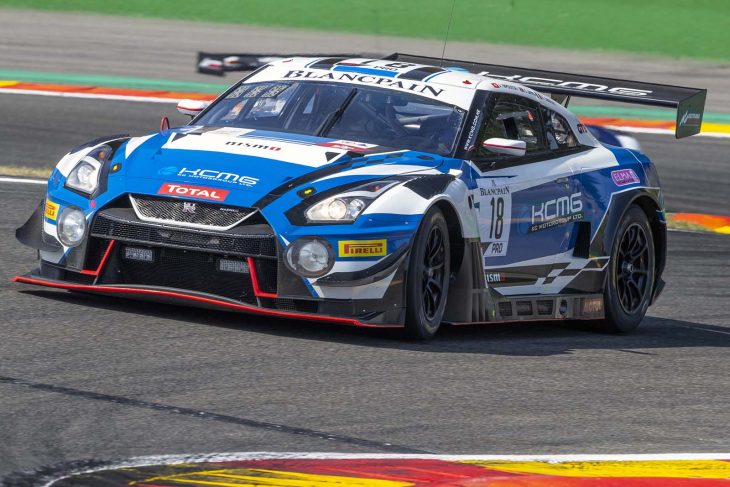
KCMG’s partnership with Nissan is in its second year. The 2018-spec GT-R GT3 is a capable car, but one that has a very narrow window for working within Balance of Performance. They struggled through Spa, after showing pace at Bathurst and Laguna Seca. But both Tyrrell and Richardson enjoy working with the blue and white GT-Rs, each of which qualified in the top 20.
“What happens with a car like ours, which naturally doesn’t handle well in the wet conditions, we have to work very hard as a team to get where we are,” says Richardson.
“We started with a good, balanced car on Friday and every time we changed the car and we felt we improved it. By the end of the day, in the same conditions, we were slower. When you look at Saturday morning where we had our first piece of dry running, we are extremely limited on time to be able to develop a setup that works here. And globally, we put the car seven overall in qualifying with a very short amount of time.”
“And between Q3 and Pole Shootout, we managed to find something like eight-tenths of a second in the performance of the car.”
“I think it’s a lot more technical even than the LMP2 was,” Tyrrell says of his current fleet of GT-Rs. “Nissan obviously put a lot of effort into designing a good car. Obviously last year, we saw some of the problems that we had and prevented them this year. We’ve been able to look deeper into the car itself, and get more time in the workshop. We obviously have the knowledge we’ve gained from this race last year, and in Blancpain Asia.”
“Yeah, the car has a narrow window, but the drivers quite like it in fact, it was just really tough for us. The car seems to suit us pretty well. Possibly, because NISMO did a lot of development here at Suzuka. The track is pretty flat. So we can run the car a bit lower and not have to worry too much.”
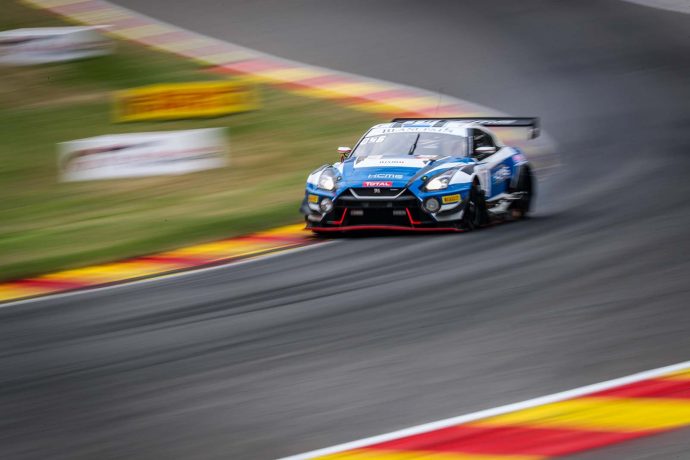
Is there shared technical support between KCMG and fellow Nissan customer teams GTNET Motor Sports and MP Racing? “Directly between us and the team? Zero,” says Tyrrell. “But we share everything we have with NISMO, we’re not asked to keep this secret. They’re pretty open. Because we’re not really in direct competition, generally.”
“Obviously, we won’t come here and give them a setup if they’re in the same place. But if we find something breaks or something to be careful of, NISMO ensures it’s all on the table. It’s all open to them. We’re really open and we’re happy with the support NISMO gives us in return.”
With two cars, two crews, and six drivers to work with, harmony between the team is important. “They’re all pretty easy to work with,” says Tyrrell. “There’s nobody that’s more demanding than the other. So obviously, having that harmony is important!”
“I think we have interestingly, one of the best driver lineups that I’ve worked with in terms of teamwork,” says Richardson. “So the drivers work, especially well as a team together, supporting each other, and supporting my decisions and working with me to achieve the best decisions always possible.”
He looks back on the strategy the team had put into place for 2018 that had them in prime position to win before mechanical gremlins prevented both cars from seeing the chequered flag.
“Last year, they threw one safety car, we lost 15 seconds on the first stop, seven seconds on the second stop, we didn’t lose anything in the third stop, we gained back a little bit something like three or four seconds. So globally, we should have been down on the leaders probably by 30 seconds with their advantage on track position before there was a safety car.”
“And last year after the safety car, we are sitting three, four seconds off the lead with the ability to undercut them more than they can undercut us. And the ability to take the lead, which is exactly what we were going to do when we were very unfortunate with car trouble. So we were sitting very pretty about to take the lead and try and win the race.”
As for what to expect from the race today?
“The most interesting thing that if it remains dry, is the time difference between the beginning of a stint and the end of a stint,” says Richardson. “I reckon the first laps tomorrow the fast laps will be around 2’03 or 2’04. And by the end of the stint, they will be a 2’07 to a 2’08, or even higher depending on track temperature. When people come in for a tyre change, they’ll be able to do 2’03s again – so those who box earlier make the biggest advantage.”
“But you have to play the long game also. You have to choose, do you play the short game and be lucky no safety cars? Or do you go long game and hope for lots of safety cars? Because if you arrive at the last pit stop with more undercut than everybody else and only five seconds off the lead, the race is yours.”