


Inter Europol Competition are Polish endurance racing pioneers, the first Polish flagged outfit in the ELMS, the Asian Le Mans Series, and now in the full FIA WEC (though they are the second to have contested the Le Mans 24 Hours – see * at bottom of article).
Regular followers of ACO rules racing will know that the company behind the team are backed by a major industrial baking concern, and that the team has regular race-winning form in the ELMS, Asian LMS previously VdeV and Ultimate Cup in LMP3 and that they are now targeting similar form with their LMP2 programme in the FIA WEC, finishing a strong fifth at Spa on their full-season WEC debut last month.
Back at home in Poland, the national media are beginning to take notice, here’s a recent TV interview from TVPSport.pl’s Rafal Majchrzak with the team’s founder and owner, Wojciech Śmiechowski.
You can find the original story Here
Rafał Majchrzak, TVPSPORT.PL:
So I caught up with the boss of the “Racing Bakers” before the European Le Mans Series round in Austria. Interesting that Inter Europol is better known in the racing world than to customers in Poland?
Wojciech Śmiechowski:
Our model is b2b (business to business), not b2c (business to consumer). I bet you’ve eaten our bread without knowing it, just as you’ve probably bought it in shops or discount shops. We send more than a hundred trucks from our warehouses to Poland and across Europe every day.
And at the same time you decided to invest in endurance racing, in the Le Mans series in Asia and Europe. Why did you do that?
In the beginning, it was about providing my son with the opportunity to compete.
Kuba started karting quite late, he started at the age of 15. He didn’t follow the typical path of a racing driver’s development; in fact, we already see older teenagers in racing formulae, not at karting level. Then he competed in Formula Renault, where he just needed funding. The next step was endurance.
Starting a team seemed like a good idea from the standpoint that Kuba could showcase his strengths. He doesn’t gain much in the so-called “timed races”; it’s only during the race distance that he shows his true fast pace, which is awakened in him over time. This is why he is much better at racing than qualifying, although he made big strides here, too, for example when he won the Asian Le Mans Series championship he also took pole positions.
The idea to compete in endurance racing came while Kuba was still competing in the North European Cup with the Renault 2.0 formula. That’s why we started competing in the BOSS GP formula, where Kuba competed in the fastest formula in Europe outside of F1, i.e. the GP2 formula, which today is Formula 2. He drove a 600 kg model with an engine with over 600 horsepower. It was an older model from the years 2005-2009. We were getting Kuba used to what awaits him in long-distance racing – really fast and powerful cars, the ability to use aerodynamics and repeated overtaking manoeuvres on the track.
What was next?
We had a choice between the absolutely new homologation Renault RS01 cars and the LMP3 cars (Ginetta and Ligier at the time). After testing in Spain, we decided on the LMP3 Ligier prototype. We were a bit lucky, as Renault cancelled the development of their beautiful car. The main reason for the choice, however, was the path to the 24 Hours of Le Mans, which the choice of the Renault car would have put considerably further away.

We were almost certain that choosing the LMP3 prototype was the right choice. The very name LMP is, after all, short for Le Mans Prototype. It turned out to be a hit for us. It has enabled us to compete in Europe, Asia, the USA and now in the WEC series.
And yet still not many people have heard about your team?
I will not hide the fact that motorsport is treated in a neglected way. It is not mentioned on news portals, apart from sports portals. It is not the so-called core of our lives. I cannot answer the question of why we are not able to break through.
Robert Kubica is an exception on the Polish scale. It is thanks to Formula One that he became popular and that is how he built his recognition.
Looking at the successes of Inter Europol Competition, that is, the championship and runner-up titles in LMP3, what goals can you still set for yourselves?
A team like ours would like to stay in the WEC above all else. The truth is that in the world of racing from a European position, it is the first most important series after Formula One. Don’t forget that we are actually a small private team not affiliated with any racing car manufacturer. I believe we have reached our personal Olympus.

So what are we talking about in terms of total budgets?
Millions of euros.
I am guessing: several million?
Some start with low amounts of millions, ending up with 9-10 million in the LMP2 category alone. For one season. 2021 is a reasonably cheap year, the logistics are much cheaper. When the WEC used aircraft transport, running costs in the series were higher. On a per-team basis, even more than a million euros was spent on just transporting equipment, specialised tools, instrumentation. And let’s remember that for each car there are 15 people from the staff alone.
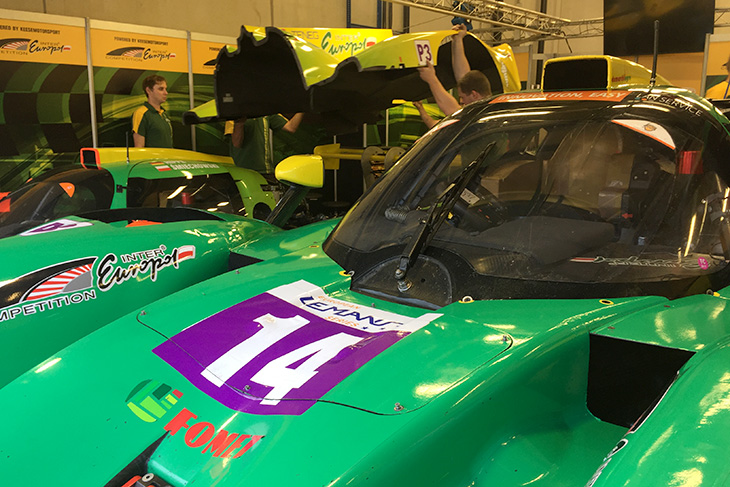
To this must be added the logistical environment. Spare parts, consumables, etc. are also needed. Therefore, the elements of each car are transported in special crates. Nowadays, we transport the cars mainly by trucks across Europe, and we have 3 trucks for one LMP2 car. We also have specially prepared sea containers for Asian and US races. This year the calendar has been set up so that the races in Europe make up the majority and are grouped together as much as possible, and special time slots have been left for sea transport for the Asian races.
Empty grandstands don’t matter to you?
No, the teams have never made money from the tickets sold. The only revenue to the teams is from sponsors. A racing team is not a money-making machine.
So it is a big toy?
It depends on how you look at it. We try to promote Polish motorsport. We drive with the logo of the Polish Motor Association. We ride under the Polish flag, under the Polish license. We are based in Poland and we have two Polish drivers – Kuba Śmiechowski in the LMP2 category in WEC and Mateusz Kaprzyk in the LMP3 category in ELMS. We also have a Polish chief engineer. Of the most important technical and strategic positions, only the team manager is not from Poland. Sascha Fassbender is German.
Moving on to the personalities and the drivers themselves, I think it was probably impossible to put together a better line-up?
It could always be better. But actually, Alex Brundle, son of Martin Brundle, a well-known former F1 driver is a very good choice. He has competed for a number of established endurance teams, including United Autosports, but let’s also remember that he has a history of competing in single-seater formulas. His starts in the ELMS and WEC show that he has talent and is hellishly fast.

The most interesting thing about him is that he has approached us himself with a desire to start for Inter Europol Competition. Renger van der Zande is also an excellent driver, perhaps with a better brand than Alex in the USA, although he is less well known in Europe.

This comes as a surprise. I saw Alex as a potential leader?
For sure, Alex is very hard-working and friendly, he shares a lot of insights with us, for example on aerodynamics or suspension physics. He gives us very precise information.
Let’s not hide the fact that he is mainly associated with F1 TV and his commentary which honours Formula 3, Formula 2 and recently Formula 1 races. Is he as entertaining in the team as he is in front of the microphone?
You have to ask Kuba about that. Nevertheless, the younger generation would say that “this guy is cool”. Alex shows great professionalism in training and during qualifying, but he can also be very direct and has a great sense of humour. Indeed, he has inherited many of his father’s qualities, including winning the 24 Hours of Le Mans. He’s not a major celebrity, he’s more of a helpful person. He commands the attention of those who listen to him. He complements Kuba well, but so does Renger, who is probably even more successful than Alex. After all, he won one edition of the Rolex 24 at Daytona. I think they all make a great team.
But compared to Helio Castroneves, the legend of IndyCar, Indianapolis 500 and CART, he is a bit lacking in terms of achievements?

To him for sure, especially since Helio is older and also, they both competed in different series. Castroneves is an oval legend in the USA, which in the stands Americans normally fill during every race. CART and IndyCar are more popular than IMSA (WeatherTech SportsCar Championship, in which Robert Kubica competed in Daytona Beach in January – ed.), so the top drivers become heroes there.
Helio, by the way, won “Dancing with the Stars”!
And in this matter, I will not make myself an expert. You know, there are others for that.
Yes, including me. What prompted Castroneves to join you in turn? His potential starts in Europe would be a fantastic thing in terms of marketing?
Certainly. We got to know each other during the Sebring race. He liked the atmosphere in our team. But he is a very busy driver. Especially in the current environment where travel is difficult, it is not easy to combine so many series. In addition, races are also postponed, like the Portimao 8 Hours. They are also cancelled, like the 12 Hours of Sebring in February this year.
Helio has a very busy racing schedule and after the cancellation of that race, the later dates no longer suited him. Unfortunately, we will not see him in our car for the time being. Renger is also a Cadillac driver in the IMSA series. His contract with Chip Ganassi’s American team was earlier than with us, so he has priority.
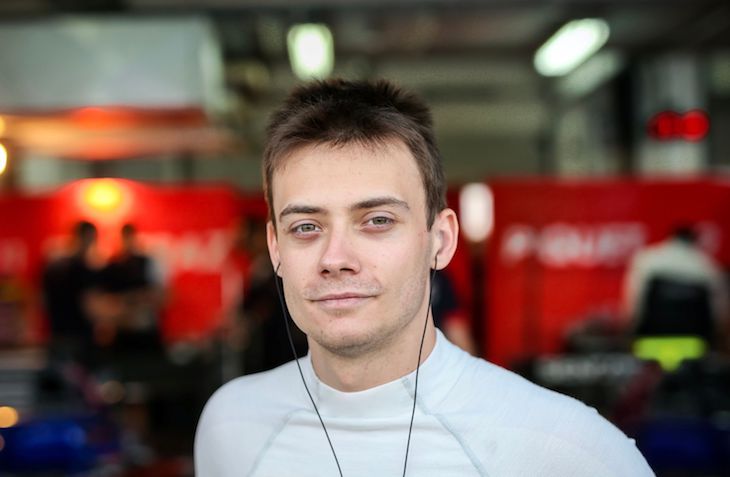
This forced us to look for a replacement for him. It was the collision of the two race dates that led to Louis Deletraz joining us for two races. The same one who will combine driving in the WRT with Robert Kubica in the European Le Mans Series.
Did he also seek contact with you himself?
Yes, among others through Robert, who never came into contact with us. Louis came to us through an advertisement we placed on industry portals. He knew Alex and Kuba, which is why we finally managed to communicate and find each other.
The interest of such drivers as Brundle, Castroneves, Deletraz or Kaprzyk in our team shows that in the endurance world we are perceived as a good team that prepares cars well and professionally.
In LMP3 with our #13 car in 2018 we won the last race of the season in the European Le Mans Series with Kuba Smiechowski and Martin Hippe. Since then we have been on the podium in every one of our LMP3 car starts for a year and a half.
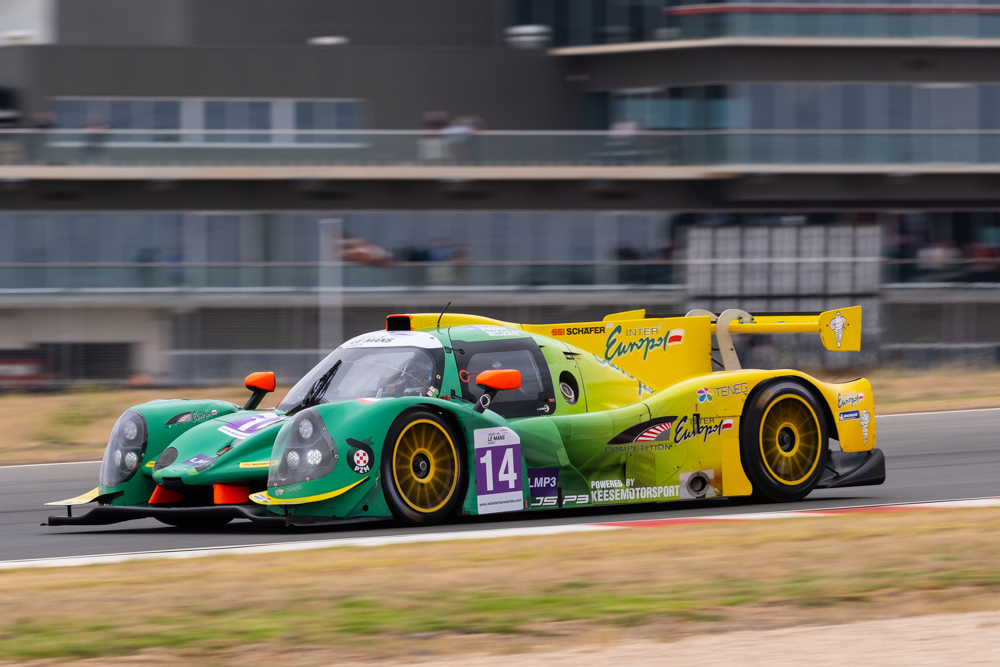
In the Asian Le Mans Series, we won the category and had a pole position taken by Kuba. In the ELMS the following season we were on the podium in every race, unfortunately in the last one, we had a penalty added which stripped us of the class title. And it wasn’t on the basis of sporting or technical regulations, but on the basis of a provision of common French civil law, while the race was taking place in Portugal.
Then again, we won three more podiums in the Asian Le Mans Series. For endurance and one car, it really is an incredible series.
So what was your goal before the first round of the WEC?
We wanted to finish in the top five of our category. It was a difficult goal to achieve. We are competing in a huge and incredibly professional series. We know we have a good car, very good drivers. But the change in the LMP2 regulations two weeks before the first WEC event made life very difficult for us.
This includes the mandatory “low downforce kit” for every race, which is an aerodynamic package used so far only in the 24 Hours of Le Mans, featuring low aerodynamic downforce. That’s about 0.5 tonnes less downforce per car.
Another issue is the different tyres suggested by the supplier, Goodyear. There was a return to an earlier specification, the new tyres tested for this season were found to have poor handling. An additional problem with the Goodyear tyres is that they are too stiff for the rather soft compound. This causes rapid abrasion, i.e. wear on the tyre. For us, nothing matched what we had tested all year and collected data to simulate the car’s behaviour on individual tracks. All six months of work went to waste, including our two races in IMSA last year. We had to start all over again learning the car with a week to race.
It was a tough task?
In fact, we came there as much less experienced participants than the rest. Some were using the ORECA-07 body for the third or fourth season. And you have to remember why we changed the body supplier. Starting in LMP2 already in the ELMS was difficult because of the costs.
In the beginning, we used second-hand cars, built by Ligier. It wasn’t that the car was ill-prepared, but rather that it couldn’t handle the hardships of racing. It was an inferior design to the current ORECA-07. It was less aerodynamically efficient. And yet aerodynamic efficiency is the thing that still amazes most in current designs.
This season’s LMP2s have engines at 540bhp and have been bolted down from last year’s 600bhp. The weight of the cars has been increased by 20 kilograms and that wretched ‘low downforce kit’ has been imposed.
Meanwhile, the times we recorded in the first WEC round at Spa in Belgium were the same or even better than last year. In qualifying we were eleventh, but regaining six positions in the race was the result of further adjustments to the car’s settings. We got into the top five. We have a great chief engineer for the team, who has experience working for Toyota. He is the only Pole to win the 24 Hours of Le Mans, and he won it twice. Rafał Pokora has been the chief engineer of the #8 car, the one driven by Fernando Alonso, since the beginning of Toyota’s LMP1 programme. Rafał is, by the way, a close friend of his.
And he is also a little-known figure?
In Poland? Yes. However, he made his mark in motorsport. He worked in the WRC programme, in rallies. Then he moved towards racing. He worked on the Nissan GT-R, from 2012 he was one of the managers of the LMP1 programme at Toyota. As I mentioned, he was in charge of Alonso’s car. That’s one of the differences I mentioned earlier. At Toyota he was the chief engineer of one car, having a dozen engineers under him. With us, he is the engineer of the whole team and has only a few of them to help him. But he is an excellent professional.
Thanks to his work, we quickly overcame the aerodynamic problems. We achieved a good pace in the car, but also at some cost. We experienced faster tyre degradation during the race. This made it difficult to drive the car during the second stint on the same tyres. In addition, on each of the seven refuellings, we lost another 10 seconds of time due to the slower flow of fuel in our refuelling device. In total, therefore, we had to make up over a minute on the racecourse, which is very difficult. This is clearly something we need to improve before the next race and we are working on it now in Warsaw.
When you switched to the ORECA-07 bodywork, this choice was praised and, indeed, there was considerable optimism. This was also emphasised by Kuba, your son. So what were the biggest differences you noticed after dropping the Ligier?
The ORECA-07 is a race car that is built to the limit. The weight of this car is around 80 kilograms. The Ligier car was built with practically no ballast, so its weight was almost equal to the legal weight. The places where the car can be loaded with ballast are imposed by the manufacturer. ORECA is better at producing parts, they take care of the details. The bonnet, the front nose, the rear parts – it’s all about making sure that specific parts fit together. On the Ligier, everything had to be refined.

You’re talking about something that sounds like a stopgap?
But, Ligier is a small manufacturer. The car was not bad at all. ORECA is simply an incredibly successful design. Still, let’s mention components like the alternator and starter. Their cooling is also much better in the Oreca. Many small details add up to a big difference.
Kuba, your son, is positive about this season? I had the impression that he was a little embarrassed when we spoke in January. And then he complained that the changes to the LMP2 regulations made your life difficult.
He is an introvert by nature. When he talks, he likes to complain. So do I. But in fact, he has a great sense of humour and is a hard worker. He has layers of optimism that at first glance seem imperceptible, but they are visible in his actions.
In which we fervently believe. Do you know that I can’t help but ask about Robert Kubica? I’ll frankly admit that WRT’s result in his debut in the European Le Mans Series took him by surprise. How do you view his result?
LMP2 is a private team class. WRT is almost entirely funded by ORLEN in the ELMS. The Belgian’s programme in the WEC is in turn supported by Audi, another giant, this time from the automotive market rather than the fuel market. WRT has become almost a factory team with the patronage of Audi, part of the Volkswagen group.
The film ‘The Gentleman Driver’ on Netflix showed how such private teams are built. If you’re a ‘privateer’, you also have drivers coming to you with money who are buying a seat. Today, drivers with mainly bronze or silver categories, i.e. drivers with less experience and less track record, are looked upon in this way. They also tend to be older drivers, in their thirties. And rarely are they people with the platinum category, like Robert.
Please note that the race is not won by a single driver, but by a team. The WRT team is set up to win. They are not there to show off, but to win. Thanks to the fact that they have a budget centred around a platinum driver, hardly anyone will be able to oppose them. They operate with almost no restrictions.
Nevertheless, would you rate his race well?
It was a correct, good drive. He got in on the last shift, took the win to the finish, maintained a safe lead. It seems that today Kubica may have been the slowest of the three. However, this is not fully measurable, either, as his drive was half as long as that of Louis and Ye Yifei, his teammates.
Robert was already driving when “the track was slowest”. The point is that often the “track speed” changes during a race. It depends on the rubberisation of the track or the weather conditions. I find it difficult to relate to what problem he has when changing drivers or fastening belts.
When getting in, I don’t see any problems and that is good news. But the rule that reduced the number of car attendants this year may have hurt him a bit. It has become natural in endurance racing that a driver loosens his seatbelt when he is already on the approach in the service lane. The next driver can only concentrate on fastening them. Drivers can help each other. But if a mechanic is to help, it must be one of the team changing the wheels. So the tyre change is delayed at the price of getting the driver in the cockpit quicker. This is probably why Robert drove the last shift.
Does it matter to you that there are so many Polish accents in endurance series, with him at the forefront? Is the prospect that you will be rivals at Le Mans in August pleasant?
The fact that we can compete with Robert adds spice for observers. But we can’t look at what the competition is doing. We look at ourselves, we look at what we can do better ourselves. We have a great cast both in the WEC and in the ELMS. And everything is crowned by that diamond in the whole calendar, the 24 Hours of Le Mans. It best tests the endurance and patience of all the competing teams, regardless of class. This is where even the best make mistakes.

Nyck de Vries, the former Formula 2 champion, or Juan Pablo Montoya, Michael Schumacher’s former rival, are examples of drivers who have been punished by Circuit de la Sarthe in recent times. They made mistakes when driving at night when maintaining concentration is vital.
Should it ever turn out that Robert would come to you, do you have an open door for him?
As far as I know, he likes to walk his own path. He must want to come to us himself. I am open to it, another Polish driver in a Polish team… that would be great news. There are not many drivers like Robert, who could record competitive times in racing prototypes in no time.
Poland is poorer in terms of the resource of fast drivers. Kubica has always been a driver who likes to decide about many things on his own. As far as I know, he does not give in to suggestions. He is the one who explains to his sponsor how and where to go. There is nothing to change this attitude, it is very possible that without it he would not have achieved so much.
Is he stubborn?
I do not know him well enough to say so. Robert has what many teams want today, skills, a great experience and, in addition, great financial support. And without that many things in difficult times for motorsport are not able to move forward. ORLEN has changed his status. Robert is one of the more wealthy pay drivers today. Personally, I think Polish motorsport still benefits from what Robert is doing.
Do you see hope for more people like him?
We need young, fast drivers. We start in off-road rallies with success, as the Dakar Rally shows. In rallying, we are still trying to break into the top league. In Porsche Supercup Kuba Giermaziak added a runner-up finish. We won three runner-up titles in the European Le Mans Series and were champions in the Asian Le Mans Series. Poland is steadily climbing the ranks of world motorsport. It is an arduous road. The problems are connected with the reluctance of sponsors. It is still difficult to find enthusiasts who would willingly give hundreds of thousands or millions of euros for yearly starts.
ORLEN and Lotos are now almost the only patrons of motorsport. And I don’t know if it should look that way. Most of them are not used to such sponsoring. Poland is still a country on the rise, our companies are still working for their capital. We live on credit. And advertising does not necessarily always pay off financially. Hence, we, as a team, have actually become a promotion and self-promotion. We promote our own brand, but we are also a team that shows that Poles can chase success.
* The first Polish-flagged entry for the Le Mans 24 Hours was Count Stanislaus Czaykowski, who ran Bugattis in both 1932 and 1933. He owned seven Bugattis, which paid the factory to run his for him, not only at Le Mans but in European races including Avus (2nd) and the Brooklands 500. Sharing with factory driver Ernest Friderich, his T55 was running 3rd in 1932 when a piston broke with an hour to go. In 1933 his T55A was shared with France’s Jean Gaupillat, but they went out soon after dark with a failed battery. Both times the cars carried the Polish flag. – With thanks to Mark Cole


