

The age of worrying whether there will be a clash between your favourite Series or Championship and Formula One is over.
The expansion of the F1 World Championship to a 24 race calendar will mean that more or less every Championship is set to see Formula One racing somewhere on the planet for at least some of their racing weekends.
There is at least one bright twinkling star in the storyline for another significant event as the FIA has, as promised, avoided a clash with the centenary race for the Le Mans 24 Hours, a ‘win’ for certain, but with Grand Prix on both the weekends before and after the race Le Mans looks unlikely to see significant involvement from current F1 drivers.

There’s nothing new about the F1 calendar dominating the scene and affecting the plans, pre-announced or otherwise, of other significant motorsport events.
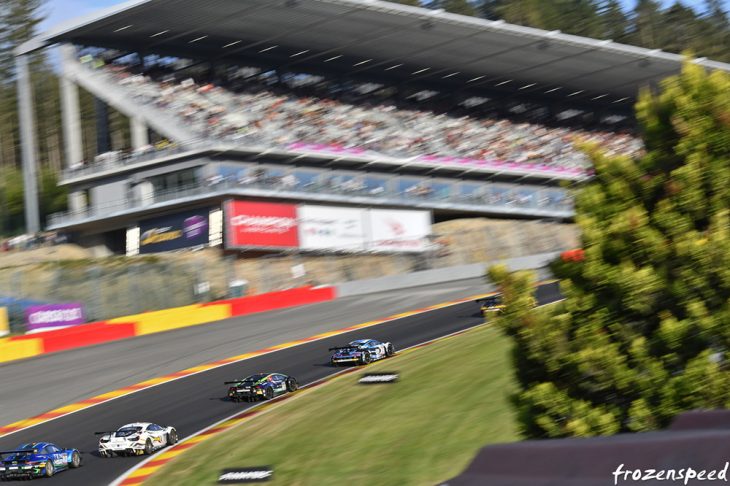
That said, the land grab of the Belgian Grand Prix is a particular low, the Spa 24 Hours’ long-standing traditional date snatched away with SRO forced into a not insignificant repackaging of their 2023 plans for no fewer than five Championships as a result.
That leaves other clashes too as a knock-on result including a clash between the new date for the Spa 24 Hours and the 2023 Le Mans Classic, the de facto second celebration of the centenary of the great race.
It remains to be seen what happens in 2024 when the Spa 24 Hours celebrates its own centenary – but there seems little or no chance for an accommodation to be offered by F1 for that!
The commercial power of Formula One is at the heart of the issue, and the current explosion of interest in the World Championship is – in turn – at the heart of that.
That has been powered, in no small part, by some effective moves by Liberty Media to open up new communications and commercial channels and attract a much larger and younger audience. In turn, the success of some of the ‘new and shiny’ events has fuelled a movement to cash in on that phenomenon, with some of the traditional homes of the sport yet again under pressure to keep their place on the calendar.
Once again Spa Francorchamps is at the core of this part of the tale, the circuit, after spending millions to improve safety and spectator facilities, only surviving on the calendar as a result of the failure of Kyalami to seal their own deal for 2023.
It seems incredible that those responsible for developing this ‘product’ didn’t take a couple of steps back during that process and ask themselves the question: “I know we CAN drop Spa – but SHOULD we?”
Put aside for a moment the fact that they didn’t – that came as a result of the failure of a more lucrative deal.
There has long been a reality that in many circles there are two sports in operation – Motorsport, and Formula One, the latter operating almost exclusively in its own interests and caring little, if at all, about the interests of the wider sport. The recent debacle around super licences is the pointy sharp tip of an iceberg that could sink rather more than the Titanic!
There is an argument that F1 does not have a responsibility to promote motorsport beyond the boundaries of its own product – and that argument has some merit. But only if unenlightened self interest is the goal.
A stronger sport sees investment across the board, a deeper skill base and even more opportunities in business, media and human interest, with more general investment available into the venues that fuel the passion of the fans, and those that pay the truly big bucks prices to keep major teams in profitable employment.
There have been bright moments in this process, current F1 stars taking the opportunity to sample events outside of F1 a significant highlight in the past decade, a process that serves several masters: The drivers enjoy it, the fans enjoy it, it takes nothing, not one thing, from F1 but it helps to elevate other parts of the sport.
So perhaps it’s time for a new deal to be done. There’s simply no stopping the money machine of F1, but perhaps they need to be persuaded that accommodating other avenues of the sport is in their own interests, to allow others behind their (hugely expensive) curtain, and to allow others to enjoy at least some exposure via their human assets.
Certainly drivers should not be discouraged from racing outside of F1, though the intensity of the new calendars makes that significantly less likely going forward.
But perhaps there’s more that can, and should be done?

Identifying key Grand Prix where significant national, regional and continental Championships could be welcomed onto the support bill should be examined thoroughly – It used to happen VERY regularly (V8 Supercars at Melbourne is a good example) but has been very much less prevalent in recent years.
Doing that, indeed mandating that process, helps everyone.
It helps F1 to provide a frankly more enticing support package;
It helps the other Championships by providing them with a blue riband event and an opportunity to build their own fanbase (at ZERO risk to F1’s own fanbase);
And it delivers a message that motorsport is one sport, and not two!
The great motorsports events of the world need to be protected better too, and a subtle message needs to go the way of F1s ringmasters that the more race you add, the less special some of those become.

How those messages are delivered and received, and the attitude of Formula One to races such as the Indianapolis 500, the Bathurst 1000, and yes, the Spa 24 Hours will define the relationship between F1, and the rest of motorsport – and its fanbase, for many years to come.


