

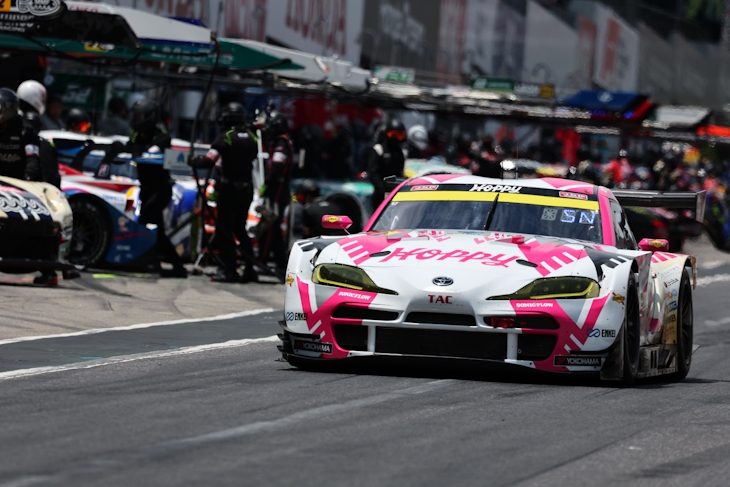
As dozens of teams arrived at Mobility Resort Motegi for the final race of the 2023 SUPER GT season, Takeshi Tsuchiya is trying to simply return his family-owned team, Tsuchiya Engineering, to the series. He is in a race to race again.
185 kilometres southwest of Motegi, at Tsuchiya Engineering’s small garage in Fujisawa city, Tsuchiya and his team of five young staff members have been working almost every day for the past three months to rebuild their hand-built, GTA-GT300 class Toyota GR Supra – affectionately nicknamed “Hopico” – after a devastating fire during the 6 August race at Fuji Speedway.
“After the incident, we received a lot of messages via social media or even directly that we should come back SUPER GT – and they would like to support us somehow,” Tsuchiya recalls. “We are really grateful.
“Even though we haven’t gotten any support from GTA (the GT Association), I personally got warm words and encouragement from Chairman Mr. (Masaaki) Bandoh. We got various offers of support from other teams.”
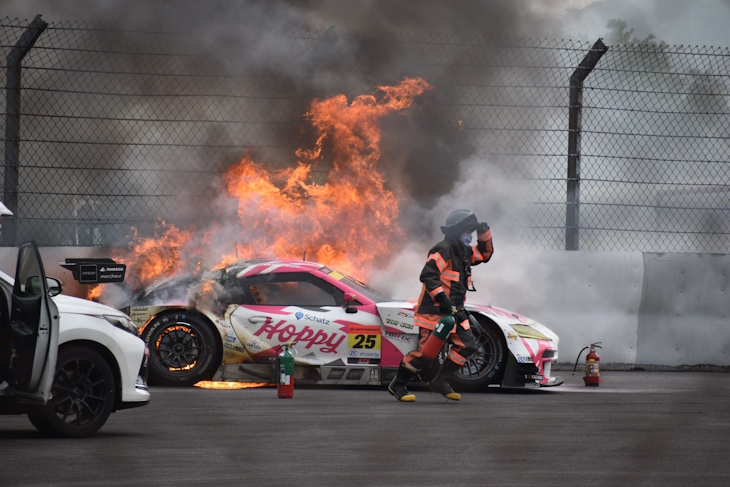
The pink and white number 25 Supra caught fire just minutes after a pit stop, where Togo Suganami stepped out of the cockpit, and Toyota young driver Seita Nonaka climbed in to finish the 100-lap race at Fuji. A large piece of the car’s exhaust fell off, which eventually started a fire that ruptured the fuel line.
Nonaka was able to pull off the track and get out of the car without any injuries, while the full tank of petrol ignited, causing the flames to burn so intensely that the fire spread to the nearby tyre barriers, with marshalls unable to contain the blaze for several minutes.
Tsuchiya could only watch the awful scenes unfolding from his pit wall. He was relieved that his driver was unhurt, but he and everyone else watching knew that Hopico was destroyed – and many, including Tsuchiya himself, thought that this would be the end of Tsuchiya Engineering.
Any avid SUPER GT fan will happily run down a list of Tsuchiya Engineering’s accomplishments in the series. Trophies, posters, and other keepsakes of these successes can be found lining the team’s garage.

What’s most important to Tsuchiya, however, is that throughout nearly all of its 52-year history, Tsuchiya Engineering has built the cars that it has raced.
It was a practice which began with Tsuchiya’s father, Haruo, the founder of Tsuchiya Engineering and one of the most respected engineers in Japanese motorsport. Because of his father, Tsuchiya has lived his entire life in motorsport – as a successful driver who had a fruitful tenure as a Toyota works driver, then as a second-generation engineer, and now as the owner and manager of the family team. He grew up to appreciate the work of his father and the other craftsmen of his youth.
“In the 1970s, the early stage of Japanese racing history, professional craftsmen ran their own racing teams in that era. Lots of motorsport fans were excited by the dramatic races and the spirit of these craftsmen. Craftmanship was definitely one of the most attractive faces of that era,” Tsuchiya recalls fondly.
“Nowadays, it seems that Japanese racing’s place in ordinary culture has faded away, and it’s hard for me to accept this trend.”
Whether it was the agile, clever Toyota MR2 that won back-to-back GT300 championships in the late 1990s, or the Starlet and Corolla Levin touring cars that won championships in the years before SUPER GT, they were all built by Haruo Tsuchiya and his team. Even the GT300 Mother Chassis, which spearheaded Tsuchiya’s return to the GT300 class in 2015 and championship success in 2016, was conceived in the spirit of empowering the young craftsmen to work within the common components of the platform to make their own designs and refinements.
In 2023, this practice of building cars in-house as a small-scale privateer makes Tsuchiya Engineering a unicorn in professional sports car racing.
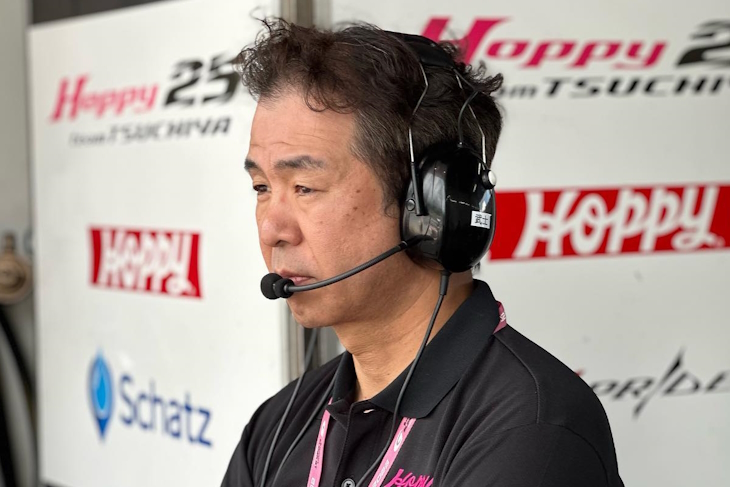
“I believe it is meaningful to compete with a self-made racing car, to maintain this philosophy and help to preserve the culture of Japanese racing which I love,” Tsuchiya said.
“There are not so many natural resources in Japan. But I believe craftsmen are our strong point and I would say that is our resource. To that, I believe what I am doing has meaning, not only for motorsports but also for Japanese society as a whole.”
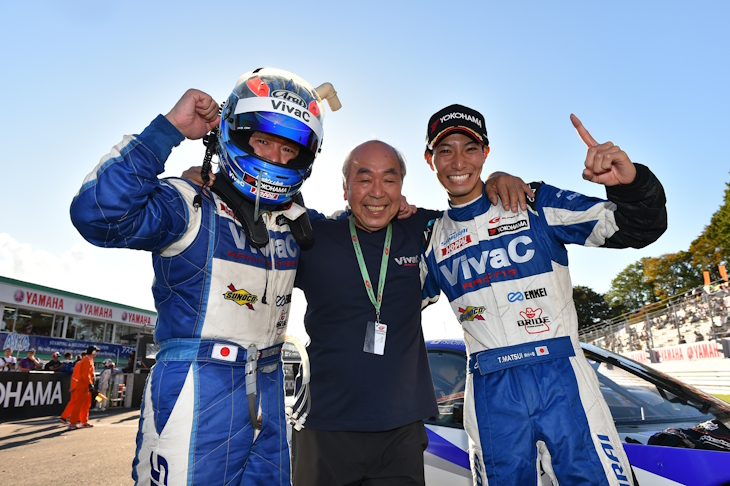
In 2016, driving the Toyota 86 Mother Chassis, Tsuchiya won his first SUPER GT championship as both the driver and chief engineer of his team – a storybook ending to his full-time driving career. His apprentice, Takamitsu Matsui, was once working at a transportation company after being cut by two of the ‘big three’ manufacturers’ young driver programmes. Then, Tsuchiya took him under his wing as both a driver and staff member – and in only his second season, Matsui broke through and became one of the GT300 class’ elite drivers at the wheel of the number 25 car.
But it’s been over six years since Tsuchiya’s team won a SUPER GT race – a photo finish in Autopolis in 2017 – and the years since have been littered with moments of frustration and pain.
On the track, unfavourable BoP changes, parts scarcity, and some larger-than-expected repair bills led Tsuchiya to retire his title-winning MC86 from SUPER GT racing after 2019 – and it now serves as an automotive keepsake of those glory years. A reluctant switch to customer Porsche GT3 cars in 2020 only intersected the team’s skid down the running order, though the 911 GT3 R is kept for training purposes.
However, the most painful loss came away from the track. Just days after Tsuchiya finally won his first championship in 2016, his father Haruo fell ill with cancer. The disease would take his father’s life on 11 April 2021, on the first day of the SUPER GT season.
Tsuchiya sought to return to the team’s roots of crafting its own race cars and nurturing the next generation of craftsmen – just as his father did. The end product of that labour of love was Hopico, the #25 Hoppy Schatz Toyota GR Supra that made its debut last year.
This new journey would be filled with its own hardships. A delayed introduction meant that the first races were glorified shakedowns with no prospect of meaningful results. Separate testing crashes forced the team to miss a race in 2022 and almost put the start of 2023 in jeopardy. This off-season, Tsuchiya let Matsui leave for Team Mach instead of tethering his future prospects to a long-term project.
Even when Hopico ran a clean race, a pair of tenth-place finishes in 11 races seemed like a pathetic return on the surface. And just as the team was making progress and starting to improve, it all burned to ashes.
Five years ago, Tsuchiya Engineering received a sizeable investment from Hoppy Beverage Company and CEO Mina Ishiwatari, and its SUPER GT was renamed to Hoppy Team Tsuchiya. At the same time, the rechristened team followed the successful lead of Goodsmile Racing’s Personal Sponsor campaign by launching a crowdfunding effort to support its participation in SUPER GT, named the “25PRIDE Supporters Club”.
But even with that support, Tsuchiya Engineering is still one of SUPER GT’s smallest teams – and even Tsuchiya felt that several big, costly accidents followed by this devastating fire would be what ultimately forced him to give up.
“The financial issue is the big headache,” he said. “And unless we have the funds to support us, I would have had to break up the team.”
Adding to Tsuchiya’s burden of starting over, as a legend of the sport in his own right, are the other responsibilities that he carries – such as being an official ambassador for the Super Formula Championship, and a television commentator for J SPORTS.
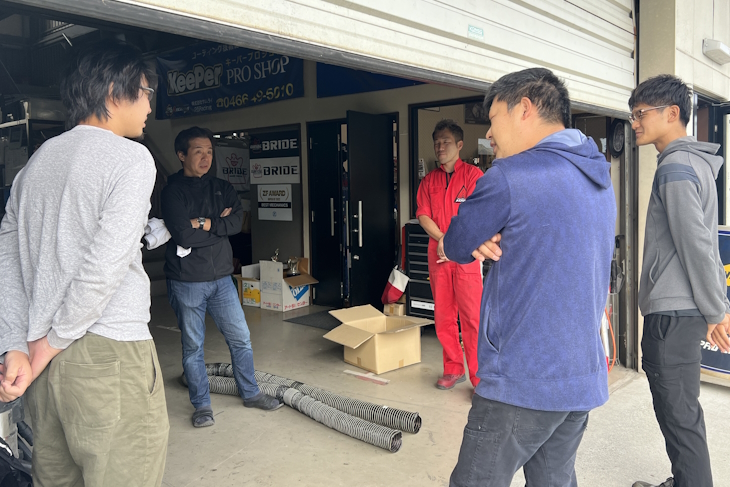
Even with promising young engineers and mechanics like Ryunosuke Kino (Chief Engineer of the SUPER GT team), Asaki Miyajima, and Yoshiaki Muto firmly in his corner, encouraging him to continue down his path, it was still a massive task to rebuild. Just a few short days after the race, Tsuchiya said it could take “several years” to return to SUPER GT – if they could return at all.
Max Racing, another GT300 team whose cars were prepared by Tsuchiya Engineering in the same garage as Hopico, suffered a similar exhaust failure and fire at the same race at Fuji, then disbanded just a few weeks later. It would have been sad, yet understandable if Tsuchiya made the same decision.
But something compelled Tsuchiya to keep going, whether it was the support of fans, the support of his young and loyal crew, or a stubborn, unbreakable will.
Sure, they could have kicked the dust off one of their old cars in the garage like the Porsche or MC86, but all of Tsuchiya’s staff felt that it wouldn’t have been right just to compromise the team’s vision. And as for buying or leasing a newer GT3 car for a short-term boost of performance? Out of the question!
So Tsuchiya turned to his supporters for help. Six weeks after the fire, he began a new fundraising campaign known as the Hopico Revival Project, aiming to help Tsuchiya raise the necessary funds to rebuild the car and return to SUPER GT.
The generosity of fans, even fellow drivers and owners of other teams, some even pledging from overseas – it has all made the Hopico Revival Project a success in the six weeks that have passed since. Nearly 1,500 people have pledged upwards of ¥20,000,000 towards the crowdfunding drive.
“Drivers and team staff who have worked with us before also joined the Hopico Revival Project, and I am so grateful,” Tsuchiya said.
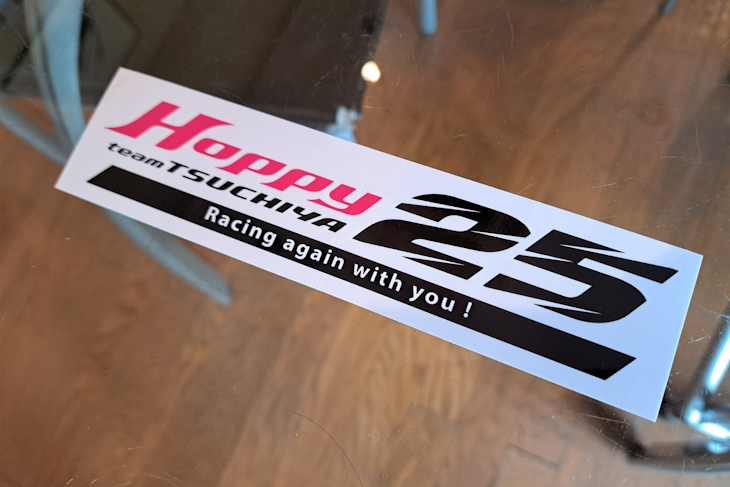
Everyone who’s pledged has now received special stickers from the team which read, “Racing Again With You!” – which is, of course, a declaration of the team’s ultimate goal. Chances are that these stickers will be seen throughout Motegi this weekend. They’ll be on camera equipment and laptop computers, on civilian cars parked at Motegi’s historic banking, and maybe some of the cars in the race itself.
https://twitter.com/Hiroaki_Ishiura/status/1713116430311510031
Team Studieも25号車の復活を待っています。#つちやエンジニアリング #土屋エンジニアリング #SGT #studie pic.twitter.com/TQ4U9dVqo9
— BMW M Team Studie (@teamstudie) October 14, 2023
And it’s all had a tangible effect.
With less of a burden upon Tsuchiya and his team to raise the necessary funds to return, they could direct more attention towards their work. The days are typically long since Tsuchiya’s garage also services civilian cars during weekdays. But everyone is happy and proud of what they do, whether it’s welding or assembling body panels.
Tsuchiya and his team were also the recipients of a miracle.
When Hopico returned to the garage in Fujisawa, they found that the only salvageable parts of the body were the front bumper and splitter. But somehow, after a thorough inspection, Hopico’s chromoly steel frame had survived the fire without any structural damage!
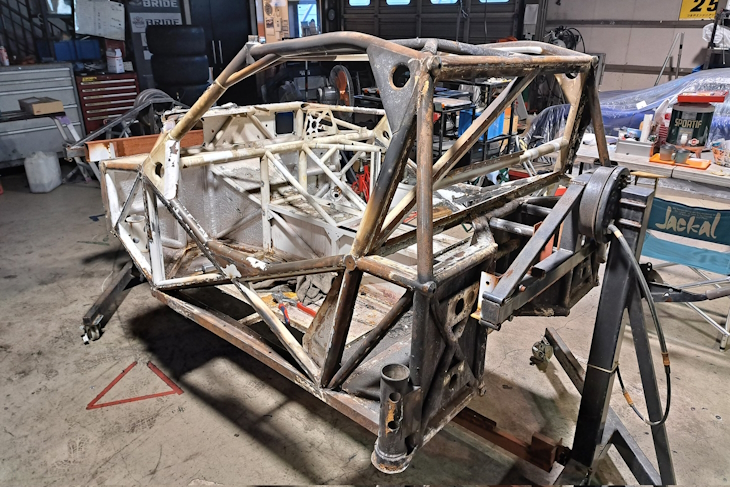
Instead of starting over from absolute zero, the team could now rebuild around the original Hopico frame. Tsuchiya already has ideas for how to make the rebuilt car, appropriately known as “Hopico 2”, faster and more capable than it was before – as long as the budgets of time and money allow him to do so.
After a bleak initial prognosis, Tsuchiya can now see a return to SUPER GT by the start of the 2024 season as not just a possibility, but a certainty.
“To be honest, I never would have thought this would be possible two months ago, and that is the biggest change since,” Tsuchiya recalls.
“As mentioned, I got lots of support from motorsports fans and our fellow competitors, and it helps me to stay positive.”
It would ensure that Hoppy Team Tsuchiya won’t lose its place on the GT300 grid and then have to wait in line to get back in, which has been a frustrating experience for a handful of aspiring SUPER GT teams that have waited for years to enter or return to the series.
And it’s been a relief for the man himself, just days before his 51st birthday. Tsuchiya has openly admitted to suffering from burnout and physical fatigue over these past three months – he was even hospitalised in early October.
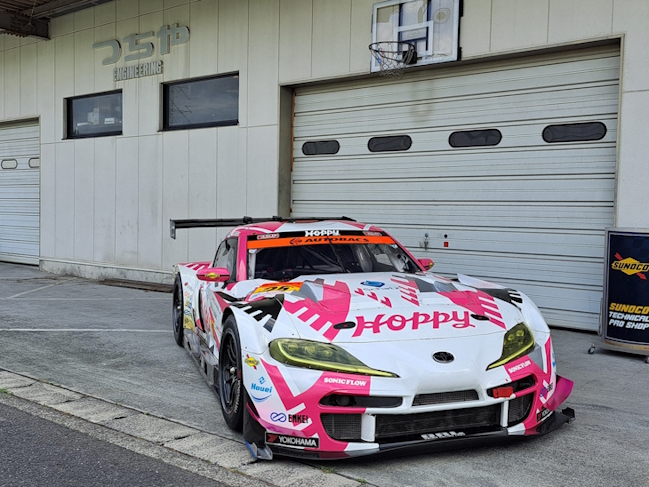
Now, more than ever, Tsuchiya is determined to pay back the fans who have supported him and his team by building a car capable of restoring the Tsuchiya Engineering tradition of racing excellence.
“What I hope to return to them is to come back to SGT with a rebuilt Hopico as soon as possible, and win the race. To do that, I will focus on this goal and keep going onward,” Tsuchiya said.
“There is one more thing. I hope that future generations will inherit my father’s spirit.”
Images © Hoppy Team Tsuchiya (Tsuchiya Engineering), Sunoco Japan, ‘NASUBU’ (Twitter.com/nasubu_100), and the GT Association (GTA)
Feature image © Toyota Motor Corporation


