With so much going on at the moment at the top-end of sportscar racing, it feels like the perfect moment to revisit DSC’s 2023 round-up of all the key teams, suppliers, OEMs and organisations involved in the FIA WEC’s Hypercar and IMSA’s GTP classes at this extraordinary time for the sport.
We begin today with the first of five parts, covering the ACO all the way to Bentley. Check back each day during this working week for the next instalment!
ACO
The ACO (Automobile Club de l’Ouest) is the organising body for the now more than a century-old Le Mans 24 Hours and was the founding partner of LMEM (Le Mans Endurance Management), which operates and promotes the FIA World Endurance Championship, as well as the European and Asian Le Mans Series.
Based in Le Mans and under the current Presidency of Pierre Fillon, the ACO was a key partner (together with IMSA and the FIA) in the decision to converge its original Hypercar regulations with IMSA’s LMDh ruleset.
ACO work together with the FIA on establishing and evolving the technical and sporting regulations. ACO also produces annual Supplementary Regulations that are specific to the 24 Hours of Le Mans
Action Express
See Cadillac.
Acura
Started in IMSA GTP with two Oreca-chassis LMDh-rules cars in 2023 – one apiece from continuing supported Acura teams Wayne Taylor Racing and Meyer Shank Racing.
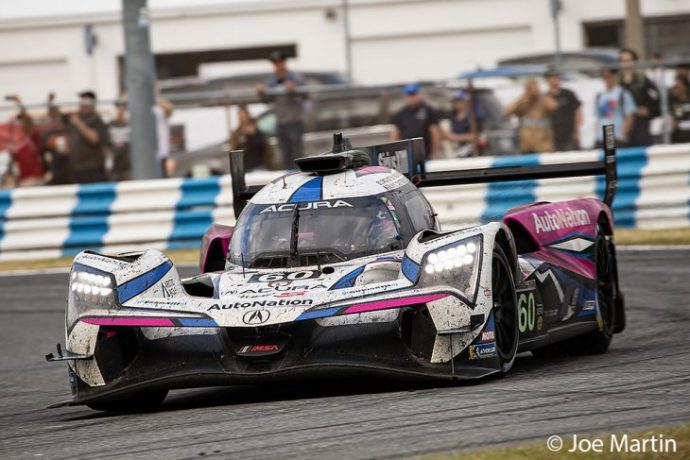
Wayne Taylor Racing also partnered with Andretti Autosports before the start of the 2023 season, but that aspect of the team’s makeup has since been set aside.
For 2024 in IMSA the effort switched entirely to Wayne Taylor Racing with a pair of cars, before the wholesale switcheroo of service providers for 2025 saw WTR return to Cadillac and the Acura effort entrusted to the returning Meyer Shank Racing team with one car handled entirely by MSR and the other engineered ‘in-house’ by the newly established HRC USA.
Acura is understood to have had informal (and unsuccessful) discussions with the ACO about allowing an Acura to take up a Le Mans invitation. However, it is and instead is now evaluating a near-future full-season FIA WEC effort under the Honda brand (see Honda).
Any WEC programme would have to be signed off under the Japanese end of the Honda brand. It is understood that there have been some talks, but at present there is no imminent programme in sight.
The ARX-06 also made history as the car that scored the first GTP win at the 2023 Rolex 24 at Daytona, albeit in controversial circumstances.
AF Corse
See Ferrari.
Alfa Romeo
Alfa Romeo CEO Jean-Philippe Imparato made public statements that the historic Italian brand, now part of the Stellantis group, was considering a return to sportscar racing alongside an evaluation of how the brand might manage to continue in F1 after its partnership with Sauber concluded at the end of 2023.
The plans for Glickenhaus to initially utilise a modified turbo V6 from Alfa Romeo deserve consideration here, too. That plan had to be revised when the regulations were amended to accommodate the cancelled (but later rejuvenated) Aston Martin Valkyrie.
The 2023 evaluation came to nothing. But the matter arose again much more recently, with a Hypercar programme for Alfa Romeo in place of Peugeot eventually falling victim to the brand’s currently weak market position. Stellantis opted instead to a soon-to-be-confirmed re-commitment for Peugeot with a still-to-be-announced successor to the 9X8, to give the French brand another shot at cracking the Hypercar code. (See Peugeot)
Alpine
Renault’s sporting brand was the first manufacturer to field two entirely different cars in Hypercar, both with the assistance of Philippe Sinault’s Signatech operation, after its two-season stopgap ex-LMP1 Rebellion, ‘grandfathered’ down in performance and re-badged as an Alpine A480.
The A480 scored a pair of overall wins in Hypercar in 2022 and took the championship chase down to the wire at the final round.

2024 saw the FIA WEC debut of its Oreca-based LMDh machine, the Mecachrome turbo V- engined A424, with a pair of cars for World Championship competition.
The car scored its first podium finish at Fuji in 2024 and followed that up, after Alpine used one of its allowed ‘Joker’ upgrades to address some engine concerns, with a second third place at Imola in 2025.

Alpine has had aspirations to market customer cars. An early-programme apparent opportunity in IMSA, though, disappeared with the Andretti organisation’s alliance with Wayne Taylor Racing and uncertainty surrounding the introduction of Alpine to the North American market.
Alpine has taken its engine build and development in-house from Mecachrome, with a gradual transition taking place since the 2025 24 Hours of Le Mans. This was made possible, according to Signatech, because of the brand’s decision to switch to Mercedes power in F1 from 2026.
Andretti Autosports
See Alpine and Acura.
Asian Le Mans Series
Outline plans were announced by the ACO and LMEM at the 2025 Le Mans 24 Hours to introduce Hypercars to the Asian Le Mans Series from 2026/ 2027.
The plan is based around purely privateer efforts with Pro-Am crews, the latter a first for the class (with the exception of a one-off appearance by Ben Keating at the 2024 Rolex 24 Hours in a JDC Miller Motorsports GTP class Porsche).
Aston Martin
The VERY early adopter of the original Hypercar regulations (an initial announcement came at Le Mans in 2019), with the Valkyrie, then pulled out less than a year later, having forced the rules in a direction which supported its ‘road car’-based platform and left something of a mess for both Toyota and Glickenhaus.
The GR010 platform was modified as a result of the revisions necessary to accommodate the Valkyrie, and the 007 needed a replacement engine from its originally planned Alfa Romeo unit.

Aston Martin later revealed at least some elements of the original Valkyrie LMH within its track-only AMR Pro car. This was based around a new and longer chassis with performance parameters that significantly exceeded those planned for Hypercar.
Scroll forwards to June 2023, and DSC ran the first story suggesting that the Valkyrie Hypercar programme was likely to re-emerge, as the extraordinary cavalcade of emerging factory interest in Hypercar and GTP gathered momentum.
Just a few months later, that story was confirmed when The Heart of Racing owner Gabe Newell and his team collaborated with Aston Martin on a joint WEC and IMSA programme for 2025.
The Cosworth V12, non-hybrid LMH cars debuted in the WEC at Qatar and in IMSA (with a single car) at Sebring, the cars immediately became fan favourites with their screaming soundtrack and fabulous looks.
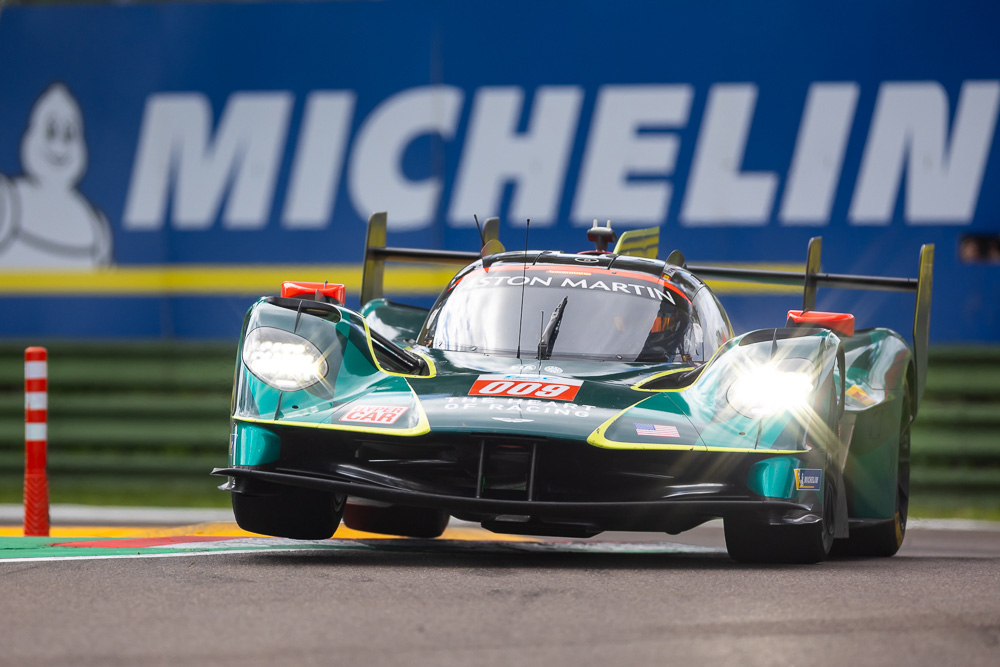
The car’s debut at Le Mans in 2025 saw the #009 make Hyperpole, and both cars ran reliably, albeit somewhat off the ultimate pace, en route to a highly creditable double finish.
Programme insiders predict significant strides will be made during the flyaway rounds before the end of the current season, but podiums on pace are some way away as yet.
As for the future, ultimately the car’s race performances will play a major part on that front, with any discussion around potential customer cars some way away. A touch ironic, as the initial 2019 plan had foreseen cars fielded by a factory team, with a then-likely privateer car to be fielded by the now-stalled R Motorsport outfit from Switzerland.
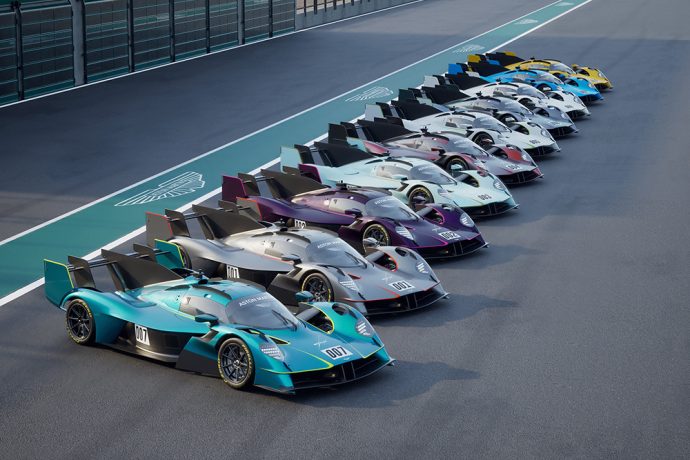
At Le Mans, Aston Martin announced a run of 10 track-only Valkyrie LMH cars for customers, not homologated for racing.
Audi
Early adopters of the LMDh regulations with an Audi rework of the Multimatic-Porsche that became the 963.

The programme progressed sufficiently to have a chassis delivered (above), and Nico Müller and René Rast were announced as drivers, with WRT all but confirmed as the factory WEC team.
The initial plan was for parallel WEC and IMSA programmes, before the IMSA aspect was later reeled back when the brand’s new management determined that they would prefer to progress an engine programme for Formula One. The WEC effort was first postponed, and later cancelled.
As an aside, Audi later came close to joining the WEC’s LMGT3 category, partnering with Sainteloc to develop a version of the R8 for the new 2024 ruleset. However, the brand didn’t make the cut when the entry list was finalised.
Autotecnica Motori (ATM)
An Italian-based engine and powertrain expert was named as the engine builder for the turbo V6 motor for the 2027 McLaren Hypercar.
See McLaren for more.
Balance of Performance
A key principle in making the ‘convergence’ between LMH and LMDh rulesets possible.
The principle of balance of performance was established in the mid-noughties to allow existing GT1 machinery to compete with the incoming Maserati MC12 and utilised a range of measures to manage the potential peak performance of all cars contesting a given class.
The BoP framework was then applied to the new GT3 class (and later to GT4 as well) to allow an unprecedented variety of machinery to compete head-to-head in the same class and the same races.
Carried over to the Hypercar and GTP classes, the basic principle is intended to cap peak performance at any given circuit.
In doing so, values for the car’s mass, power, power over a pre-defined speed, power-to-weight ratio and energy usage over a stint can be managed.
For all 2025 WEC races other than Le Mans, the calculations take into account the best-performing car of each brand in two of the past three races. Adjustments are also made to ensure that each car completes the same number of laps per energy stint.
The effective challenge is for any competing car to reach as close to the defined maximum performance values as possible and to stay as close to them for as long as possible, despite managing energy and degrading tyres.
At Le Mans, the regular system is ‘parked’, replaced by a simpler system based around each car’s homologated values for weight, power and aero performance, with a specific adjustment made to attempt to equalise top speed.

The performance of all cars is monitored in real-time via torque sensors applied to all driven axles, ensuring that rulemakers can detect if defined maximums are exceeded.
The system for 2025 has received its fair share of criticism from fans, the media and (albeit off the record by regulation) competitors since the opening round at Qatar.
It remains to be seen if further significant changes are in the pipeline for the WEC’s premier division, in light of IMSA’s recent decision to allow manual adjustments to be made alongside its five-race rolling average system to close the gaps between the GTP Manufacturers.
Bentley
DSC is aware of at least three attempts to bring the British luxury brand into the hypercar market, all based around the LMDh ruleset and with at least one (and most likely two) of the projects focusing on a car based around Multimatic’s spine.
The first, entirely private, project fell foul of timing and supply chain woes. Two further pushes, more directly, included the factory, though neither progressed beyond the evaluation stages.
Beyond that, there are rumours of another future potential plan, but these are denied by well-placed insiders!
Stay tuned tomorrow for Part 2…