With the announcement back in June of Project: Endurance, McLaren has become the latest Hypercar manufacturer, after Ferrari and Aston Martin, to offer an unshackled track-day version of its FIA WEC top-class challenger for customers.
It’s a concept that has been years in the making for McLaren Automotive and McLaren Racing, which are partnering to deliver what it describes as “a unique opportunity to own an authentic Le Mans Hypercar and become part of McLaren racing history.”
According to McLaren’s head of HyperTrack cars, Neil Underwood, the idea predates Ferrari’s 499P Modificata launch in 2023. “We started work on it three years ago,” he tells DSC.

“We had initial discussions and it became clear that there would be an appetite for this sort of joint collaboration, with Racing and Automotive using their expertise to manufacture, design and run racing cars, and our knowledge of what high net worths are looking at.”
With its Solus GT project, featuring 25 examples of the single-seater V10 sold to run on its Pure McLaren track days, a smash hit, the idea was to go bigger and better. And what better way to do that than to develop an extreme hypercar for customers that has a direct connection to a new, exciting racing programme for the brand?

After evaluation from McLaren, which dated back to the Hypercar ruleset’s inception in 2018, McLaren Racing CEO Zak Brown and the board signed off on the LMDh programme earlier this year, which in turn led to Project: Endurance receiving the green light.

The details are impressive. Customers who purchase one of McLaren’s Hypercars, of which between 30 and 35 are set to be built, will be treated to a multi-year programme. It will see them develop their own driving skills with factory drivers, drive on world-class circuits around the globe, and get a front-row seat for the development and early seasons of the race programme.
Customers from McLaren’s own target list, on a regional basis covering the Americas, Europe, the Middle East and Asia, are being offered the chance to purchase a car, which will no doubt come at a seven-figure cost.
“It’s not so much about the car,” Underwood underlines. “Although the car is important, it’s about the experiences, to go behind the scenes for what we believe will be a very competitive car, seeing how it evolves and develops and the races. We will be bringing these customers along for the journey.
“It would be fair to say that Ferrari, with its Corse Clienti programme, is the most advanced as it has been in a cycle for about 20 years. I think that’s demonstrated to us that there’s an appetite for programmes like the Solus GT, and one of the things we have noted is that customers wanted to go even further than that, they want heritage Formula One cars, for instance. So we looked at this as an alternative to bring customers to the absolute pinnacle of endurance racing. It will be immersive.
“They’ll be given details about the engine fire-up, aero testing, they’ll attend tests, they’ll do their seat fit, do a simulator session, and it will also culminate in them being on site at Le Mans in 2027 to see the car on track.”
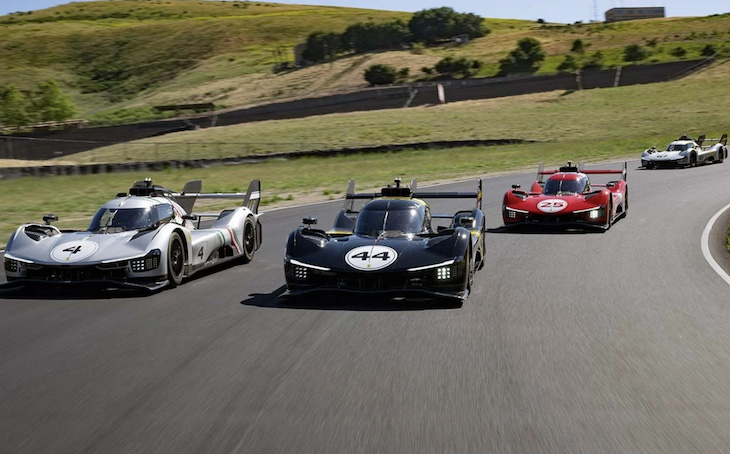
As for the track day car itself, it looks nearly identical to the LMDh launched at Le Mans in June. But due to the testing and development regulations in place, some changes have to be made.
“It’s a customer-friendly version of the car that an amateur can drive,” Underwood explains. “The car won’t have any of the scrutineering sensors or torque sensing for BoP.
“It will also have different traction control systems and engine map to make sure it’s more drivable. The idea is that across the two-year track programme the customers will grow with the car, learn how to be a better race driver. The car is extreme to drive; it’s the real deal.”

McLaren is also exploring avenues to ensure the car is suitable for customers with physical attributes that don’t match the prototypical race driver.
“The cockpits are small; there’s not much we can do about that,” Underwood points out. “But we are doing a study at the moment about freeing up more space, so if you’re a bigger build, we can mould the seat around you and make use of an adjustable pedal box.”
McLaren’s ‘Arrive and Drive’ package will take all the stress out and manage every aspect of the programme for the initial two-year period, storing the cars, prepping them, stripping them down, and operating them.
Project Endurance owners get 12 days of track time, inclusive of the car, at six events, and can add to that with special events
“Later this year, we will announce the 2026 event calendar to support our existing ultimate series track cars on European circuits, and the plan is that we will look to gain momentum over 2026 and 2027 so that in 2028, when we are running Project: Endurance, we have a wider choice of circuits,” Underwood adds.
“Project Endurance owners get 12 days of track time, inclusive of the car, at six events, and can add to that with special events. The idea is that on top of the existing programme, we give customers the chance to drive the car almost where and when they want, at exclusive tests or with a group.”
McLaren is allowing for some personalisation, too. The car will come in raw carbon, then the customer can choose a livery or make their own with MSO’s visualisation team. “It won’t be personalisation at the level of Solus GT when it comes to paint and interior colours; it’s much more of an authentic Le Mans experience, to keep the cars looking right for the race track and not the garage,” Underwood adds.

And before anyone speculates, there’s no plan for any of these customers to be offered the chance to purchase an LMDh for themselves after honing their skills with Project: Endurance and going customer racing with McLaren in the future. If they wanted to do that, they’d have to buy one of the six race cars being built, but McLaren says they are all sold.
The timeline for this programme is tight, but realistic. The first validation prototype is scheduled to hit the track next summer, shortly after the LMDh race car begins testing. Around that time, Underwood says, they’ll make decisions on final specifications, freezing them after the race car is homologated. “The likelihood is that over the next six months it’s going to evolve substantially as we take the car through aero testing and working on the simulator.”
The first deliveries are expected in 2027, before the track programme, which will initially run for two years, begins in 2028.
Chassis partner Dallara, which also services Cadillac and BMW in Hypercar and GTP competition, will be extremely busy, as will engine supplier Autotecnica Motori. But McLaren is confident that everything will run to schedule.
It’s not long away, but we are very confident in Dallara’s abilities
“We will have a really good development window between then and production of the car, which will start sometime in mid-2027, and then we will probably have produced all the cars by the end of 2028,” Underwood says of the production timeline.
“It’s not long away, but we are very confident in Dallara’s abilities. We’ve worked with them on IndyCar, and they know what they are capable of. They also engineered the 499P and 499P Modificata, they have a pedigree in this.”
We’ll hear more in the coming weeks and months about the scope and scale of Project: Endurance. For now, though, it’s clear that McLaren is taking its Hypercar programme extremely seriously. It’s all-in on making its FIA WEC programme a Le Mans and title-winning success and activating it too amid this astonishing era.
Images courtesy of McLaren