

Ford Racing is continuing to ramp up preparations ahead of its FIA World Endurance Championship Hypercar debut next year, with the commencement of engine dyno and simulator running.
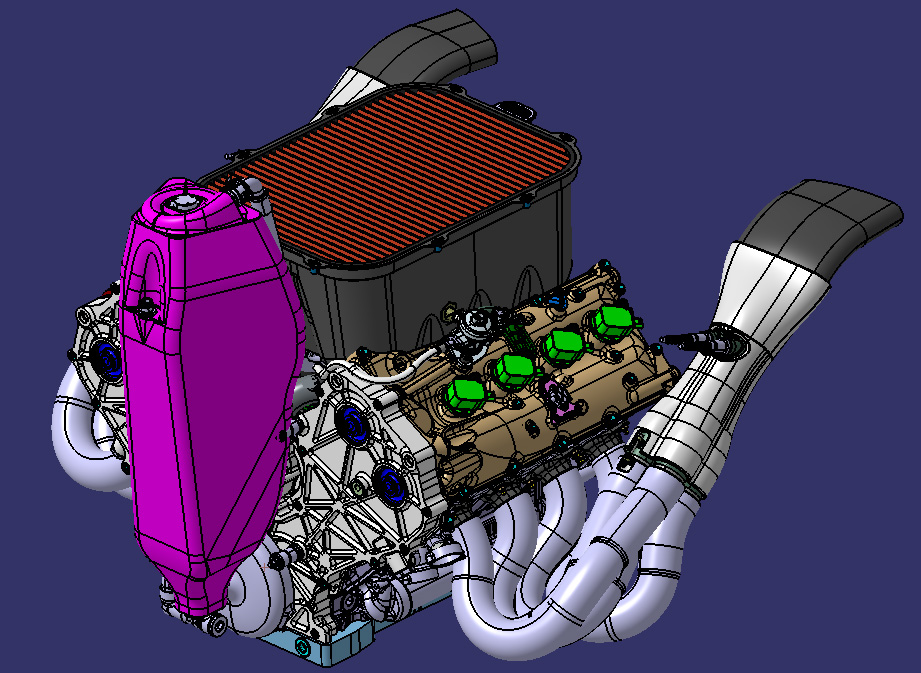
The 5.4-litre V8 Coyote engine, the first performance race engine developed in-house by Ford Racing, has recently begun dyno testing, albeit not yet paired with the spec LMDh hybrid system.
“The first engine has completed build, and was on the dyno,” confirmed Dan Sayers, Ford’s WEC Hypercar programme manager, in a roundtable with reporters earlier today.
“It’s been testing now for a period of time, going through the basic calibration tasks, and we’re just now starting development of certain aspects for performance. Then just down the road, on the same site, the hybrid system is also running on the full powertrain dyno. It’s a spec system, but it’s important to get all of the software communications, the looms, just to make sure everything’s working, and now the team are running through the hybrid system characterisations.
“We haven’t mated the two together, so that’s not running with the fired engine just yet, but that is going to be coming up in the next three to four weeks, so the powertrain is progressing well and pretty much to plan.”
With development now well underway, no particular challenge has stood out to Sayers so far, with the project currently running to schedule.
“I actually think there probably hasn’t been one single challenge [which stands out],” he said. “It’s actually the magnitude of jobs and tasks that need to be done. There’s a huge amount to get done. We’re very conscious of the amount of testing that we want to maximise.
“The balance is quite difficult, because the more time we spend developing the car virtually, the more prepared we’ll be, and arguably the better product we’ll have. But each time you go to the track, you learn, and we need to get on track early as well. So it’s [finding] that balance, and that’s why some of the tools that Ford Racing have, the capability is massive, and we’re conscious we need to maximise that, because when we go testing, we want to be on the track rather than [fixing] software bugs or problems.
“Also trying to coordinate between three main areas, which are the UK, US and ORECA in France, and trying to tie that all together. You just have to be very clear with roles and responsibilities and who’s doing which element.”
The plan is still for Ford Racing to commence on-track testing in the third quarter of the year, with tests booked in both Europe and the USA as part of a comprehensive schedule.
“We expect to be building the car in the next three or four months,” Sayers said. “And then as soon as that’s done, we’ll roll it out in the South of France.

“We’ll spend a week, I envisage, just on the rollout debugging, and then we’ll start our first track test the same month. The whole of the test plan is booked and confirmed, so we’re pushing like hell to make sure we’re ready, because if we miss one of those tests, it has a huge knock-on.
“For the first few months, we’ll focus on Europe, and we’ll definitely do a 30-hour test in Europe before we then go to America to finish off the testing. The plan is to do another 30-hour test, probably early in the new year, and some of those tracks in America. Sebring, for example, is great for durability. So we plan to visit there to do an endurance run as well.
“The difficulty is with a finite amount of time and the mileage we need to get in. We’re trying to stage the tests with a good couple of weeks in between to allow us to do development, analysis and code updates, so it’s getting that compromise between enough time to move forward, but not too long, such that we get very few tests.”
Before the car hits the track, Ford Racing can rely on the simulator for an early baseline, and the American marque has already run some simulator sessions using the data and models it has for its Hypercar challenge.
“We’ve also been running some simulator sessions with all of the drivers, roughly a couple of sessions each month,” Sayers said.
“It’s very difficult at the moment, because there’s no data to correlate against, but we’re running through all the systems that we can. We’re proving that the car, set up with the models we have, is actually behaving the way we’d expect, including the aerodynamics, and it’s a great tool to prove out some of the control software.”
“What is good and what is important is that we’re able to start implementing all the controls and the systems that we’re going to have in the car, both for the engineers and for the drivers,” added Logan Sargeant, who is one of three drivers confirmed for the programme so far, and has completed one sim session to date.
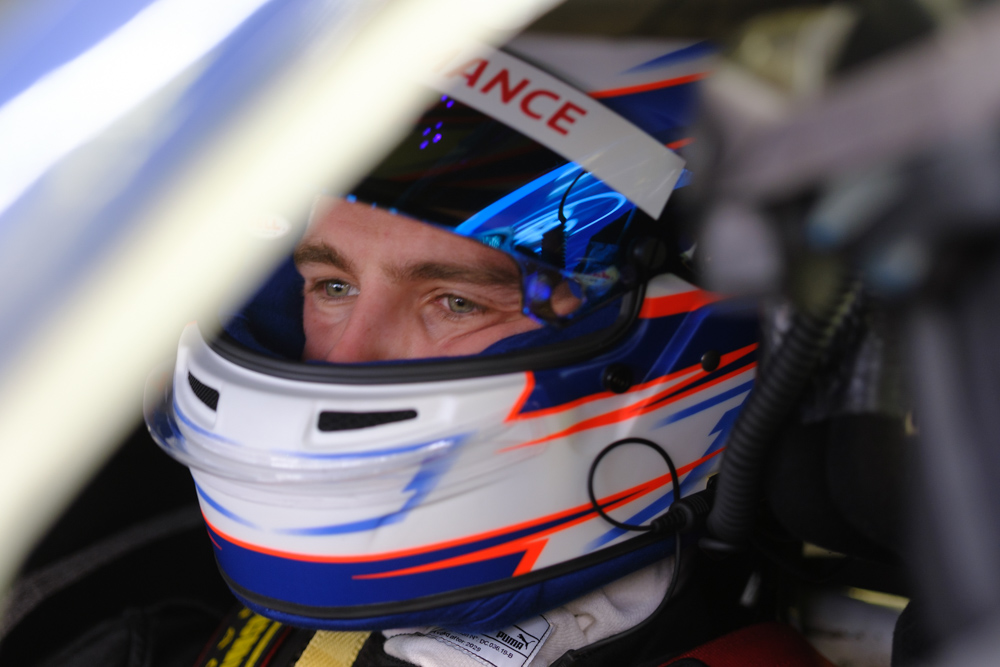
“So we’re able to tick through those things, make sure that they’re working, make adjustments to those things, so that reminds me a little bit of my F1 days. Being able to do all those things, and those things are really cool to be able to play with. It was also good for myself, just to get a feel for it for the first time.
Another perk of the sim programme is that Sargeant, and his teammates Sebastian Priaulx and Mike Rockenfeller, can work on systems such as the steering wheel layout.
“The simulator is a great opportunity to move those around,” Sargeant explained. “See what works best, see what makes everyone the most comfortable, and I guess, make the buttons that you’re using the most the most accessible.
“But the steering wheel is something that’s still a work in progress. I haven’t driven with the actual wheel yet. I think the next session I go to will be the first time I drive with the final wheel, so we’ll be able to play with it more when that comes.”
The three drivers named so far will form half of Ford Racing’s 2027 line-up, with the remaining members of the line-up unlikely to be revealed until towards the end of this year. This includes the potential of additional external hires, with Rockenfeller currently the only driver on Ford Racing’s books to possess LMDh experience.
“We’re talking to a lot of drivers at the moment, some of whom do have LMDh and Hypercar experience,” admitted Sayers.
“I think we’re going to try and continue to have a balance of experience and youth, so I think you’ll hopefully see with future announcements that that’s continued.
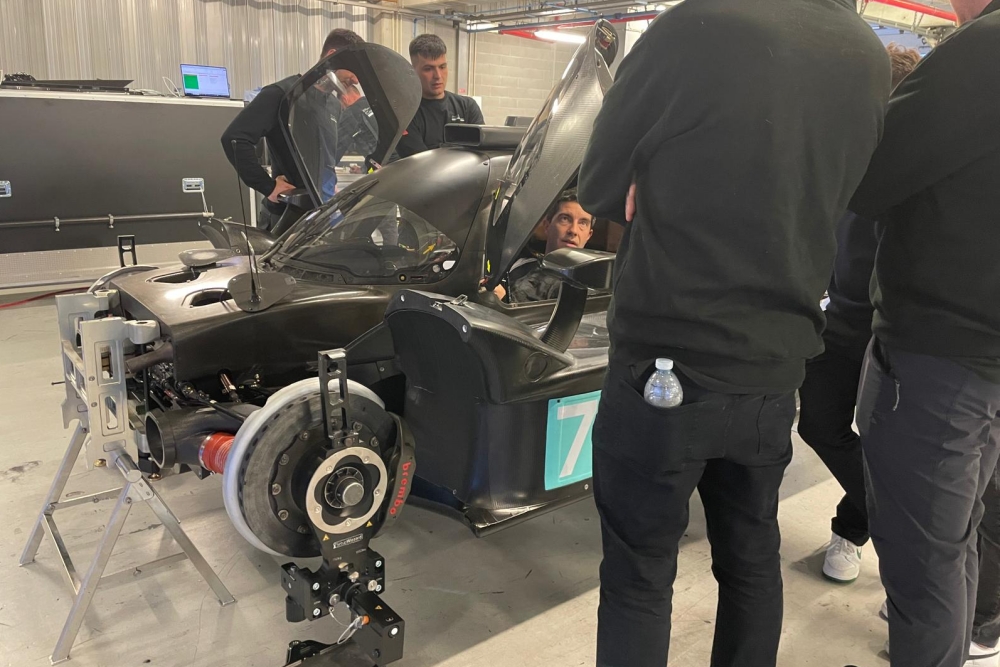
Meanwhile, Ford Racing’s staff will be utilising a collaboration with Proton Competition in the European Le Mans Series to help with their preparation, with Sayers estimating that 80 per cent of the Hypercar crew will play a role in the ELMS programme at some point this season.
The effort, which will see Rockenfeller and Priaulx team up with Jonas Ried in the #9 ORECA O7 – Gibson LMP2, has two objectives: to keep the team race-ready and help develop the work processes so that the team knows what it’s doing once the Hypercar test programme begins.
“It’s definitely a secondary [focus] to Hypercar,” explains Sayers.
“But in terms of the drivers and team getting used to ACO rules, it’s important, and it keeps us busy while we haven’t got a Hypercar to run. The primary objective is just to get everything ready, improve everything for the WEC programme, whether that be the engineering processes, all of the data processing, the aero maps, everything that we want to be ready, so when we go track testing with the Hypercar, we’re ready to plug and play.
“Essentially, we’re not going to our first test developing the workbooks, the KPIs, all of the systems and processes behind the scenes, mainly for engineering, but also operationally as well.
“There are obviously a few difficult times with the test programme and the continuation of the race series into October, but we will try to spread the workload so people can focus on the testing as well, because the biggest risk actually is that we focus on the ELMS and then it detracts a little bit from the LMDh, which we can’t afford to do.
“The objective is not to win the championship. Of course, when everyone goes to the racetrack, it’s the most important thing to try and win, but we need to keep true to the fact that preparing for the LMDh programme is the primary objective.”
Images courtesy of Ford