This column was produced in association with the PMW Expo. After a highly successful, bumper 2026 edition, the build up to the next year’s industry-only event is already underway. It will be held once again at the Koelnmesse, Cologne, on November 10th and 11th. For more information CLICK HERE
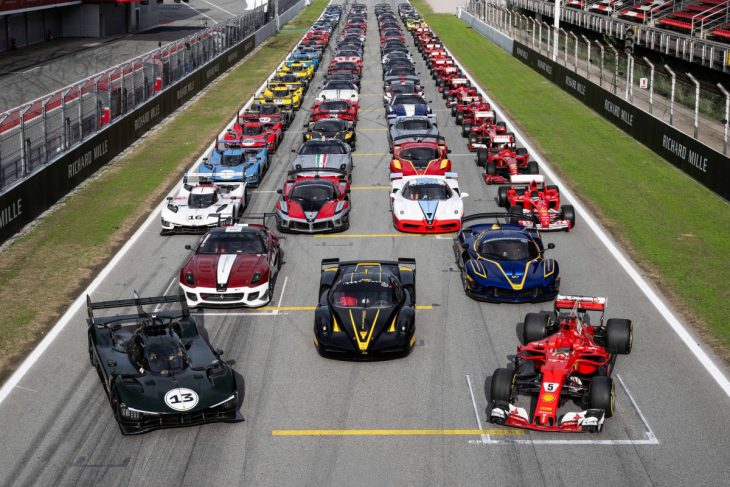
This weekend sees the 2026 edition of Ferrari’s astonishing end-of-season Finali Mondiali event, which this year is taking place at the Circuit de Barcelona-Catalunya. It represents the most important weekend of the year for Corse Clienti, Ferrari’s extensive customer track programme, bringing together owners and their cars from across the world.
But what exactly goes into running such a diverse and technically demanding operation? DSC’s technical columnist Lawrence Butcher spoke to the programme’s technical director Filippo Petrucci to find out more.
Record breaker
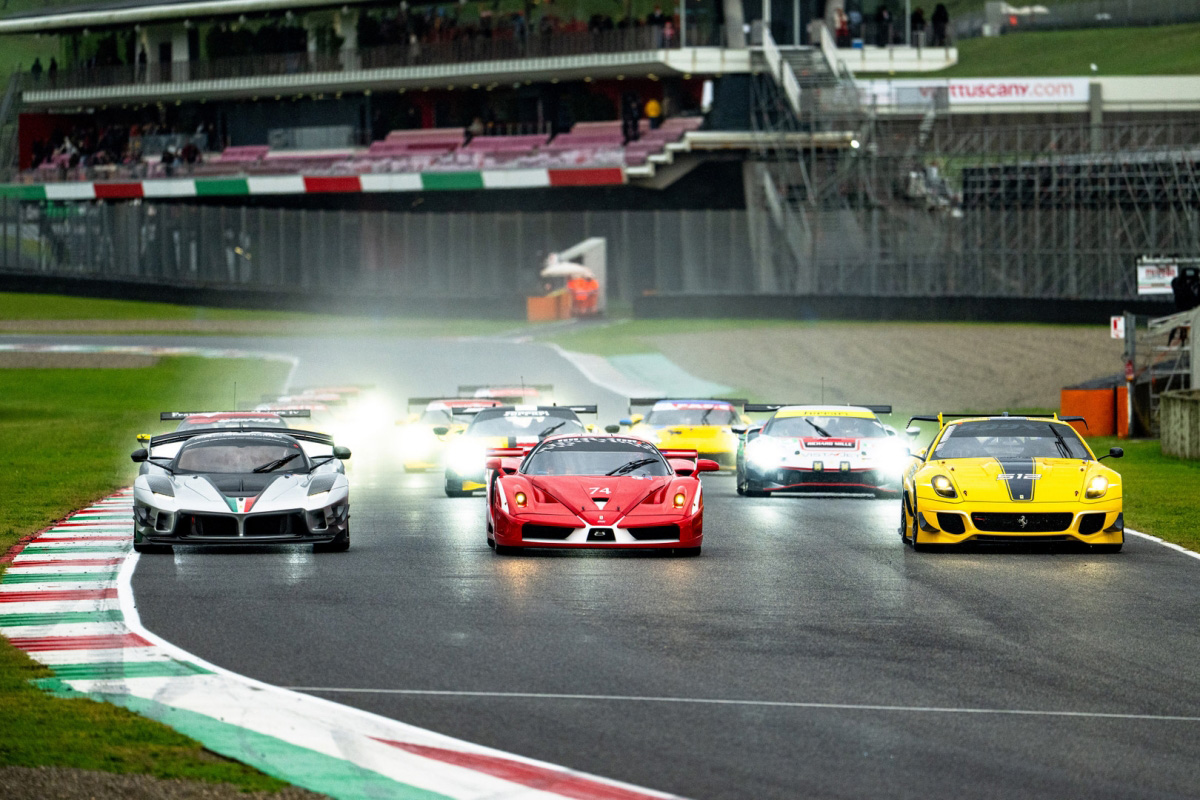
A year ago, at the 2025 running of Finali Mondiali, held in Mugello, a record 84 Corse Clienti cars were in attendance. These were all privately owned vehicles, run by Ferrari as part of one of the most impressive customer track programmes in the world, Corse Clienti.
The fleet features all variants of the XX program for track-only versions of the marque’s road cars, the 499P Modificata and Formula 1 cars from 1970 through to the most recent eligible machinery. The sheer variety presents challenges well beyond those of a conventional race operation, and Filippo Petrucci is the man responsible for coordinating all of it.
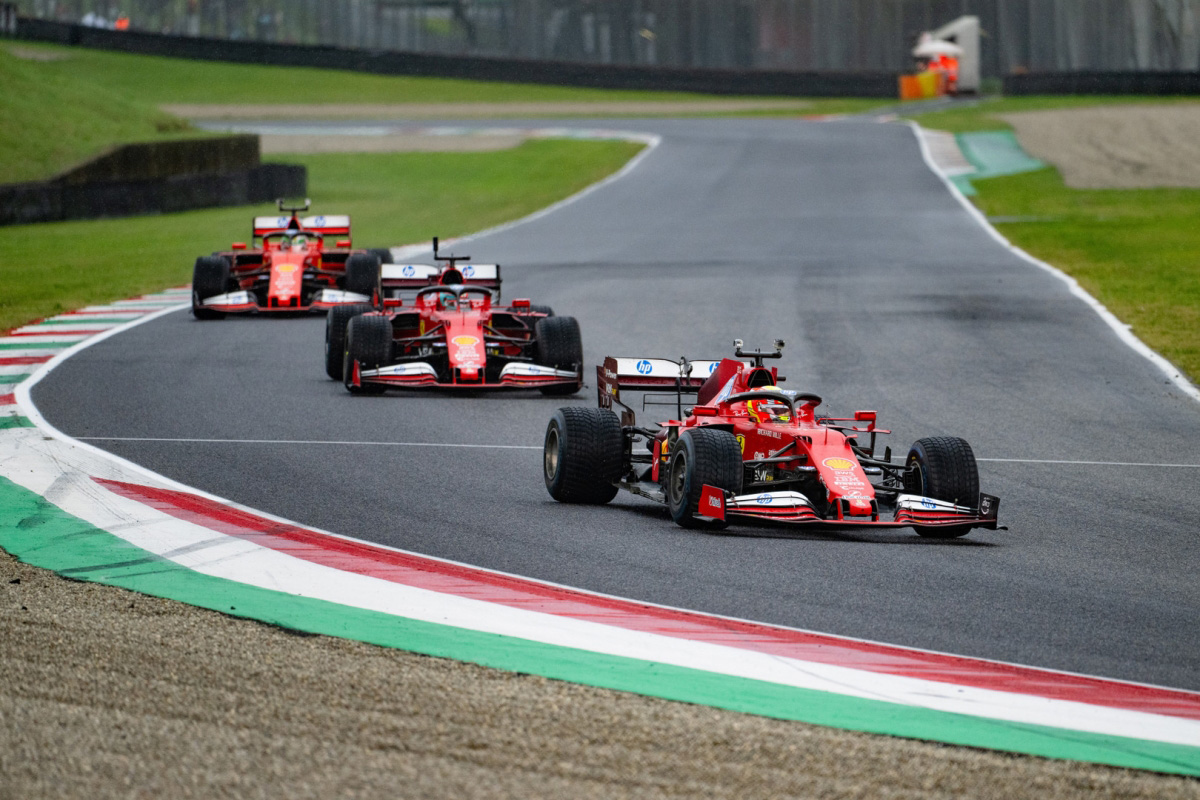
Petrucci’s official title is head of XX and Monoposto Heritage Programmes and Corso Pilota Workshop, which means his remit covers almost every customer track car that Ferrari runs, with the exception of Ferrari Challenge. Each has its own unique technical, staffing and logistics demands. What they share is a single base of operations in Maranello, and a service model built around one central principle: allow customers to arrive at a track and drive their cars with the minimum of fuss.
Full Service
The majority of Corse Clienti cars are stored at Ferrari’s Fiorano circuit complex, in a dedicated building that houses the workshop, offices, spare parts warehouse and tyre stores. Owners are not required to manage any of the preparation of their cars. “You can call me one week before the event, saying you’re coming,” explains Petrucci. “I take the car from storage, put it into the workshop, we do a fire up, a general check, and we send the car. We are pretty sure that it will be okay to start the event.”
Ferrari’s on-event service is the definition of arrive and drive. Transportation, accommodation and circuit hospitality are all provided, even down to ensuring drivers’ kit is laundered after each session. “The customer has only to show up at the airport with a suitcase,” Petrucci adds.
“We take them from the airport and we do everything for three days. Most of our customers are very, very busy businessmen. They don’t have time to care about transportation, customs; we do everything.”
The model is, at its core, a means of removing every practical obstacle between owner and driving time.
The Corse Clienti calendar runs to nine rounds annually, with a deliberate rotation of venues. “We try every year to change the calendar to allow our customers to experience the best circuits in the world,” says Petrucci.
The tracks are normally iconic ones: Suzuka, Indianapolis, Daytona and Silverstone, for example, alongside recurring European rounds at Mugello, Imola and Monza. A typical Clienti event runs around 30 cars, though attendance can reach 45 to 50 for major European rounds. Overseas events tend toward the lower end of that range.
Technical Complexity
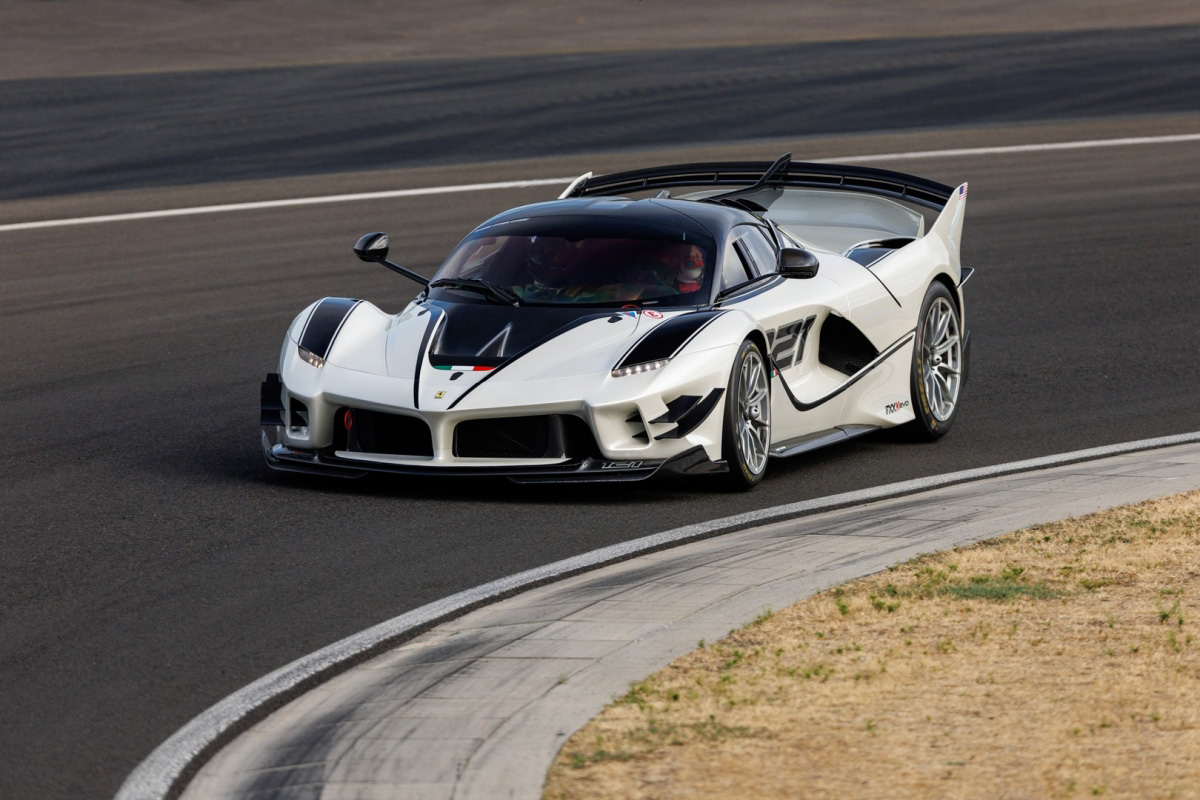
Just the cars in Ferrari’s XX range of track specials would be enough to create a headache for most race teams. The XX programme currently includes six distinct models: the FXX, FXX Evo, FXX-K, FXX-K Evo, 599XX and 599XX Evo.
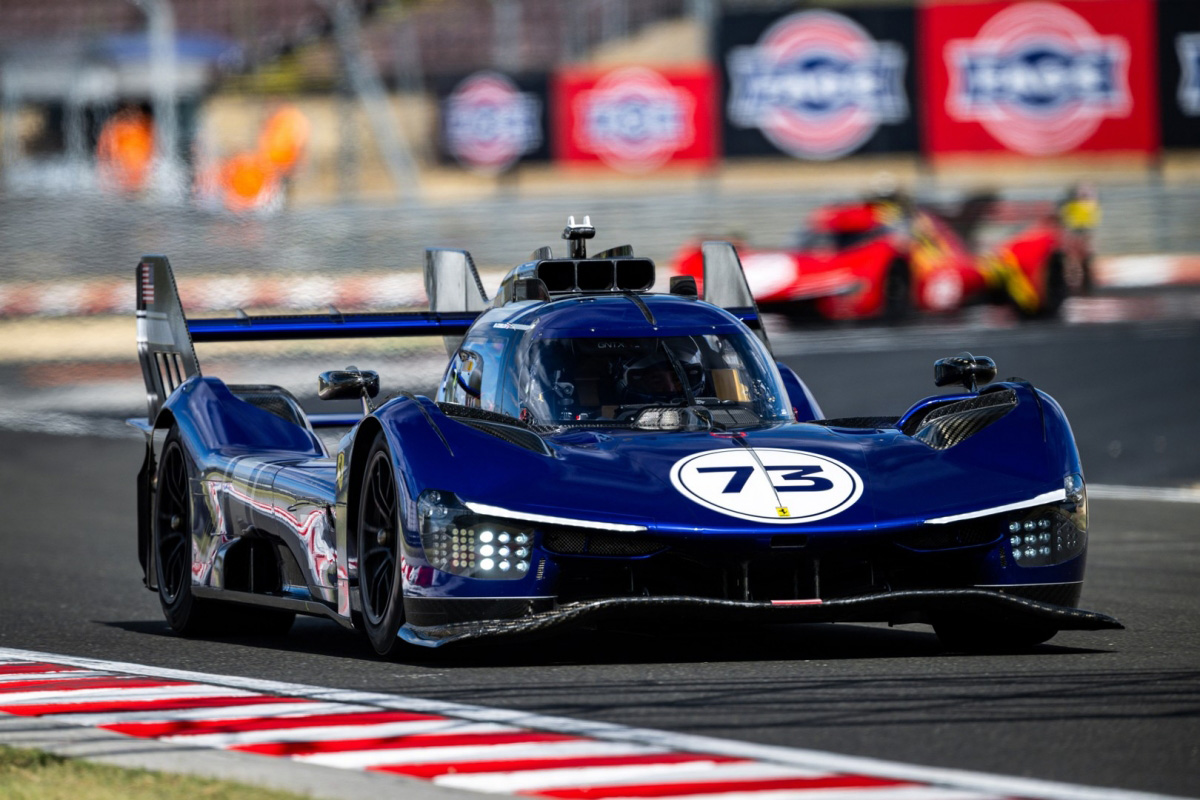
Once you add F1 Clienti cars that span from 1970 to current F1 cars, and the latest addition, the 499P Modificata Le Mans Hypercar, it gets even more complicated.
Take the process of managing component life across the full fleet, which is handled via a dedicated software system. “For each car, I can tell you very quickly how many kilometres the engine has done, how many the gearbox has done, the dampers, the suspensions,” says Petrucci. “After each event, we load the numbers into the system, it updates, and we get warnings when it is time to carry out overhauls.”
For the XX programme, engine overhauls are scheduled at 5,000km intervals, with a full rebuild at 10,000km. A very active XX driver covers 500-600km per event; an F1 Clienti customer typically runs 150-250km. The system also flags time-based component limits that run independently of mileage; for example, aux belts have a three-year life, fuel cells five years, regardless of use.
For the F1 Clienti cars, an additional curve ball is the matter of what specification a car runs in. Corse Clienti takes cars at the end-of-season specification, which Petrucci regards as the most reliable configuration of any given year’s chassis, having been developed and debugged across a full season. However, there is no guarantee that available spares are from that particular spec, as there is constant development throughout a race season.
Fortunately, the team also holds the full digital archive of drawings for every car it runs; when a component is no longer available, it can be manufactured from scratch. This capability has been called upon more than once. Petrucci highlights the case of a customer with a 1975 312 T, one of Niki Lauda’s race-winning cars, who declined to use the original engine and requested a new one. “We took the old engine out – he has it now in his home somewhere – and we made a new engine, fresh, starting from zero, without a single spare part available. It took three or four years but now this man is running with a fresh engine.”
Spare parts procurement varies by programme. XX parts unique to the cars are held in the Corse Clienti warehouse, while components shared with Ferrari road-car production are drawn from Ferrari’s general parts store. However, this arrangement can occasionally run into stock conflicts when parts have been allocated elsewhere in the Ferrari network. For items where this has been an issue before, Petrucci’s team has adopted a policy of pre-pulling regularly needed stock into its own inventory rather than relying on availability at the point of need.
With the customer experience at the core of the programme, reliability is paramount. “We are working on many details on the cars to try to anticipate possible problems,” Petrucci reports. In the earlier days of the programme, engine and gearbox overhauls were the main tasks, but having hit issues as the cars age, the between-event maintenance is more rigorous.
Here, Petrucci highlights the key difference between his team’s job and that of a race team. “Our focus is not to be faster, it is to give fun to the drivers. The worst thing that can happen is a customer comes from Japan, does two laps and then the car is broken. This must not happen.”
Top of the tree
The 499P Modificata sits at the top of the customer car hierarchy. Ferrari had 22 of these on track in 2025, which Petrucci describes as “very similar to the car that won Le Mans this year.” This makes them unique compared with the F1 Clienti cars, which cannot be sold until three years after the season in which they were used. The majority of the customer cars have been delivered, with the final unit due in the first quarter of 2027. It is slightly surreal that Ferrari could independently run a field of cars that would be bigger than the entire Le Mans Hypercar entry.
That proximity to works spec creates staffing requirements that differ substantially from those of the regular fleet. An XX car can be managed by a single mechanic, whereas “on the 499P you need two mechanics, one electronics technician, one engineer per car,” says Petrucci.
To prepare the team for the 499P, Ferrari seconded key mechanics to the WEC factory programme and placed its electronics specialist within the works Hypercar team for a full season. “When we had the 499P, we already had one year of experience,” says Petrucci. With the F1 Clienti cars, the burden is greater still. A modern Formula 1 car requires seven or eight people simply to fire it up and release it from the garage: four on tyre blankets, two on the air jack, one with the jump battery, one on the starter.
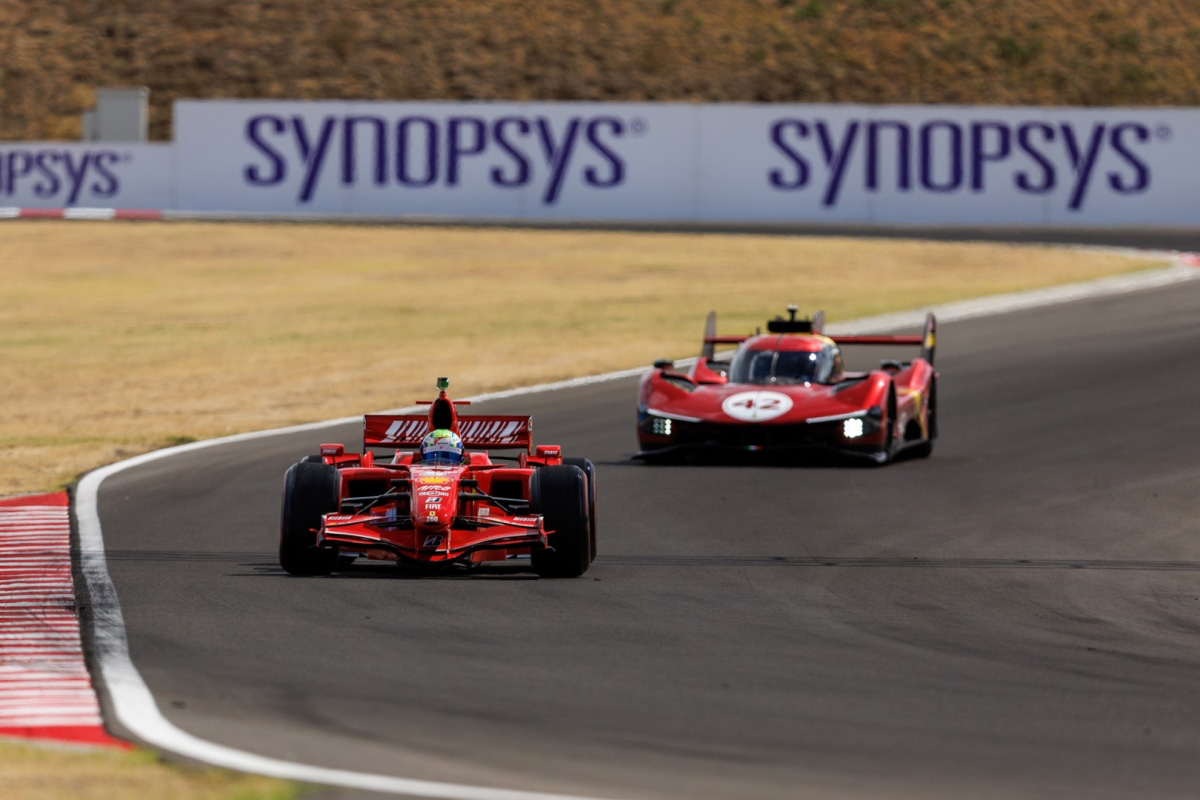
The transition to hybrid Formula 1 cars brought about a notable change in the customer operation; there are owners running around in 2022 vintage machinery! “Honestly, we were a bit scared,” Petrucci admits. “Nobody in the department had any experience with hybrid cars at all.”
The practical operational differences are significant: a non-hybrid F1 car takes one hour to fire up; a hybrid takes two. The solution was to bring in personnel from Ferrari’s test team with existing hybrid system knowledge, distributing that experience across the broader group ahead of the first hybrid cars entering the customer fleet.
When it comes to setup, particularly for the 499 and F1 cars, Ferrari is understandably conservative. “Normally we try to have a standard setup for everybody,” explains Petrucci. This is both a pragmatic choice for drivers with varying levels of skill and a practical one. “It’s quite rare that we change the setup of the car – bringing 22 cars, you cannot change the setup every session. So normally it is a basic setup with a medium-high level of downforce, which gives the driver confidence.”
There are circuit-specific exceptions. For example, when Clienti ran at Daytona, the banking required a dedicated pre-event test session to establish a baseline; the Nürburgring Nordschleife demanded a similarly tailored approach.
Logistics
The Corse Clienti logistics department operates as a discrete function, running to 65 personnel and managing all material movement, fuel supply and tyre logistics across the annual calendar. Each car travels with a dedicated toolbox specific to its model and specification.
The tyre inventory alone represents a substantial management task: Pirelli’s rules (all the cars run Pirellis) require that “each tyre, once it has been used the first time, after one year you have to scrap it,” explains Petrucci. “And even if you don’t use it, after three years from production it is done. So in any case, we always have fresh new tyres.”
Pirelli is still actively developing compounds for the older XX cars, with the full fleet recently migrated to a new construction with increased sustainable material content.
Overseas rounds require decisions on transportation routing that have material consequences for car availability. Sea freight to Suzuka, for example, can take two-and-a-half months one way, five months in total for a return journey. “It means that for five months, you cannot use the car because it is traveling,” says Petrucci. “So some customers ship by air freight and some have decided not to do the overseas rounds at all and just concentrate on the European calendar.”
The staffing pipeline underpinning the whole operation draws heavily on the Scuderia. “Most of my mechanics come from Formula 1 – from the Scuderia,” says Petrucci. “The number-one mechanic who was with Massa, the number-one who was with Räikkönen and Barrichello – they do their time in the Scuderia and then they come to us, bringing a lot of experience with them.” The practical consequence is a department with deep hands-on knowledge about cars that, in some cases, have no instruction documentation – only institutional memory and digital 3D models for reference.
That knowledge base, and the reliability record it produces, is ultimately what the programme sells. It clearly works.
At Finali Mondiali, there are many owners with multiple cars running, and the annual gala dinner, which also encompassed the Ferrari Challenge series, attracts over 1,000 attendees. Ferrari invests heavily in the programme, but when you can sell more than a hypercar grid worth of cars such as the 499P Modificata, and doubtless have a very long waiting list for whatever XX car is next, it is clearly a sound business model.
This column was produced in association with the PMW Expo. After a highly successful, bumper 2026 edition, the build up to the next year’s industry-only event is already underway. It will be held once again at the Koelnmesse, Cologne, on November 10th and 11th. For more information CLICK HERE
Images courtesy of Ferrari