


The opening race of the European Le Mans Series has, almost by tradition, been a dramatic affair. A couple of seasons back we had the start-line incident when half the GT grid – mostly Porsches – were wiped out. The 2013 season kicked off with very difficult conditions, a car into the pit wall even before the lights turned green, and then tactical chaos as half the field pitted for a change of tyres. Ultimately, the weather would be the victor at Silverstone, with the race eventually abandoned when it became clear that the rain would never ease in time to allow a resumption of racing, but between the incident-packed start and the waving of the red flags, there was a race that provided plenty of entertainment and track action, and demonstrated that the ELMS is, once again, a healthy option in endurance racing.
The opening few minutes were made more complicated than they might have been by the fact that the ELMS teams were based in the ‘old’ Silverstone pits, but their race started on the ‘new’ pit straight at The Wing. Two, or more precisely one and a half, formation laps should have been enough to ensure that everyone was aware of the worsening conditions, and that things were changing fast. Anyone out there on slicks, and we think that was everyone, was in for a difficult time, as several discovered by spinning off even before they reached Club Corner.
The lights were held until the last moment before they went green, but no sooner had Turvey and Hartley been released than there was a spinning LMPC car in the middle of the grid – Alex Loan t-boning the pit wall in the #47 and ending up broadside to the track. The GT cars behind threaded round the stricken Oreca, and the race was off, but for how long?

Having the pitlane half-way round the lap allowed the leaders to pit for a change of tyres and get out again before the official deployment of the safety car, and that became critical when the new ELMS safety car regulation came into force. These state that the pitlane will remain closed for the safety car’s first three laps. The quick thinkers had already been through the pitlane and out again, re-kitted with appropriate full-wet rubber, but the rest had to endure three very difficult laps that cost most dearly.
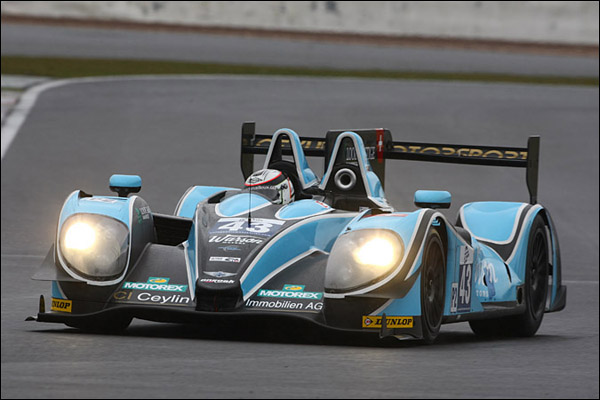
On the restart, Frank Mailleux was quick to capitalise on the situation, and eased the #43 Morand Racing Morgan, but it was Brendon Hartley who was really flying. The young New Zealander had been amongst those to complete the tyre swap before the pitlane closed, and was swiftly up to speed. After dicing through the traffic from a relatively lowly tenth, he eased into second, and from there, started to erode Mailleux’s lead with a succession of fastest race laps. He took the lead with a clean move around the outside at Stowe with 24 minutes gone.
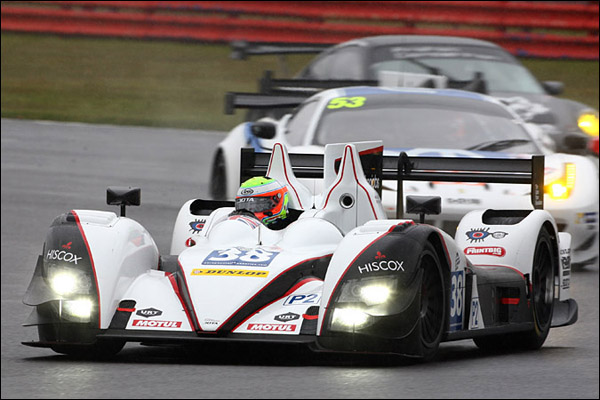
One of those to pay a high price for the confusion of those opening laps was Oliver Turvey, the erstwhile polesetter, who ended up languishing in 8th. Another was Chris Dyson. The American had been one of those to spin on the warm-up lap and had clipped the wall. He pitted, lost a whole stack of positions as a result, and then had to pit again before the half hour, ending up almost last. Turvey meanwhile recovered to fifth.
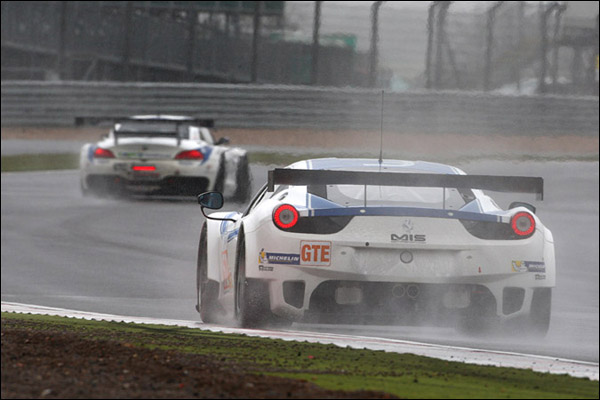
Similar stories unfolded in GT. Proton Competition were ultimate beneficiaries of wise tactical judgement when they helped Nick Tandy and the #77 Porsche into the GTE lead, seventh overall. “The Michelin wets on a Porsche are a great combination and it was exactly the way I like it – not because it was wet, but because it was changing,” said Tandy. “We stopped for normal wets at exactly the right time and then we had to change to full wets, and we were maybe a lap late in doing that, but we still had a lap lead.”
In GTC, it was Ecurie Ecosse who emerged as class leaders. “We started on slicks. It was a difficult call to come in straight away but once we were on to wets and caught up with the Audi, we were already a lap ahead,” said Andrew Smith. “I probably had the best of it. It was wet, but there was very little standing water, but Alasdair did a brilliant job to keep it on the track.”
Weather conditions continued to deteriorate, and nobody seemed immune from driver error. Brendon Hartley paid the highest price, running wide on the entry into Stowe and losing grip, sliding wider still, and ending up beached deeply in the gravel.
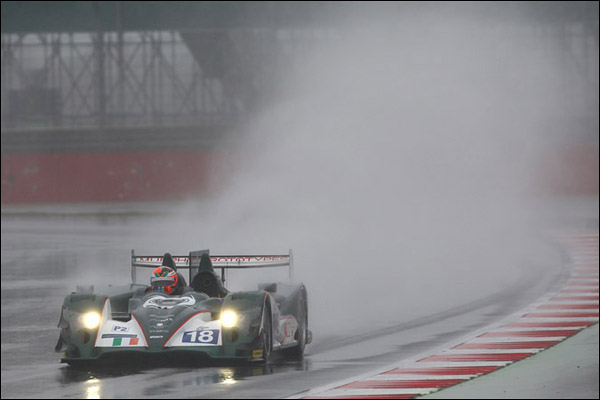
“It was pretty hairy,” admitted Hartley. “I did the first lap on slicks, but it was a really good call to move onto wets. I got caught up with a GT car on the restart, but the car was really fantastic. Inn the end, I made a massive error of judgement. I braked too late in these changing conditions. I’m really kicking myself right now. I shouldn’t have been so silly to throw it off. It’s my first time off for the team, and we could have had a really good day, but we’re all humans. I’ve just got to take it on the chin.”
Mailleux swept back into the lead. Another driver unhappy with the conditions was Nelson Pancatici, and after a wild cross-country spin aboard the #36 Alpine, he conceded second to Jonathan Hirschi, followed minutes later by the loss of third to Oliver Turvey.

The drama was almost constant. Ten minutes before the end of the first hour and Frank Mailleux was the next leader to suffer from aquaplaning, losing control as he eased past the #77 along Hangar Straight, getting a wheel onto the grass, and then bunny-hopping backwards into the tyrewall. Unlike Hartley (who’d pitted and handed over to Mark Patterson without damage), the Morand Morgan hit the barriers hard, and became the first race retirement – allowing for the fact that the #47 never actually crossed the start line!
The net beneficiary was Oliver Turvey. Having started on pole, Turvey had been one of those to suffer under the three-lap rule, but with an hour completed, the Jota Zytek was back into the lead.
There was plenty of incident elsewhere as well. Contact on the run through to Abbey between Ayari in the #49 class-leading LMPC Oreca had Andy Smith in the Ecurie Ecosse BMW, second in GTC, off the track and losing ground, but ultimately he regaining the class lead from an even more troubled Stefano Gai in the #62 AF Corse Ferrari. Moments later, Michael Marsal continued a challenging opening race for Greaves, thumped heavily into the tyres at Vale and redesigned the Zytek’s rear-end. The team initially planned a rebuild, but closer inspection suggested that, with worsening conditions, it really wasn’t worth the time and the risk of sending the car out again.
“This was a really rough way to return to racing in Europe,” said first-stint driver Chris Dyson. “As the race started the rains came and the conditions soon became undrivable. It was a real casino out there, with standing water and driving rain. It was a matter of luck as to whether you stayed on the track. I had a few ‘moments’ on track so I know that Michael’s accident could have happened to me or anyone. The good news is that Michael is fine and that the damage to the car is not substantial.”
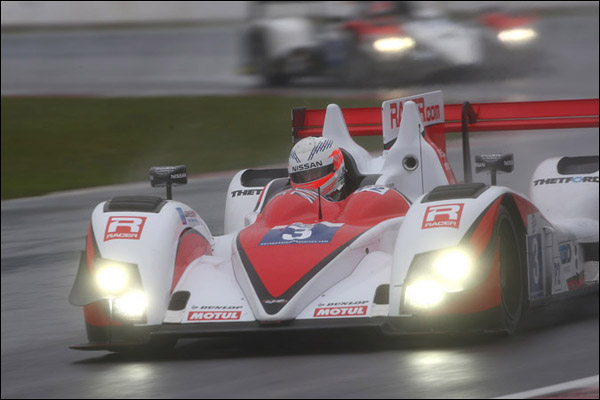
“This was not the way I planned to make my European race début,” said Marsal, “but you have to play the hand you’re dealt. I found it really hard out there as the track conditions changed from corner to corner and from lap to lap. The car got away from me without warning and there was nothing I could do to save it.”
The only class – at the mid-race stage – to be relatively unaffected by errors of judgement was GTE. Montecalvo had exploited an early stop for tyres to lead for the first hour in the #53 Ram Racing Ferrari, but it was Nick Tandy who was pressing on through the spray to head the class, 6th overall, as we entered the second. He’d hold on to that despite a later spin (and mild contact with the IMSA Performance Porsche) at Copse.
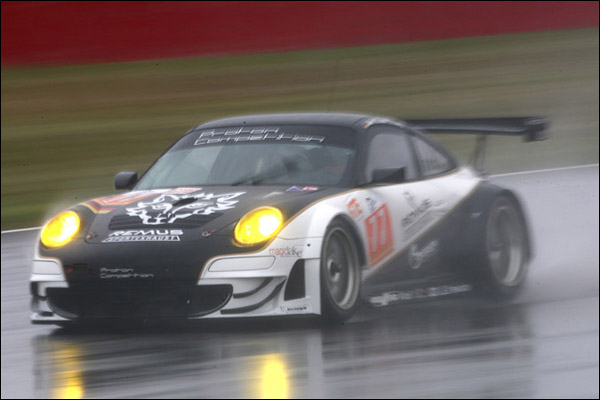
“I caught him very quickly between the old Club and the last corner, and in normal conditions it would have been OK, but as soon as I got alongside him, the car just aquaplaned into him,” said Tandy later. “The first thing I did when I got out of the car was to go and say sorry.”
Quarter-past the first hour and Steven Dolan was another to clip the barriers at Vale. He’d only just taken over from Turvey, but got away with his excursion fairly lightly. The car sustained only superficial damage to the front-right bodywork, and Dolan resumed in third.
That gave us our fifth leader of the race inside forty-five minutes, with Jonathan Hirschi topping the timing screen for Thiriet by TDS, and enjoying almost two minutes advantage over Dolan.
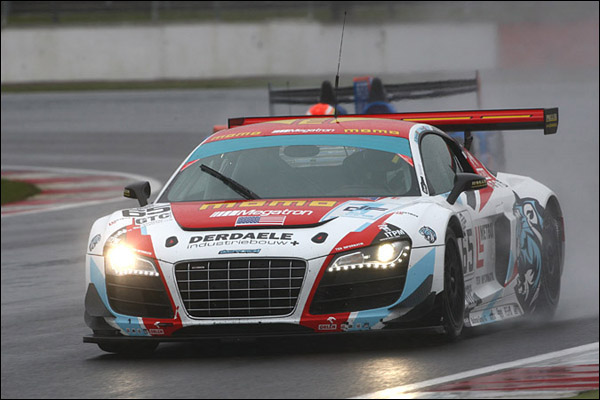
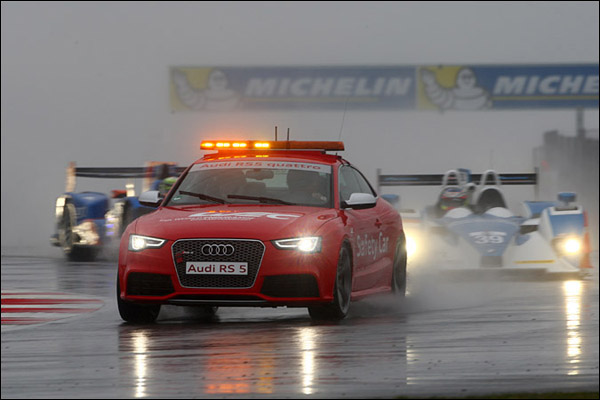
Conditions were indeed so appalling that the race organisers elected to reintroduce the safety car when the GTC Audi went off close to the exit at Stowe. Dylan Derdaele explained that “every lap it was changing. Raining, raining, raining! I braked and the car just moved onto the green stuff and went straight off.”
The safety car appeared at 16:25, effectively closing the pitlane for three laps. This posed a dilemma for Proton, with Nick Tandy needing to pit before the end of 90 minutes to avoid a technical infringement for driving over his time limit.
Despite the slower pace – or perhaps exacerbated by it as the racing line deteriorated – cars continued to slide off across the grass or into the gravel traps. Most were harmless embarrassments, but Raffi Bader, taken over from Derdaele, made sufficient contact with the barriers to add further damage to the rear of the Momo Megatron Audi R8 #65 and see the car end its race on the back of a flatbed.
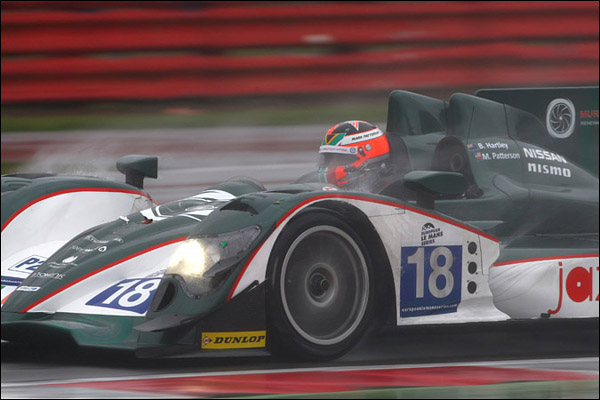
As well as challenging the drivers, the incessant rain was also causing technical problems. Mark Patterson brought the Murphy Prototypes Oreca in for a scheduled pitstop, but the engine wouldn’t restart, and the team lost roughly ten minutes, and seven more laps, drying out the starter circuit. Regulars at Silverstone were heard to suggest that they’d never seen so much water swathing the Northamptonshire circuit, and drivers like Jonny Mowlem, who’d completed a first stint, admitted that just staying on the track at all was almost as much as most could cope with. “The tyres we have here simply can’t cope with this amount of water,” he intimated “It’s very tough out there. I can’t remember worse conditions, except perhaps Le Mans in 2001. The car is just aquaplaning everywhere. I nearly crashed fifteen, twenty times when I was out there, but I think the sensible thing to do now would be to red flag the race at 70% distance.”
Even under the safety car, there were changes in position. A pitstop – some might suggest premature – for Hirschi and a driver change to Pierre Thiriet allowed Simon Dolan back into the overall lead for Jota.
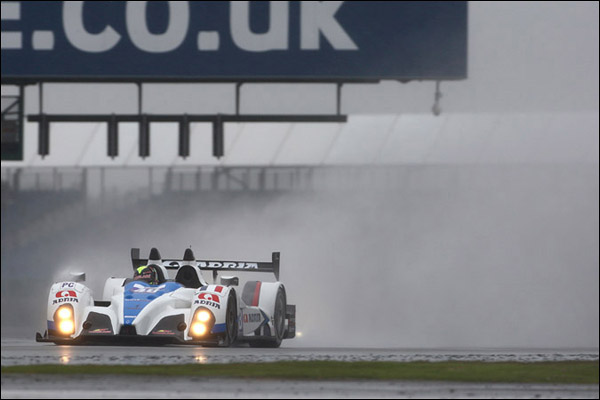
Soheil Ayari handed on the #48 LMPC Oreca to Anthony Pons, but with second-placed #49 running last, there was no risk of losing that lead. Similarly, the driver change to Ollie Millroy didn’t risk a lead change in GTC either, with the Ecurie Ecosse Z4 enjoying a two lap lead in the #79.

At 17:19 the inevitable decision was taken to abandon the race. With 75% of the three-hour race distance completed full points could be awarded and further risk of damage to cars – or, perhaps, worse still to drivers – avoided. So, wins for Jota in LMP2, Ayari and Pons in LMPC, Prospeed Competition in GTE and a debut victory for Ecurie Ecosse in the team’s first ELMS appearance.
Although the opening round did not provide a sustained afternoon of great racing, it was still good to see the first signs of a positive recovery for the ELMS, following a 2012 season that did not bode well for the future of the Series. All credit to the teams, who have demonstrated once again that the ELMS remains the benchmark for the LMP2 category, and to the ACO for stepping in, supporting the Series, and ensuring a healthy and top quality grid for the beginning of the year. Yes, there were a few administrative errors, and no doubt there will be recriminations, but this was an event where the weather played the greatest part, and even the ACO can’t be held responsible for the malevolence of nature.
MP & PS


