


There’s a major backroom change at Aston Martin Racing for 2016 with long-time Prodrive man Paul Howarth named as Team Principal (below).

That frees up John Gaw to keep closer tabs on Prodrive’s other programmes, including work for VW, and other major OEMs.
Gaw will still be in evidence at many of the major race meetings but it’s Howarth that will hold the reins of the team for the 2016 season. Howarth shadowed his boss throughout the 2016 WEC season and now steps up to the plate for what promises to be a super-competitive season.
You’ve been part of Prodrive for an awfully long time. How are you approaching this new role?
“It’s a big effort, my focus has always been on preparation and execution. So it’s probably time to keep our heads down, focus more on the detail, get everything gelled correctly, make sure we’re effective every weekend we’re at the track and keep resetting and reminding ourselves of our goals.”
You’ve got a revised car, a new tyre partner, a new lubricants partner. Lots of challenges there, what do you think the major bridges to cross will be coming into this season?
“The biggest bridges will be the learning curve, the partners are very committed, they’ve got lots of knowledge. Look at Total, look at Dunlop, they’re at the top of motorsport and are very similar. GT racing offers massive variety for championships, we went from every ambient on the track, every wet condition, we went through lots with the regulations.

“The major hurdles will be consistency, keeping our heads. If I broke each area down, with a new car, we’ve done more testing than we’ve ever done before. The engineers have to fully understand the setup of the car, and manage that over a six-hour or indeed a 24 hour race. You can manage it for qualifying and go for points, but then that may effect optimisation for the race.
“That’s going to be the main focus, when we start the race we’ll have the right package. If we have the right package it’ll be great, if we don’t get the right package, we’ll see the deficit as the hours go by. If we play that card close to our chest, and if we work hard, then optimising the tyre and the relationship with Total (they’ll have a technical person with us at all times) then it’ll point us in a direction we’ve never been before.
“That’s what we’ve bought into, that’s why we brought them in.”
You’ve clearly been involved in programmes with multiple factory efforts involved, but you’ve had a chance behind the scenes last year seeing how hot the competition is. Clearly Ford have entered into that. What’s your mindset coming in, how tough do you expect this to be?
“Obviously through the winter I’ve thought about this a lot. Everyone has got to get up to momentum, we’re probably on the front foot with momentum at the moment. We’ve got 100% reliability in the chassis mechanics. We’ve got quite a lot of percentage learning to do to optimise everything on the car on every track with its new aero potential.
“The other guys have got new cars, one particular manufacturer has got a homologation special which I would say is similar to some of the stuff in the world of rallying when you build a purpose-built car to the limit of the regulations.
“We built this car to the ‘spirit’ of the regulations. Their results could mean they’re gone in the distance. Who knows? We rely on the technical regulations to balance the performance and make close racing.”

“They’ve got great skillsets, I’m not underestimating where they’ll be, what I’ve seen of this race is preparation and execution. If you do that you come away and we’ll hold to our word with our team, and challenge everyone in the team to deliver.
“We worked very hard towards the end of the year last year. Every advantage, as all the top people in the sport talk about, is marginal gains. A professional team comes to a level where it can look at marginal gains. And those marginal gains in my experience seem to be, in my mind, matching up with the objectives.”
What motivates you about this sport?
“What motivates me is the end of that six hours, looking around the garage, hopefully looking up at a podium. There’s about half an hour after a race where there’s an atmosphere you can’t get anywhere else. Before the race there’s a tenseness unlike anything you’ve seen before. I’ve never seen anything like it, I’ve seen endurance rallying but it’s nothing like Le Mans.

“It’s the four to five days where there is this air of “what’s going to happen? What’s coming?” When it’s all over, if everyone has done their job there’s a smile on everyone’s face. It’s winning, and that’s what I look for.”
You were at Le Mans last year?
“Yeah I made sure I got involved in every aspect of the #99 car. I have heavily involved in the pre-preparation of the car, I like to really understand the process.
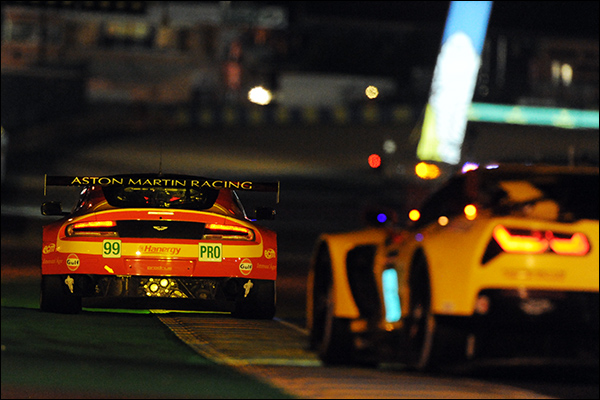
“I learnt a lot because there’s different ways to approach Le Mans. #1 for me is to approach Le Mans with a team that is fresh, well rested, focuses, and has an attention to detail for everything that may go wrong.
“What I saw is that it can still go wrong, but you can still win. You don’t have to do the fastest brake change, the fastest pit stop. What you have to have is a well conditioned team, a well conditioned set of drivers and everything behind that should support it.
“If it all goes to plan, you get your outcome. If it doesn’t go to plan because somebody wasn’t quite awake. There’s always five reasons for something going wrong, that what the aircraft industry uses. I learnt it many years ago, that when something goes wrong, look for five reasons, it doesn’t take long.
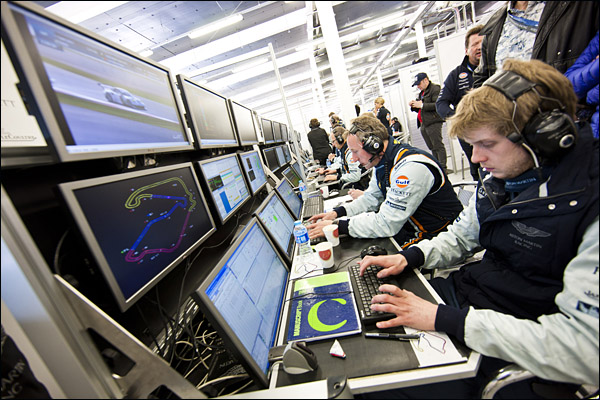
“So you’ve got to manage very aspect of the team: what can go wrong with a tyre change, what can go wrong with the lights in the night, what can go wrong with the track deterioration? Is the driver in the right frame of mind? Has the mechanic fallen out with his girlfriend? There’s so much to think about. It’s endurance at a level which you’ll find nowhere else in the world.
Final question. You described beautifully the emotion that’s involved in this. We’ve had for many years back to the GT1 era, a nice bit of needle with Corvette and Aston Martin Racing. And rather oddly, part of the evolution is with a guy like George Howard Chapell, who is involved with another team. Is that part of the appeal, the interpersonal rivalry?
“I tend to respect other people, and you have to have competition. You look at the Italians, look at the needle match in the Rugby. The Italians very calmly in the background never say too much but they just enjoy it. So, yeah. If they’ve bought ten bottles of champagne, you’d like to not allow them to drink them.”
GG


