Before COVID-19 there seemed to be very few truly growth areas in motorsport, GT and Endurance racing and electric racing are arguably two that bucked the trend, but a third most certainly was historic racing and as the world staggers back to its feet after the body blows dealt by the pandemic there seems every likelihood that trend will continue.
In particular, there has been an explosion of interest in racing more modern machinery at historic race meetings, Super Touring Cars have seen a surge in interest but for reasons that will become clear below, 21st Century Sportscars might just see the biggest spike of all.
To find out why DSC has been digging deep into the world of the relatively recently launched Masters Endurance Legends, part of the Masters Historic Racing family of Series and Championships.
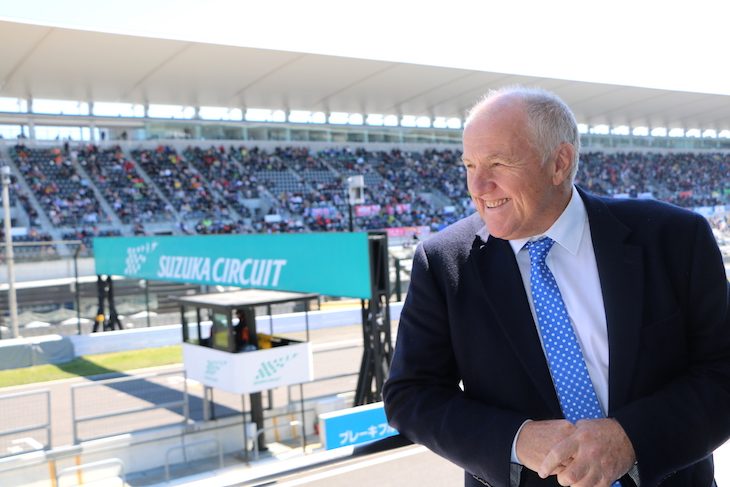
First up a chat with the man that made it happen – Masters Historic Racing Founder And President Ron Maydon – he established the organisation back in 2004 with the launch of Grand Prix Masters, and the suite of Series, the breadth of cars than can race in them, and the roster of happy customers, have all been growing ever since.
That final measure of success is one that particularly pleases the man at the helm:
“We are aiming to be a friendly and accessible group.
“It’s very easy in this technical world, where we’re governed by numerous authorities as we go around Europe, to get swamped with officialdom, and to forget that, without customers, we don’t exist.
“Even aside from the current challenges, we’ve worked from the very start to try to adhere to the necessary rules, to keep the impact of them on our customers to a minimum, and to provide as welcoming an environment as possible at our race meetings.”
There are no excuses whatsoever either for a laser-focused concentration on the traditional ‘Gentleman’ driver’:
“Motorsport is not a cheap endeavour, and, if you are focused on the fully professional level of participation, there’s a huge amount of focus and expenditure on getting to and maintaining an upward trajectory.
“That’s simply not necessary in our market. A large proportion of our customers are successful business people and their drive and motivation is very different. They run businesses and that helps to pay for their hobby and their passion.
“They enjoy a good racing result but, quite often, that’s a secondary consideration to their enjoyment of a racing weekend.
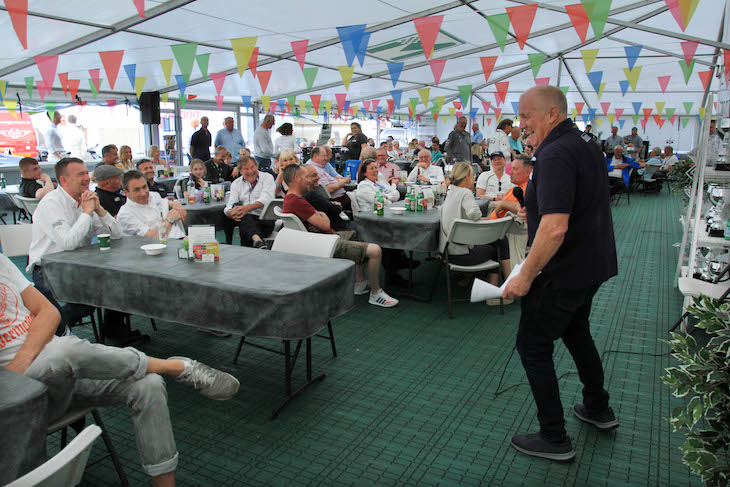
“That’s why we invested in the infrastructure that we have, the hospitality unit that comes with us around Europe, where we have tried to create a welcoming atmosphere that is tailored to the feel that our customers tell us they are looking for.
“The racing can be fantastic, but if the social side falls short then there really is not going to be the level of satisfaction that brings people back race after race, year after year.”
Where would you define the place of Masters in what is becoming a very busy marketplace?
“There are lots of options out there for what you might term budget racing, without any bells and whistles. That’s not for me, and it isn’t for our customers, I think most people like to have somewhere as a hub where they can get good food, sit and chat with their friends in comfort, grab a bacon roll in the morning and be fed well through the weekend.
“What we aim to do is cater at a level between the grandiose hospitality that some events do very well, but at a huge cost, and the lower end of the market where you get to race, but that’s about it!
“I like to think we go in the middle ground between those that offer top line, five-star hospitality and those that offer just racing. I’m very comfortable, where we are, we offer good food, the hospitality is good, the organisation is great and we have a lot of very happy customers that tell us we have got the balance between the offer and the cost spot on.”
That’s where things are now, but where did this all start for you?
“I was in America visiting a friend many years ago and I saw a car.
“I didn’t really know what it was, but I took some pictures of it in a garage under a tarpaulin and sent them to a friend of mine who came back and said, “That’s a Cooper Formula One car, a 1963 Cooper, with an Alfa Romeo engine, one of the last cars they built.”
“So I bought it. And I turned up at an HSCC event and said I’d like to race my car. And they said, “Well, where’s your licence?” I gave them my driving licence. And they explained that you have to have a race licence. I had no idea about any of that!
“So I went away and got a race licence by marshalling and all sorts of stuff. And then turned up my first event at Silverstone, with my wife and children. Clearly, I was going to set the world on fire as a latent talent!
“And anyway I came last. And not just last, I think I was lapped three times in the qualifying race. And it was very cold and very wet and my wife and children decided that not only were they cold and wet, but that I was an embarrassment too.
“So not to be deterred, I then went to the next event, which was the Bugatti Circuit in France, and, once again, the result was similar, but this time, it was so hot.
“I phoned home and said to my wife, it’s so hot, it’s unbearable. And she said, Don’t moan about it. either sell the car or do something about it. But don’t come on the phone moaning!
“So there was the question. Do I pack up now? Or do I try to improve and do something about the fact that there was nothing to do, and nowhere to go outside of our own little paddock set-up?
“So then I set out to start Masters, bought a trailer and decided to do hospitality at the race events.
“And whilst my driving didn’t improve that much, the hospitality did.
“We started out doing hot drinks and sandwiches, ice creams or whatever? And it started from there in 2004.”
So how did it get from being a driver to offering a catering truck, to where we are today with the organisation offering multiple Championships, and working with major events in North America too?
“Well it started with trying to put together a series for classic Formula One cars and I realised pretty early on that this wasn’t going to work as a standalone, there weren’t enough Historic Formula One cars out there at the time to make it commercially viable.
“I did a deal and bought a series for Group 4 Sportscars which worked out quite well, and then, about a year later, we did another deal and bought the Gentlemen Drivers series for Pre-66 GT cars and that’s how it grew.
“We added a Pre-66 Touring Car series too, always by finding Series out there that had a customer base and had promise and that we could roll into our package.
“In fact, the only Series we’ve started up from scratch is the Masters Endurance Legends.”
Let’s come on to talk about that. Because when that came out, it was a pleasant surprise. It wasn’t a huge surprise, because there was clear demand out there in motorsport for these cars, not to be garage queens any longer. But tell us a little bit about that journey and how and who persuaded you to jump into that pond?
“We were looking for another series to complement our existing package. People kept coming to me with suggestions but everything that was suggested was already being catered for by another race group. And I really don’t like it when people steal groups or do similar grids to other people. It just seems to be a dead-end from a business point of view, dividing the cake into slices that are less viable.
“So we looked for something different. We looked at Group C and made a pitch to Bob Berridge at the time when he was handing over the reins but we were beaten to a deal by Patrick Peter.

“So we kept looking, and a number of people mentioned this group of more modern endurance cars which, at first, I wasn’t convinced by, but the more digging we did the more interesting it became for a number of reasons, the number of cars out there, their cost to buy and to run, and, crucially, there was nowhere else for them to go!”
And, of course, very many of these cars were designed from the start with Pro-Am competition in mind, so they are relatively accessible for Gentleman drivers?
“Whenever you do anything in life it’s usually accompanied by a series of mistakes and, at first we did allow Pro drivers in.
“First off, we didn’t realise how quick some of the Pro drivers are. At our first event at Spa we penalised them quite heavily, not realising that even having the mountain of penalties made very little difference, they were just so much quicker than the amateur drivers.
“We had some owners putting in very young, very, very fast, pro drivers competing against some of our owners that are not so young. And you could tell by the end of the first event that there was some unhappy people about – which is the opposite of what we are trying to achieve.
“We had a go at increasing the penalty for Pro drivers but then came to the conclusion that actually, do we really need them? I mean, these are people that are fantastically talented. And their whole focus on life is motor racing. But our series is for businessmen, who worked hard at being successful in business, so they can go racing, and the two things are really quite different.
“And so we have decided, and we’re starting to implement that Pro drivers doing solo runs is something that we don’t want anymore. Maybe it’s because I’m jealous of how good they are!
“Joking aside it’s as simple as this, our job is to look after those who write out the cheques. They need to be happy, or we don’t have a business.”
One of the things that is emerging from your entry lists, and from conversations with the drivers and teams involved is that there are a number of competitors who already have, or are considering, adding one of these cars to something that they are already racing over one of your weekends?
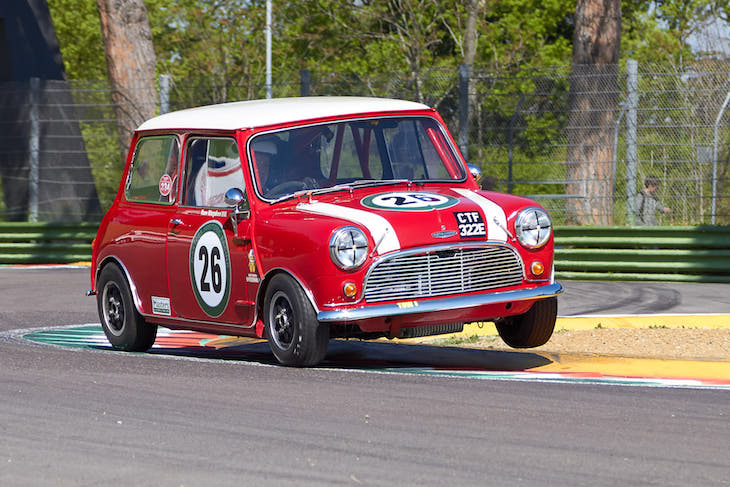
“I hope this is one of the attractions in the Masters package. I mean, for example, I drive my Mini and then I drive a little GT Ginetta, and then I drive an F1 car. Okay, I do all three of them quite badly. But it gives me a real joy for the weekend that I’m fully occupied, and it keeps me out of trouble!
“By that, I mean that I’ve got such good people working around me that, really, they don’t need me to help to run the meeting.
“Yes I am, I suppose, a figurehead, so I spend my time between races talking to our customers and feeding back into the team. We are always looking for ways to make the experience better.
“Back to the car choices on the package, I hope, and expect, that it can work in both directions, that we can attract some of our current customers to try out and race an Endurance Legends car, and that new blood coming in with the newer cars like the look of something else on the package and get themselves a second car for a different grid.
I gather as an additional incentive that entry fees for 2021 are reduced?
“Yes, in particular, because we were unable to offer our usual full hospitality at our events this year. We took a unit to most of them, and we handed out packs of food, sandwiches and coffees, but it’s not really the way we like to do it.
“We like to give a hot breakfast and a hot lunch, and afternoon tea. And it’s so important to us, that element of it, that when we couldn’t do it, we felt we had to reduce the prices.”
Many observers of the marketplace for the cars eligible for Masters Endurance Legends have commented to me on the cost of the cars, buying them and running them, as being a major plus right now?
“I don’t want to get into commenting on the purchase price of the endurance cars – I’m simply no expert.
“What is worthy of comment though is, contrary to everything I was told and contrary to the general belief amongst historic racing drivers, is the cost of running these cars.
“That’s been quite a surprise. They’re much cheaper to run than the historic world realises. And it’s something I wish we could get across to other people.
“In particular some of the numbers about engine mileage are amazing. When I compare the mileage and rebuild costs too, for instance, a Cosworth DFV it really makes racing these cars look cheap by comparison.
“To give some sort of yardstick, a single-engine rebuild for many of these cars will give you three seasons of historic racing.
“I’ve been looking at some cars in North America recently and have been told they will do around 5000 miles between rebuilds. Compare that to a DFV, even with the restricted revs we use in historic racing, they’ll do around 1500 miles between rebuilds.
“Of course they should be a lot better with the better part of 50-60 years of engineering development and design against a DFV but it is massively impressive and a huge saving.
“I’ll give you a practical example from the historic racing world. We often get asked, can we go to Monza, I hear all the time from our drivers. And a couple of years ago we took the historic F1 cars there and had a tremendous grid of 37 F1 cars.
“Even though we restrict them to 10,000 RPM, they were on the rev limit is for so long, that by the end of the second race, I think about 10 of those engines had blown up.
“Now, that’s costly for the competitor and for us as a business it’s a disaster because that means we might not see them again, for two or three races, we might not even see them again that season because the owner is then looking at a repair bill of anything from £25-35,000 pounds, provided there isn’t a lot of damage.

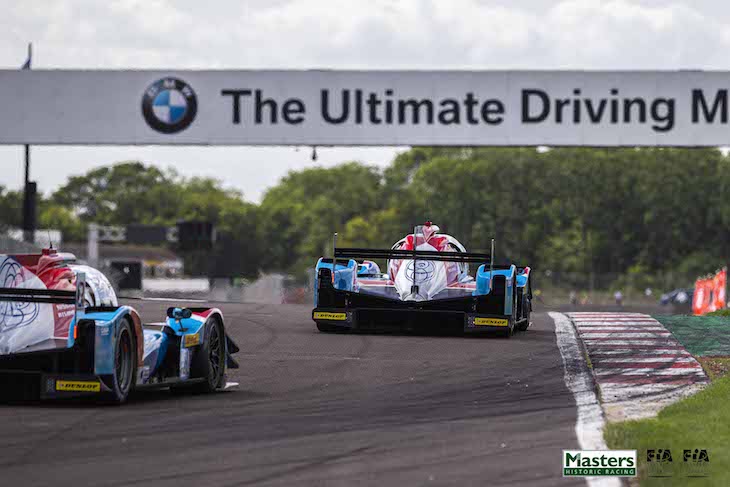
“Compare that to the endurance cars when we took them to support the ELMS in 2019 and the cars just go round and round quickly and with no restriction on performance. So the value for money that a competitor can get at a track like Monza is clearly way, way better with the Endurance Legends cars.”
The other major selling point that I have heard from competitors in these cars is the safety aspect, that these cars are far and away safer than just about anything else currently on the historic racing scene?
“There is no doubt that the modern cars are tremendously strong and safe, perhaps not ultimately as directly involving as some of the older cars but that trade-off also means that in the endurance car you can push harder and for longer to get faster.
“Again as a for instance, after 20 minutes in my F1 car (a 1977 LEC) I feel as if I’ve gone 10 rounds with Anthony Joshua. 30 minutes in a modern GT car and, although I’d had a huge amount of fun, it was nowhere close to as physically demanding.
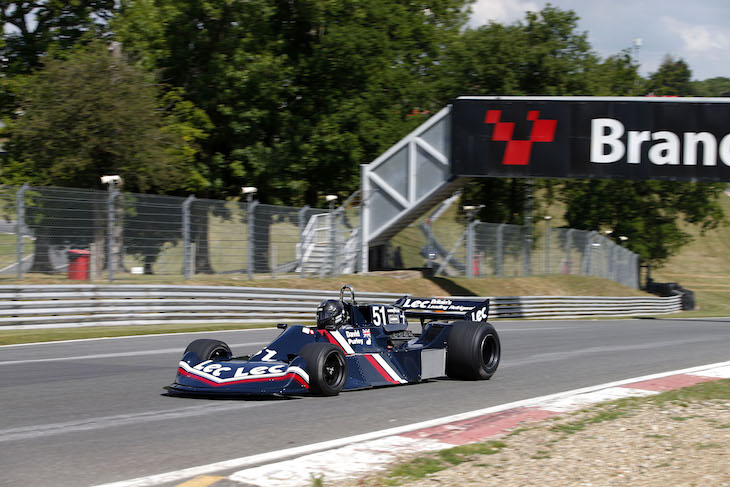
“And, there was far less to worry about. In an older car, you worry about all sorts of thing, you’re absolutely terrified that you’ll over-rev it on a down change. There are all sorts of things to be concerned about. And so you’re concentrating more on preserving the car and less perhaps on lap times and actual racing, but in the modern car there is just more opportunity to try and improve my driving and my racing lines because there is less of that to worry about.”
There’s another potential upside here isn’t there, the possibility of attracting new blood into historic racing?
“Quite naturally there is a reducing number of people interested enough in the cars that I was enthusiastic about when I was younger to want to race them.
“That’s both a challenge, but also an opportunity as we now move into racing cars that are part of the personal history of a younger generation and that gives us a real chance of attracting a younger clientele into our paddock.
“If we can achieve that then I can start working on some of them to take a look at the older cars too!”