

Following a challenging debut for the new Porsche 963 at the Rolex 24, where mechanical woes cost the team a shot at victory, the car’s performance at the ‘Super Sebring’ doubleheader provided the Porsche Penske operation with plenty of reasons for optimism.
Had the end of the 12 Hours not been interrupted by a multi-car pile-up that left both the cars severely damaged, Penske Porsche’s #6 could well have won the race, as Mathieu Jaminet was leading with just minutes to go before the incident with the Wayne Taylor Racing Acura.
There is plenty to build on going forward, for what is set to be a multi-year factory commitment featuring parallel IMSA and WEC programmes plus a sizeable customer racing set-up on both sides of the Atlantic.
But will the cost of racing in the new formula prove problematic for factory and private teams alike in the future?
Jonathan Diuguid, the head of the Porsche Penske Motorsport operation admitted in conversation with DSC that the budget required to go racing with an LMDh chassis costs more than was originally anticipated. He is however encouraged by both the new era of sportscar racing and the progress of the 963 as a platform, as the biggest race of the season at Le Mans in June approaches.
The progression of the LMDh and LMH rulesets in terms of performance and cost is going to be something to keep a close eye on in the coming months and years. For now, it is still early days.
To find out more about this historic programme, which Porsche will use as a platform to score a historic 20th overall win at Le Mans, DSC spoke with Diuguid and discussed the car’s progress, LMDh budgets, the relationship between Penske and Porsche and more…
Let’s start by talking about the WEC crew, which has come together later than the IMSA outfit. Tell us about the formation of the team. Is the crew made up entirely of new hires?

“Yes the team is new and was only able to run together for three days in Portimao before Sebring. Obviously, we have a lot of individuals that are part of the testing programme, but this is the first time they’ve worked as a team and a group. So after the Prologue, that was just five days. So it’s quite early.
“But everyone’s working really well together and, and starting to gel. So the experience is just building with time. And we’re where we think we should be right now.
Everyone’s working really well together and, and starting to gel
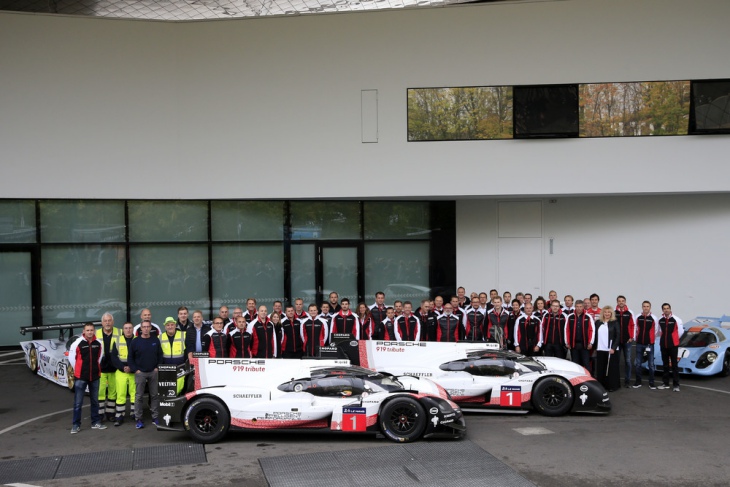
“I think between the two programmes, our team is around the mid-80s, personnel, I would say 15 to 20 people came from Penske. And then the rest are new hires from different programmes that all of us have been exposed to. Anything from F1, to IndyCar to NASCAR, all over the place.
“So we’re kind of well represented from a lot of different racing backgrounds and a lot of different teams and, you know, we have different opinions on how to go racing. And so it’s really bringing that group together to figure out the best way to solve the problem that’s the biggest challenge.”
How confident are you in the car’s reliability now, as we edge closer to Le Mans?
“I think we I think we’ve addressed some of the reliability issues that we had in Daytona, you know, specifically the gearbox, and then the hybrid issues. So if I looked at those three main issues that we’d say were 60-70% better, but, you know, obviously, anything can come up at any time. But in general, every time the car runs, we’re making steps to improve reliability and build perimeter cars.”
What are the 963s biggest strengths?
“I think right now, we’re still trying to understand how to make the car happy in all conditions. I think our mid-corner speed and our traction out of the corners is pretty good. Right now we’re continuing to work on the braking performance. And then, you know, with the straight line speeds that we’ve seen, I think we’re kind of middle of the pack, with, with the LMH cars, being slightly quicker.”

How different are the Porsche 963s in IMSA to the WEC? How much work needs to be done to prep them if they switch championships?
“I would say that the core components of the cars are the exact same. It’s more of the FIA logger versus the IMSA logger and the FIA timing system versus the IMSA timing system. And so there are some small differences. But, I would say of the 100 per cent of the car’s wiring I would say that the changes are 15 to 20% of the systems.
How are you going to manage the third car with the IMSA crew that will join the WEC operation at Le Mans? Can you prep the car in a day or two?
“It’s definitely not a day or two I would say I’d say to properly prepare and go through and check everything we’re probably talking three to five days, so almost a week. But we haven’t done it yet.

“And in terms of expense, being able to do this means it’s a lot less expensive than in the past! But, you know, the additional cost is the fact that the WEC car already has IMSA electronics. And so we’re having to purchase or rent or lease another kit of FIA electronics, but that’s sort of the cost of entering the race. So I wouldn’t say it’s extremely difficult.”
Relative to an LMP1 budget it’s significantly less expensive, but there has been a lot more development cost than I think everyone anticipated.
When these regulations were first revealed, it was clear that there was a drive to prevent costs from spiralling out of control as they did in LMP1 Hybrid. Now we are here, has that worked? Can you go racing at the top of the WEC at a fraction of the LMP1 budget?
“I think that, you know, the development process is you is probably on the heavier side than everybody intended, because of parts, reliability and of course general development. Relative to an LMP1 budget it’s significantly less expensive, but there has been a lot more development cost than I think everyone anticipated. Hopefully, that’ll stabilise over the homologation period of the car, to where there’s very close to the targets posed for budget control.”
Now we’ve seen some racing, how satisfied are you with the route Porsche has chosen? We’re now seeing LMH and LMDhs share the same track, do you feel it was the right decision to build a car to the LMDh regulations as opposed to LMH where you would have had more freedom to build a car from a blank sheet of paper?
“Yeah, absolutely. I think, you know, obviously if you control everything in-house, your reaction times are probably a little bit quicker. But it comes at an additional cost of personnel and equipment and approach.
“I think there are pros and cons of both approaches. I’m quite happy with the approach of course because I’m part of it. And I’m part of making it successful. I think that the formulas have produced the results, it’s worked and ensured OEMs can choose the route they want to take and take cars to go race competitively. So I think in that, in that aspect, it has been successful.”
And how has the relationship between Penske and Porsche been so far?
“It’s quite open. I think, you know, we have engineers embedded in Porsche Motorsport, and vice versa. And, you know, the technical staff at the racetrack has open communication all the time and an open book. And we use big facilities, whether it’s driving simulators and other things. It’s really a global partnership, it’s a true 50/50 partnership, and we’re here to be successful together.”
Featured image courtesy of Porsche


