


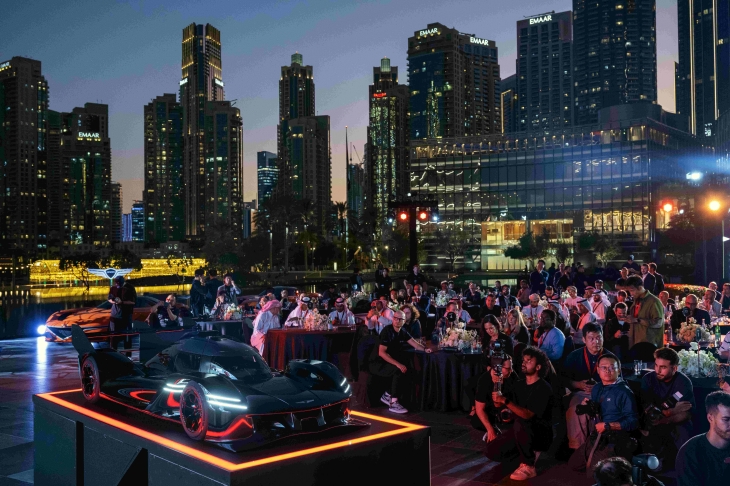
Last night’s Genesis Magma Racing Hypercar programme launch in Dubai was a sight to behold.
Held at the base of the Burj Khalifa – the world’s tallest building – the presentation was both stunning to look at and pretty symbolic, as everyone involved in this bold new race programme clearly believes the sky is the limit.
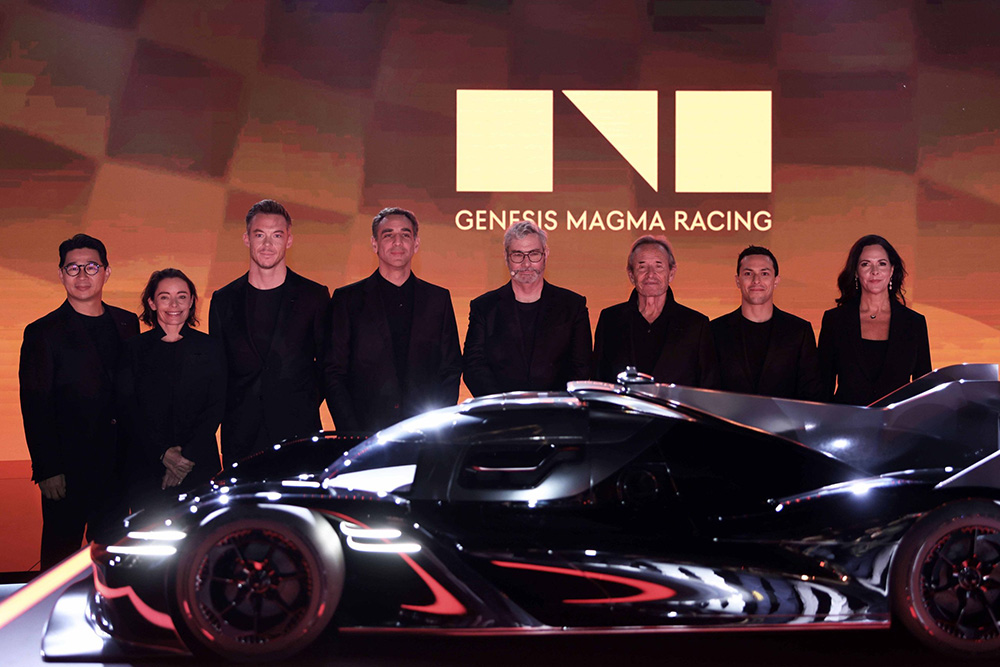
After taking the wraps off a scale model of the WEC and IMSA-bound GMR-001 and sharing the main vision for the programme, Genesis’ senior management and drivers, plus representatives from partners ORECA and IDEC Sport, spoke at length to the media.
Perhaps the most important soundbite came when DSC asked Cyril Abiteboul, the Genesis Magma Racing team principal, how committed Genesis is to the Hypercar formula.
Choosing to join the party multiple years into a regulation cycle was always going to be a challenge, but he stressed that Genesis is coming because it intends to be in this for the long haul. He pointed towards parent brand Hyundai’s longstanding WRC programme as an example.
“Absolutely!” He said when asked if Genesis was committed through to the end of the regulation cycle, which was extended earlier this year through 2029.
“In WRC we’ve had 12 years of continuity. When we enter something, we do it to make it work and secondly, with stability. We know that performance takes time to develop.
“We are not here to do one thing and move on to something else. We are here to stay, to do a good job, to be competitive and build up the narrative. If you switch your programme every year or every other year you don’t build.
“We are building a race team in Paul Ricard, moving facilities in the Frankfurt area to one that is a better fit for this type of programme. So moving more than 200 people, you do not do that for a short-term programme.”
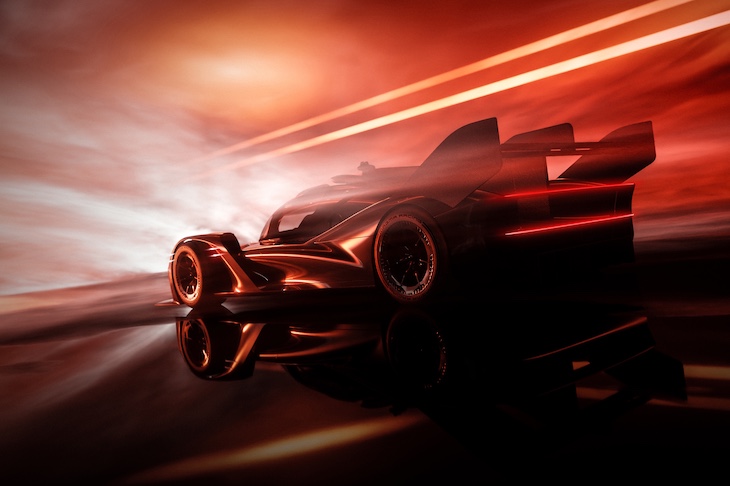
To get this project off the ground in rapid time, Genesis has opted to go down the LMDh route rather than LMH. This allows it to lean heavily on its partners for expertise and utilise a twin-turbo V8 engine based on Hyundai’s WRC unit as a “shortcut”.
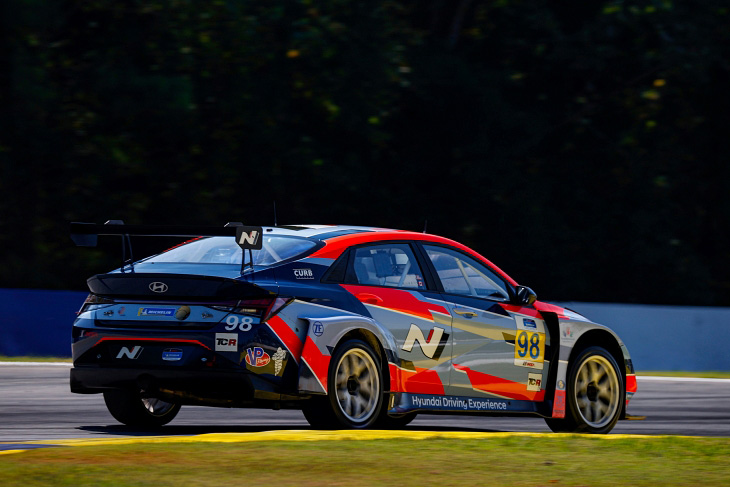
“We looked into that (LMH). We need to be humble, pragmatic and realistic about the learning curve. We are not strangers to circuit racing because we do TCR, but the difference between that and prototype racing is big,” Abiteboul explained.
“So we need to start with a set of regulations that is most accessible. Maybe in the future, there will be another step, but it’s all about taking the right step at the right time.”
A two-stage approach has also been adopted, which will begin in 2026 with two cars in the FIA WEC Hypercar and grow in 2027 with an additional pair in IMSA GTP.
ORECA founder Hugues de Chaunac feels the decision to begin in the FIA WEC and expand to IMSA a year later is a sensible one. “One of the key points of the WEC is the Le Mans 24 Hours, and it’s one of the biggest targets,” he said.
“The dream is to win Le Mans, so to start with the WEC I think it makes sense. To win Le Mans you need two years minimum to understand everything, so it’s the normal choice to start with WEC in year one.”
This is a project that was green-lit at the 11th hour. Remarkably, it wasn’t signed off until September 1st this year, meaning everything has to come together, from scratch, in just 16 months to make the 2026 FIA WEC season opener.
On stage during the presentation, Luc Donckerwolke (below) – the Hyundai Motor Group’s president and chief creative officer – revealed that his vision for this project was first shared 18 months ago, when he invited Abiteboul to his design studio to discuss his dream of having Genesis race at Le Mans.
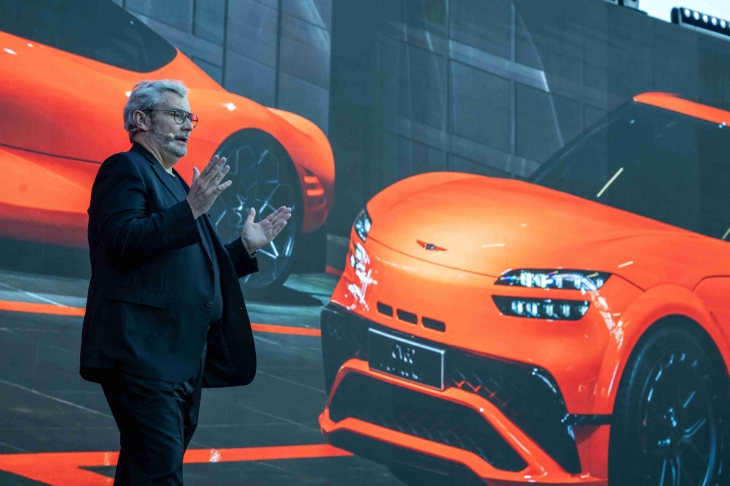
Formula 1 was “talked about”, Formula E was on the table too. But in the end, a top class endurance racing programme was seen as the most suitable route to achieving the young manufacturer’s internal goals.
“Two months ago, I pitched the idea to our top leadership about entering endurance racing,” he said. “In three days, including a weekend, I got approval for what could become a defining moment for a brand.”
“We introduced different categories to the board and explained the level of investment,” he later explained. “And it was the point of no return, either we start, or we don’t do it. It’s now that we had a slot to enter, with this calendar and level of investment. The answer was ‘yes’.
“We’d already been discussing with Hugues (de Chaunac) about how to do it and I’d sent my team of designers to him before the decision. So I had to do it, I told them to go flat out. It was a strategic decision.
“It is very important for us to race and to get a return on investment. I don’t mean on marketing, I mean on technological know-how and inspiration for design. That’s why we are motivated to enter this category of motor racing.
“It’s technology, aerodynamic research that’s more applicable than open wheel racing. This is why we believe in endurance. And we want to make sure we have a step between normal products, the Magma products – which is high performance – and motorsport.”
2025 is set to be a crucial year. Not only will Genesis be developing its car at “hyperspeed” – with the engine set to hit the dyno in February before track testing gets underway during the summer – but it will also need to make a number of other key decisions.
One of those, which according to Abiteboul will come in the first half of the year, is a final call on which team it will partner with for its effort in IMSA.
“Frankly,” he told DSC, “we were in Petit Le Mans (back in October) having discussions with interested parties. We understand that they would like to know as early as possible. But we have a bit of time, it’s an important choice. We want to make the right choice. It’s a decision to be made in Q2 of 2025, that’s a timeline we have shared with most of the people we have met. It’s workable for everyone.
“The one thing we really want is people with experience of the IMSA championship. I would feel much more comfortable. Prototype experience is not a must. It’s going to be down to a cultural fit. We want a one-team approach, with everyone talking to each other. I want a partner who is prepared to embrace what we are doing in WEC and build something.”
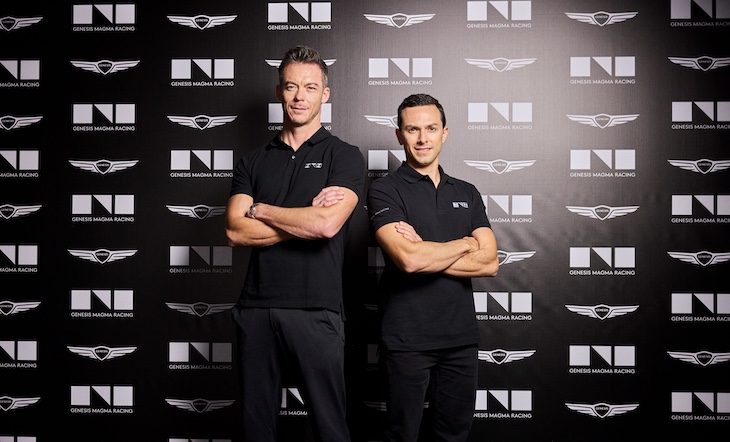
It will also need to sign up more drivers to race alongside sportscar veterans Andre Lotterer and Pipo Derani, who became the first to be confirmed last night.
Might we see one or more of the drivers from the ELMS squad it has assembled with partner IDEC Sport – Logan Sargeant, Jamie Chadwick and Mathys Jaubert – step up?
“We have multiple choices of endurance drivers, lots of them who deserve it,” Abiteboul said. “But we wanted to give an opportunity to drivers who may not normally be considered. We are assessing the combination, it’s an expression of what we want to do in the sport.
“But we have to recognise that we are just three months into this process. It’s in their hands, it’s up to them to show what they are capable of doing in fair conditions. We want to offer them a fair chance to prove their worth, whether it’s a reserve or race job, who knows? It could be a one or two-year plan, we don’t know…”
It’s full steam ahead, then. With a chassis partner selected, a car concept being worked on, an engine solution found and the foundations for a head-turning driver-crew laid, Genesis looks well-placed to become a key addition to the Hypercar and GTP grids.
This is certainly a significant moment in sportscar racing history, and who knows where it will lead? One element of this venture which shouldn’t be overlooked is how much pride everyone involved feels to represent Genesis and – crucially – South Korea on the world stage for the first time. The mission is to build more than just a brand, it’s to create a legacy.
“When I arrived in Korea nine years ago, my first question was, when the next race was, where was motorsport, where were the tracks,” explained Donckerwolke. “Everyone was looking at me like I was from another planet. I discovered that motorsport was not a strong culture in Korea.
“So one of my secret goals is to contaminate the Korean people for motorsport. Now, by competing in one of the best classes, I expect to create an enthusiasm for motor racing and get to a point where we will have Korean drivers being trained and in racing.
“It’s really important for us.”
Images courtesy of Genesis & IMSA


