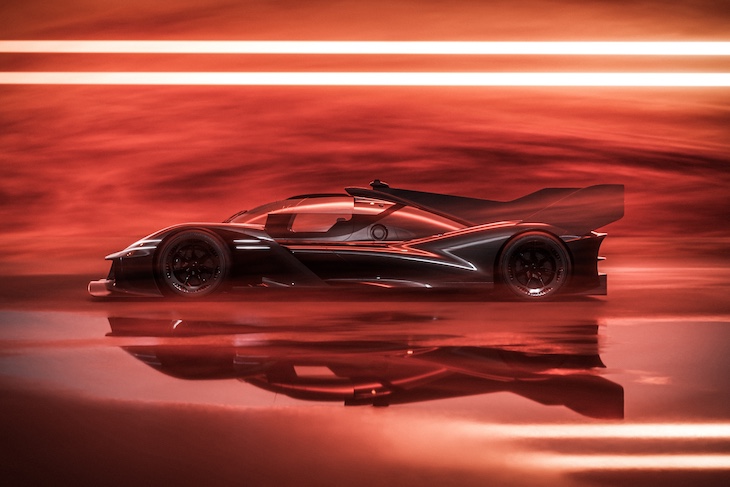
2025 is set to be a huge year for the Genesis brand and its forthcoming sportscar debut in the FIA WEC, as it pushes to develop and test its GMR-001 LMDh prototype ahead of homologation.
The car’s twin-turbo V8 (based on parent brand Hyundai’s WRC unit) is set to be dyno-ready in a matter of weeks, its race base at Le Castellet scheduled to open for business in Q2 and track testing due to begin in Q3; it’s full steam ahead.
With everything coming together apace for the young Korean brand’s ambitious project – which will see it compete on two fronts (FIA WEC and IMSA) in the coming years – DSC sat down with Hyundai Motorsport’s technical director François-Xavier Demaison to discuss the technical side of the programme.
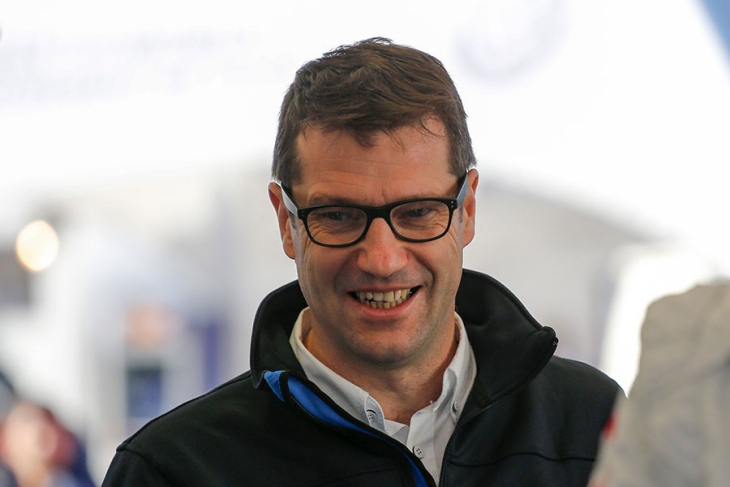
The conversation was wide-ranging, covering the test plans, engine choice and the likelihood of Genesis signing up to compete in the ACO’s planned Hydrogen category at the end of the decade.
What are your general thoughts on the ruleset and the challenges it presents when building up a programme like this with a manufacturer new to sportscar racing?
“The big challenge is to build the team because we have a technical partner in ORECA. We use their spine which is homologated and the style comes from our styling department, so it’s our responsibility to adapt it.
“The powertrain is a big challenge too. We have a short timeline to build a team to make the best software possible and the most reliable hardware for the engine as possible and to race the car in the best way.”
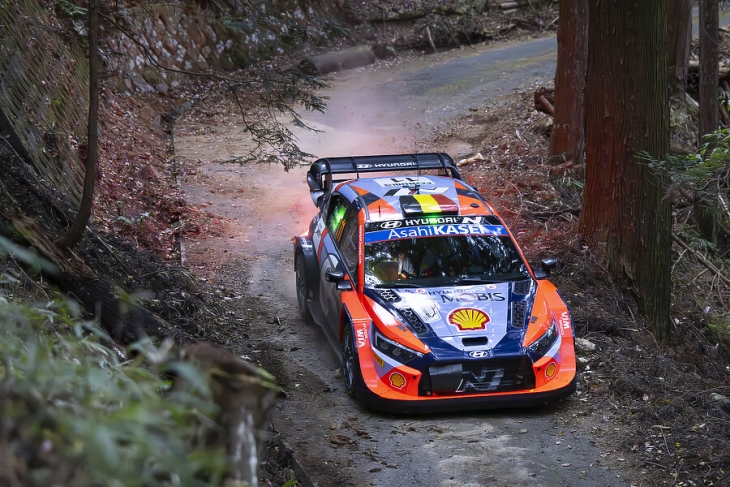
Was utilising the in-line 4 unit from the Hyundai WRC programme as a base for the GMR-001’s twin-turbo V8 always the obvious choice?
“There were more options but that was the only one which fitted in the timeline. It was the main reason. We didn’t have time to make two loops on the engine development so we had to shorten the process as much as we could.
“Reusing parts that we knew would not introduce any issues or risks, because we need an engine to start in February on the dyno and then run without any problems. So in the end there was only one choice to use the base of the WRC engine and put it together into a V8.
“The choice was the capacity, which was 400 cc, so if you multiply it by six it’s 2.4 litres, which is not enough, you have to push it too much to make the required 500 kilowatts. So 3.2 litres was a better choice.
“For sure we would have preferred to use a V6, mostly for weight reasons, but it would have introduced too many question marks and risks for homologation.
“It’s twin-turbo. This was a choice that was made for drivability and it’s the easiest option. If you’re not forced to have one it’s better to have two. If you have one the position in terms of centre of gravity is not that optimum. You have the hybrid but it’s better to have a twin turbo. If you lose one you also have one to finish the race!
“There are some parts which normally need a validation process, like the valvetrain, the pistons, the conrods, the piston rings, all these parts will be 1 to 1 and for sure we have to redesign the cylinder head. We just want to minimise the number of parts to be fully redesigned and signed off to have an engine ready in time for the project.”
Do you feel it’s a benefit to join late because other LMDh manufacturers have already done the hard yards with the spec hybrid system from Bosch?
“We will benefit from that, it’s a positive. You can see what the others did and benefit from their experience.

“In terms of pure integration, it’s quite straightforward. For sure the software, the blend between electric power and IC power, is a much more complicated topic and if you can just concentrate on this it’s less of an issue. We all know it’s a common hybrid, not a bespoke one.”
The base unit for the GMR-001 has of course been paired with a hybrid system in WRC competition, so that’s surely something that will help you get up to speed too, right?
“For software, we have this experience. We don’t start from scratch when we start to write the software. The blend of both energies is a known aspect for Hyundai Motorsports. The torque limitation is a bit new, but the rest is known parameters.”
What will the technical team look like? Is it going to be solely personnel from the Hyundai WRC programme, or are you building up with new hires too?
“We really want to benefit from different experiences and cultures so we are recruiting people with various experiences in powertrain, like we do for chassis and the race team.
“There will be people well-known in WEC or Formula One joining us in the future.”
What will the track testing programme look like?
“We are in constant discussion with IMSA and the ACO to plan the homologation and they have a clear process. We are well into this known process.”
Will all the testing come in Europe before homologation or will you venture to the USA as well?
“We will be testing there (USA), but I’m not sure it will be before the homologation. I think we will go there, but we’ll go testing during 2026 to be ready for 2027. That’s the target at the moment.
“With the timeline we have it’s difficult to have cars to test in the US, to do wind tunnel testing and to do testing in Europe with two cars. At the moment it’s mostly Europe and at Le Castellet as it’s where we will be based.
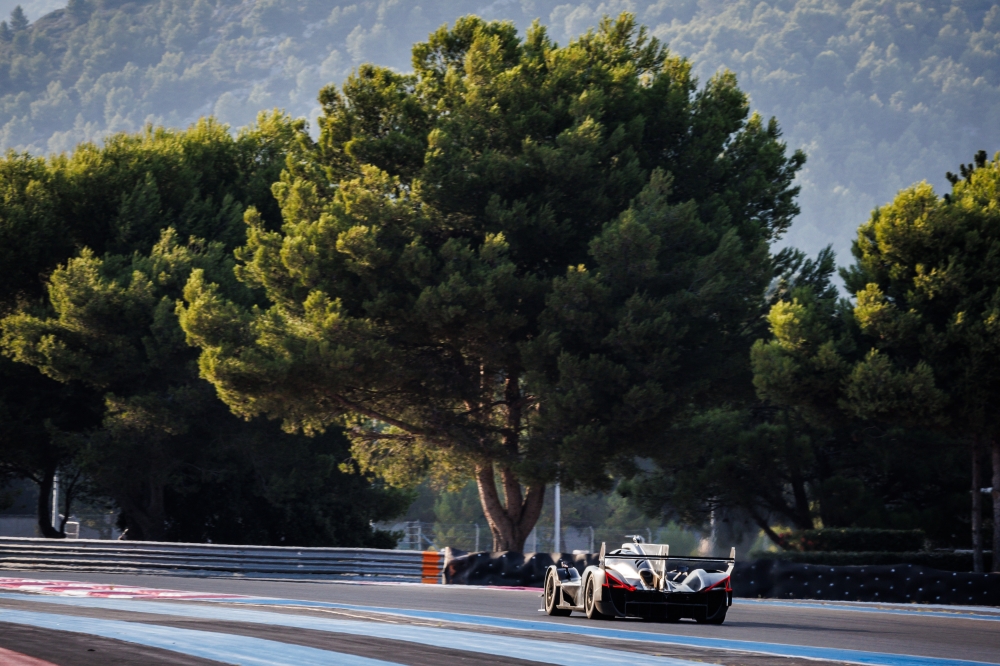
“It’s good to be close to a circuit where we can go and test and even spend two hours at the end of the day to sign off new software, spend the night to implement changes then test the next day.”
Do you have a figure for mileage or hours you’d like the car to achieve on track before homologation?
“For the engine, we will go through this. We have a validation process based on what we expect to do with the engine. It’s different for the chassis because it’s a known product. The sign-off for all the chassis parts aside from bodywork is already done.
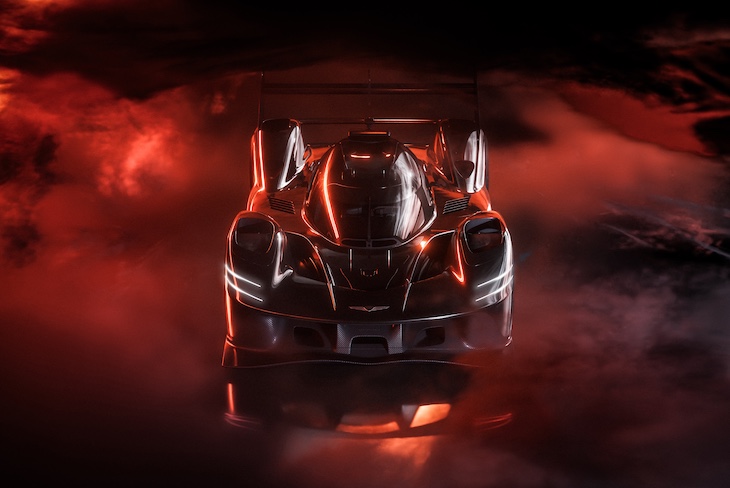
“It’s a proven solution. It gives us flexibility and we don’t have to sign off on the transmission and the chassis. And a lot of validation of the engine will be done on the dyno.”
Genesis appears to be in this for the longer term. How do you see the transition to hydrogen regulations at the end of the decade? Do you have one eye on that too at this early stage?
“Hyundai group is not really into ICE and liquid hydrogen, which is the choice of the FIA for various reasons. So it’s not a must for us today.
“To be honest we have so much to do to get into that new field and business that we will look at it. But really, I can tell you we will not be the first one to start with a hydrogen car in Le Mans, it’s not our goal.”
Is a further extension to this (converged LMDh & LMH) ruleset something you’d welcome then?
“I think that hybrid for many years is the best way for racing, and mobility too.”
Images courtesy of Hyundai, Genesis & Alpine