Lamborghini Squadra Corse’s newly-appointed motorsport boss Maurizio Leschiutta’s intray is filled with pressing matters to tackle in his first year on the job.
Following up on the brand’s most successful GT3 season to date with the Huracan GT3 EVO II and overseeing the development of the Temerario GT3 ahead of its debut in 2026 are surely near the top of the list. But perhaps the most pressing issue is mapping out the development programme for the SC63 LMDh, and, ultimately, its fate.
During the Rolex 24 Hours at Daytona, Leschiutta, along with Rouven Mohr, Lamborghini Squadra Corse’s technical director, and Stephan Winkelmann, the company CEO, spoke to select media – including DSC. Unsurprisingly, the roundtable’s main topics centred around the SC63, following its early exit from the race with cooling issues.
After a troubled first season in 2024 with single-car entries to the FIA WEC’s Hypercar class and IMSA’s GTP class for four Endurance Cup races, the SC63 effort has been scaled back for 2025 to just five IMSA races.
Lamborghini “evaluated” stepping away from both championships entirely this year to focus on development. But in the end, despite the restrictions on testing that come with running a race programme, the decision was made to keep the IMSA effort going due to “a commitment to IMSA and (President) John Doonan”, and the importance of the US market (it’s Lamborghini’s biggest).
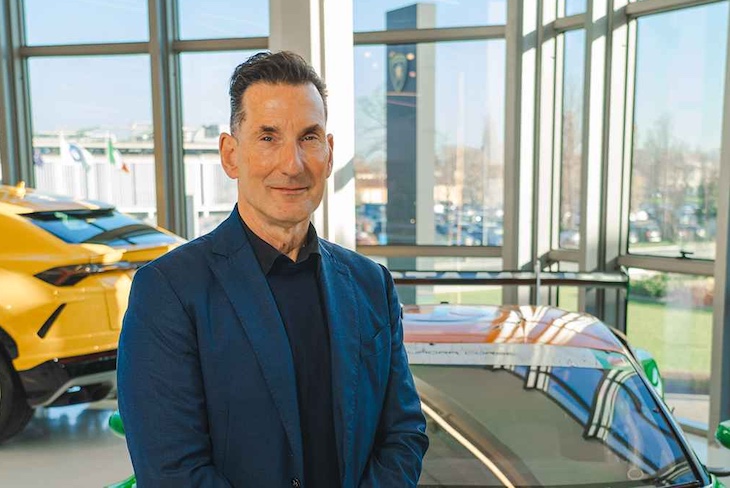
“When you’re testing you’re always in first place,” Leschiutta (above) added. “It often generates a false sense of security thinking that you’ve done better.
“The only time you measure improvements is when you measure them against the field. We have to strike a compromise.
“We want to support IMSA and IMSA gives us visibility in a marketplace that’s important.”
Iron Lynx is also out of the picture, following a split “due to misalignment on certain topics” with the Italian sportscar brand over the off-season and Riley is in for the year, as an operational partner to assist the development work and racing.
So what’s the long-term vision for the car? Lamborghini has opted to use 2025 as a chance to regroup, bring the car’s development in-house and push to make it competitive in the future.
As a result, Evo ‘Joker(s)’ are planned for, and could be introduced as early as mid-season in 2025 subject to the rule-makers permitting the changes. These will aim to address some of the car’s shortfalls in “vehicle dynamics, suspension and aero” as well as its weight.
Crucially though, Lamborghini is not dead set on a swift return to the FIA WEC’s Hypercar class – where it would be required to compete with two cars as a factory by regulation. In fact, it’s not planning to race the car as a factory at all beyond 2025.
“I would not exclude it (WEC), to be honest, but it depends strongly on the boundary conditions and how fast we are on improving the car,” Mohr explained.
This year, we decided to run the car under our umbrella. We want full control of the development of the car,

“This year, we decided to run the car under our umbrella, Squadra Corse. It’s mainly related to the fact that we want full control of the development of the car. Last year we saw potential so we said: ‘Ok, if we have control we can better manage the performance development.’ It’s not our ambition to be a racing team in the future.
“Our focus is to develop the car, we make it competitive and then the operations are done by a team like in GT3. This will not change, the general philosophy. It’s a special situation because the car is complex and we need to jump in.
“If we go in the next step to enlarge the programme it only makes sense if the car is sorted out and if the performance of the car is on the level that our GT3 cars. Then we can give the car to customers.
“LMDh will never be clear customer racing like GT3, the car is too complicated and also too expensive. But nevertheless, the car has to have a solid base. We will charge the programmes for the future depending on how fast we are progressing on performance development with the car.”
Winkelmann, on the subject of Lamborghini missing out on Le Mans this year as a result of this strategy, added: “Le Mans is a very famous race, it’s very emotional and gives a lot of visibility.

“For us, it was important to be there and be part of Le Mans. We were all very excited, we had a good race. We finished 10th and it was not expected, beating teams that had done it more times than us.
“But we are always between the emotional part of racing and what we are as a company which has to be run successfully.
“We cannot only be guided by emotion. But I’d love to be back at Le Mans as soon as possible.”
So does this all mean Lamborghini is essentially searching for a new ‘Iron Lynx’ to run a programme? Not exactly.
“If the car is ready from the development our ambition is not to run the cars as a factory team,” Mohr (below) explained. “Also in GT3, we are not doing this as we don’t want to race our own customers. The operation should be in the hands of the teams.
“But if we close the performance gap and can give it to customer teams we are open to new teams operating with our support. I wouldn’t say (Lamborghini is searching for) a replacement for Iron Lynx and the Iron Lynx situation.”
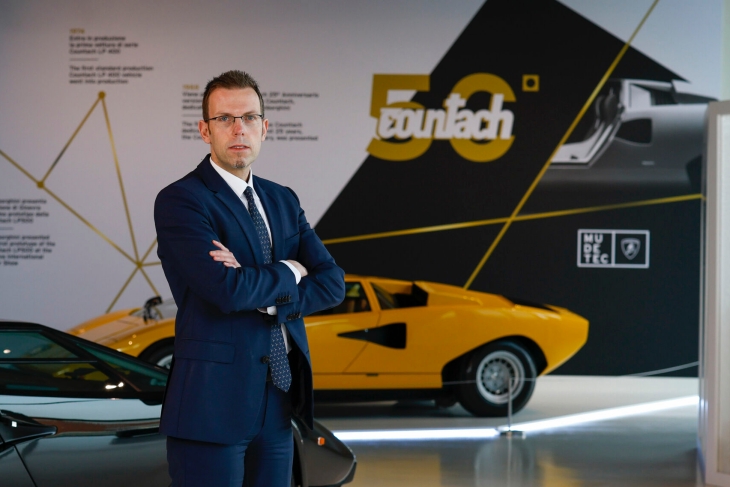
Mohr later skirted around the prospect of a hard stop to the entire project at the end of 2025 if the car doesn’t meet performance benchmarks in IMSA GTP or no customer team(s) are found.
While it’s clear that a contingency plan may be needed, he did stress that he remains confident in the potential for customer interest.
“I cannot say for sure, but I am confident. Last season we had some requests,” Mohr said when asked for some thoughts on the customer marketplace for top-class prototypes.
“The market is much smaller, not like GT3. The question is how big the market is and if it’s in the long term you can reach a limit or level that’s close to GT3 not in running costs, but with sponsors and media value and find a package with a balance.
“If we look at other manufacturers, the time will show this. I strongly believe that if there is a growth of manufacturers continuing then most manufacturers are looking for something like this.
“I’m optimistic to find a team or teams.”
What if a customer team had ambitions to race in the FIA WEC with the car though? In the World Championship, Lamborghini would need to have two factory cars entered for the season in order for fully private efforts to be accepted onto the grid.

So is it prepared to allocate more resources to a customer that came forward for WEC and treat them as a ‘service provider’ in a more traditional sense?
“It depends on the package,” Mohr said. “If the car would be competitive and if the car can be operated on a performance level that is sufficient for a team and we only have to support like in a standard case, then we are open, it’s clear.”
Another potential solution which shouldn’t be ignored is a continuation of the Riley partnership beyond 2025.
“Never say never,” Mohr pondered when asked if it could stick around after this season. “Let’s see if during the year if Riley is interested in operating the cars in IMSA next year. Why not? We are excluding nothing but it’s too early.”
With the SC63’s Rolex 24 Hours debut ending abruptly after just 34 laps, four races for the car and 34 hours of racing remain this year for the car before the big decisions need to be finalised.
How will we look back on the programme when all is said and done? The coming months look set to define the narrative…
Image credits: Jack Webstier, Andrew Hall, Audi AG & Lamborghini