It may sound ridiculous on the face of it, but even though the FIA WEC and IMSA grids remain packed with major factory teams and world-class drivers, there’s a strong case to be made that the 2026 sportscar season will be remembered for what happens off track rather than on it.
With major regulatory discussions taking place, calendars being chopped and changed, costs increasing, and significant new cars from Ford, McLaren, Mercedes-AMG and Toyota being developed and launched, it’s shaping up to be a defining year for the medium to long-term future of the top end of endurance racing. But there are questions that need answering at every turn.

Looking first at the WEC, which finally gets underway this weekend in Imola following the postponement of the Qatar meeting in the wake of the ongoing conflict in the Middle East. The way the revised 2026 Balance of Performance system governs the Hypercar class will be under heavy scrutiny all season.
Behind closed doors – because rules prohibit competitors from speaking publicly on the topic – the rule-makers and championship organisers will almost certainly face lobbying from all angles. After three consecutive Le Mans wins from Ferrari’s LMH prototype, the 499P, and a title sweep to boot in 2025, the other factories will use all tools at their disposal to prevent a repeat of last season, and that includes political leverage.

Unfortunately for the powers that be, balancing the field could be even tougher than in previous years. The majority of the factories have brought updates for the 2026 season (some of which have already been in action in IMSA’s GTP class since January), Michelin is debuting a new range of slicks, and Genesis’ arrival adds another brand-new car to the mix. IMSA isn’t in the clear in this area either, after a second consecutive Porsche Penske Motorsport white-wash of the Endurance Cup races in Florida.
If the rule-makers find a way to steady their ships, the chances of the current era remaining healthy well into the next decade improve; get it wrong, and there may be further choppy waters to navigate, beyond the planned departure of Alpine and the ongoing discussions surrounding any potential return for the Porsche 963 to the WEC.
Why? Because later this year, likely at Le Mans, we’re set to hear more about the next phase for the converged Hypercar and GTP ruleset from 2030 onwards. Discussions between the manufacturers, rule-makers and key suppliers are set to resume and fill the gaps between races in the weeks ahead. The aim is to find a compromise to transition to a single platform (which key sources continue to describe as something close to LMDh) that suits the majority of the manufacturers in play and simplifies balancing the field.
There are, of course, question marks hanging over several key details. Will every car be required to utilise a hybrid system that delivers power to the rear axle? Will a spec MGU-K system be mandated for all, or will manufacturers be given the option to develop their own? Will there be stricter rules on the underfloor design? Will OEMs be permitted to develop their own chassis, or will there be nominated suppliers for the spines? Will Michelin, Goodyear, or a left-field option emerge successful in the WEC’s tyre tender process?

Perhaps the biggest question of all, though (leaving aside the obvious questions on performance balancing), surrounds how whatever comes next affects the life cycle of the current crop of cars. Will any or all of the factories be forced to bring a brand-new car in time for the 2030 rule cycle’s debut? Will it be feasible to adapt the current machinery?
Several manufacturers have raised concerns with DSC about the cost if everyone is required to bring new cars. At the very least, one current factory looks likely to be affected in this area: Aston Martin. There’s already a mandate that all newly homologated FIA WEC Hypercars require ERS systems from 2026 onwards, raising significant questions about the future for the brand and its non-hybrid Valkyrie programme if the Aston Martin THOR team cannot carry over its current concept.
The good news is that there remains a clear sense of optimism surrounding the current discussions. There seems to be a shared vision to address the key talking points and find a solution that works for the majority of voices in the room.
“There’s a real willingness across OEM representatives to work together, but the decisions we’re facing on cost and car life cycle are tough; nobody will get everything they want. The tone in the room is collaborative, even if the topics (hybrid architecture, costs, and how long these cars live) are contentious. Still, I think we will ultimately come to a compromise.” General Motors’ sportscar boss, Keely Bosn, tells DSC.
I think we will ultimately come to a compromise
There is a need to instil confidence in longstanding manufacturers, new entrants, and the evermore serious prospects from the Chinese marketplace that top-class prototype racing in both the WEC and IMSA remains an attractive platform as the automotive market (particularly in Europe) becomes increasingly volatile.
“It would be a real positive of the future regulations if we could have some longevity. There’s a real core of what’s working very well; there’s a reason we’ll see 10 Hypercar teams in 2027, maybe more,” James Barclay, who is leading McLaren’s forthcoming Hypercar effort, adds.
“Evolution would be better than revolution. What’s built up is great ground swell, so keeping the intrinsic parts of that but improving the elements is quite challenging when you have different technical rulesets in LMH and LMDh. If we can create one, it would be fantastic for it.”

On the LMH side of the room, Peugeot Sport’s team principal Emmanuel Ensault admits that reaching a final decision will be tricky, but echoes the general sentiment.
“It’s like anything. Common sense must prevail to build something convenient for all, because everybody has a different agenda. If you are a promoter, the governing body, a car manufacturer, or a private team, the most important thing is to make sure that the general interest comes first and to make the platform stronger.
It’s a world championship and you’ve got different agendas, a different cycle and different timing for manufacturers
“The stronger the platform, the better it will be for manufacturers. A strong platform is good media coverage, controlled cost, a logical way of deployment of the technical regulations – it’s a mix of many things, so that’s why it’s hard work. It’s hard work because it’s a world championship and you’ve got different agendas, a different cycle and different timing for manufacturers.”
The fact that this all coincides with the formation of the next-generation LMP2 regulations for 2028 only adds to pressure on the FIA, ACO and IMSA to make the right calls.
Last weekend in Barcelona, before the ELMS season opener, the FIA, ACO and key suppliers held a behind-closed-doors meeting with the teams. It was used to provide an update on the upcoming change to the formula, which will replace the current ruleset that dates back to 2017. DSC has heard from multiple team sources that the presentation was light on detail but positive, giving confidence that everything is on track.

During the session, Gibson, ORECA and Ligier were given the opportunity to provide updates on their progress. Gibson made it clear that it has been hard at work developing the bespoke 3.4-litre turbocharged V6 with its partner, Nissan NISMO, and the other associated powertrain suppliers, including gearbox manufacturer Xtrac, telemetry partner Control and electronics supplier Bosch. ORECA and Ligier also reaffirmed that they are on track to deliver their cars.
Realistically, testing is expected to commence early next year, before the teams begin taking delivery of new chassis from September onwards. Gibson is thought to be right on schedule, with a stock of its new engines ready for the chassis suppliers for Q4 of this year. ORECA and Ligier, meanwhile, are believed to be in the midst of CFD work.
The technical regulations are not yet set in stone, but key sources have reassured DSC that they are close to completion. The finer details are still being discussed in the technical working group, though the majority of the key topics are supposedly all but finalised.
The tyre size appears set to remain the same as that of the current cars. The rule-makers’ original suggestion that the cars should feature a central driving position has been pushed aside. The upper and lower power levels produced by Gibson’s engine are pretty much in place. A plan for an Adjustment of Performance system to achieve parity between the two chassis is being defined. The target weight is set at 950 kg, with lap time targets broadly similar to those of. the current cars.
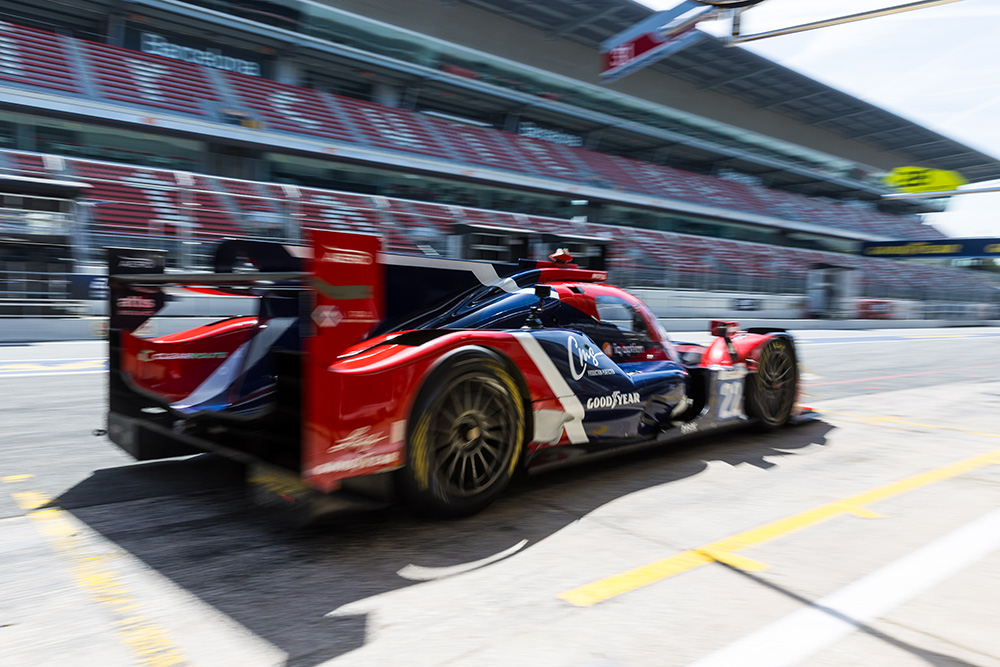
Perhaps the most important final decisions concern the pricing of cost-capped parts, as engine leasing and other parts are expected to see slight increases (between five and 10 per cent) over the current cars, in line with G7 inflation.
The expectation is that by Le Mans, we’ll have more clarity, with the technical regulations moving from a working draft to full publication. Whatever is decided, if 2028 remains the starting point for each series that welcomes LMP2 cars, it will be challenging, but achievable, for the chassis manufacturers and powertrain and electronics suppliers to work within the current timeframe.
There would likely be a sigh of relief heard across the marketplace if IMSA opts to push the introduction of the new cars to the North American marketplace back to 2029. It would give everyone involved additional months of breathing room for production. Should IMSA adopt the ruleset for the start of the 2028 season, cars and teams will need to be ready for the Daytona Sanctioned Test at the end of 2027 and the Rolex 24 in January of 2028.
The impact on the production and delivery schedules for the key suppliers must not be overlooked, though there are, of course, valid opposing views on whether IMSA debuting the cars in year one is the best option.
LMEM deserves praise for acting quickly and sensibly when the conflict in Iran broke out back in February
Before either of the regulation sets debuts, though, there’s the small matter of getting through the current WEC season, which is currently soaking up far more of the organisers’ bandwidth than usual.
LMEM deserves praise for acting quickly and sensibly when the conflict in Iran broke out back in February, shifting the WEC’s Qatar race to later in the season. But the longer the region remains under fire and cut off from airlines and sea freight, the more likely it is that a Plan B will need to be put in place to ensure that we get a full slate of eight races.

Sources within the ACO paddocks suggest that the WEC season, should the Middle East remain a no-go region through the spring and summer, could close in Europe. According to a key DSC source, a final decision on this will likely be made in July, after the 2027 WEC schedule is revealed.
The Asian Le Mans Series’ unpublished 2026/27 calendar is also at risk, lest we forget. LMEM is currently engaged in contingency planning for that, too. Safety and cost are at the top of the agenda as it works out how to proceed and when to confirm its plans.
With Hypercar set to debut and budgets for a campaign that combines visits to Dubai, Abu Dhabi, and Sepang believed to be in the 3.5-5 million Euro range, it remains to be seen how healthy the entry would be if the travel schedule were more ambitious. Thus, radical solutions are likely to be put into play if the Middle East still looks like a non-starter through the summer.
Like sportscar racing’s outlook over the next decade, its success or failure may well hinge on the decisions made in the coming weeks and months.