In a recent discussion over a pint or two of ale, regular contributor Ian Wagstaff and Features Editor Paul Truswell remarked what a shame it was that Formula 1 has so little to do with motor sport these days.
In this article, Wagstaff reflects on the past and wonders how it came to this.
Here at Dailysportscar, we are keen to hear your views on this matter, so we’ll be canvassing opinion in the weeks to come as the racing season degenerates into the awards season and then to the season of the 2014 launches.
The BBC’s web site headlines the following ‘sports’ on the banner of its sports page: Football, Cricket, Rugby Union, Rugby League, Tennis, Golf and ‘Formula 1’. That’s it, not ‘motor sport’ or ‘motor racing’ but ‘Formula 1’. Surely that is akin to saying ‘World News’ is confined to what’s happening in the USA? It reflects the attitude of so-called Formula 1 fans who raise themselves from their armchairs once a year to attend the British Grand Prix and probably think McNish, Kristensen and Duval is a pop group. Where are they when the World Endurance Championship is at Silverstone? Given that sportscar racing was once considered the equal of Formula 1, where did it all go wrong?
It was not always thus. John Surtees recalls that when he joined Ferrari in 1963, its main emphasis was on its sportscars. His first testing job was to pound round and round Modena driving a new V12 mid-engined car that would eventually become the 250P that gave Ferrari its seventh victory at Le Mans. The Formula 1 programme was of lesser importance and could wait until that was sorted.

For the car manufacturers in the decades just after the war, the unique nature of endurance racing was a more obvious place to show off their technological expertise. Mercedes-Benz’s supreme efforts of 1954 and 1955 were just as much about its sports cars as its Grand Prix team. If there is one race that we recall above all others from that period it must be Stirling Moss’s victory in the 1955 Mille Miglia driving a 300SLR. Ford was already a Le Mans winner before its name began to appear on Cosworth DFV Grand Prix engines while the aforementioned Ferrari was serious about winning the World Sports Car Championship right from its inception in 1952. Formula 1 was just part of the motor sport mix, with endurance racing as important, if not more so.
Endurance racing was the very foundation of motor sport. The winner of the first genuine race, Emile Levassor (Panhard) took 48hr 04min to get from Paris to Bordeaux and back in 1895. Grand Prix racing is a mere whippersnapper dating back only to 1906. There were times in the early days when it was difficult to tell the difference between a Grand Prix car and what we now call a sportscar. Both had two seats and it was a simple matter to remove the cycle-type wings. Sometimes it is tricky to work out just what type of car the great races such as the Targa Florio or Tourist Trophy were for. By the 1930s though, Grand Prix cars had finally become single-seaters and Le Mans was establishing the type of sportscar racing that we know today, even if initially, all but the smallest cars in the race had to have four seats.
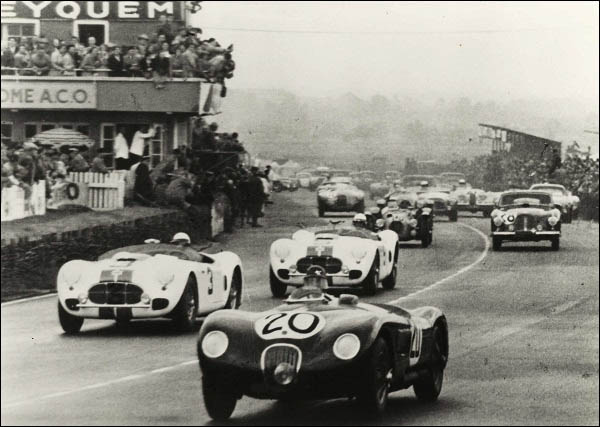
Sportscar racing’s unique identity started to become diluted as safety factors brought about the end of the charismatic but lethal challenges that had made up much of the early World Sportscar Championship. During the 1957 Mille Miglia, Alfonso de Portago, goaded by Enzo Ferrari and desperate to stay ahead of Olivier Gendebien refused to stop to change a broken shock absorber that was causing a tyre to rub up against the bodywork. The accident that resulted caused the deaths of not only the Spanish nobleman and co-driver Ed Nelson but also nine spectators. The race founded by Count Ayrno Maggi was consigned to history. The equally fabled Targa Florio was to follow in the 1970s while the Tourist Trophy had long left the winding and public roads of Dundrod to cross the Irish Sea for a flat Sussex airfield that had once been RAF Westhampnett. With the exception of Le Mans, the endurance racers seemed to be competing on similar circuits to the Grand Prix brigade.
Sportscar racing still appeared to be up there with F1 with many of the same drivers competing in both categories. Fans would still appear in their droves to witness the Porsche 917s even when the weather was appalling, witness the spectator bankings in any photo of the Brands Hatch BOAC races.
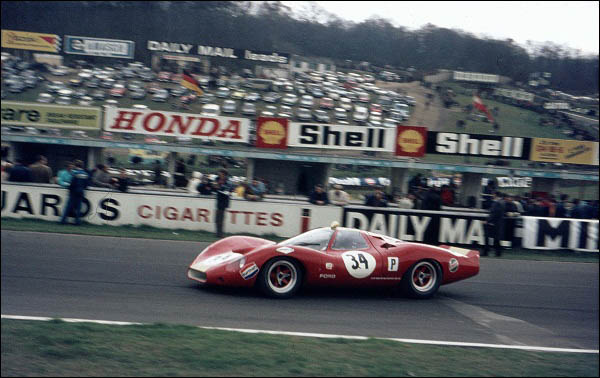
The passing of the 917s and Ferrari 512s did see a dip in interest but in the 1980s there came Group C, which, despite concerns over its economy-run nature, proved to be one of the greatest periods in endurance racing. By 1989 there were six major car manufacturers competing for the top honours: Mercedes, Porsche, Jaguar, Nissan, Aston Martin and Toyota. Today we consider ourselves blessed if there are two and there have been times when the motor industry has left Audi to itself in the playground. By this time Formula 1 had become very big business indeed and could brook no competitor that might syphon off not only money but also the attentions of the vehicle manufactures. Sportscar racing must have been seen as a threat to the dream of F1 world domination that was surely in the mind of Bernie Ecclestone. What happened can only be described as a cynical move. It was one that placed the F1 World Championship firmly on a pedestal to the point that there are many unaware that motorsport exists outside of its protected world. Crudely put, the FIA castrated endurance racing.
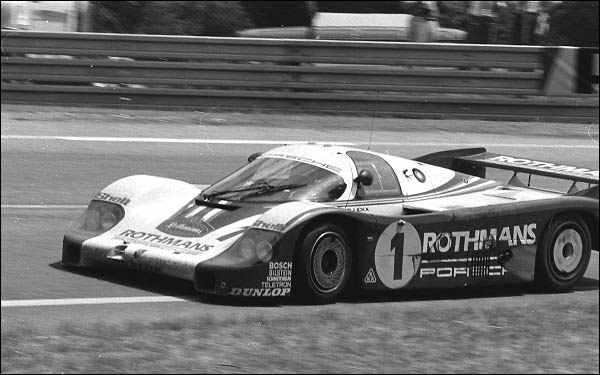
Engine sizes were reduced to 3.5-litres, which just happened to correspond to the then F1 regulations. Races, with the exception of Le Mans, were reduced to 430km. You can see where this is going, can’t you? If you are going to make an engine for sportscar racing, why don’t you develop it for Formula 1? All cars had to be entered for every race in the championship with a $250,000 fine for each non-appearance. The exception was Le Mans where you could enter as many cars as you wanted but you still had to be a championship regular. That led to registered teams ‘lending’ entry slots to those seeing Le Mans as a one-off. It was a farce. The old Group C cars were still allowed to compete at Le Mans in 1991 but the first 10 places on the grid were reserved for the 3.5-litre models, leading to the entry of initially front running cars, built for sprint racing, that were never going to get anywhere near the end of 24-hours. A year later only 29 cars turned up and the campsites were deserted. Formula 1, with, at various times, participation from Porsche, Toyota, Jaguar, BMW and Mercedes, thrived as endurance racing declined.

The 1990s saw an attempt to identify it with GTs, which may have worked with McLaren’s Le Mans victory in 1995 but was open to ridicule by the so-called GTs that appeared in the latter part of the decade. At this point we have to thank the ACO, which ploughed its own furrow, oblivious of the pressures from the powers that be. In 1999 the manufacturers seemed to be back in force with BMW, Toyota, Mercedes and new boy, Audi all in contention. Unfortunately, Mercedes, understandably appalled by the spectre of flying CLRs, withdrew from the scene while BMW and Toyota were lured away by the siren F1. One is tempted to ask what happened to that idea and to smile at the fact that Toyota is back.
The fact remains, though, that endurance racing is no longer seen as an equal to Formula 1. The return of Peugeot may have brought about another ‘golden’ period in this century but the spectacular rise in interest in Formula 1, with its saturated television coverage, has not been matched by the sportscar world. No longer do drivers leap from prototype to Grand Prix car and back again depending upon what week it is, with no clashing dates, while endurance racing has surely lost some of its unique nature by sharing the same tracks as the Formula 1 crowd. Only Le Mans and Spa can be truly considered classic tracks and even the latter is yet another venue on the relentless Grand Prix schedule. The days of even Sicily’s Piccolo Circuit are long gone. It is good to see that the Tourist Trophy is being competed for again but it is now held at Silverstone, a poor relation of the Northamptonshire track’s Formula 1 race. Its Isle of Man and Irish days are but dim memories.

A few years ago during practice for the British GP, a Shell Oils manager, seemingly overawed by F1’s opulent Paddock Club, was puzzled by the fact that somebody apparently steeped in motorsport (me) should be so disillusioned by Formula 1. The Shell man was a soccer fan and after some minutes the proverbial penny dropped. As a grass roots supporter, he passionately hated the Premiership. Perhaps, he said, the F1 World Championship was akin to the Premiership in the way that it sucked so much out of the rest of the sport. Quite so: sportscar racing, like admittedly other forms of motorsport, has surely become a victim of this trend. It might be said that Le Mans is an exception but there was a time when the BBC Light programme ran a news item on the race on every hour. Yes, that’s the BBC, which now thinks the sport is called ‘Formula 1’.
Ian Wagstaff