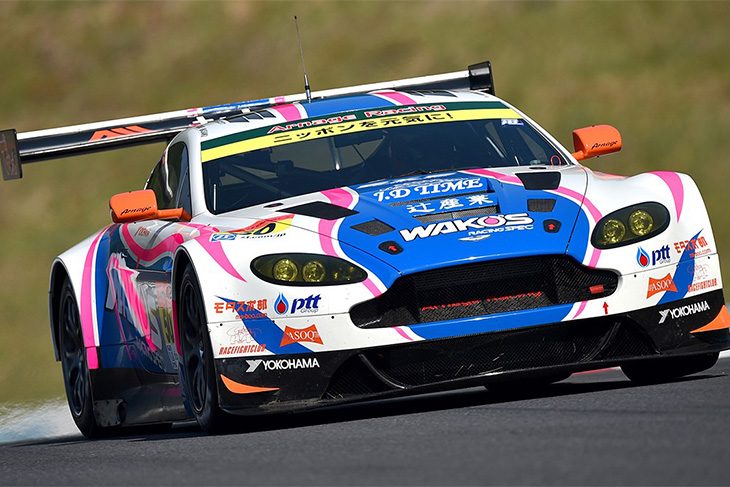
34-year-old Hideto Yasuoka is a driver who embodies the spirit of the independent racer, through a career that’s spanned the better part of 15 years in single-seaters, touring cars, and sports cars. Yasuoka is returning to the Autobacs Super GT Series in 2018 with Arnage Racing, the team for whom he’s driven for the majority of his six-plus seasons in Super GT, after spending most of 2017 out of the racing cockpit.
And on the eve of his first test back in the #50 Arnage Racing Mercedes-AMG GT3, which he’ll drive alongside Masaki Kano and newly-appointed third driver Yuya Sakamoto throughout the 2018 season, we were privileged enough to talk to Yasuoka, who was very happy to be back, full-time, in Super GT.
We resume this bumper feature, at the discussion about the 2014 season. If you missed Part 1, you can check it out HERE.
The dynamic of Yasuoka, who climbed the ladder from karting to single-seaters to sportscars, and his gentleman co-driver Kano, who didn’t have nearly as much high-level racing experience apart from the occasional one-off in the WTCC as a local wildcard, was a strong one, though it was still very clear that there was a significant gap in pace between the two drivers. In order to get another strong result in what was now becoming a pro-heavy GT300 class, they needed strange circumstances to work in their favour.
That July at Sugo, Arnage Racing once again had a chance to start well up the field as qualifying was postponed to Sunday morning, and again, run as a single session. “We started P8, but we did have an unlucky incident in qualifying where I got caught behind another car on my last lap as the track was drying out. I could have started as high as P2 with my pace!”

“And then it rained for the race, and I don’t know if it was a gamble or not, but we started the race as slicks, and everyone else went into the pits at the start of the race. The key to that race is that we were running a softer tyre than others, that or I was able to heat the tyres a lot quicker. By the end of lap 1, we were up to P3 or P4, trying to catch the Dunlop runners and the Subaru on Michelins. After a while though, their pace began to fall off, and as the track improved, we passed the Subaru, and were soon battling for the lead.”
“Then I was chasing Björn (Wirdheim, driver of the Gainer Mercedes SLS) for the lead, and we had this incident that I… regret, a little bit,” he chuckles. “He got a little bit slowed by the GT500s who were passing him. We were side-by-side down the main straight. And at the time, Gainer were second in the championship, so I didn’t think he was going to put up too much of a fight, that was me being too optimistic, then he tried to fight, I got squeezed a little bit, and I slid under braking and made contact with the SLS, which broke their front axle.”
Yasuoka still laments that incident to this day, saying, “I really felt sorry for them, because I thought it would be a clean pass, maybe they could have undercut me on the exit of the corner and we could have kept racing.” The contact resulted in Gainer’s only retirement of the 2014 season, a season in which they lost a championship-deciding tiebreaker to Goodsmile Racing & Team UKYO, tied at 78 points, GSR taking the tiebreaker two wins to one.
“We still had a good lead, though we were worried about the possibility of a puncture from the damage sustained earlier. And from what we knew from Autopolis in 2013, when we had a 15 second lead and lost to the Goodsmile Z4 by 10 seconds, I set a target to build a lead of 30 seconds, so I kept on pushing, pushing, pushing, and by the time we pitted, we had a 34 second lead over the JLOC Lamborghini in second.”
“But in practice, Kano-san had an accident in practice in the wet conditions, so he wasn’t really confident in his driving in the rain. We also had to change tyres, which was not according to our strategy, due to damage on the wheel from the contact, and that also cost us time in the pits. We still came out with the lead, but very quickly got passed by the Lambo… from there on, I was just praying that he could stay on track. We finished fourth, which I still think was a good result.”
“I think I proved to a lot of people that day that I could lead a race in Super GT, and run safely with the GT500 cars on track.”
The first two seasons with Aston Martin yielded a podium and five top-10 finishes. But in 2015, Arnage Racing sold the Aston Martin V12 Vantage, which had started to show its age after four seasons of active GT300 duty. “Thanks to my connections outside of racing, we got in touch with Morris Chen of Team AAI, who sold us a Mercedes SLS for 2015. But we struggled with setting up the car.”
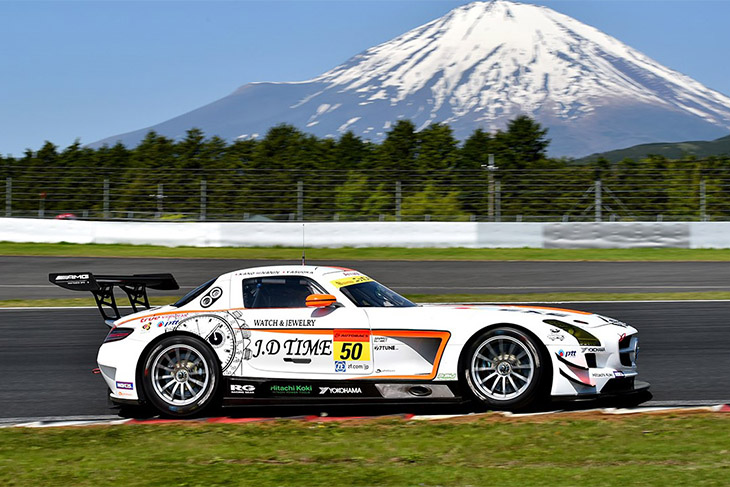
“We don’t test outside of the official test days like some of the big teams, and that’s part of the reason why it took Ito-san, and for myself and for Kano-san, so long to understand the car. We were surprised by the torque of the car, and the car struggled for cornering speed compared to the Aston. It was also harder to keep the tyres alive longer than with the Aston.
“Our strategy with the Aston was very unique for the GT3 runners, we would often go a full 300km race without changing tyres. With the SLS, which has a much harder time maintaining the rear tyres especially, I think we made the mistake of trying to make the tyres last as long as possible rather than focusing on tyre life, so we couldn’t get the pace out of the car.”
Our strategy with the Aston was very unique for the GT3 runners, we would often go a full 300km race without changing tyres
Thus began a two-year slide for Arnage Racing, who failed to score a single top-ten finish with the Mercedes-Benz SLS AMG in 2015 or 2016. 11th at the 2015 Fuji 500km was the best they would manage over the next two seasons. At the same time, promising young Thai driver Nanin Indra-Payoong entered the picture, which made it harder for Arnage Racing to maintain continuity throughout the season, as Yasuoka sat out three races.
“I usually do the set-up work with Ito-san for the races, but during that time, the setup of the car was going back and forth as I was going in and out of the car. But at the same time, Kano-san was getting much quicker! His race pace was very good, especially on fresh rubber.”
Yasuoka was back in the car for 2016, but Kano was moved to third driver status as Arnage Racing brought in Rintaro Kubo, another single-seater racer who’d also driven in PCCJ.
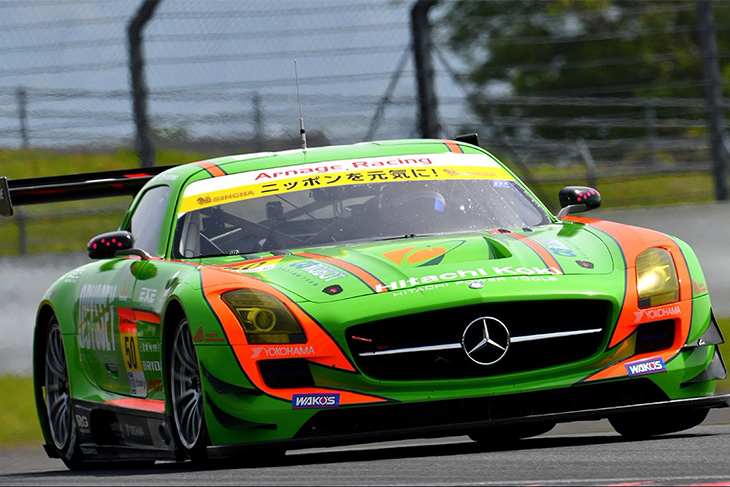
“It’s not easy working with rookies, I have to tell you,” Yasuoka laughs. Between Nanin in 2015 and Kubo in 2016, Yasuoka was already becoming not only a lead driver but also a mentor to rookie drivers in consecutive seasons.
“The practices were getting shorter, we had less time to run on the track, so I think Rintaro had a tough season, especially in the first half, as he tried to understand the car, since he didn’t have as much GT or touring car experience. It was especially difficult for him to keep the tyres alive, so we picked up a lot of blisters.”
“But what he learned in 2016 helped him in his much better 2017 season in the Prius,” Yasuoka concludes of his former co-driver Kubo, who for 2018 moves on to Pacific with Gulf Racing.
At the same time, Yasuoka was now well and truly becoming a driver coach. He’d been tutoring up-and-coming drivers through the Porsche Carrera Cup Japan in the years since his perfect championship season. For 2016, Arnage Racing started up a PCCJ team of their own, and brought in Brian Lee from Taiwan, who would work under Yasuoka, the appointed team director and mentor to Lee.
“He’s come a long way from his first season,” Yasuoka says of his protegé Lee. “2016 was his first time in a proper racing car, having always driven tuner cars. And the difference is that you have to drive much more precisely with a racing car, because the car is set up more precisely, the characteristics of the car are more rigid, so that the driver has to cope with the car, rather than the car working around the driver. He also had to learn all the tracks in Japan for the first time.”
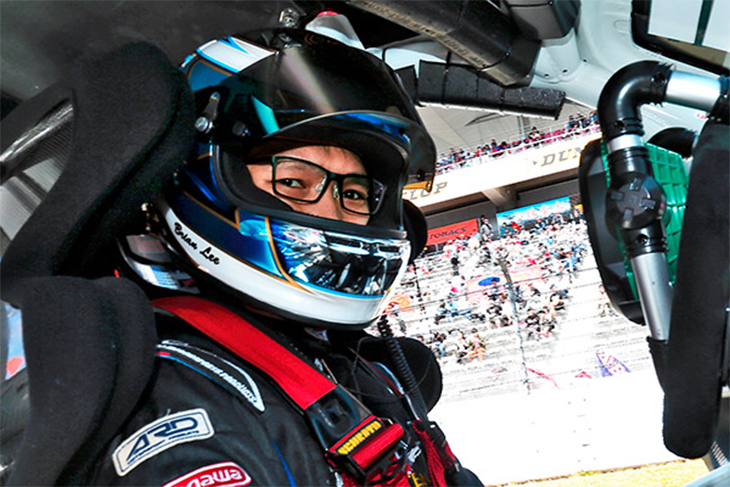
“But I was used to coaching PCCJ drivers while I was racing in the series. We spent a lot of time looking at videos, and last year we were fortunate enough to have some sessions where I could ride as a passenger, and where we traded seats. That way, I could show him how I approached some corners, working with him side-by-side as he was driving. And he improved a lot in 2017, when it came to braking, and approaching certain corners, like the third sector at Fuji.”
“Then came the opportunity to race together in Blancpain GT with HubAuto Racing at Shanghai. His pace was stable, especially for his first time in a GT3. And it was the first time that I had ever driven Shanghai, for the both of us, actually!”
This year, Lee has a full-season drive with TTR Team Sard in the GT4 class of Blancpain GT Asia, and Yasuoka is beaming with confidence over his pupil’s chances of success. “I think he’s going to do really well, and I hope he and Tony (Fong) can fight for the championship this year, I think he can!”
Yasuoka has changed a lot in the last few years alone. He was once very active on social media, these days, only sporadically so. That’s because Yasuoka leads a much busier life outside of racing, working as the General Manager for Japan of Excape Entertainment, a leading simulator and virtual reality company operating in the United States and Asia.
The difficulty of the sport is why people fall in love with racing, but with that, it is a difficult sport to experience just how difficult it is, because of the risk, and because of the cost
The opportunity came about when Yasuoka made the switch to touring cars from single-seaters, and he used simulators to hone his driving style towards the Porsche Cup cars. That part alone shouldn’t come as a surprise, after all, simulators are a commonplace tool for driver development, and Yasuoka has now competed against drivers who’ve graduated through the GT Academy, names like Lucas Ordoñez and Jann Mardenborough. But Yasuoka has made it his line of work away from the track, to bring the experience of motorsport to those who could not otherwise experience it.
“I think racing simulators are great. I think they are great because they simulate driving a real racing car, and because of that, they are difficult. The difficulty of the sport is why people fall in love with racing, but with that, it is a difficult sport to experience just how difficult it is, because of the risk, and because of the cost, and because of the locations of the tracks, which are so far away from the major cities.”
“So we saw an opportunity to demonstrate what we do to everyone, to kids, to ladies, to the elderly. What was great for Excape in particular was that we do a lot of public events, we’ll be at shopping malls and other forums. We don’t make the simulators easy to drive. Instead, we have professional drivers like myself coaching the customers, so that they’ll understand the difficulty, and pick up tips on how to drive better, which connects with driving in the real world.”
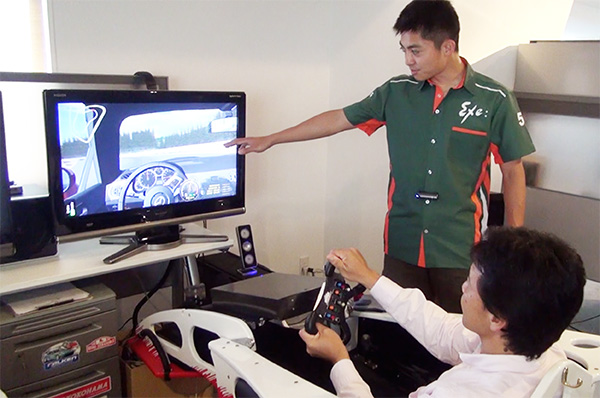
“Recently, we’ve moved beyond racing simulators, and worked with other luxury brands outside of the automotive industry to use our experiential marketing. So we started to do more non-automotive VR work. I think I have more work outside of racing than I do in motorsport. It’s different, but it’s still very fun!”
Just within the automotive industry, though, Excape has worked with the likes of Audi, Honda, Formula E, and Porsche, in fact, Porsche have two Excape-built VR driving clubs at their Driving Experience Centers in Los Angeles and Atlanta.
With the time spent at work, Yasuoka spends less time on social media than in years past, where he was particularly outspoken compared to his peers about social issues at home and abroad. Still, he laments that he’s one of the few Japanese Super GT drivers that uses social media to display more of their personality, something that even extends to the pre-race drivers’ briefings, where foreign drivers like João Paulo de Oliveira and, previously, Ralph Firman and Oliver Jarvis did most of the talking.
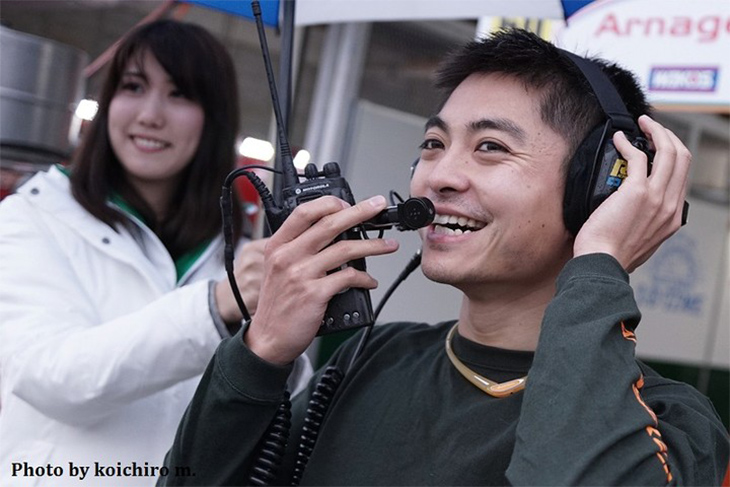
“Japanese drivers, I think, need to do a better job at communicating with the fans, and they should share their thoughts more in general,” says Yasuoka.
Arnage Racing have shown in years past that despite not running an all-pro driver lineup, that despite not having the budget of the bigger GT300 teams, that on their day they can post great finishes in Super GT. Last year, with a much different team composition, they rebounded from a terrifying crash at the season-opener at Okayama to finish 2nd at Sugo with their previous Ferrari 488 GT3.
GT300, as mentioned earlier, is a much more competitive landscape. That will only intensify in 2018, with GT500 stalwarts like Kohei Hirate, Hironobu Yasuda and Takashi Kobayashi stepping down to this category, with the return of a legend in Ryo Michigami, with outstanding newcomers like Ritomo Miyata, Hiroki Otsu, and Marco Mapelli, and with the escalating development of GT3 machines as they do battle with the JAF-GTs and Mother Chassis cars.
This year, the driver lineup is familiar, but much different from last season’s. Same with the car, the Mercedes-AMG GT3 being the fourth different machine that Arnage Racing have fielded in six years as an independent team. Yasuoka has set modest, yet realistic goals for the season ahead.
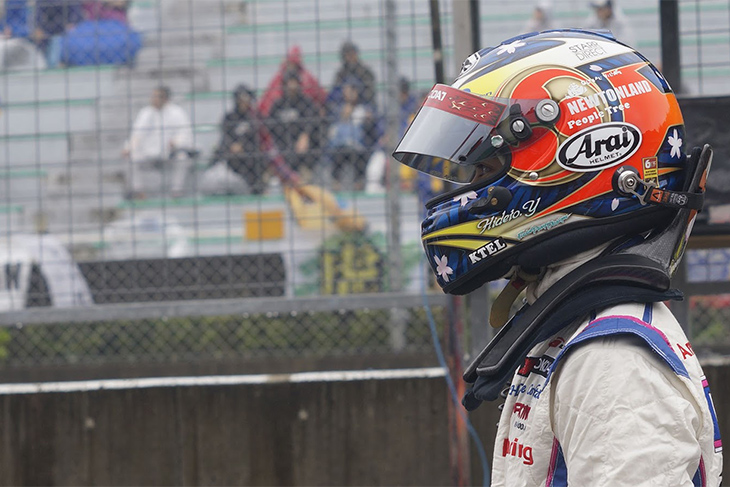
“Since the first year with Arnage, our goal has been to finish all the races, and we haven’t done that yet! Ito-san says it’s very important for us to finish every race, and I believe too that it’s very important for us to finish every race without stupid accidents or mechanical failures. So that’s the first goal,” says Yasuoka.
He goes on, “A personal goal for me would be for me to make it out of Q1 in a race, but it won’t be easy. I feel that the Yokohama tyres aren’t as strong in terms of one-lap pace compared to our rivals with Bridgestones and Dunlops.
“And then, we have to think of the hybrids and the JAF-GTs which are always fast in qualifying. So it’s not going to be easy, but there are tracks that I really like Sugo, Autopolis, Suzuka, even Okayama.”
Since the first year with Arnage, our goal has been to finish all the races, and we haven’t done that yet!
“And as a team goal, between myself and Kano-san, our goal will be to get into the points. I think we have chances at the longer races, when we have Sakamoto-san joining us, since he is an experienced and proven GT driver. There are other races as well where I feel like we can fight within the top ten, and when we’re in the top ten, maybe there’s a chance we can finish in the top six.”
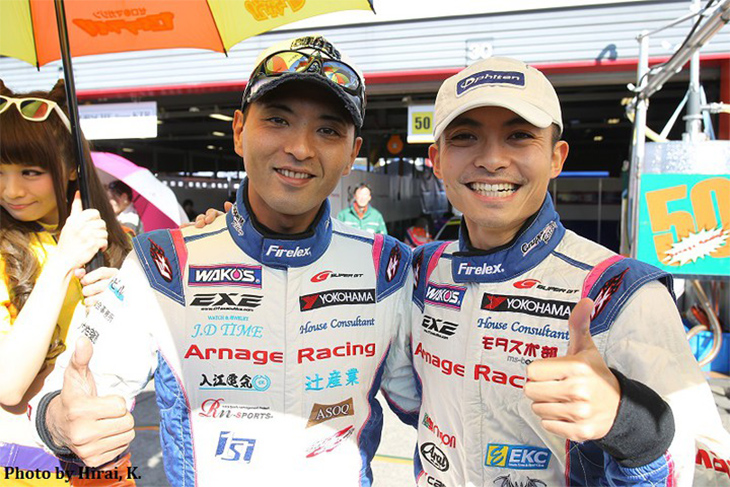
“And if there’s another miracle, maybe we can be on the podium again! But even I think that’s too high a target to set. So we’ll start from just being able to finish all the races, and trying to get into the top ten. That’s how we’re going to approach the season.”
Hideto Yasuoka’s first chance to drive the V8-powered Mercedes-AMG GT3 in anger will be this week’s test at Okayama International Circuit, and the following week at the test at Fuji Speedway.
The fight will be a hard one for the Arnage Racing team, but Yasuoka, a popular and personable driver who’s already endured the highs and lows of a life in auto racing, is well-equipped for the task, and those who know him won’t be too terribly surprised if he can once again drive the team to a podium finish in 2018.
Images courtesy of Arnage Racing, Hideto Yasuoka Supporters’ Club, Porsche Japan K.K., Motorsport Department (MS-Boo.com), and the GT Association
Formula Toyota photo credit to Tadashi Iida